Villa No. 13: An Architectural Design Exploring Spatial Interaction Between Courtyards and the Central Green Patio

Spatial Interaction in Villa No. 13
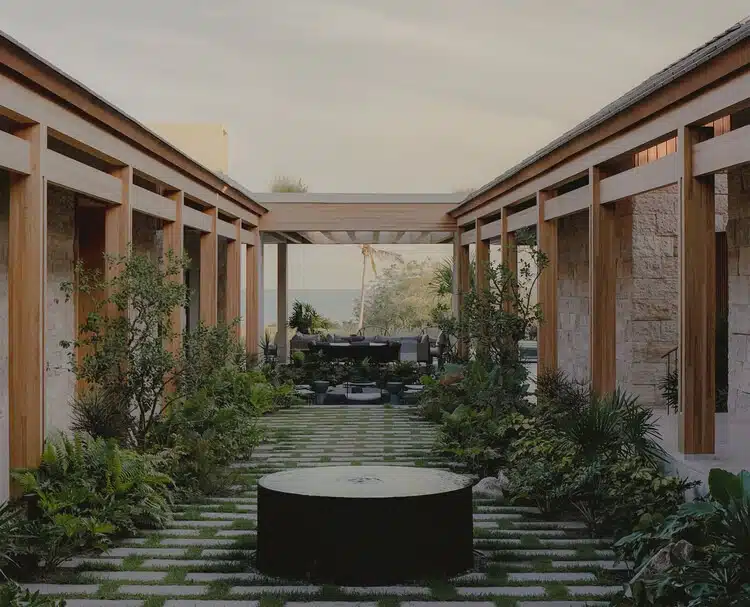
Villa No. 13 was designed to highlight the relationship between open, semi-open, and enclosed spaces, creating a balanced spatial composition. This arrangement organizes three exterior courtyards and an internal patio that work together to provide a precise microclimate, mediating smoothly and comfortably between indoor and outdoor environments.
Sunlight Orientation and Natural Views
The villa is oriented along a north–south axis, allowing the courtyards to capture sunlight from the south while preserving natural views to the north. This design enhances natural lighting and opens extended visual perspectives within the building, supporting the spatial experience of visitors and creating a balance between light and shadow.
Functional Sequence of Interior Spaces
The courtyards and internal patio were also designed in accordance with the narrative and functional sequence of interior spaces. Circulation and movement within the villa are not arbitrary but serve the purpose of each space, whether it is a reception area, a living space, or more private zones. This approach reflects the designers’ attention to user experience and the natural flow of movement throughout the building.


The Central Patio and Spatial Experience
The central patio is designed as a green space that offers a transparent and dynamic sectional experience, gently differentiating between public and semi-public areas within the villa. This strategy enhances the sense of openness and connectivity between interior and exterior spaces, creating a rich and evolving spatial experience as one moves through the building.
Spatial Design Strategies
The enhancement of the project’s spatial and experiential qualities can be divided into two main strategies:
- Stitching the Courtyards: Achieved through independent exterior pathways that encourage open-air circulation, creating a seamless experience between different courtyards and promoting fluid movement.
- Shading and Environmental Control: The design employs a perforated envelope that provides multi-layered shading, creating comfortable atmospheres and supporting climbing plants. It also helps regulate temperatures and mitigate direct sunlight.
Architectural Approach and Environmental Integration
The villa reflects a contemporary architectural approach rooted in the traditional Iranian concept of the Narenjestan. This approach aims to integrate the building within a lush, green envelope, embodying a long-term design vision that goes beyond mere aesthetics to embrace harmony between humans and their surrounding environment.


✦ ArchUp Editorial Insight
It can be noted that Villa No. 13 offers several positive aspects that may inspire designers, such as its focus on spatial interaction between different areas, the use of the central patio to enhance transparency and connectivity between interior and exterior spaces, and the sunlight and shading strategies that contribute to a more dynamic spatial experience.
However, there are several points worth considering when evaluating the practical application and overall impact of the design. For instance, the strong emphasis on the central patio and open spaces may limit privacy in certain areas. Additionally, relying on an integrated green envelope and multi-layered shading may require careful and sustainable maintenance to ensure long-term visual and functional performance. Similarly, the balance between openness and internal functions is not always apparent to all users, which could pose challenges when attempting to integrate the architectural experience with daily use.
From an architectural perspective, the project can serve as a valuable case study for strategies that integrate natural light and ventilation with green elements in residential buildings, while taking into account the need to adapt solutions to the local context and user requirements, and ensuring the sustainability of the design over the long term.
Prepared by the ArchUp Editorial Team
Don’t miss the chance to explore more from Architecture, Archive, and Buildings on the ArchUp website.