
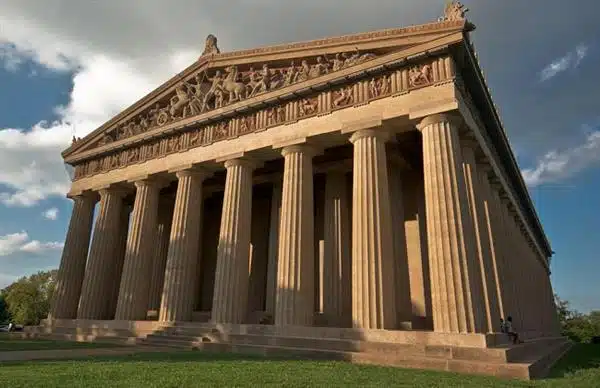
The Classical Orders A Simple Guide to Doric, Ionic, and Corinthian Columns

Classical architecture remains one of humanity’s greatest achievements. It began in Ancient Greece, evolved under Roman rule, and has continued to inspire architects for centuries. At its core lies a system known as the classical orders three distinct styles of columns and entablatures that defined how buildings were built and experienced.

These three orders Doric , Ionic , and Corinthian are more than just decorative elements; they carry deep cultural meanings and reflect the values of the societies that created them.

1. Origins: From Greeks to Romans
The Doric order was the oldest and simplest, emerging in mainland Greece around the 7th century BCE. It was used in grand temples like the Parthenon in Athens, where strength and simplicity spoke of power and stability.
The Ionic order followed, appearing in the eastern Greek islands (Ionia) around the 6th century BCE. Known for its elegance, it introduced the iconic spiral volutes on column capitals.

The Corinthian order , the most ornate of all, was developed in Corinth around the 5th century BCE. While it began in Greece, it became truly popular during the Roman era, especially for imperial monuments like the Pantheon in Rome.
By the 1st century BCE, the Roman architect Vitruvius had documented these orders in his treatise De Architectura , laying the foundation for their use throughout history.
2. What Makes Up a Classical Column?
A classical column isn’t just a vertical support it’s a carefully designed structure made up of several parts:
- Base : The bottom support, common in Ionic and Corinthian columns but often missing in early Doric ones.
- Shaft : The long, vertical body, usually fluted with grooves.
- Capital : The top part, which varies significantly between the orders.
- Entablature : The horizontal structure above the columns, consisting of:
- Architrave : The lowest section, directly resting on the columns
- Frieze : Often decorated with carvings or triglyphs and metopes
- Cornice : The uppermost projecting part
Each of these components follows strict proportional rules, unique to each order.


3. The Doric Order: Strength and Simplicity
The Doric order is the oldest and most robust of the three. It originated in mainland Greece around the 7th century BCE and is known for its strong, masculine appearance.
Key Features:
- No base in early Greek versions
- Shaft fluted with 20 grooves
- Simple capital made of a rounded echinus and square abacus
- Entablature includes alternating triglyphs and metopes
This style was ideal for large, monumental structures.
Famous Examples:
- The Parthenon , Athens
- Temple of Hephaestus , Athens
Proportion Table:
| Element | Proportion Relative to Column Diameter |
|---|---|
| Shaft Height | 5–6 × diameter |
| Capital Height | ~½ × diameter |
| Entablature Height | ~¼ of column height |

4. The Ionic Order: Elegance and Refinement
The Ionic order brings a lighter, more graceful feel. Developed in the Ionian islands around the 6th century BCE, it’s associated with intellect and culture.
Key Features:
- Base with multiple moldings
- Slender shaft with 24 flutes , separated by narrow fillets
- Distinctive scroll-like volutes on the capital
- Continuous frieze, sometimes carved with detailed reliefs
Designers favored the Ionic order for civic buildings such as libraries, courthouses, and theaters
Famous Examples:
- Erechtheion , Athens
- Temple of Athena Nike , Athens
Proportion Table:
| Element | Proportion Relative to Column Diameter |
|---|---|
| Shaft Height | 8–9 × diameter |
| Capital Height | ~½ × diameter |
| Entablature Height | ~⅕ of column height |

5. The Corinthian Order: Ornament and Grandeur
The Corinthian order is the most decorative of the three. Though invented in Greece in the 5th century BCE, it reached its peak under the Romans, who used it for grand imperial buildings.
Key Features:
- Elaborate capital covered in acanthus leaves and scrolls
- Similar base and shaft to the Ionic order
- Richly decorated entablature with deep cornices and sculptural details
Architects reserved this style for the most luxurious and prestigious buildings.
Famous Examples:
- The Pantheon , Rome
- Temple of Olympian Zeus , Athens
Proportion Table:
| Element | Proportion Relative to Column Diameter |
|---|---|
| Shaft Height | 10–12 × diameter |
| Capital Height | ~1 × diameter |
| Entablature Height | ~⅕ of column height |
6. Common Architectural Terms
| Term | Definition |
|---|---|
| Capital | Top part of the column; differs in each order |
| Entablature | Horizontal structure supported by columns |
| Pediment | Triangular gable above the entablature |
| Fluting | Vertical grooves along the column shaft |
| Volute | Spiral scroll found in Ionic and Corinthian capitals |
| Acanthus | Leaf motif used in Corinthian design |
| Symmetry | Core principle in classical architectural design |
7. Legacy Through the Ages
Vitruvius documented the classical orders in his treatise De Architectura To the Greeks, they reflected human proportions and harmony. To the Romans, they stood for authority and order.
During the Renaissance, architects like Andrea Palladio and Leon Battista Alberti revived these styles, blending ancient principles with modern needs. Later, figures like Thomas Jefferson brought them into American public architecture.
Even today, these classical forms appear in banks, government buildings, and memorials, reminding us of timeless values like dignity, strength, and beauty.
- ArchUp continues to track transformations in the construction sector, documenting innovative projects that redefine how cities are built.


