The White House in Krakow: Balancing Brutalism and Sustainable Innovation

Nature-Inspired Architectural Design
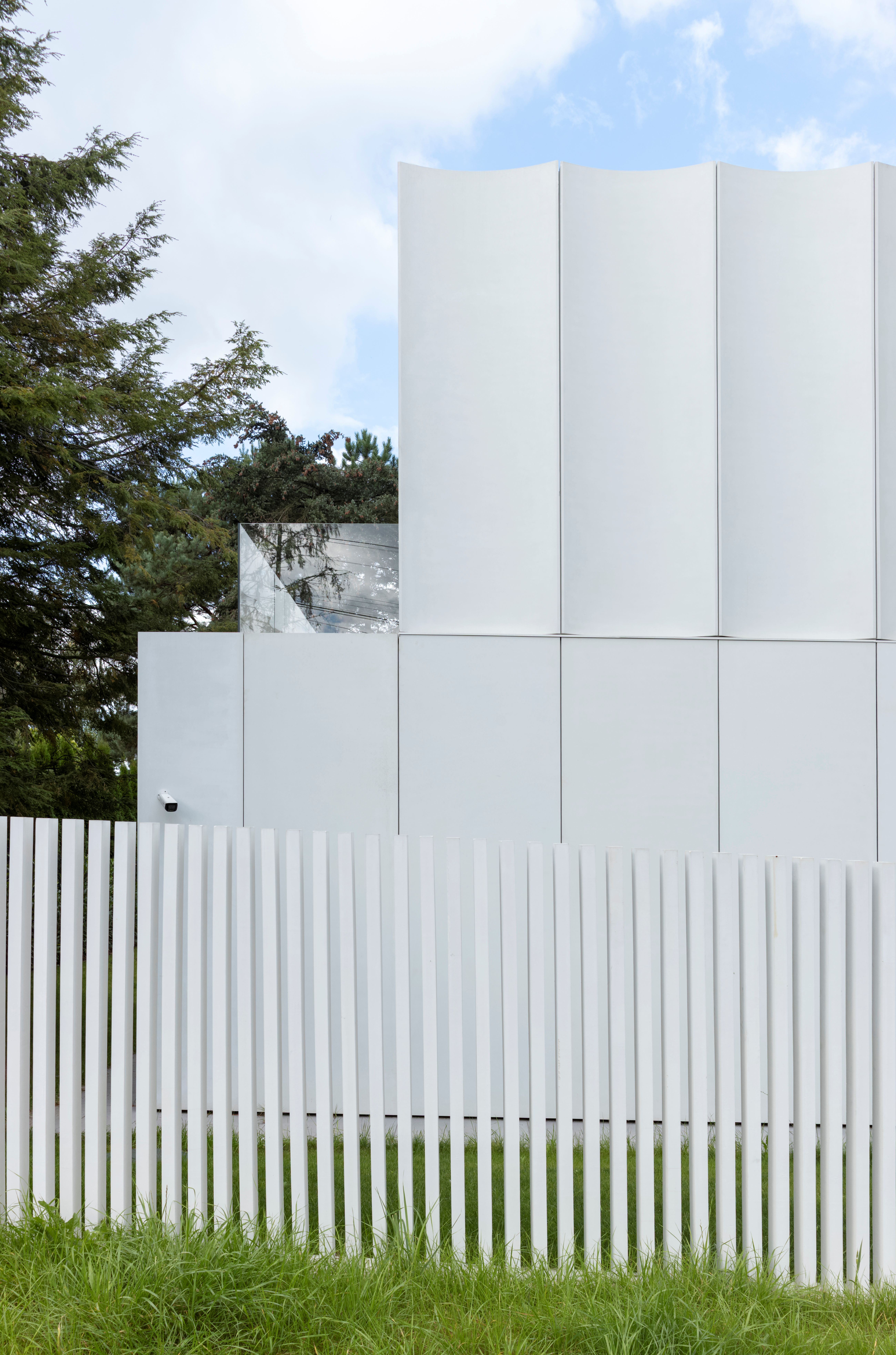
Surrounded by an elegant white fence, this villa in Krakow, designed by the Polish studio UCEES, represents a model of a simple villa inspired by the multi-layered shape of an iceberg.
Form and Function
Under the title “The White House,” the building features a cubic and sculptural form, designed to visually impress viewers without competing with the surrounding architecture. This approach reflects the designers’ awareness of the balance between architectural distinction and harmony with the environment, a key element in contemporary design.
Architectural Direction
The villa’s design embodies a philosophy of simplicity and clarity, focusing on clean lines and thoughtful details, giving the building a distinctive presence without visual clutter.
A Strategic Location Combining Nature and Urban Life
“The White House” is located in Wola Justowska, one of Krakow’s most renowned residential neighborhoods. This area is characterized by its blend of urban environment and green spaces, making it a living example of the balance between city life and nature.
Distinctive Neighborhood Features
The neighborhood is playfully nicknamed the “Beverly Hills of the city,” due to its architectural appeal and tranquil nature. Residential buildings are interspersed with forested gardens, providing a comfortable, nature-connected living environment, which adds significant value to any architectural design situated here.
Sustainable Innovation in Design
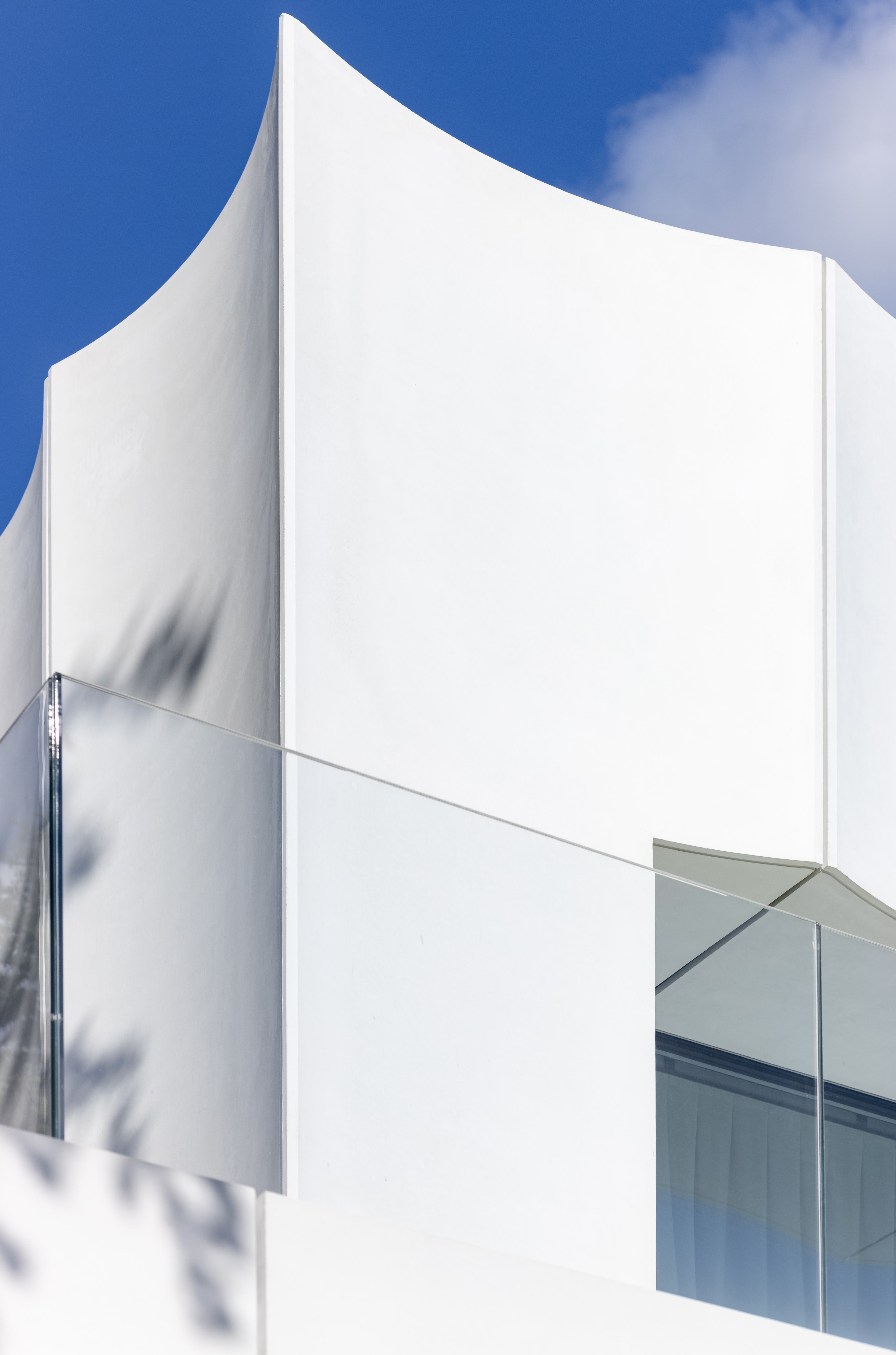
The architects aimed to combine modern form with eco-friendly solutions, drawing inspiration from the traditional urban shape of the area as a foundation. From this standpoint, they employed a flat roof and a uniform white volume, giving the building clarity and simplicity in appearance.
Playing with Form and Texture
After establishing the base, the design evolved to become more dynamic. The architects experimented with shapes and textures, adding innovative touches to the building’s facade, which helped achieve a balance between authenticity and modernity, while introducing a visually dynamic dimension to the design.
Concrete as a Foundation for Architectural Expression
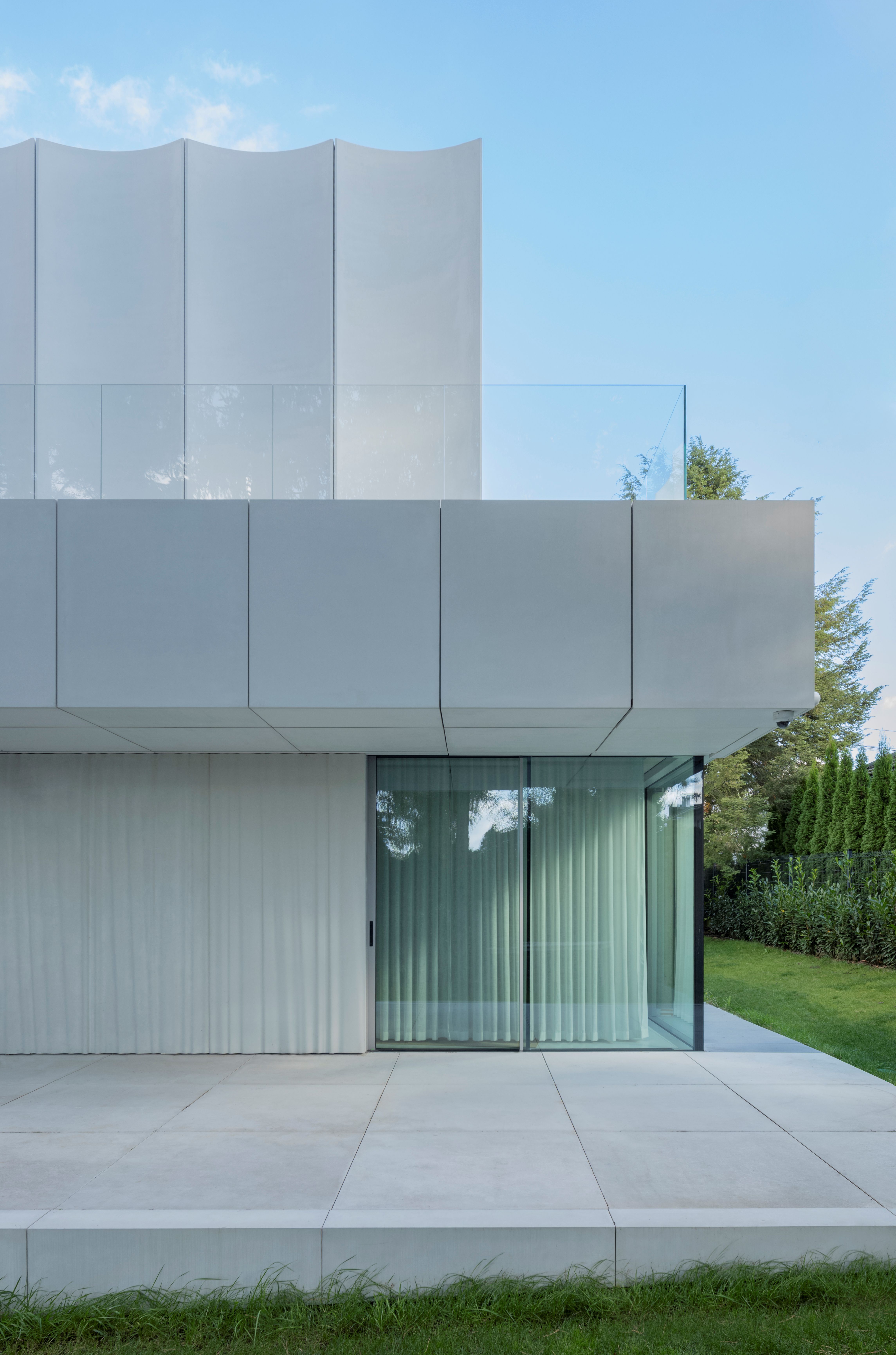
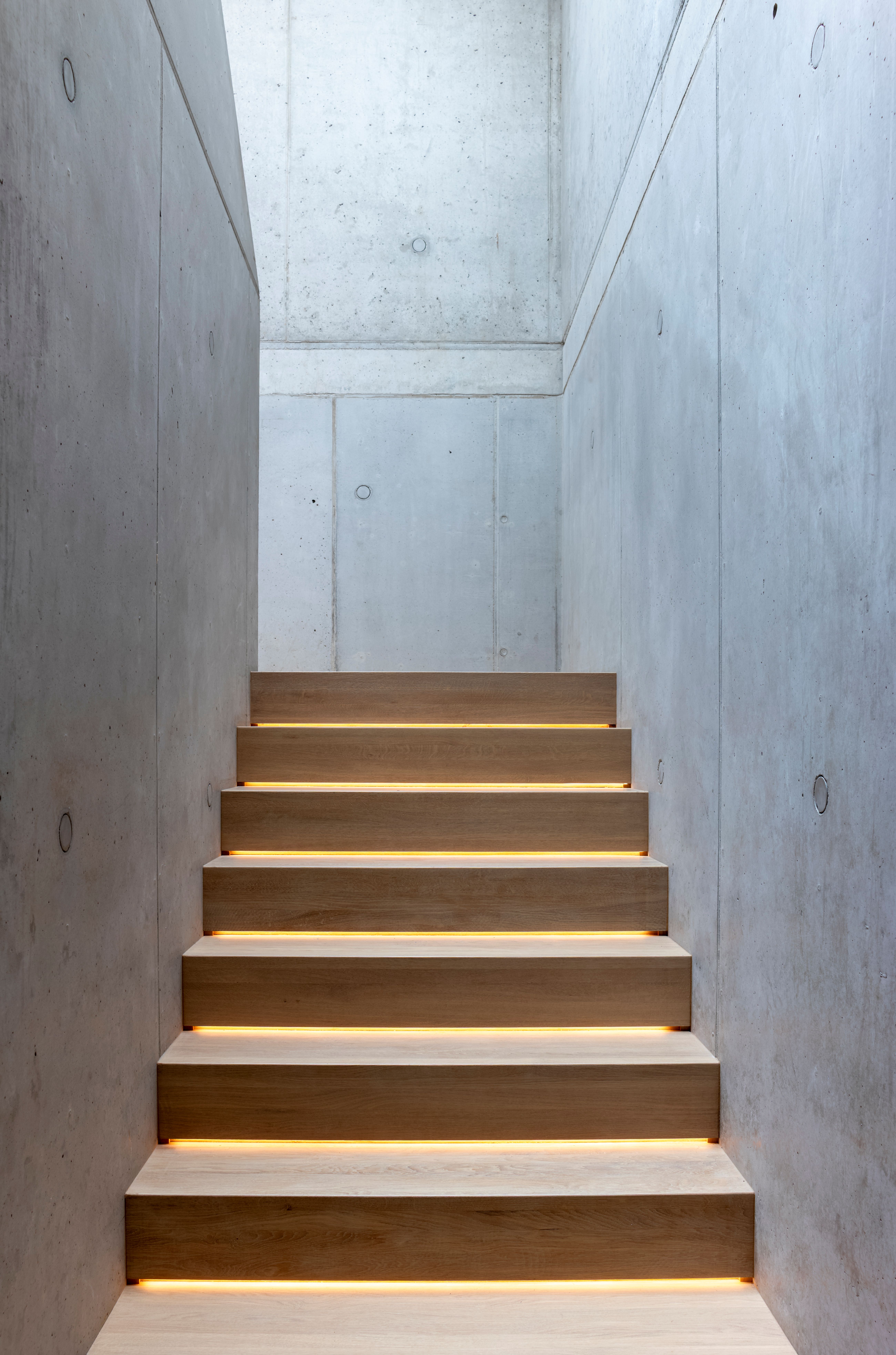
The architects relied on concrete as a primary material in the villa’s design, taking advantage of its ability to form precise geometric shapes. The layers of the signature cubic form were crafted using a “sculpting” technique on white cement, allowing them to control the details and highlight the building’s final form.
Details Enhancing Visual Appeal
Additionally, extra concrete details were added to thresholds, protruding elements, and cornices, providing an added aesthetic dimension to the villa. These subtle elements enriched the facade and introduced a sense of vitality to the overall design, while maintaining the building’s visual harmony.
Organization of Spaces and Floors
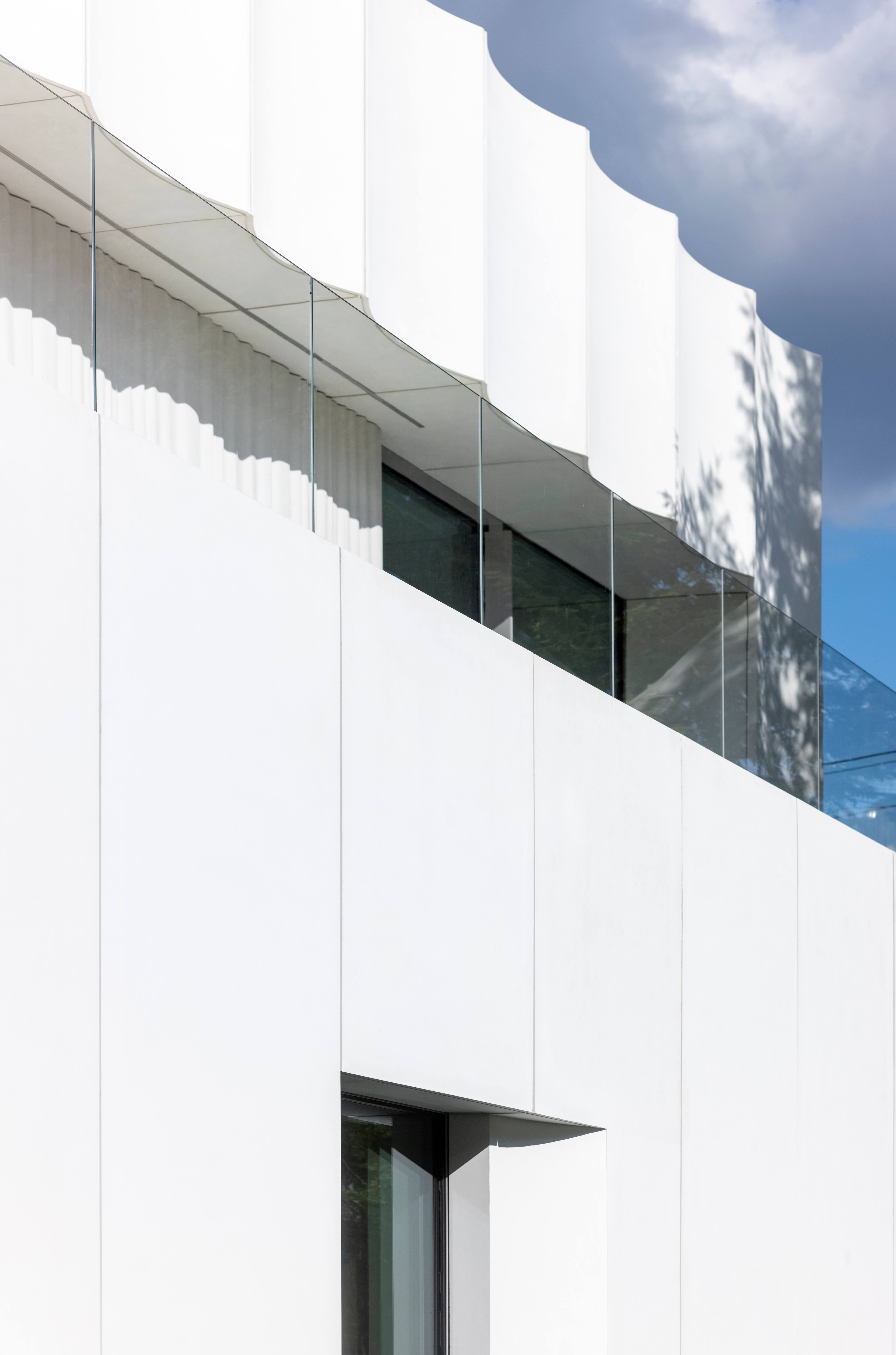
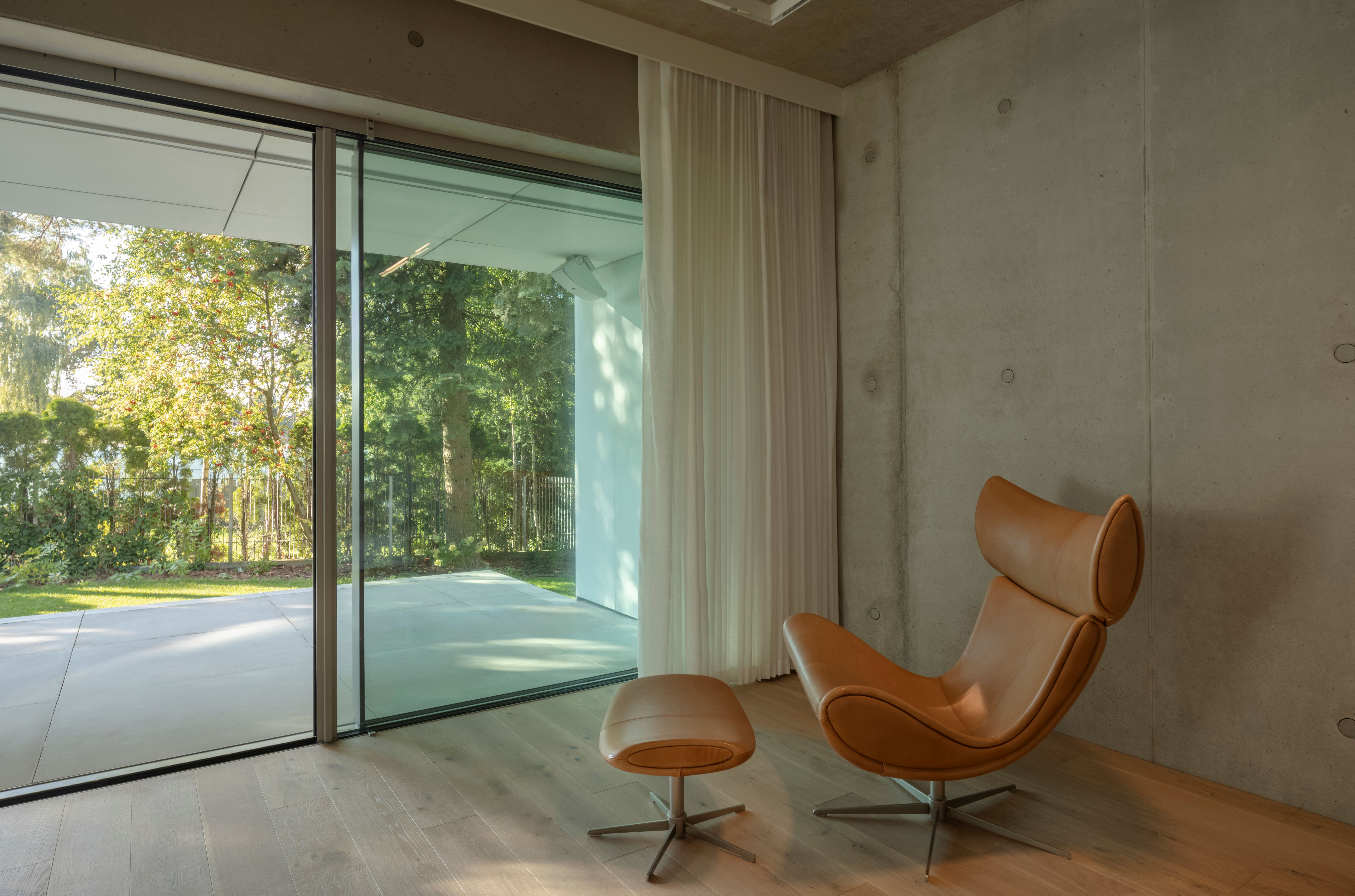
This residence features a distinctive upper floor, described by the architects as having a “carefully coordinated concave lens shape,” along with recessed balconies on the ground floor. This design enhances the building’s visual dynamism and allows better natural light and air flow.
Attention to Detail
Meticulous attention to detail is evident throughout the villa, from the sculpted concrete surfaces, to the harmonious facade lines, and the carefully designed balcony floors, reflecting the architects’ commitment to delivering a cohesive design that combines beauty with functionality.
Commitment to Sustainability and the Environment
The architects demonstrated a strong awareness of environmental considerations during the villa’s design. The UCEES team ensured that all existing trees on the site were preserved, reflecting their respect for the surrounding natural environment and their focus on maintaining a balance between construction and nature.
Use of Eco-Friendly Materials
Additionally, the team emphasized the selection of sustainable materials, such as TioCem cement, which has the ability to remove nitrogen oxides from polluted air. These environmental initiatives make the design not only aesthetically pleasing but also environmentally responsible, reflecting contemporary architecture’s focus on eco-friendly buildings.
Blending Brutalism with Modernity
The result is a single-family villa that serves as an engaging case study in architectural design. It demonstrates how combining brutalist building materials with contemporary concerns can produce a unique design that balances visual strength with modern simplicity.
Integrated Visual Appeal
The villa possesses a strong visual appeal, where strict geometric lines harmonize with carefully considered details, making it an example of how to create urban residential spaces that are both elegant and functional.
✦ ArchUp Editorial Insight
The “White House” villa offers a clear and distinctive architectural experience, featuring appealing geometric lines and the use of innovative materials that reflect the designers’ focus on sustainability. On the other hand, some may find that the heavy reliance on cubic forms and strict lines can make the design feel less warm or connected to the surrounding neighborhood. Additionally, the rigid concrete details may not appeal to all residents, particularly those who prefer more lively or traditional designs. Nevertheless, the villa remains a strong example of combining modernity with environmental awareness, achieving a notable visual balance.
Prepared by the ArchUp Editorial Team
Don’t miss the chance to explore more from Architecture in fields like Design and Projects on the ArchUp website.