Lina Peak: A Stunning Height Reshaping the Alpine View

A bold architectural plan defies Alpine tradition. A 260 meter skyscraper looms before the Matterhorn. This Project aims to solve the Zermatt vertical housing crisis while preserving Switzerland’s iconic natural scenery.
A Window on Contrast: Alpine Silence and Rising Steel
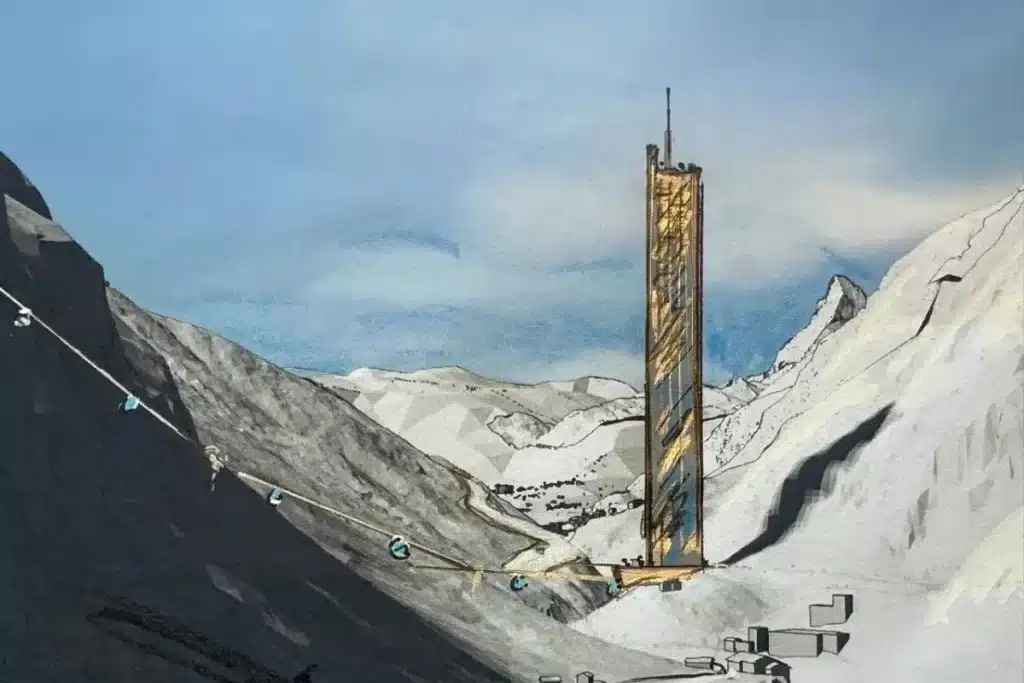
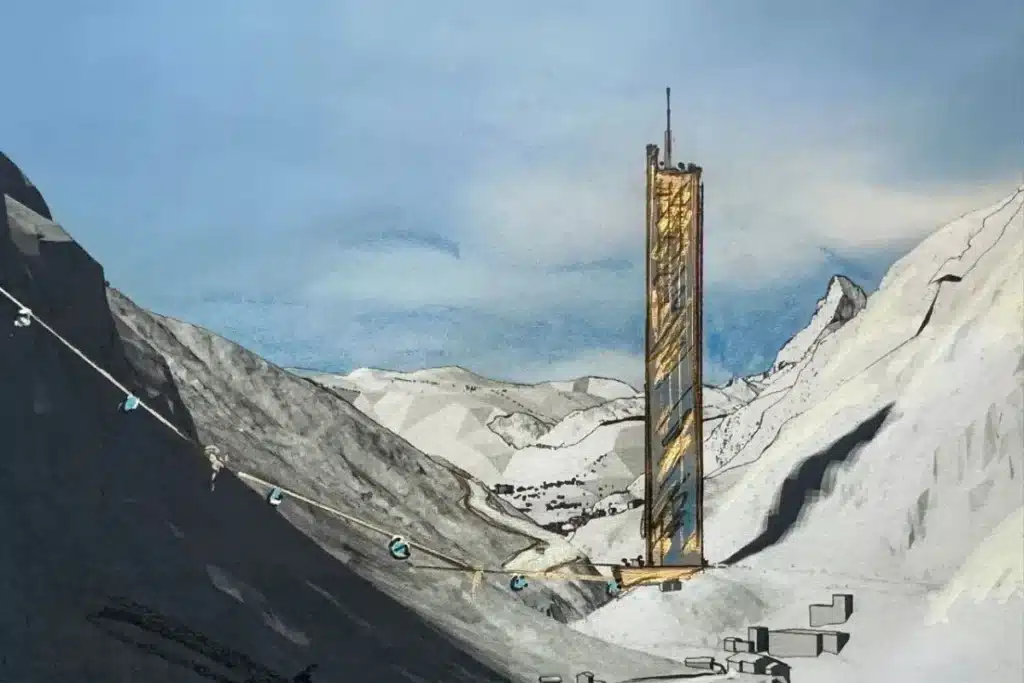
Imagine standing at the edge of Zermatt village. You are surrounded by the silence of the Alpine valleys. Suddenly, this calm is broken by the sight of a colossal structure. It is a residential building reaching 260 meters and comprising 65 floors.
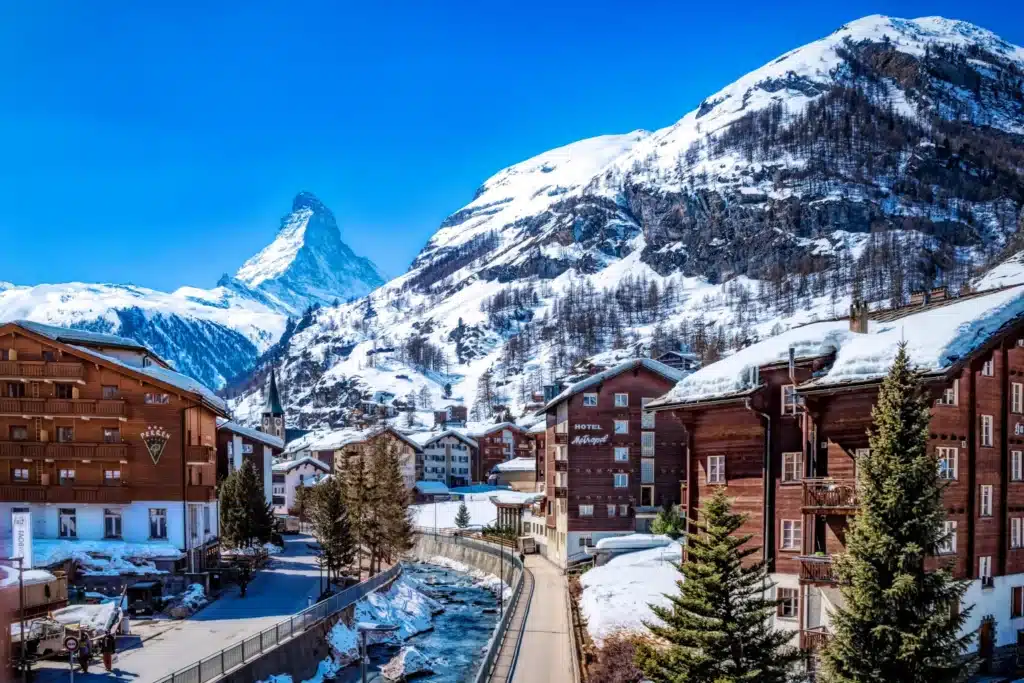
This Design was put forth by a local architect. The tower represents a direct attempt to answer the escalating Zermatt vertical housing crisis. If executed, this structure would be the tallest in Switzerland. It stands as a stark architectural statement amidst the low-rise, traditional wooden homes. The designer opted for a strategy of building upward instead of outward. This strategy is dictated by the narrow, confining mountain valley terrain surrounding Zermatt.
The Visitor’s Path: A Compact Village at 65 Stories
The visitor’s journey begins at the base. The footprint extends across only 40 × 40 meters. This limited area emphasizes the concept of vertical density. This ground level serves as a comprehensive community center. It benefits both the tower’s residents and the wider community.
The Base Amenities Include:
- 1,000 parking spaces.
- A concert hall accommodating 2,500 seats.
- An integrated sports center and public swimming pool.
- A childcare center, retail shops, and restaurants.
Movement then shifts to the tower’s core. High speed elevators provide vertical transport. The designer dedicates floors 2 through 32 to relatively affordable residential units. These units are specifically for workers and permanent residents. This is the direct architectural response to the Zermatt vertical housing crisis. The village faces a near-total lack of available housing for its workforce.
The Skyline Experience: Luxury Living and a Scenic Challenge
Ascending to the upper floors, specifically from 33 to 62, the residential texture changes. This segment features luxury flats with huge glass windows. These windows frame panoramic views of the famous Matterhorn peak. This functional differentiation raises debate. Observers question the balance between meeting local needs and attracting global capital. The path culminates in a public rooftop terrace. This terrace allows a completely new perspective of the Alpine skyline.
Architectural Specifications: Steel and Glass in a Mountain Setting
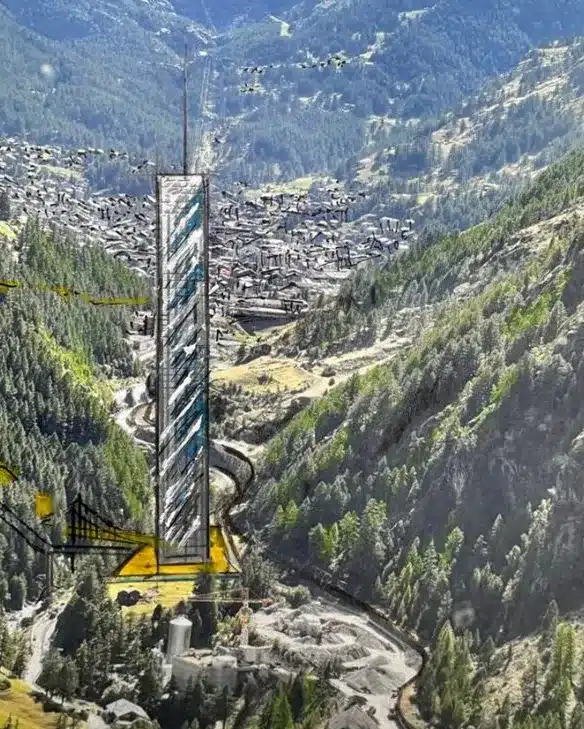
The architecture adopts a modern aesthetic. It strongly contrasts with the local engineering tradition. The tower relies on a robust and efficient structural system. The Design primarily focuses on transparent facades.
Key Materials and Techniques:
- Structural Component: Relies on a Steel frame. This provides durability and the necessary height attainment.
- Exterior Cladding: Intensive use of Glass facades. This maximizes the visual connection to the surrounding landscape.
- Space Efficiency: The design prioritizes maximum vertical density. This reduces the required ground area to 40 × 40 meters. This reflects a practical solution to the valley’s spatial constraints.
- Circulation System: Integration of ultra-high-speed elevators. This ensures efficient transport of residents and visitors across 65 floors.
The Bigger Picture: A Skyline at Stake
The development is situated on former agricultural land. The site is approximately 1,500 meters high. It lies near the entrance to Zermatt. This strategic location places the tower directly in the Matterhorn’s line of sight. This raises major concerns about the impact on the region’s visual harmony. Critics argue this structure could permanently damage the scenic image Zermatt has long preserved. Peaks like the Gornergrat ridge risk visual disruption. The Lina Peak Project is a bold, documented attempt to solve the Zermatt vertical housing crisis. However, its fate remains dependent on local community approval. They must decide between aggressive Urban Development and the conservation of their natural heritage.
✦ ArchUp Editorial Insight
The Lina Peak tower presents a bold visual challenge; its 260-meter Steel and Glass structure sharply contrasts with Zermatt’s traditional, low-rise urban fabric. This high-density vertical Design offers a solution to the Zermatt vertical housing crisis, utilizing a minimal 40 × 40 meter footprint to provide worker housing units in its lower floors. The critique focuses on the design approach: while densification is justified, selecting the archetypal luxury skyscraper form risks defacing the Matterhorn’s iconic view, transforming a social need into a spectacle of global capital. Nevertheless, this initiative is a necessary step in pushing Urban Development to address social issues without resorting to sprawl.