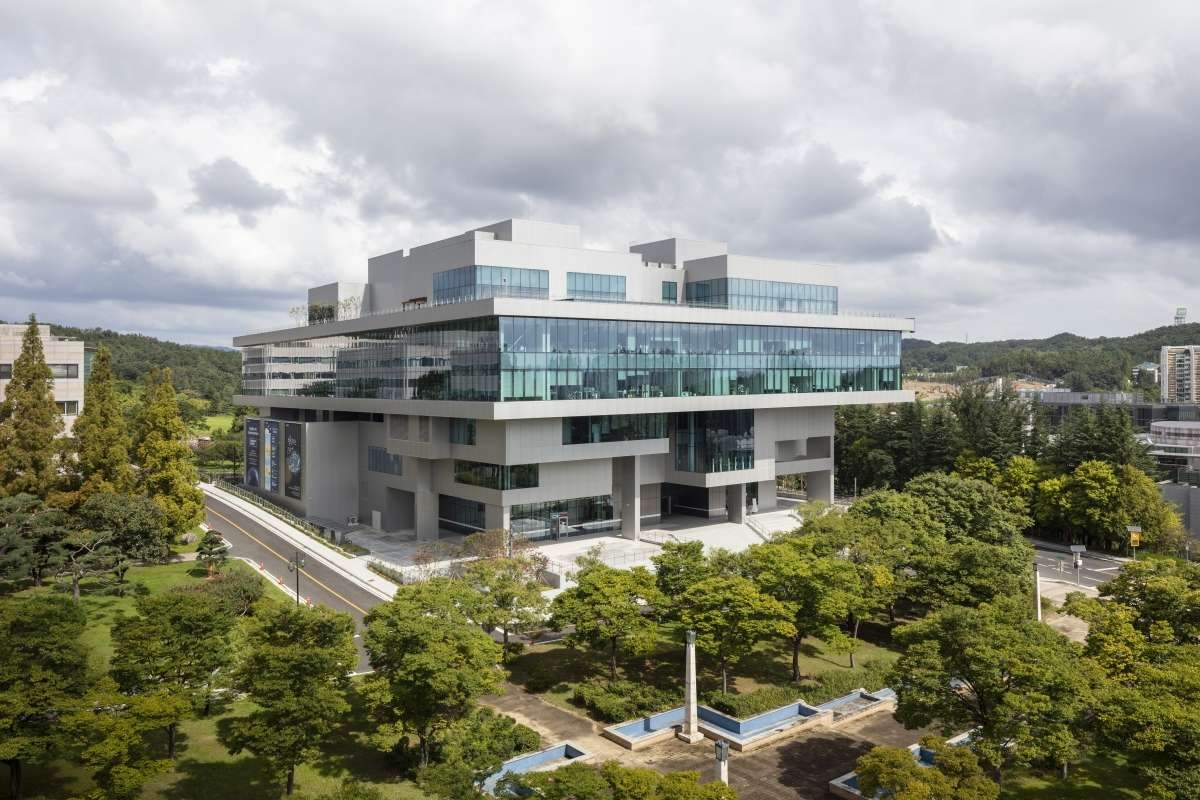
670 Mesquit: BIG’s Four-Building Complex Approved in Los Angeles

The 670 Mesquit development, designed by Bjarke Ingels Group (BIG), has received approval from the Los Angeles City Council after nearly a decade in planning. Situated in the Arts District near the Los Angeles River, the project is a large-scale urban intervention that combines residential, educational, commercial, and recreational functions within a unified architectural framework.
This ambitious complex consists of four interconnected buildings of varying heights, with the tallest reaching 34 stories. The program includes nearly 900 residential units, office spaces, a hotel, a charter elementary school, retail facilities, and green areas designed by Studio MLA. The buildings adopt a tiered profile, stepping down on one side while opening with balconies and terraces along their perimeters. According to BIG, the design draws inspiration from both the historic warehouses that once defined the area and the innovative mid-century Case Study Houses, merging industrial character with human-scale adaptability.
Beyond its scale, 670 Mesquit represents an attempt to redefine the contemporary role of urban architecture in Los Angeles. It creates not only living and working spaces but also integrates educational and cultural functions within one complex. This integration raises questions about density, flexibility, and the blending of public and private realms. The approval of this project highlights both the challenges and opportunities facing twenty-first century cities, especially in neighborhoods experiencing rapid transformation such as the Arts District.

Design and Program
The 670 Mesquit project consists of four interconnected buildings organized along the Los Angeles River. Each building adopts a tiered profile that steps down gradually, creating terraces and open edges. The tallest structure, reaching 34 stories, will be dedicated primarily to office space, while the smallest volume will contain a hotel. Between them, two central buildings will provide nearly 895 residential units. At ground level, retail spaces and community areas aim to activate the street and connect the development with the neighborhood.
| Building | Height | Primary Function |
|---|---|---|
| Tallest Tower | 34 storeys | Office space |
| Smallest Tower | Mid-rise | Hotel |
| Two Central Towers | Residential scale | Housing (approx. 895 units) |
An elementary school is also integrated within the complex, emphasizing the role of educational infrastructure in contemporary urban developments. Studio MLA contributed landscaped spaces and an elevated public deck that cantilevers over the adjacent railway, offering a park accessible to the community. This integration of private development with public amenities underscores the hybrid nature of the project, which moves beyond being a single-use structure to become an urban microcosm.

Architectural References and Influences
The design concept of 670 Mesquit emerges from a dual reference. On one hand, it acknowledges the robust industrial warehouse typologies of the Arts District, characterized by large spans and open plans. On the other hand, it engages with the architectural experimentation of the Case Study House program, which promoted flexible and affordable housing in the post-war era. BIG combines these precedents by introducing large-scale structural clarity while allowing individual customization through balconies, terraces, and residential typologies.
The result is a series of volumes that balance mass and detail, industrial strength and human comfort. While the general silhouette resembles industrial warehouses, the stepped facades, large windows, and colorful vertical elements add rhythm and accessibility. This balance attempts to reconcile the scale of the city with the scale of the individual resident.

Architectural Analysis
The logic of the design rests on the juxtaposition of industrial massing with human-centered adaptability. The tiered form allows light to penetrate deeper into the site while also creating semi-public terraces. The material palette, although not fully disclosed, is expected to reference concrete, glass, and steel, consistent with both warehouse aesthetics and contemporary urban developments. By stepping down the volumes and framing open decks, the project reduces its visual bulk and introduces a sense of permeability along the riverfront.
From a contextual perspective, the project acknowledges the Arts District’s heritage of production and industry but transforms it into a mixed-use urban model. Critically, however, questions arise about affordability and accessibility: while the design promises openness and integration, the scale and luxury of the development may reinforce exclusivity in a neighborhood facing gentrification pressures. At the same time, the integration of a school and public park signals a more civic-minded ambition, showing an effort to offset these concerns.

Project Importance
The 670 Mesquit complex offers important lessons for architects and urban designers. It demonstrates how large-scale developments can blend multiple functions into a single architectural framework, moving beyond monolithic typologies. The project highlights the potential of structural clarity and modular adaptability, drawing inspiration from both industrial heritage and experimental housing programs. For architectural thinking, it contributes to the ongoing discourse about density, urban transformation, and the merging of public and private realms.
This project matters now because Los Angeles, like many global cities, faces increasing pressures of growth, affordability, and sustainability. 670 Mesquit suggests that urban housing does not need to be repetitive or isolated but can instead integrate schools, offices, and cultural facilities. The project proposes a more interconnected and layered model of urban living. Its relevance extends beyond the Arts District by asking how cities can create developments that are both contextually rooted and forward-looking.

✦ ArchUp Editorial Insight
670 Mesquit presents a bold architectural composition with tiered volumes, wide terraces, and rhythmic facades influenced by industrial warehouses and mid-century experimentation. The interplay of stepped massing and landscaped decks creates a visually striking identity for the Arts District. However, the sheer scale raises a critical question: can such monumental architecture truly respond to issues of accessibility and social equity in a rapidly gentrifying context, or does it primarily serve an exclusive market? While this tension remains, the inclusion of educational and public spaces adds long-term value. Ultimately, the project stands out as a significant urban intervention that could guide future mixed-use developments in Los Angeles.

Conclusion
In conclusion, 670 Mesquit is more than just a large development project; it is a statement about the role of architecture in shaping the contemporary city. The complex brings together housing, offices, education, hospitality, and public green space within a single design framework. By combining industrial references with human-centered adaptability, it demonstrates how architectural form can bridge scales and purposes. Yet, the project also underscores critical issues related to affordability, equity, and gentrification that architects and policymakers must address.
For the architectural profession, the significance of 670 Mesquit lies in its experimentation with mixed-use density and its acknowledgment of urban heritage while proposing a new model for living and working. It challenges traditional suburban and single-use typologies by suggesting that future developments can be multifunctional and integrated. As cities continue to evolve under demographic and environmental pressures, projects like this highlight the importance of architectural innovation that is context-sensitive yet forward-thinking. The approval of 670 Mesquit is therefore both a milestone for Los Angeles and a prompt for further reflection on how architecture can contribute to equitable and imaginative urban futures.

Explore the Latest Architecture Exhibitions & Conferences
ArchUp offers daily updates on top global architectural exhibitions, design conferences, and professional art and design forums.
Follow key architecture competitions, check official results, and stay informed through the latest architectural news worldwide.
ArchUp is your encyclopedic hub for discovering events and design-driven opportunities across the globe.
Brought to you by the ArchUp Editorial Team
Inspiration starts here. Dive deeper into Architecture, Interior Design, Research, Cities, Design, and cutting-edge Projects on ArchUp.