A Circular Installation on the Moașa River: Temporary Architecture Dedicated to Environmental Awareness in the Făgăraș Mountains

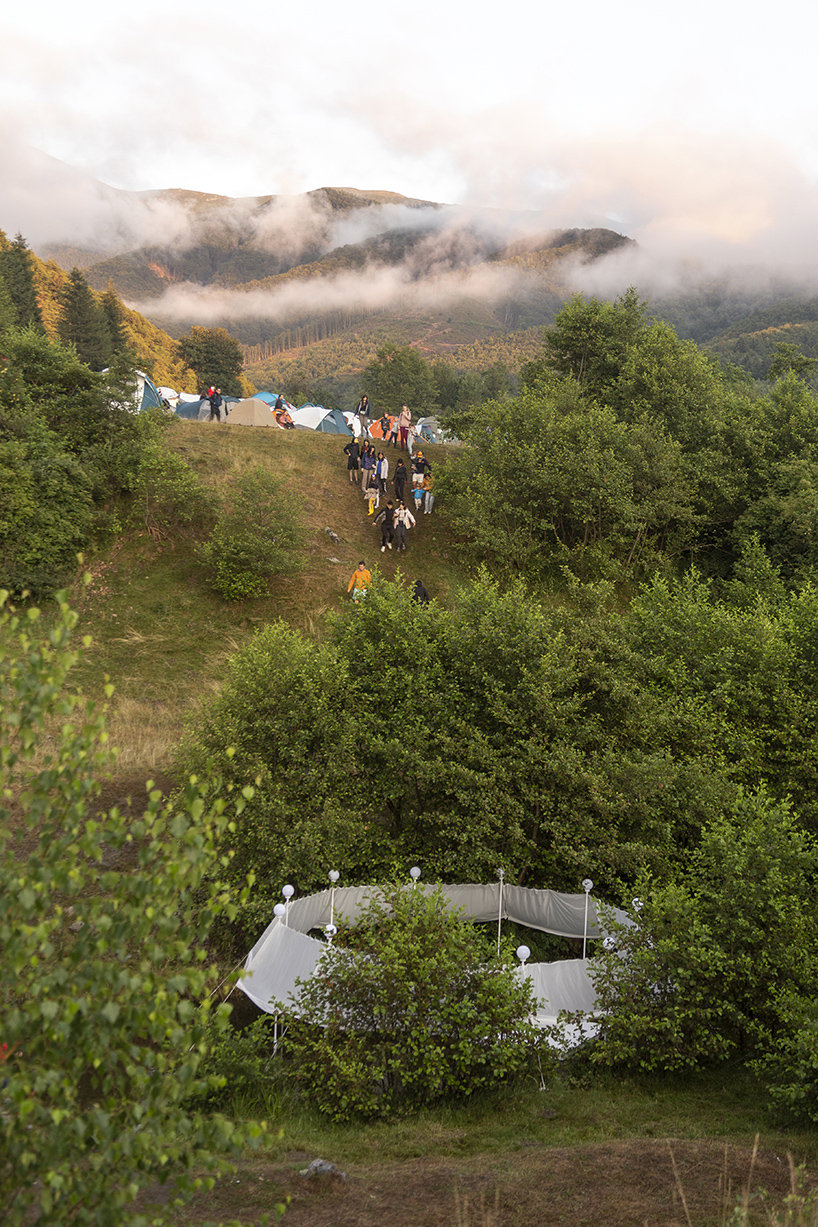
Within the framework of the “Făgăraș Fest” held in the heart of the Romanian nature, the creative design group “atelier VRAC” unveiled its temporary installations that merge sophisticated architecture with deep environmental awareness. This artistic work is erected on the banks of the “Moașa Sebeșului” River, a tributary of the Sebeș River in the Făgăraș Mountains, acting as a bridge connecting humans and nature, and delivering a vibrant aesthetic and ecological message.
Circular Design: Architecture that Mimics Nature
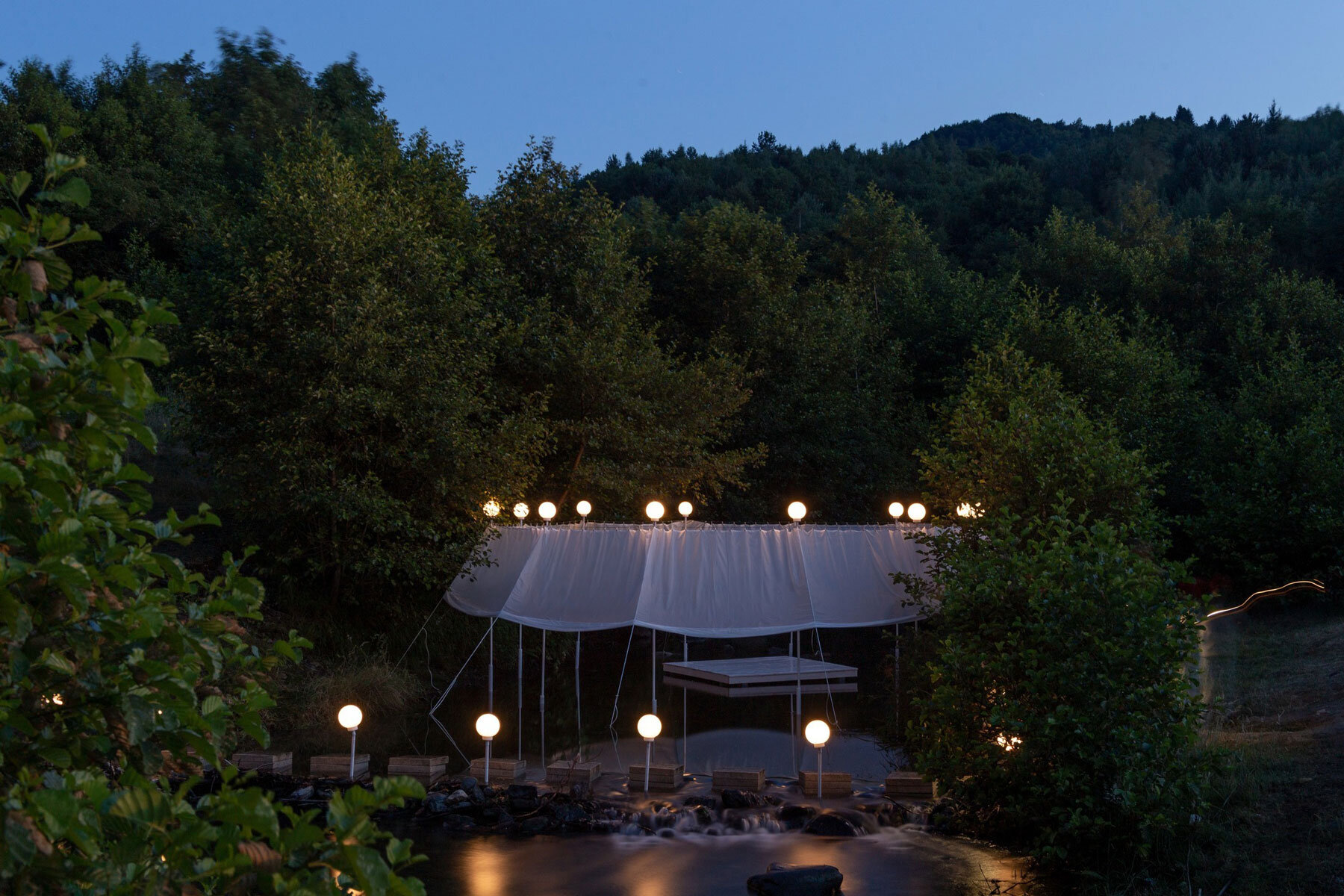
The installation takes the form of a precise circle, placed directly within the riverbed, creating an exceptional visual effect. This circular structure forms clear geometric boundaries that transform the river area into a temporary “open-air room,” redefining the river’s linear space and giving it an intimate, human character. This design allows water to flow freely beneath the structure, emphasizing respect for the river’s natural flow without obstruction.
Structural Elements: Lightness and Material Integration
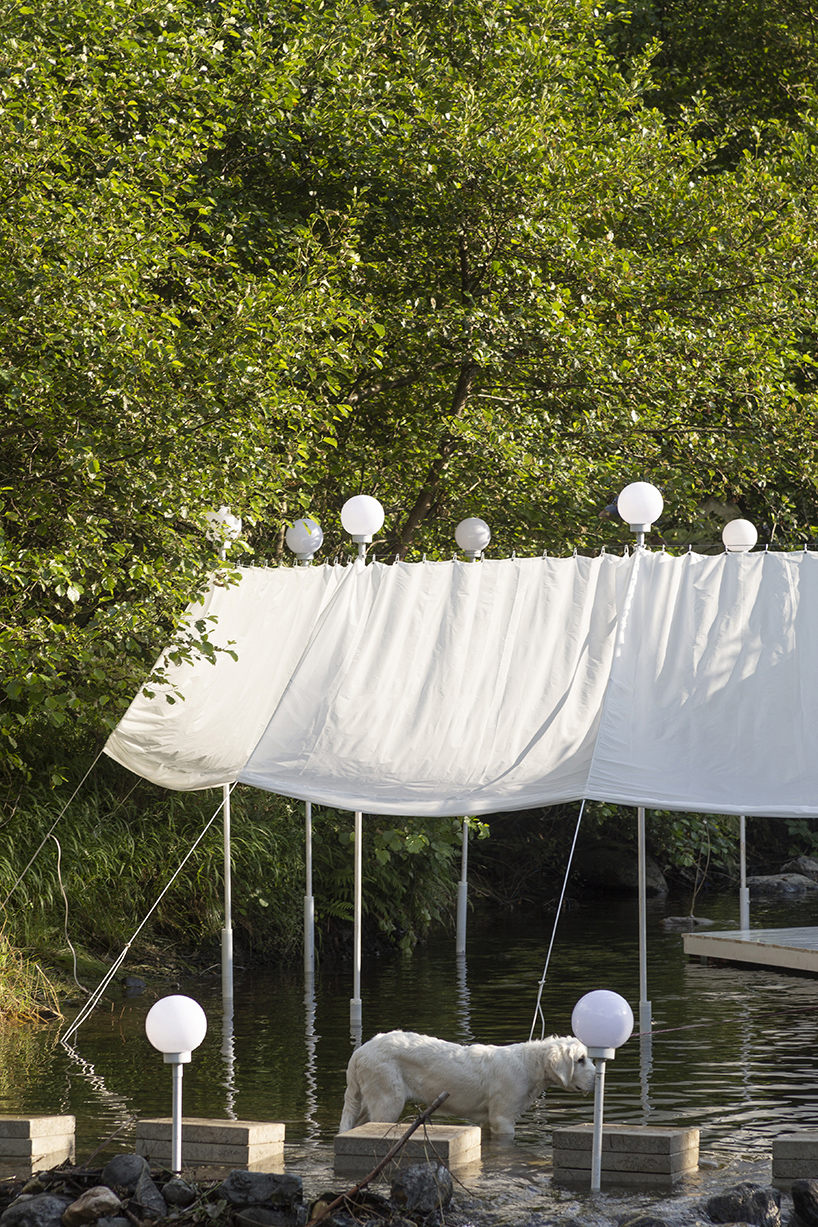
The structure consists of a series of slender vertical elements made from lightweight materials, topped with solar-powered light globes. These globes illuminate at night, providing soft lighting that preserves the natural ambiance of the place while ensuring visibility for visitors. Additionally, a light textile canopy is suspended above the structure, forming a permeable roof that sways with the river breeze and gently touches the plants on both banks, as if embracing the surrounding nature.
User Experience: Context-Dependent Interaction
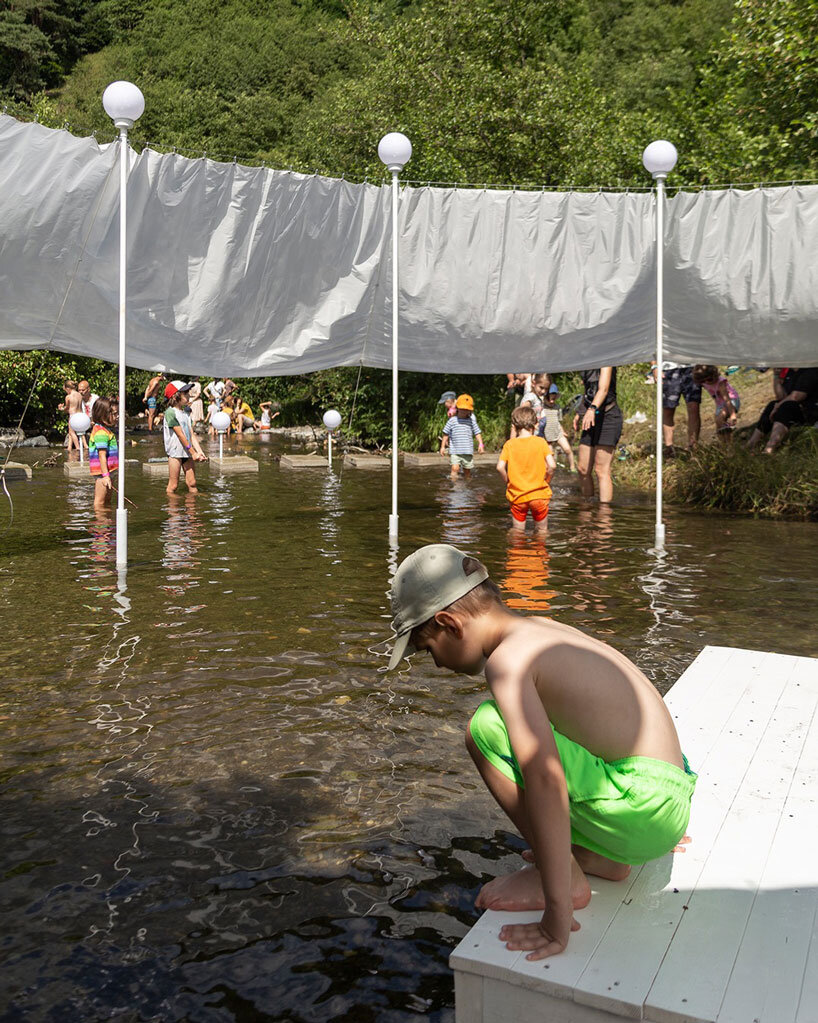
The experience of entering the installation’s space varies according to the visitor’s characteristics. Children can easily pass under the textile canopy, while adults must bend slightly to enter, adding an element of challenge and fun to the experience. Inside the circle, an off-centered, angled wooden platform can only be reached by stepping into the river water, creating a unique moment of pause and meditative relaxation amidst the river’s flow.
The Narrow Crossing: A Connection Between Two Banks
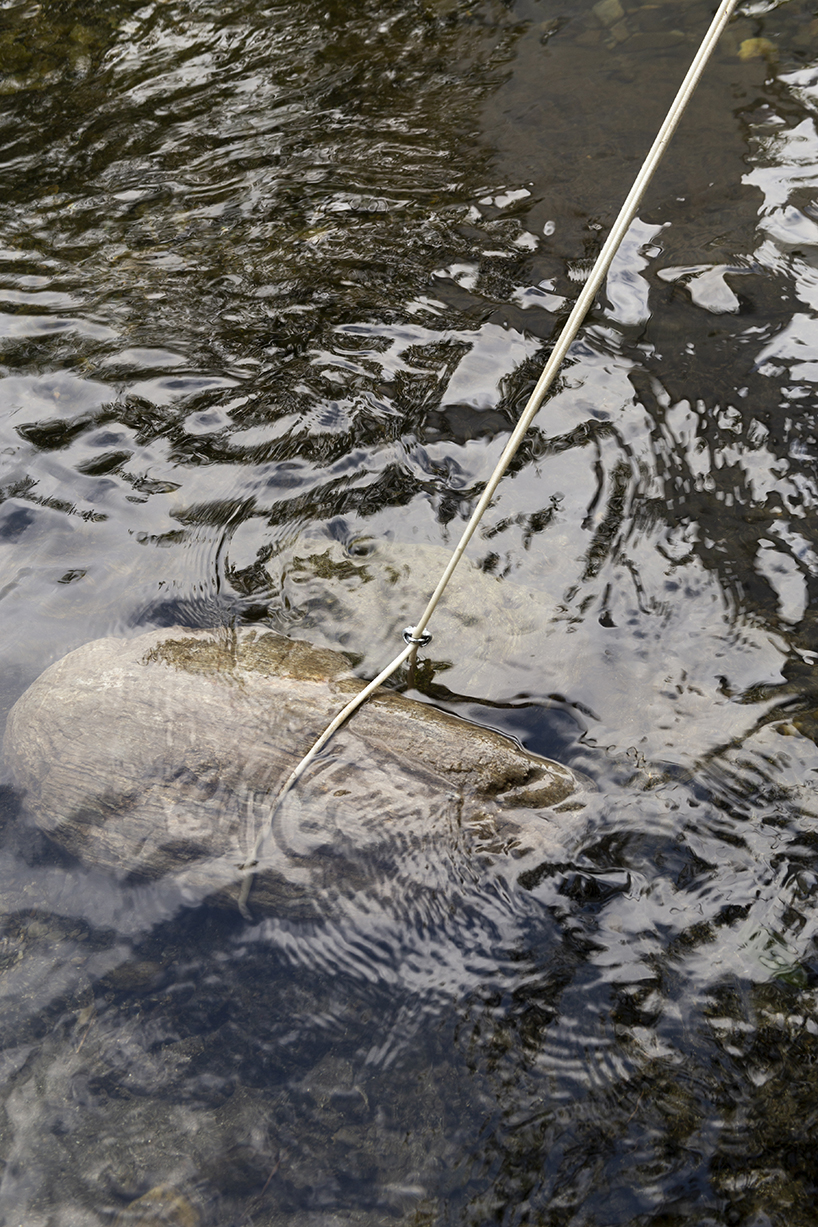
Alongside the circular structure, the operators designed a narrow river crossing consisting of a series of stones placed at intervals suitable for human strides. This crossing encourages visitors to move between the festival’s main camping area and the riverbank in a deliberate and conscious manner, enhancing harmony with the surrounding environment.
The Environmental Message: Design that Serves Nature
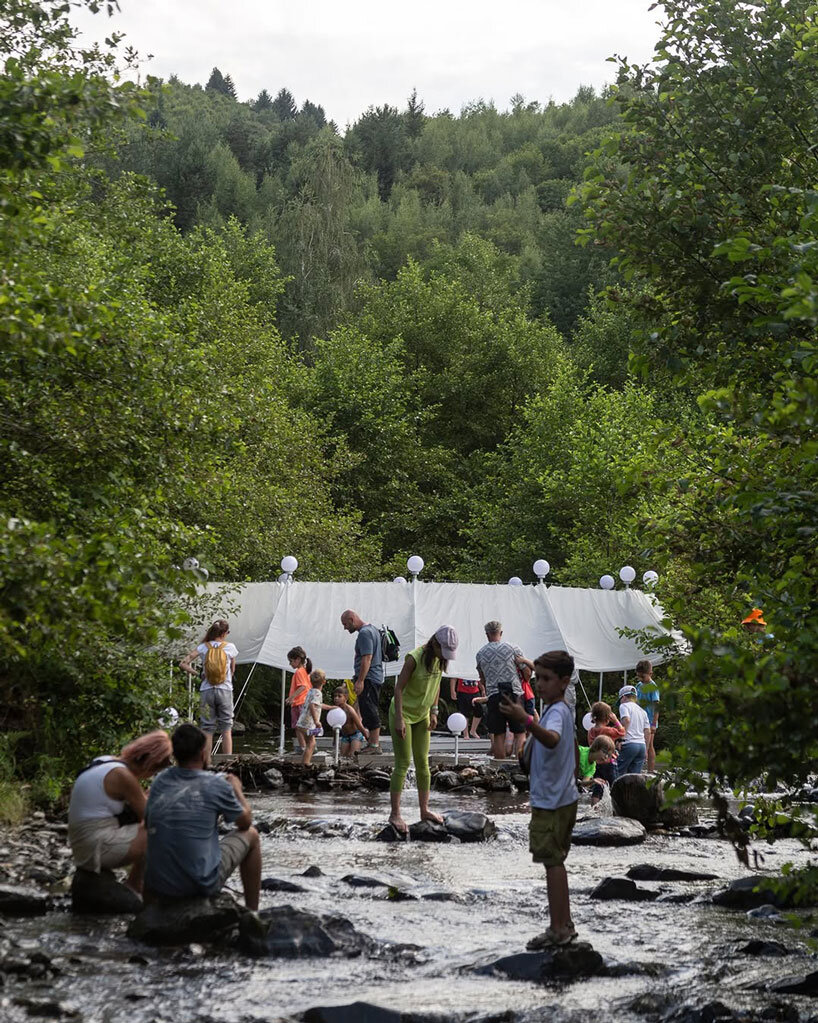
This installation is part of the “Făgăraș Fest” organized by the “Foundation Conservation Carpathia,” aiming to raise awareness about the importance of protecting the Făgăraș Mountains as a national park and to highlight the cultural and natural potential of the local community. This work is a response to the increasing pressures faced by mountain rivers due to the development of micro-hydropower plants, chaotic construction, and waste dumping. Through its geometric clarity, lightweight materials, and integration with natural flows, the installation activates the site without altering it, presenting design as an effective tool for awareness and the preservation of fragile environments.
Conclusion: Architecture that Leaves No Trace Except in Awareness
This temporary installation demonstrates how architecture can be a means of enhancing environmental awareness without harming nature. Through a design that respects and integrates with the river’s dynamics, the visitor can perceive the beauty of nature and the importance of its preservation in an experience that combines visual excitement with intellectual depth.
✦ ArchUp Editorial Insight
The “atelier VRAC” project presents a temporary circular architectural intervention within a riverbed, aiming to reshape the visitor’s perception of the natural landscape and stimulate dialogue about the preservation of mountain rivers. From a critical perspective, and despite the project’s claim of not altering the site, the mere introduction of a fixed circular structure—even if temporary—into a naturally dynamic and changing river ecosystem constitutes a modification of the sensitive ecological system. The intervention raises questions about the feasibility and ethics of direct physical construction within the watercourse itself, rather than working on its banks, which could disrupt delicate aquatic habitats even if it appears harmless to the human eye. By focusing on the human aesthetic experience, the design overlooks the ecological complexity of the river as a living entity, potentially weakening its core conservation message. However, the project’s strength remains in its successful creation of a powerful contemplative moment that pushes the visitor to recognize the beauty and tranquility of a river worth protecting, using architecture as a means for emotional provocation and environmental awarenessaryl
Brought to you by the ArchUp Editorial Team
Inspiration starts here. Dive deeper into Architecture, Interior Design, Research, Cities, Design, and cutting-edge Projectson ArchUp.