A House with an Inverted Roof: Fala Atelier’s Playful Suburban Experiment

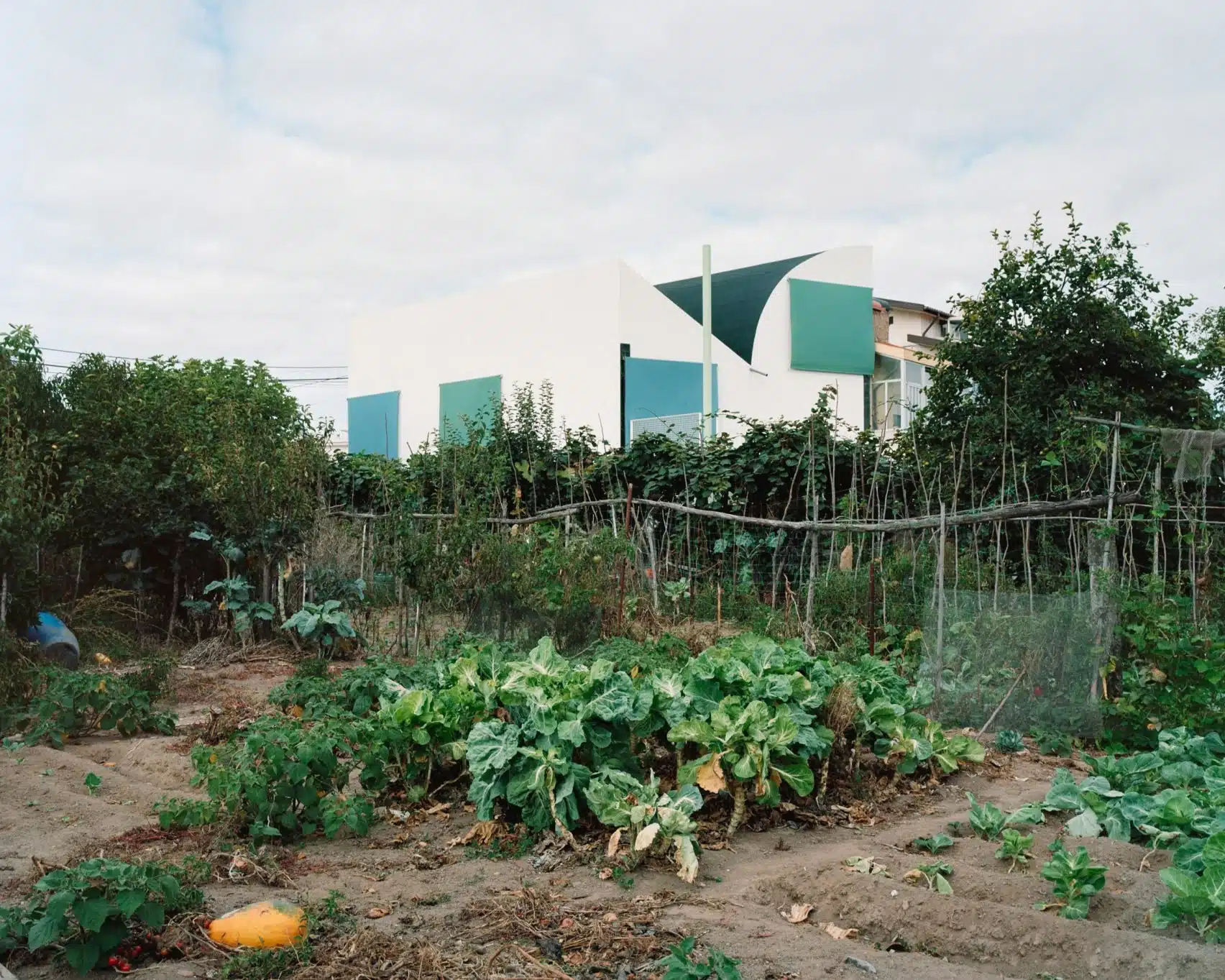
Located in Matosinhos, just outside Porto, A House with an Inverted Roof by Fala Atelier challenges the uniformity of suburban housing with a bold architectural gesture. The three-storey residence is topped with a sculptural roof that flips the traditional pitch upside down, dividing the volume into two halves: one sloping and one curved. Round and square windows punctuate the facade, shaded by brightly colored blinds in green and blue. The project is at once playful and critical, using form and detail to reimagine what domestic architecture can look like in a setting marked by repetition and conventionality.
From the street, the house immediately stands out. Its glazed ground floor creates a light base for the heavier sculptural volumes above. Inside, the plan is disrupted by painted green columns that not only support the structure but also create unexpected interruptions in circulation. These interventions show how structural elements can double as spatial devices, introducing tension and humor into daily life. By combining exposed concrete, marble, and glass brick with bold colors, the architects developed a collage-like palette that connects the building’s form and materiality. This project exemplifies how architecture can resist monotony through experimentation while still addressing domestic needs.
Design Concept and Exterior Form
The most striking feature of A House with an Inverted Roof is its distinctive roofline. Instead of a conventional ridge, Fala Atelier employed an inverted pitch that generates two sculptural profiles. This roof strategy not only reshapes the silhouette but also produces differentiated interiors. The curved section creates an intimate vaulted space, while the sloped side allows for a dramatic double-height living area.
The facade reflects this duality. Large geometric windows, some circular and others rectangular, create a playful rhythm. Colorful blinds add a dynamic layer of detail, softening the geometry with everyday practicality. On the ground level, glazed walls open the communal spaces toward the garden, emphasizing transparency and fluidity between interior and exterior.

Interior Layout and Circulation
The house’s internal organization emphasizes openness and surprise. The ground floor hosts the living, kitchen, and dining spaces, connected directly to the outdoor garden through sliding glass doors. Instead of following conventional symmetry, the architects positioned concrete columns in seemingly arbitrary locations. Painted in pale green, these columns obstruct movement and force occupants to navigate around them. In one case, a column continues through a terrace to support nothing at all, functioning as an architectural joke that questions the necessity of structural logic.
On the first floor, a secondary living area takes advantage of the sloped roof to achieve a double-height ceiling. Meanwhile, the master bedroom sits beneath the curved vaulted roof, creating a sense of enclosure and calm. This juxtaposition of openness and intimacy demonstrates how geometry can modulate spatial experience.
Materiality and Finishes
The material palette is both raw and expressive. Exposed concrete is paired with polished marble and translucent glass bricks. Timber adds warmth, while the painted green columns connect with the colorful blinds on the facade. Fala Atelier intentionally used this combination to highlight the sculptural qualities of the form. Instead of hiding structural elements, the architects treated them as part of the aesthetic composition.
| Material | Application | Architectural Role |
|---|---|---|
| Concrete | Floors and structural columns | Provides strength and defines space with bold presence |
| Marble | Interior finishes | Adds texture and refinement |
| Glass Brick | Side wall surface | Allows light transmission while creating a textured facade |
| Timber | Interior fittings | Brings warmth and contrast to raw concrete |

Architectural Analysis
The logic of the design rests on inversion and disruption. By flipping the traditional pitched roof, Fala Atelier creates a sculptural silhouette that draws attention within a monotonous suburban context. This inversion transforms the roof from a passive cover into an active generator of interior experiences. The sloped side fosters openness and verticality, while the curved side produces enclosure and intimacy.
Material use reinforces this duality. Concrete’s massiveness contrasts with the translucent delicacy of glass brick. Marble and timber balance austerity with domestic warmth. The playful use of color ties the exterior and interior together, while the misplaced columns challenge the conventional relationship between structure and function. Contextually, the house stands as both an anomaly and a provocation, asking whether suburban housing must follow established patterns or can embrace experimentation.
Project Importance
The project offers multiple lessons for architects and designers. First, it demonstrates how domestic architecture can resist visual monotony through form-making without sacrificing functionality. Second, it shows how structure can be reinterpreted as a spatial and aesthetic tool, not merely a technical necessity. Third, the project contributes to the discourse on suburban housing typologies, suggesting that repetition does not have to equate to uniformity.
For architectural thinking, A House with an Inverted Roof reminds practitioners of the value of humor, experimentation, and collage in residential design. It repositions the suburban home as a site for innovation rather than conformity. Its contribution is timely, as architects grapple with the challenge of making housing both expressive and livable in environments where efficiency and standardization often dominate. This project matters now because it asks how individuality and imagination can coexist with everyday domestic needs.

✦ ArchUp Editorial Insight
The project stands out for its inverted roofline and collage-like use of materials. The mix of exposed concrete, glass bricks, and bright colors produces a bold suburban statement. Yet the intentional placement of columns, some seemingly purposeless, raises questions about whether disruption always enhances daily living. This approach might intrigue architects but complicate routines for residents. Still, the house adds value by opening dialogue on how suburban homes can escape monotony. Its playful sculptural quality suggests a future where domestic design allows more creativity and experimentation.
Conclusion
A House with an Inverted Roof by Fala Atelier demonstrates that suburban housing can transcend monotony through bold gestures, experimental use of materials, and playful disruption of conventions. The project uses form not only to shape exterior identity but also to generate varied interior experiences. Its inverted roofline produces both openness and intimacy, while its material palette blends strength with warmth. By questioning the role of structure and challenging assumptions about suburban homes, the project makes a statement about the possibilities of domestic architecture.
In broader terms, the house underscores the importance of imagination in everyday living environments. Suburbs often prioritize repetition and efficiency, but this project shows how individuality and architectural exploration can enrich domestic life. For architects, the lesson is clear: innovation can emerge even in the most ordinary contexts when form, material, and humor are used with intent. A House with an Inverted Roof not only redefines what a suburban home can look like but also sparks reflection on how design shapes the way we live now and in the future.

Explore the Latest Architecture Exhibitions & Conferences
ArchUp offers daily updates on top global architectural exhibitions, design conferences, and professional art and design forums.
Follow key architecture competitions, check official results, and stay informed through the latest architectural news worldwide.
ArchUp is your encyclopedic hub for discovering events and design-driven opportunities across the globe.
Brought to you by the ArchUp Editorial Team
Inspiration starts here. Dive deeper into Architecture, Interior Design, Research, Cities, Design, and cutting-edge Projects on ArchUp.