A Modern Mountain Cabin in Sapphire: Blending Nature and Japanese Design in North Carolina

I
The “Sapphire” mountain cabin challenges traditional concepts of rustic architecture, presenting a contemporary model that merges Japanese and Scandinavian influences into an architectural composition harmonious with its natural surroundings. Designed by Rusafova-Markulis Architects as a serene retreat for a young family, it achieves a delicate balance between aesthetic simplicity and practical functionality, providing an ideal base for family comfort and adventure.
The Unique Architectural Composition and Spatial Distribution
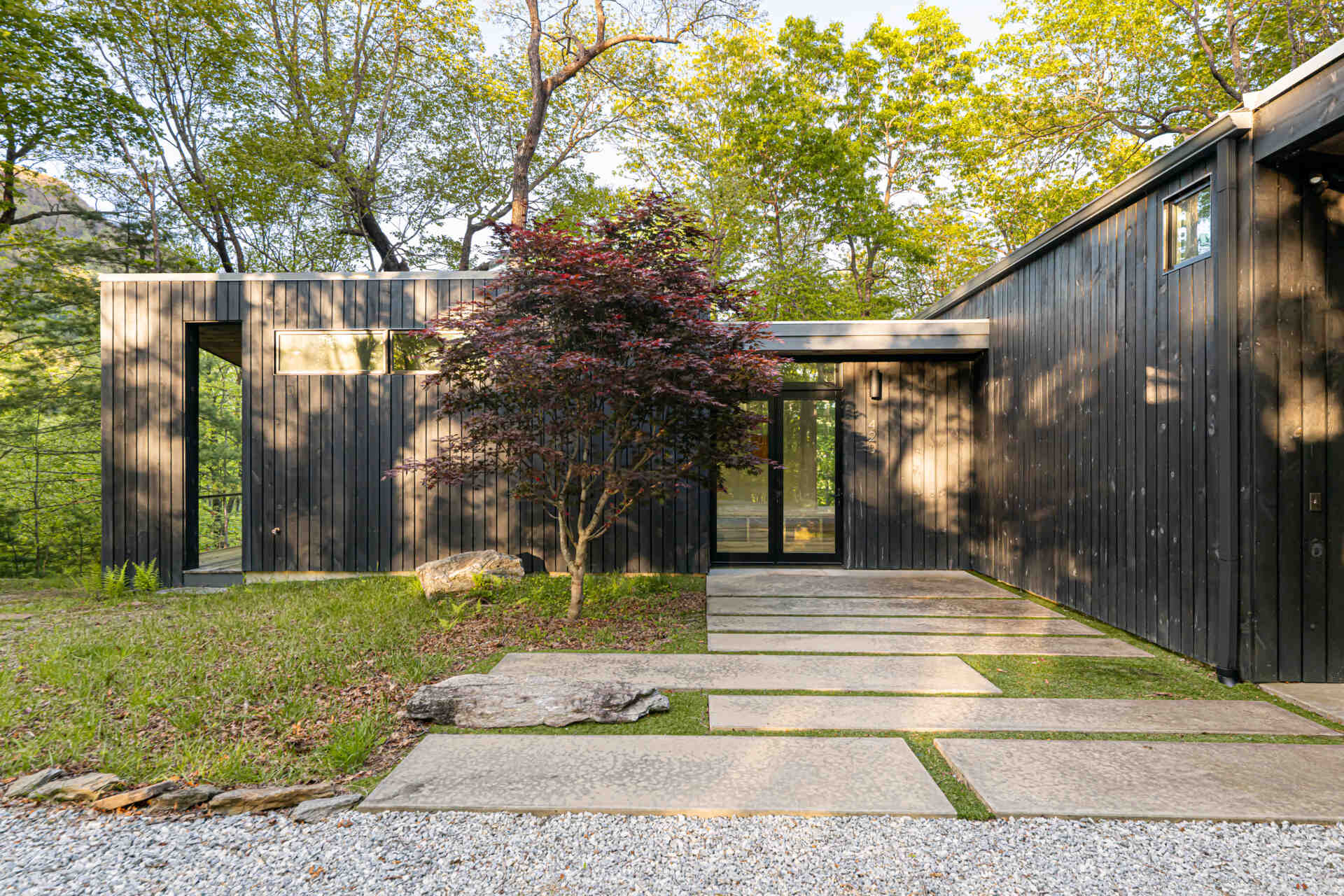
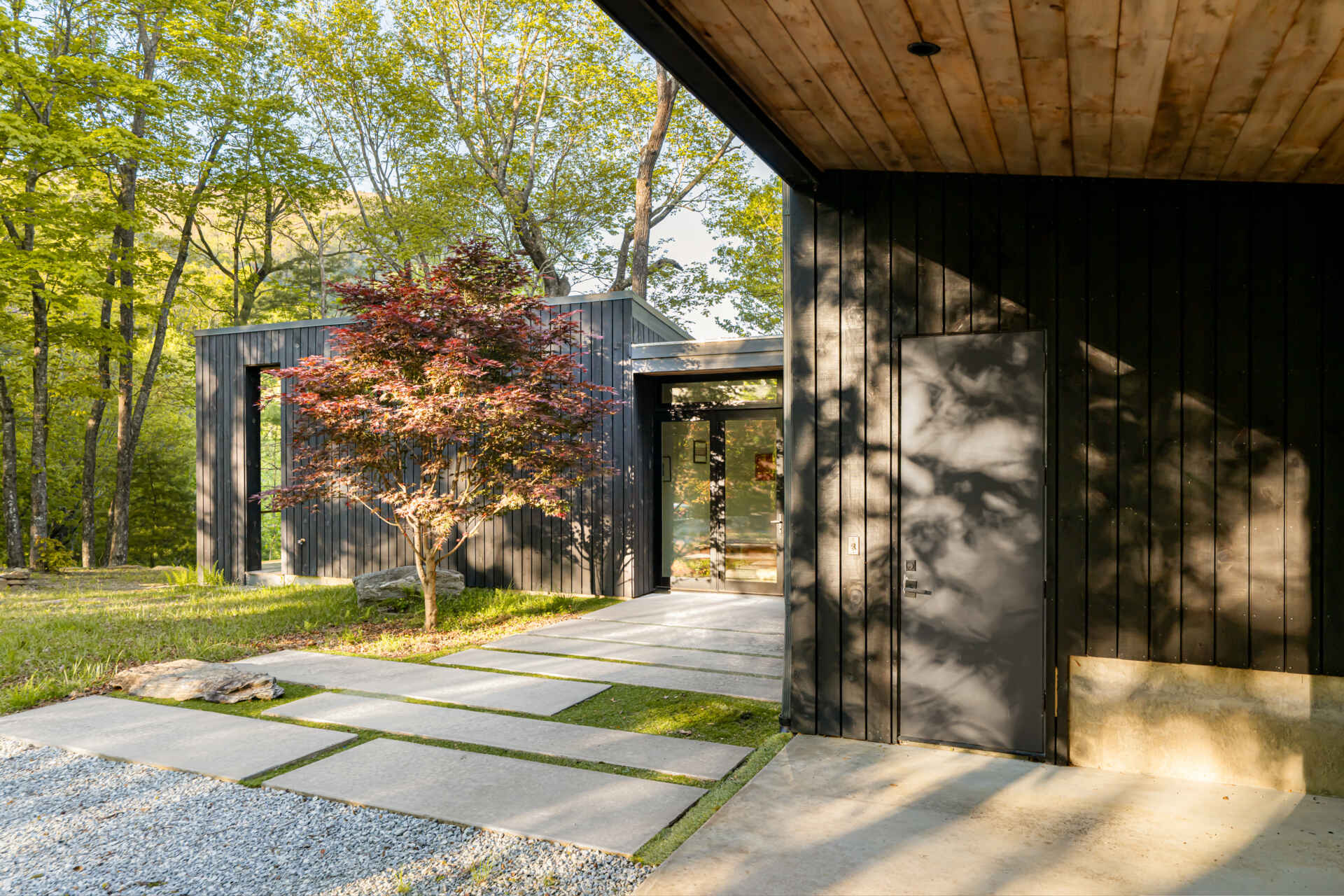
The house stands on a 5-acre parcel divided by a logging road, forming a distinctive architectural composition based on two perpendicular wings that enclose a comfortable interior courtyard. This dual-wing design not only provides privacy for the residence but also redefines the relationship between interior and exterior space, with the courtyard becoming the home’s pulsating heart—a transitional zone suspended between the wings that connects the family to the surrounding nature.
The Exterior Facade and Material Selection
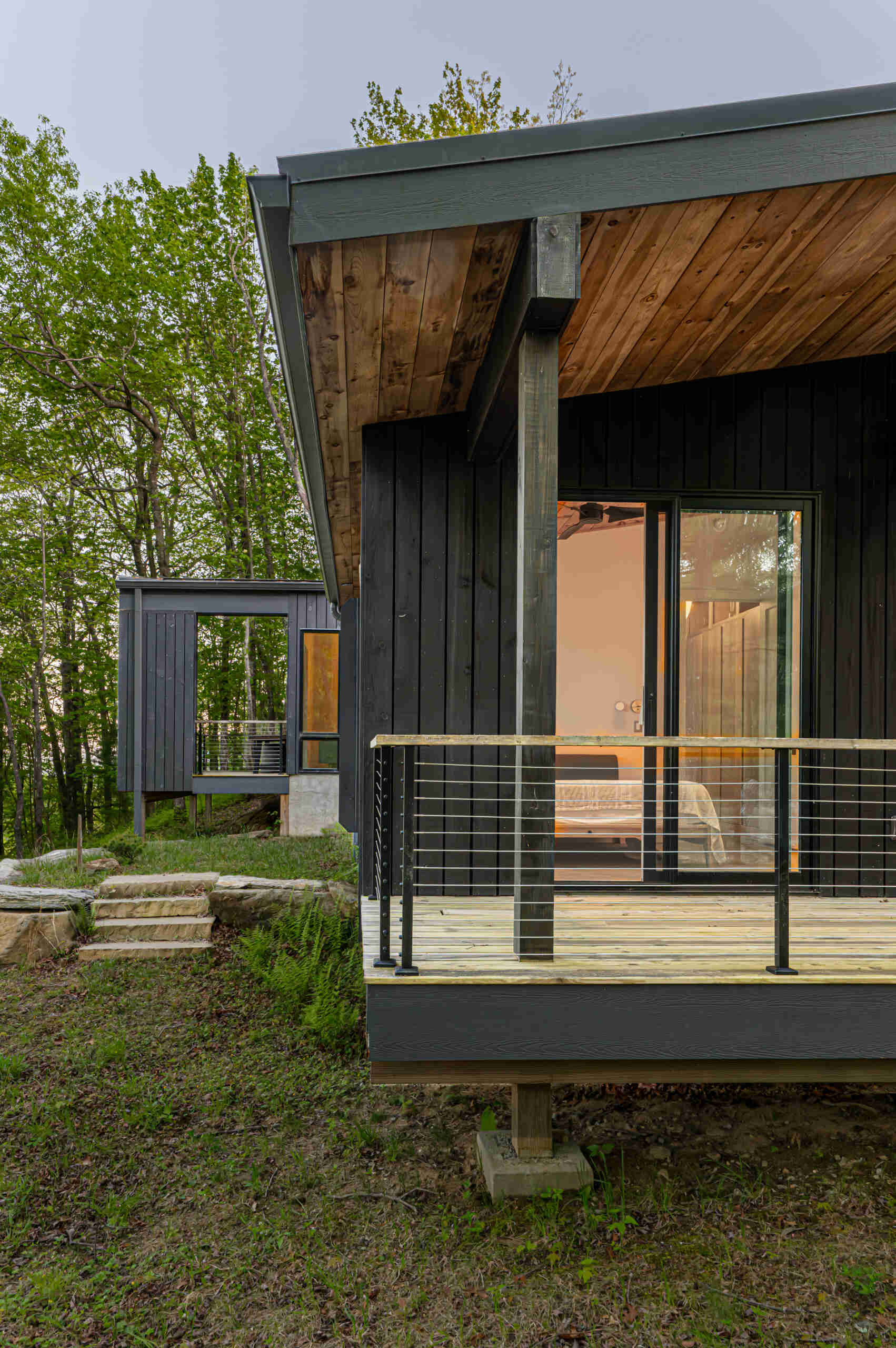
The cabin’s exterior facade features rough, vertical pine boards stained black, creating a dramatic contrast with the site’s surrounding greenery. The choice of black is not merely an aesthetic decision but also a practical one, allowing the structure to blend with the natural shadows of the forest and reduce the visual impact of the architectural mass on the natural landscape. This coating also protects the wooden structure from the elements while preserving the organic appearance of the material.
Interior Layout and Circulation
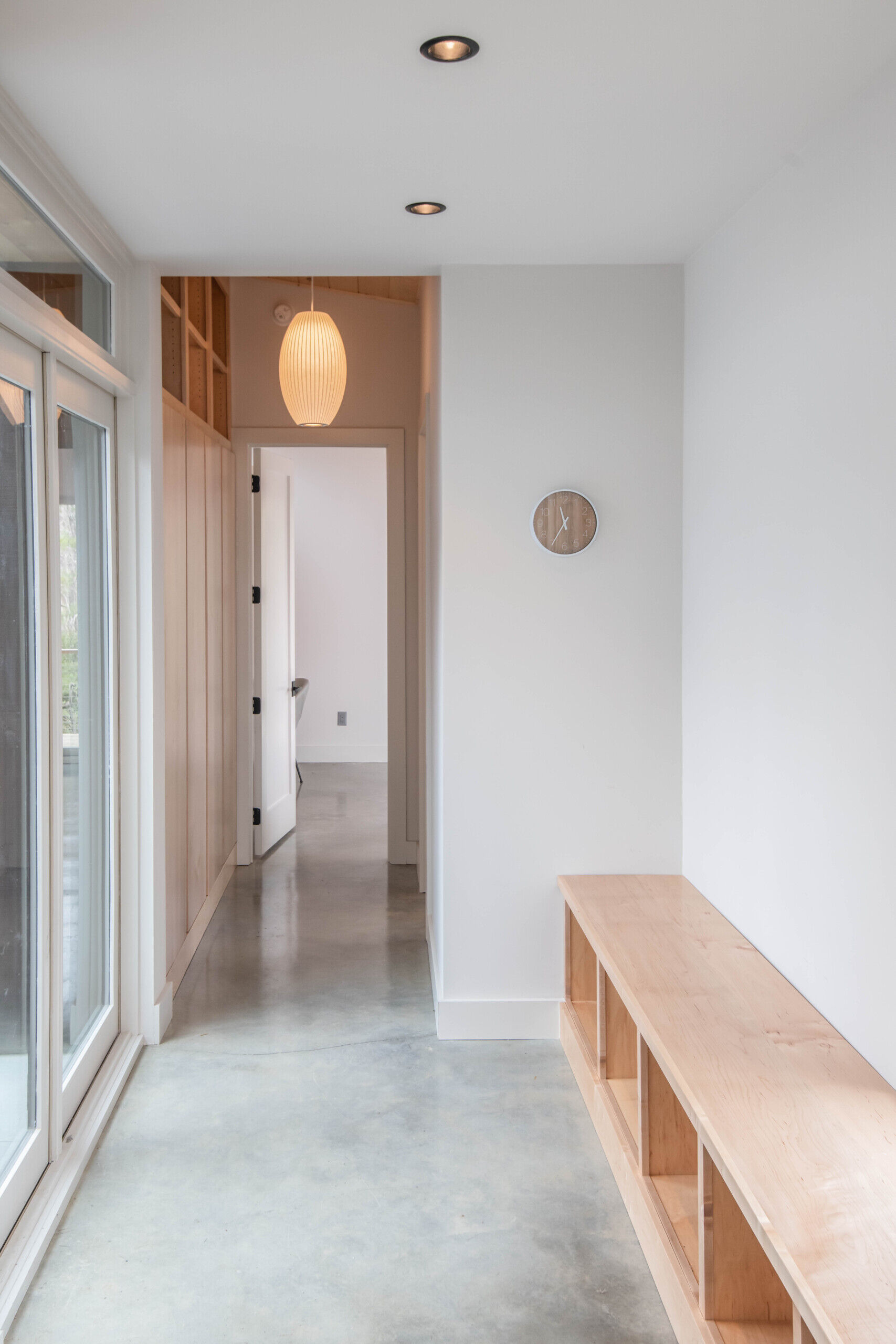
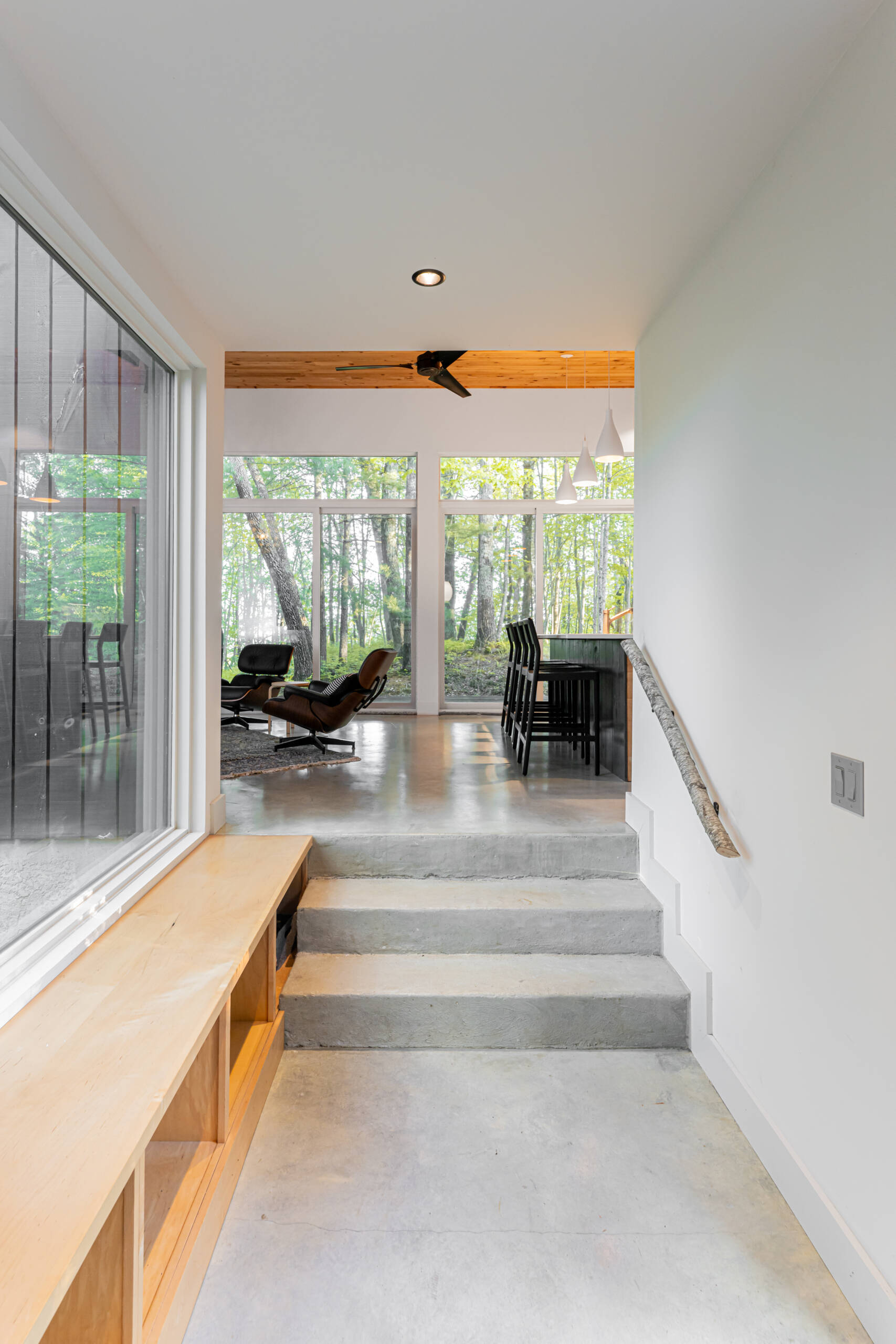
The interior design is characterized by polished concrete floors and pine plank ceilings, creating a clean aesthetic that reflects the Japanese philosophy of simplicity and functionality. Space flows seamlessly through a main hallway that connects the public and private areas. The continuous concrete flooring enhances the sense of spaciousness and continuity, while the built-in maple storage maintains the visual cleanliness of the spaces.
The Multi-Functional Garage: A Model of Spatial Efficiency
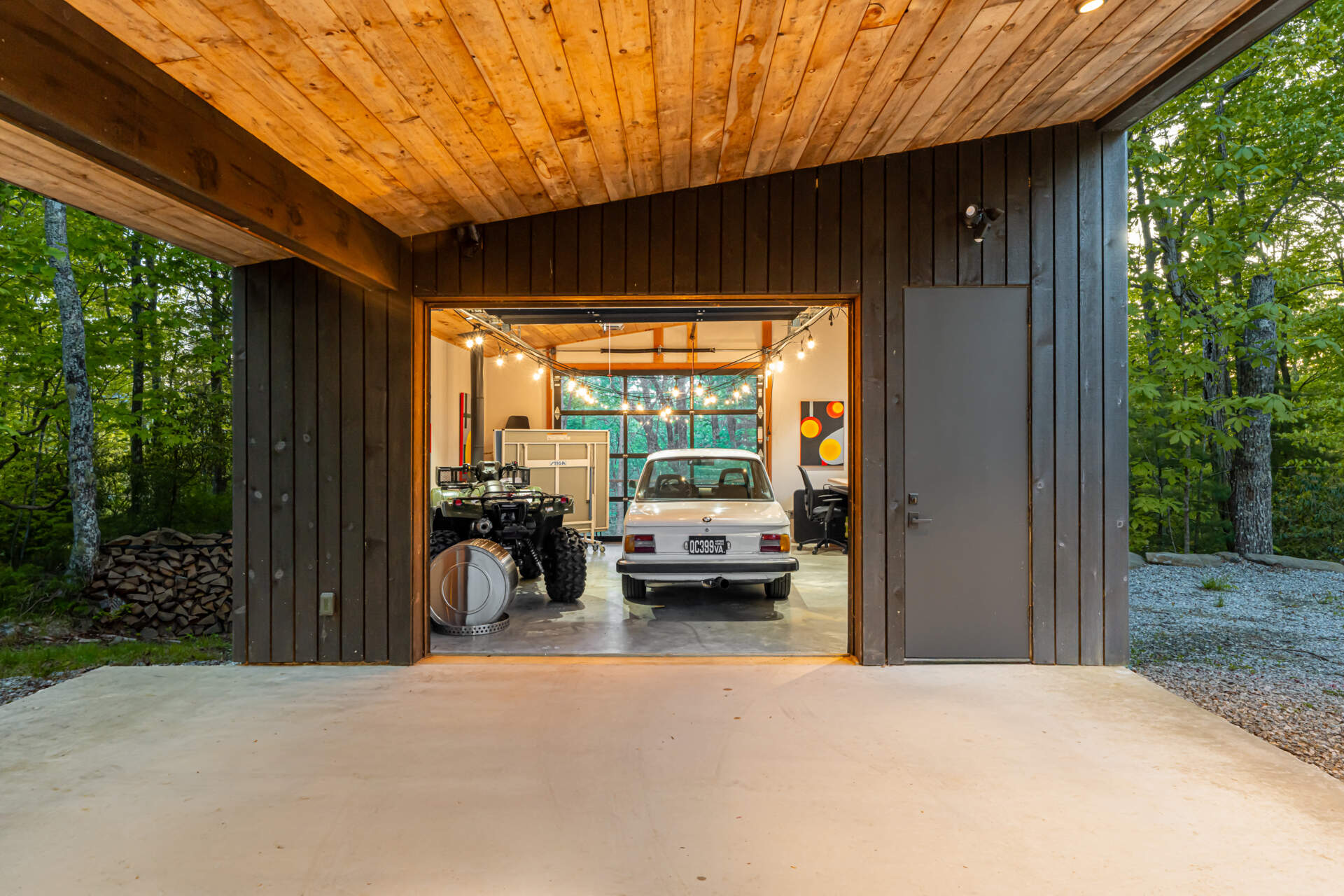
The garage occupies a strategic position along the logging road, designed as a flexible space serving as a work area, traditional garage, and a zone for creative projects. This functional versatility maximizes the use of the available area while maintaining an architectural identity consistent with the rest of the project. Its thoughtful placement makes it a practical entry point to the property without disrupting the visual privacy of the main living spaces.
The Main Entrance and Arrival Experience
The main entrance is located along the east-facing wing, offering a quiet, phased approach separate from the home’s more active living areas. This considered positioning gives the family a sense of gradual transition from public to private space, maintaining privacy and tranquility. The entryway continues the cabin’s minimalist aesthetic, where natural light filters through carefully placed windows, creating a calm atmosphere that sets the tone for the rest of the home.
The Living Room: The Social Heart of the Home
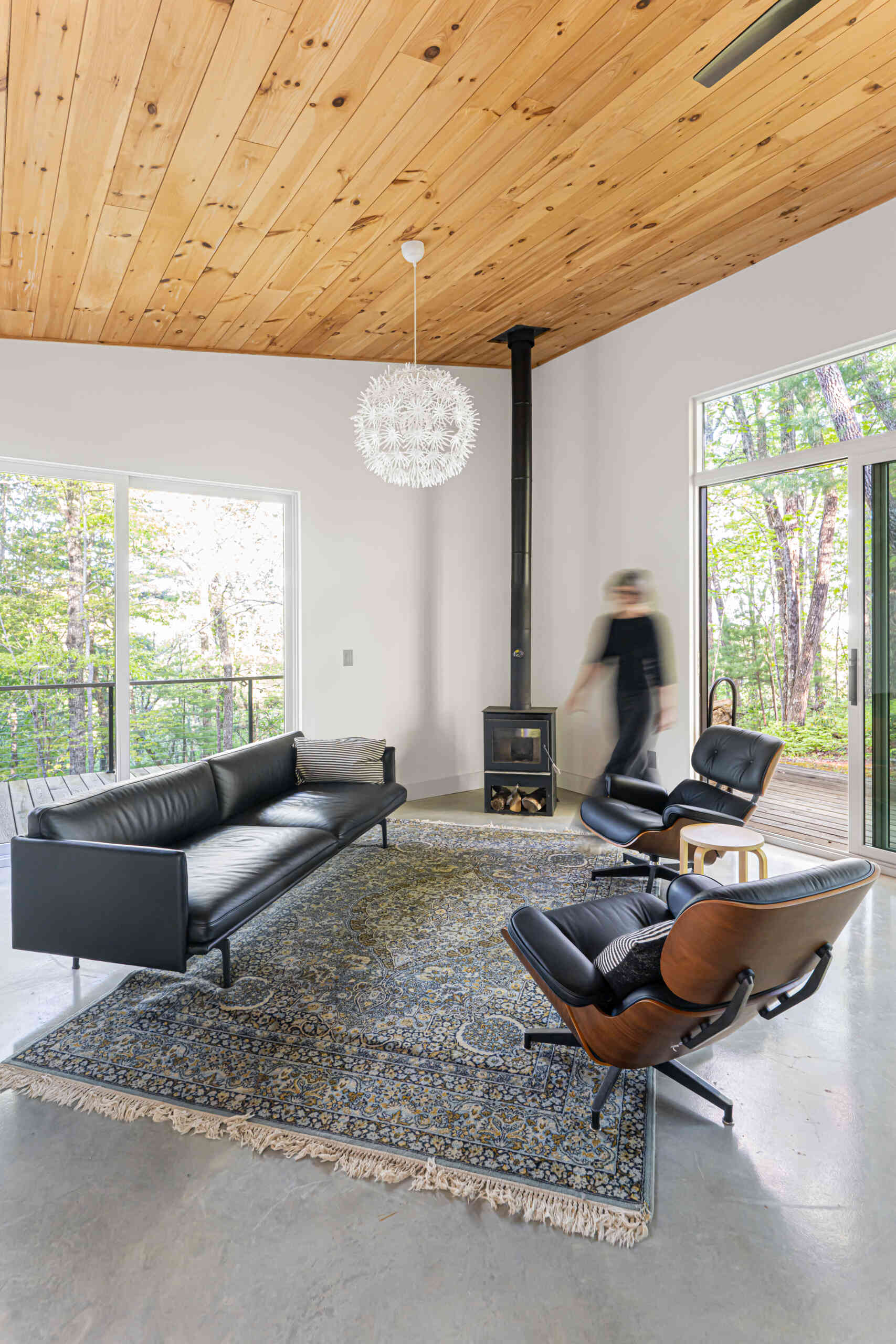
The living room features a central fireplace and opens onto covered decks that frame the surrounding mountain views. The space flows smoothly between indoors and outdoors, making it ideal for family gatherings or quiet evenings. The room’s open-plan design allows for abundant natural light and panoramic views of the landscape while maintaining a visual connection to the interior courtyard.
The Kitchen: Functionality and Simplicity
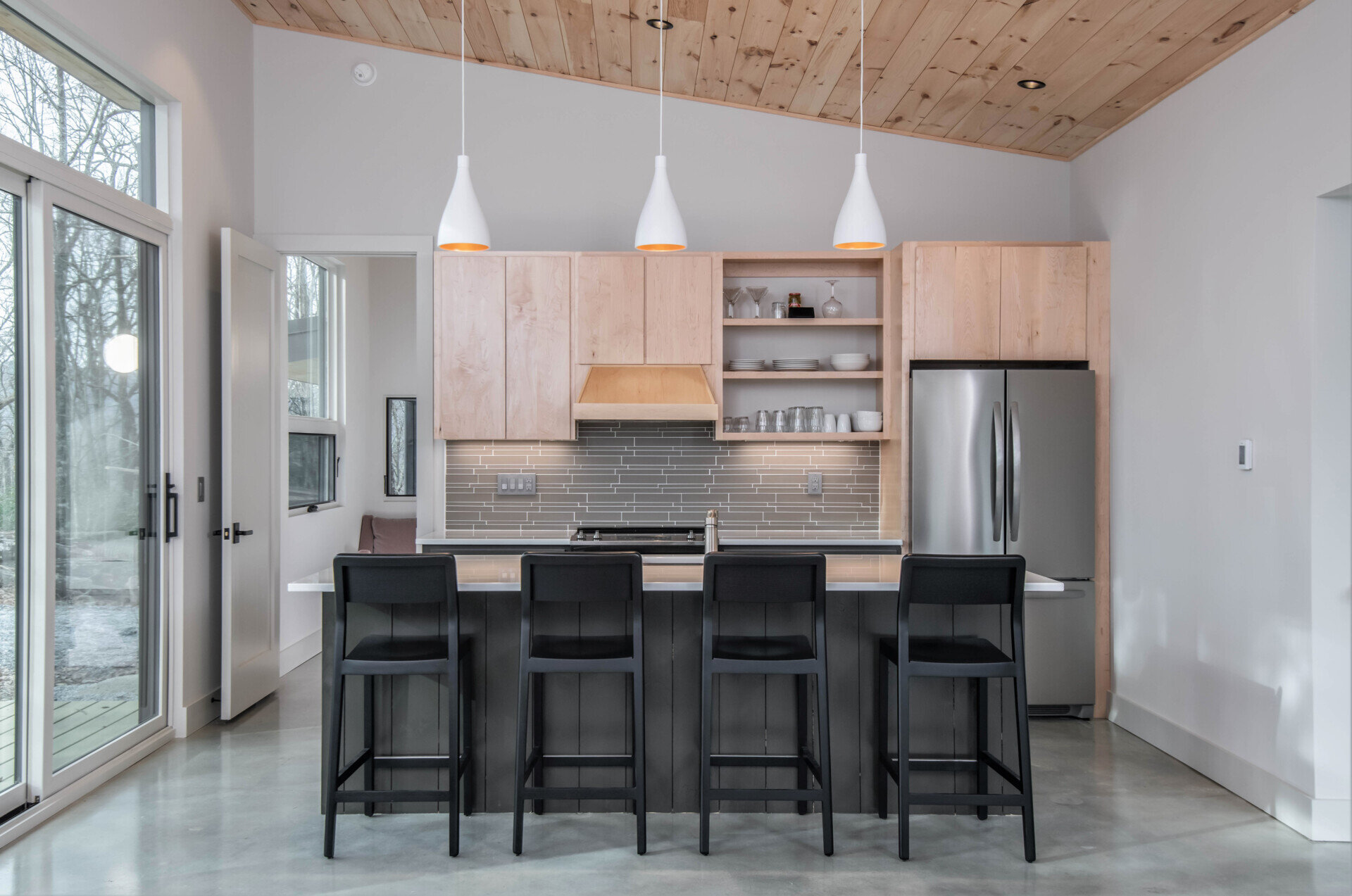
The kitchen reflects the cabin’s overall aesthetic, featuring maple cabinetry and integrated countertops. Its design prioritizes simplicity and functional efficiency, allowing the family to cook, gather, and enjoy meals while constantly engaged with the surrounding natural views. The kitchen’s smart layout ensures easy movement and access while preserving the visual cleanliness that defines the overall design.
The Main Hallway: The Connecting Artery
The intelligently integrated main hallway seamlessly connects the public living areas with the private zones, maintaining the home’s flow while ensuring visual and acoustic privacy. The polished concrete floors and clean finishes extend through this transitional space, reinforcing the cabin’s cohesive aesthetic and creating a continuous, harmonious movement experience.
The Primary Bedroom: A Private Sanctuary
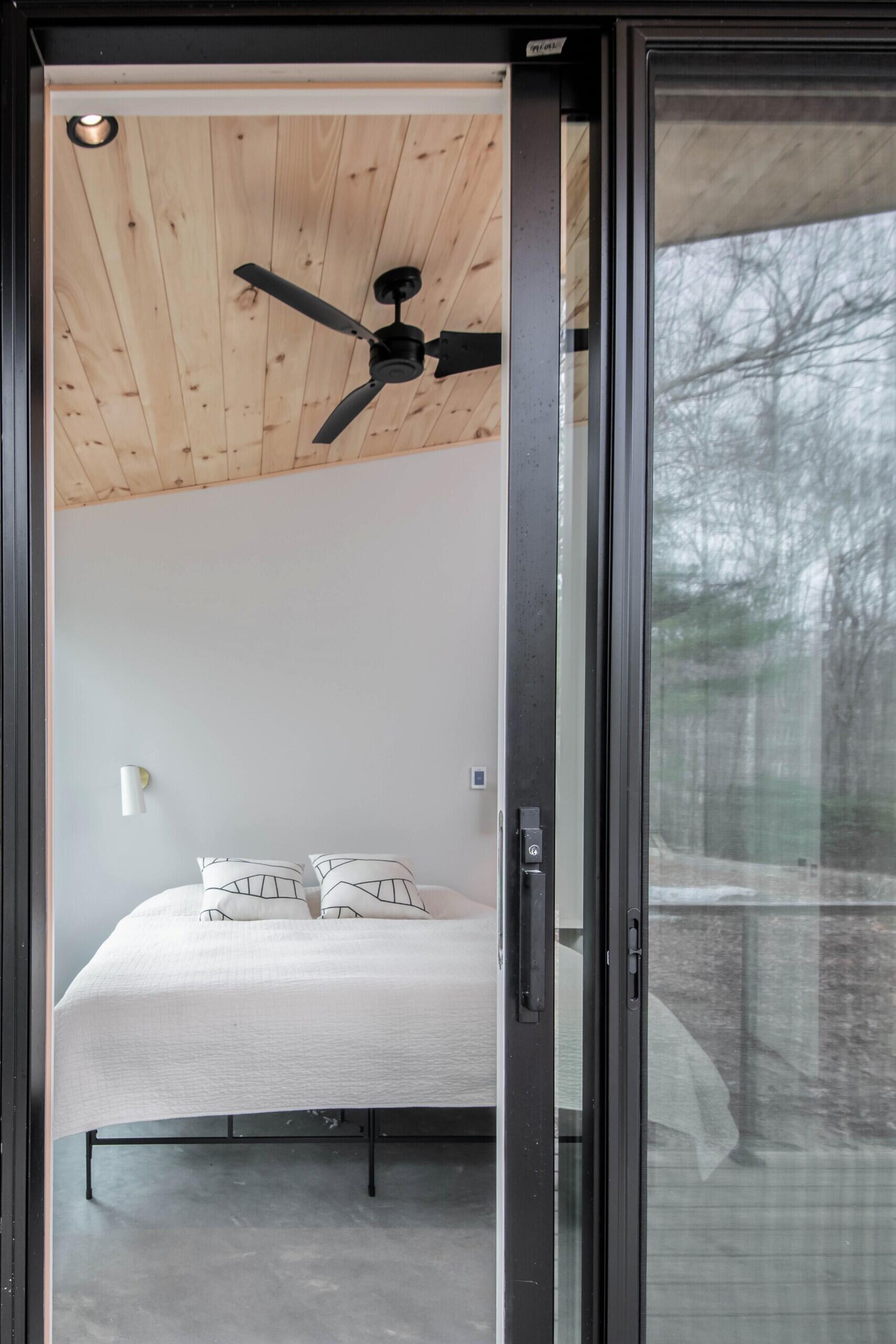
The primary bedroom provides a quiet retreat along the eastern wing. The integrated desk adds multiple functions without compromising the room’s serene ambiance, offering a workspace that blends smoothly with the simple interior. The room’s eastern orientation allows for optimal morning light while maintaining privacy.
The Loft Room: Smart Use of Space
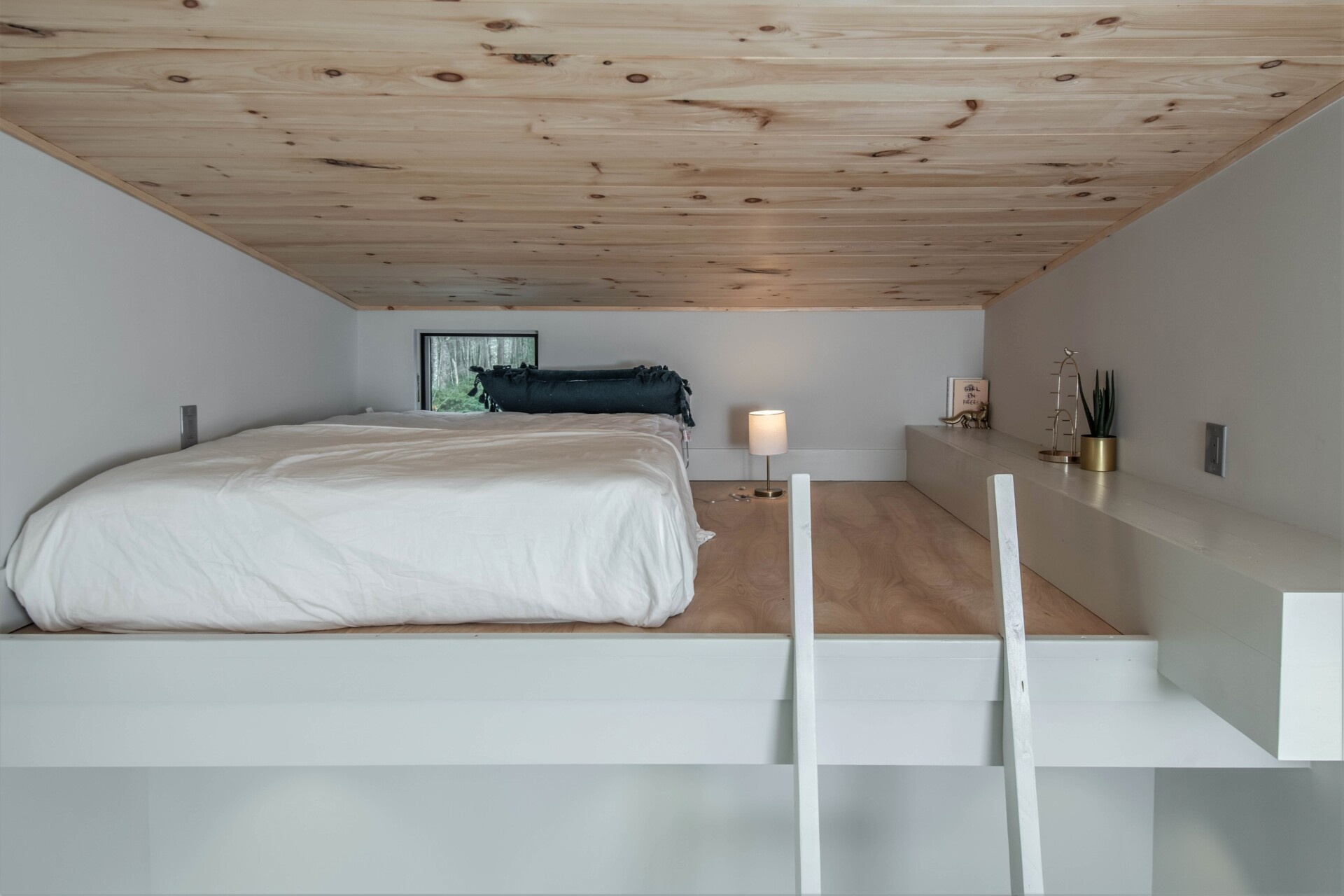
The loft bedroom adds extra sleeping space for the family while maintaining the home’s compact footprint. Its elevated position utilizes the ceiling height to improve ventilation and lighting, providing a different perspective on the surrounding landscape. This section represents a model of spatial efficiency in design.
The Bathroom: Functional Refinement
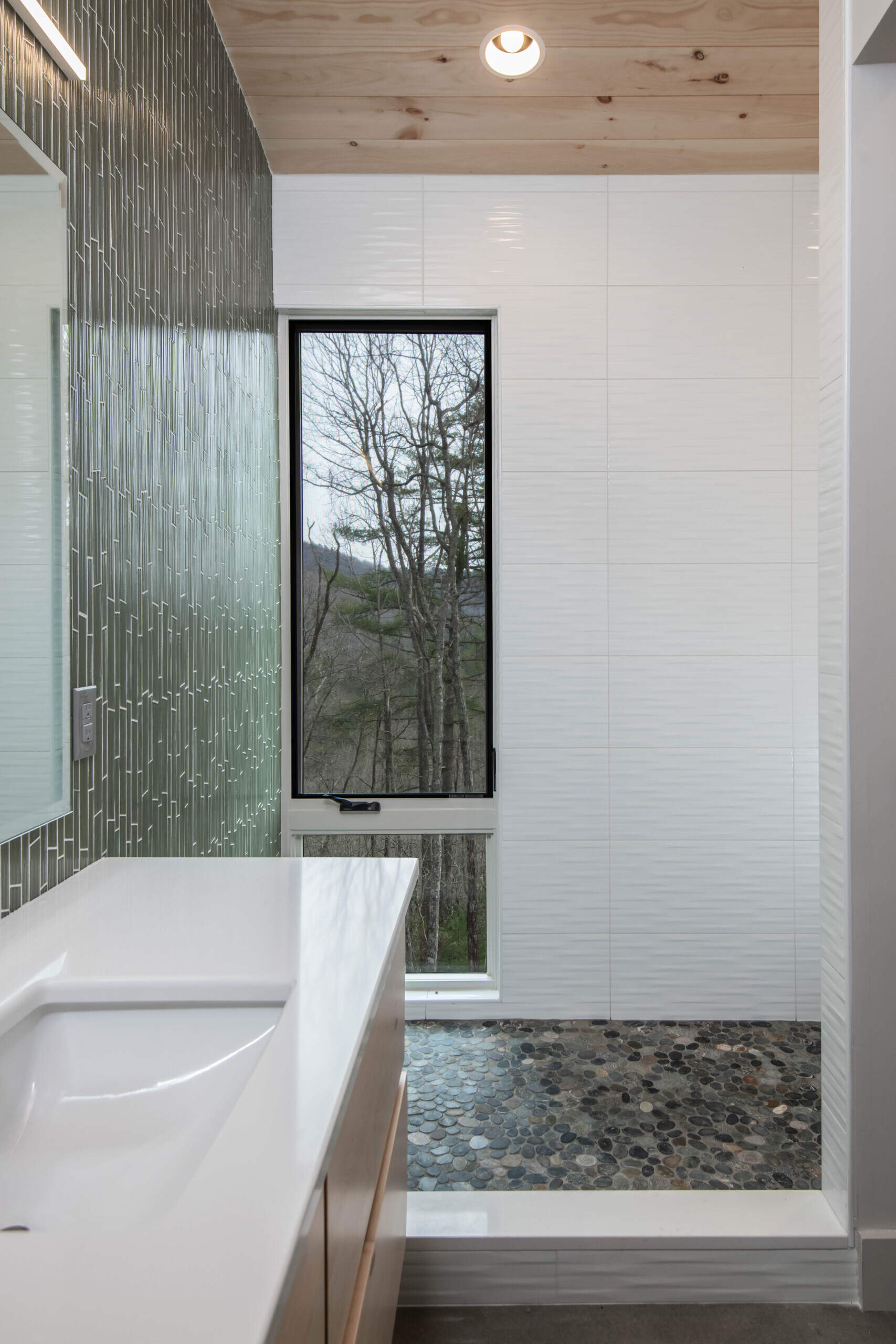
The bathroom features maple wood details, crisp white tiling, and vertical green tiles. It provides a simple, functional space consistent with the overall aesthetic while remaining practical for daily use. The choice of materials and layout ensures durability and easy maintenance while maintaining aesthetic consistency with the other spaces.
The Overall Architectural Plan
The floor plan shows the two perpendicular wings creating a central courtyard, framing both the view of the logging road and the mountains. This dual composition creates a dialogue with the site by selectively opening and closing views, enhancing the living experience and providing a sense of security and belonging to the place.
Conclusion
Rusafova-Markulis Architects have created a thoughtful cabin for mountain modernity that balances simplicity, function, and family life. With clean lines, natural materials, and intelligent planning, this home remains a tranquil space for living, playing, and enjoying the North Carolina mountains, representing a successful model of contemporary architecture in a rural context.
✦ Archup Editorial Insight
The project presents an attempt to integrate Japanese and Scandinavian influences within a mountainous context through a dual-wing composition surrounding a central courtyard. The design raises questions about the effectiveness of polished concrete for thermal insulation in the volatile mountain climate, while the reliance on a black facade color may increase heat absorption during summer periods. The strict, dual distribution of the massing restricts future expansion possibilities and limits adaptability to the residents’ changing needs, and the use of treated black wood raises questions about periodic maintenance requirements in a humid environment. The relationship between the dark mass and the green nature creates a visual sharpness that questions the project’s degree of integration with its natural surroundings. On a positive note, the design achieves a distinguished spatial flow between the interior and exterior through the central courtyard, which functions as an effective transitional zone
Brought to you by the ArchUp Editorial Team
Inspiration starts here. Dive deeper into Architecture, Interior Design, Research, Cities, Design, and cutting-edge Projectson ArchUp.