Architectural Originality on Trial: Authenticity vs. Repetition in Global Icons

What is originality in architecture? And what is faithful evolution?
Zaha Hadid in Miami
In mid-August 2025, I found myself spending the summer in Miami. It was a well-thought-out choice. I stayed at the Fontainebleau, selecting a City View room on the 24th floor. I referred to it as my lighthouse a vantage point to observe the city’s architectural rhythm. From the beach to the pool, to the lively scenes filled with Rolexes, Patek Philippes, bikinis, and curated leisure, I kept escaping back to that high window to meditate on the skyline. One building drew me in relentlessly: the tower designed by Zaha Hadid, One Thousand Museum.
As an architect and an admirer of Zaha’s legacy, I naturally felt a magnetic pull. I toured the building, again and again. But something started to unsettle me. There is a moment every architect must face the moment we interrogate even those we most admire. In 2013, Zaha Hadid’s office participated in the 425 Park Avenue competition with a spectacular, unbuilt proposal. Elements of that conceptual design seem to have reemerged in this Miami tower. This in itself isn’t a fault in fact, it’s beautiful to see ideas reincarnate. Yet there’s a specific fragment at the base of the building a volume that clashes with the overall fluidity of the form. As a pedestrian, it feels intrusive, unresolved. It’s as if the project fell slightly short of the symphony it set out to compose. The integration with the urban scale is not entirely convincing.
Case Study: Sydney Opera House
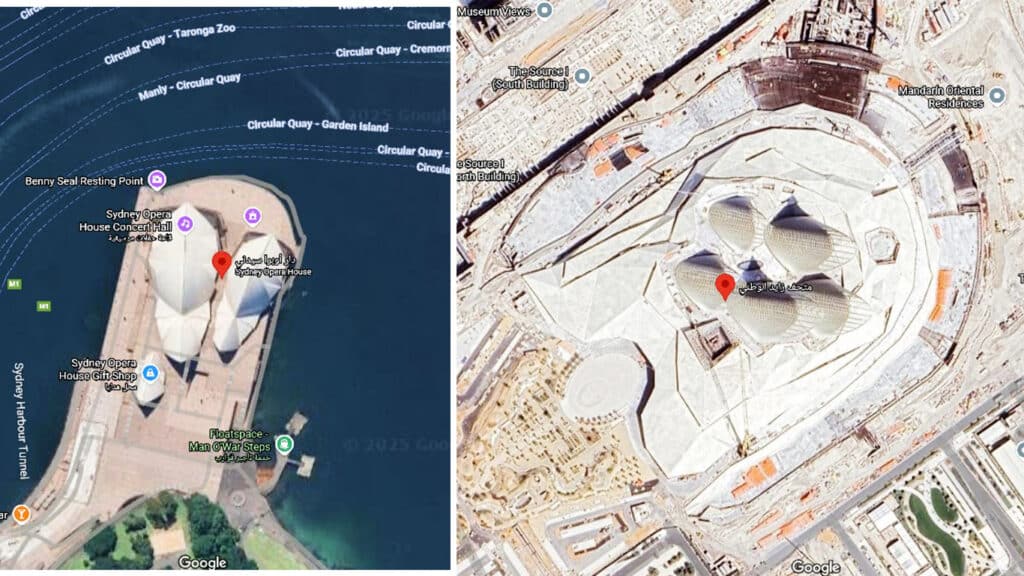
A few days later, back in my lighthouse room, I stumbled upon newly circulated images of the Zayed National Museum. Designed by Norman Foster, it’s a project I’ve admired since its early reveal in 2007. But this time, with eyes fresh from Miami, the familiar took on new meaning. I couldn’t help but notice a strong resemblance to the Sydney Opera House. Yes, the programs differ museum versus performance hall. And yes, Norman is Norman, not Utzon. But look at the plan, the curvature, the podium relationship. There’s something nearly uncanny.
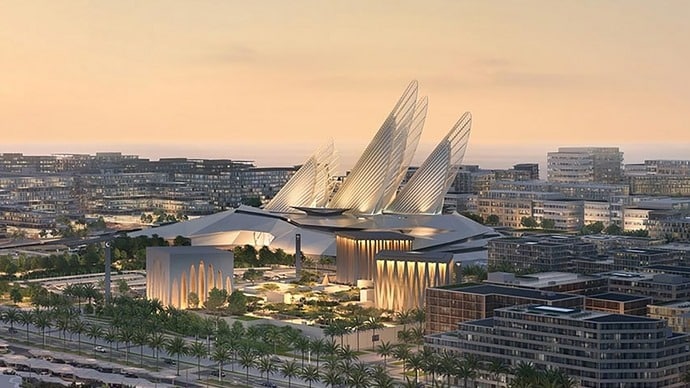
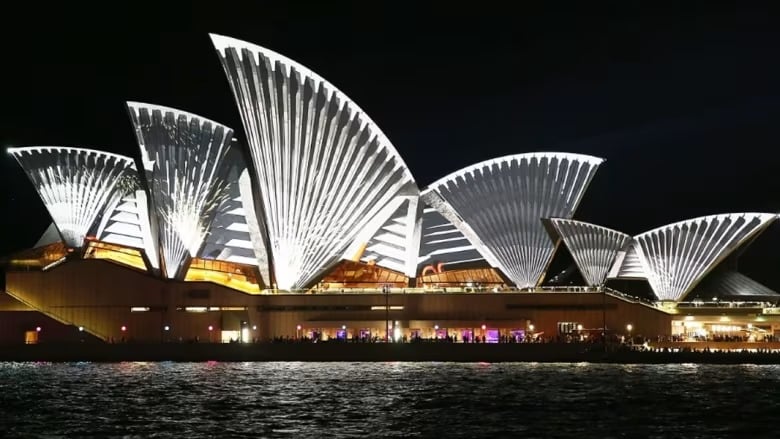
Let’s not dance around the comparison. When you place satellite images of both buildings side by side, the visual similarity is palpable. If you zoom in and study their form and urban deployment, you’ll notice alignments in massing, language, and spatial procession. Sydney’s Opera House is a once-in-a-century stroke of genius bold, accidental, and raw. Zayed Museum, though elegant, feels anchored in a shadow of that same gesture. This isn’t a mere echo; it’s a parallel.
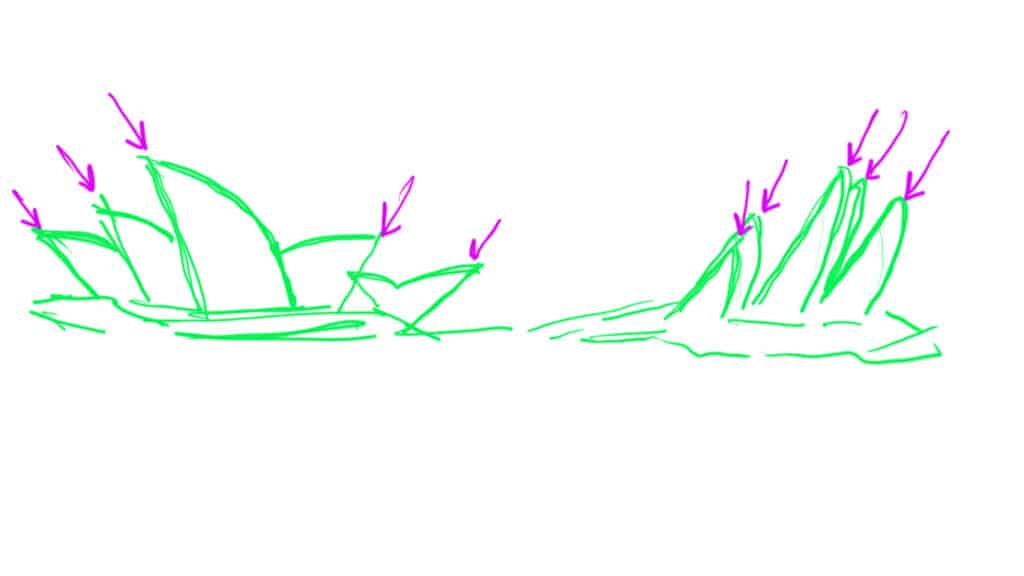
“Our sketch traces the flow of both designs: Sydney’s Opera House works through bold arcs and fractured polygons, while Zayed Museum leans into softened curves that feel like a late-model update. It’s less an original gesture and more like a car redesigned fifty years later — sleeker, smoother, but unmistakably derived from the same chassis.”
Originality vs. Evolution in Design
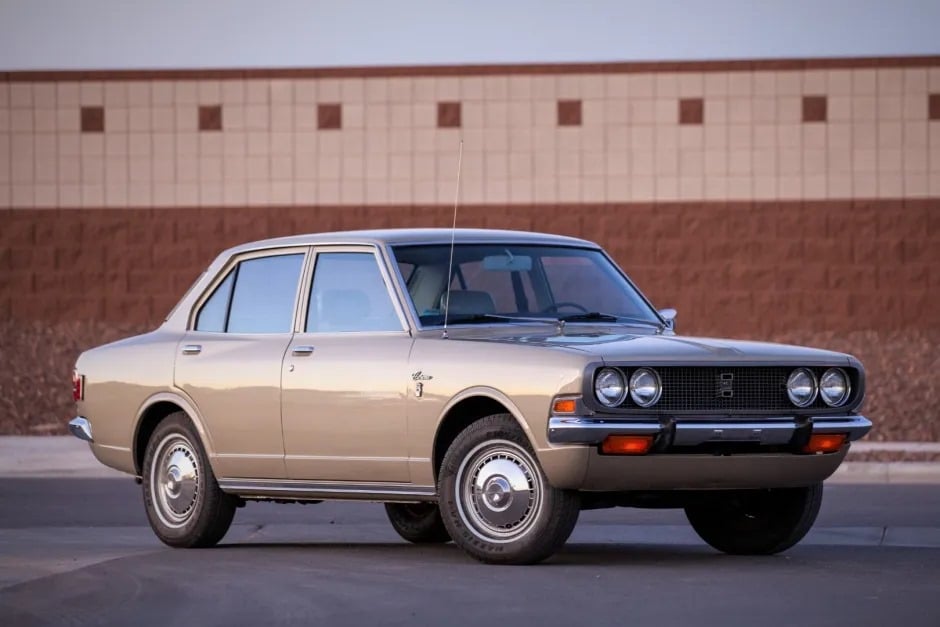
To offer a metaphor: imagine the Toyota Crown in 1970 iconic, distinct. Now bring the 2025 model into frame. There’s evolution, refinement, maturity. But what if the new car looked exactly like the old one, just repainted? Then we would question: is this nostalgia or stagnation? That’s the dissonance I feel here. I’m not convinced by the narrative of the “air towers” in Foster’s scheme. Perhaps the client insisted on an homage to Sydney. Or perhaps it was an unconscious channeling of forms now embedded in our collective design DNA.

Meanwhile, Zaha’s Miami tower despite its reference to the 425 Park Avenue competition had the potential for stronger urban grounding. The borrowed design language was not the issue. In fact, that reference enriched the formal drama. The issue, however, lies in how a specific mass sits too visibly at eye level. It disrupts the pedestrian experience in a city where street engagement is critical. That mass could have been resolved with more grace. Zaha’s vocabulary is inherently sculptural, but the street doesn’t always forgive formal imposition.
Can the reproduction of architectural symbols be considered originality or mere copying?
The Future of Architectural Icons
In both cases Foster’s museum and Hadid’s tower we’re reminded of how architecture recycles, adapts, and occasionally trips over its own admiration for the past. The profession thrives on influence, but the difference between influence and mimicry lies in the eyes of the user and sometimes, in the eyes of critics like us.
At ArchUp, we document, we question, we honor. Our platform remains open to discourse, to dissent, to the evolving aesthetic conversation that defines this era. If you see it differently, say it. This is architecture. This is critique. This is the record we keep.
✦ ArchUp Editorial Insight
This article raises a vital and uncomfortable question: what counts as architectural originality in a world of global repetition? By juxtaposing iconic projects like the Sydney Opera House with newer works that echo its form, the piece critiques how signature designs can become diluted through overuse, homage, or worse—lazy mimicry.
Visually, the examples discussed serve as architectural déjà vu, and the writing invites us to ask: are we innovating, or recycling prestige? The critique is subtle yet sharp, particularly when unpacking the responsibility of major firms and starchitects in perpetuating formal trends.
From a future-facing lens, the article touches a nerve that will remain relevant. As AI-generated designs and templated aesthetics continue to rise, this question of authorship and authenticity will become increasingly urgent. A bold read, provoking a necessary dialogue about form, memory, and legacy in contemporary architecture.
What do you think? Are we still capable of producing authentic architectural icons?
Prepared by the ArchUp Editorial Team
Don’t miss the chance to explore more from Architecture, Archive, and Buildings on the ArchUp website.