

Architectural Prophecies

Architectural Prophecies — What Comes After the Race?
Have you ever tasted mango gelato with chili? The kind they serve in Mexico or Latin American neighborhoods where the rules of flavor are rewritten? At first, it feels wrong. Your brain rejects the combination. But then it grows on you. And before you know it, it makes a strange sort of sense.
That’s the perfect metaphor for architecture today.
What we are witnessing now is not a steady evolution but a tangled race. A marathon where the runners include consultants, AI tools, students, starchitects, freelancers, entrepreneurs, interns, and bystanders. Some are sprinting. Some are limping. Others are just watching from the curb.
It’s not even a fair race. Some ride horses. Some drive Teslas. Some pedal with bare feet. But the track is the same. This is what architectural practice has become in 2025. A beautifully absurd spectacle. And no one is quite sure where the finish line lies.
The Age of AI and Architectural Confusion
Let’s be honest. Many of the projects being published today feel… odd.
We used to be stunned. Now we scroll past. Take for example BIG’s recent project in Los Angeles – a four-building mega-development in the Arts District. Ambitious? Yes. Iconic? Not quite. Where is the awe?
Or consider the Future Public Library concept published just days ago. A building shaped like an open book, but with proportions and articulation that verge on satire. Is this radical imagination or a meme dressed as architecture?
One respected architect told me: “Give it two years.” He believes this marathon will not last. That AI will sort itself out. That the hype will settle. That clarity will return.
The Lucky and the Lost
The lucky ones today are those already building.
If you are deep in a project now, navigating site constraints, budgets, materials, and codes, you are ahead of the curve. Because what comes next is not theory. It is structure. After this chaotic phase, the industry will stabilize, and the architectural ecosystem will reorganize. Roles will shift. Tools will specialize. Firms will adapt.
But what if you’re not building anything? What if your time is consumed by renders, competitions, or endless ideation?
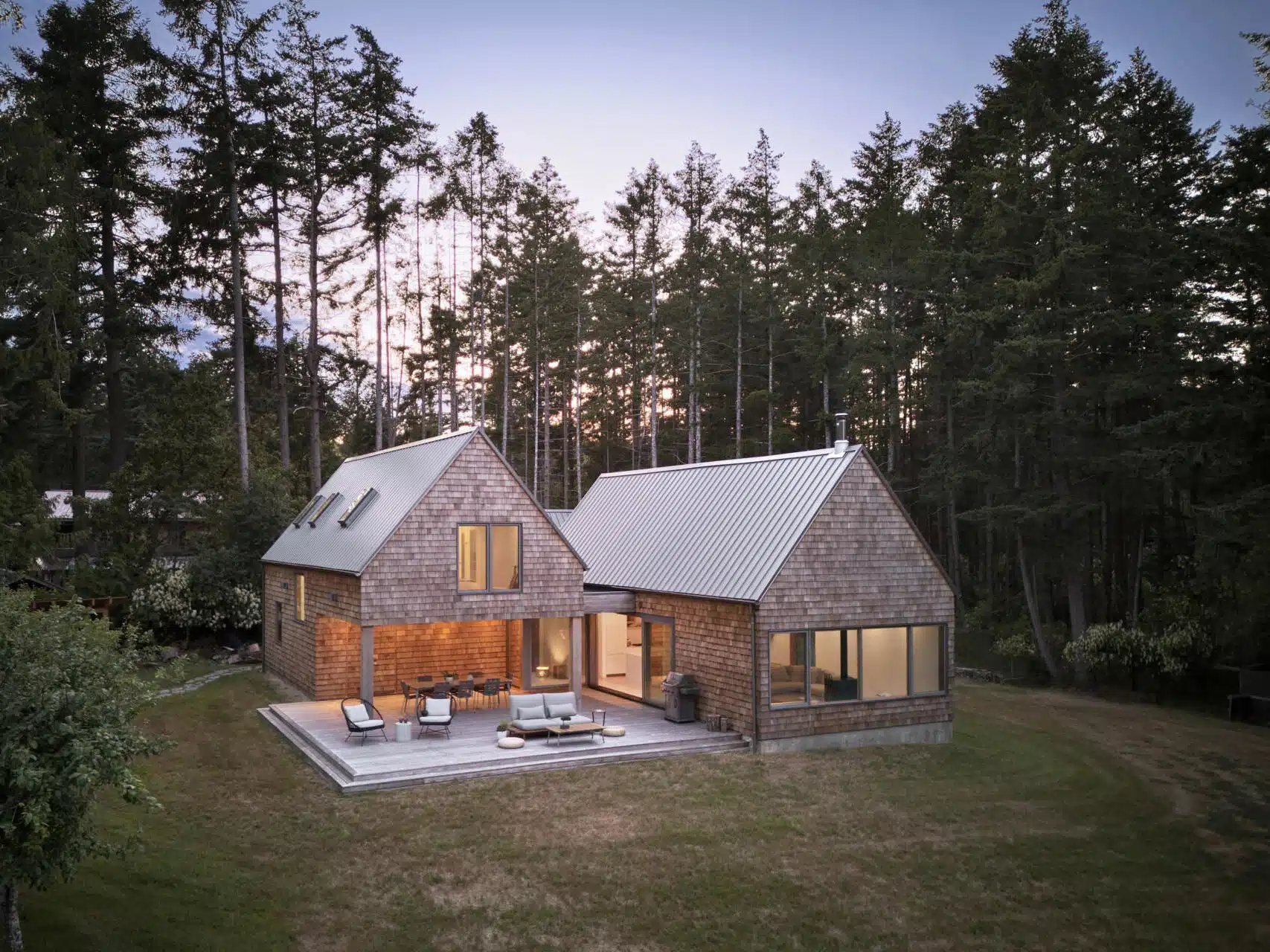
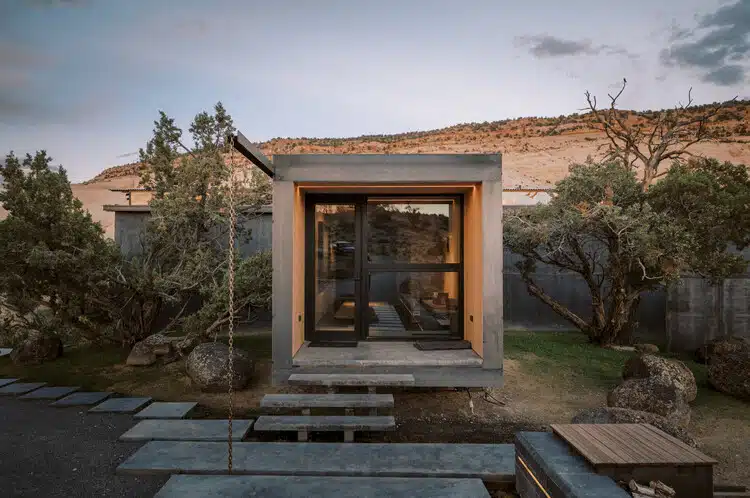
Then you are merely training for the next race. You are conditioning yourself for what is to come. Which is still worthwhile. But the advice remains: find something to build. Anything. Even a cabin. Even a kiosk. Practice the act of making. Because when the music stops, those holding real projects will set the new rhythm.
The Contradictions of “Green”
Now let’s complicate things further. Try this thought experiment:
Imagine if three billion people around the world each pedaled on a gym bike for ten minutes a day. That’s thirty billion minutes of physical exertion. In pure energy terms, that’s roughly 15 million kilowatt-hours generated per day. Enough to power a mid-size country like Slovenia for twenty-four hours.
On paper, it’s genius. On the ground? It’s wasteful. The manufacturing, maintenance, and resource footprint of deploying smart bikes at scale cancels the gain. Sustainability, once again, shows its paradox: what looks green on a slide deck often isn’t in real life.
This summer, while traveling across the United States, I began to notice these contradictions everywhere. The roads are mostly concrete. The homes are mostly timber. The carbon footprint is inverted. Most American houses are still built from wood, an ancient preference dating back to colonial times. Why? Because it’s fast, light, and flexible.
But the roads? The roads are carved in stone.
Concrete for Cars, Wood for People
Recall the California wildfires. In Malibu, when flames devoured whole neighborhoods, one house stood standing. Why? Because it was made from concrete and stone, not wood and drywall. And yet, wood remains the norm.
Why is the American dream still framed in two-by-fours? Is it cost? Culture? Or genetics?
As I reflected, I couldn’t shake a theory I once published through ArchUp called Archigenetics. It suggests that architectural preferences may have a cultural or even biological memory. Americans didn’t just inherit wood homes. They became part of their DNA.
And still, the question lingers: why does the ground get the concrete and the people get the plywood?
The Fragmented Profession
Architecture is now too broad to describe as one profession. Restoration, heritage, defense, public housing, ports, office towers, sacred spaces each field demands a different skill set, a different soul. This is a strength, but it is also a source of disarray.
The rise of modular systems, robotic assembly, and 3D-printed buildings threatens to displace many of the trades and talents architects rely on. Automation is not looming. It is already here. And it will redraw the line between builder and designer.
Studies show that over 70% of buildings in the US are still built using traditional methods, even as over 15% of new housing units are now prefabricated or modular. That number is growing. Slowly, but steadily.
If we are in a marathon, innovation is on a bicycle slow, steady, and eventually overtaking the runners.
The PR Machine and the Illusion of Momentum
Today, any architect can generate press. All it takes is a clever narrative, a good render, and the right PR firm. Claim you’ve reinvented the dome, and some publication will bite. Post it on Instagram, and someone will share it.
But is that real architecture? Or performance art?
The danger lies in chasing attention instead of excellence. When the market is noisy, visibility can overshadow vision. So it becomes a test: can you stay focused on your lane, even when the marathon beside you is filled with flashing lights?
The Final Prophecy
And so we arrive at the prophecy.
This race has about two years left. Two years for AI to mature, for trends to fade, for markets to reset. Two years for the architecture community to catch its breath and remember why it started running in the first place.
Until then, build. Sketch. Learn. Teach. Find a project any project and put your hands into it. Because when the dust settles, those with muscle memory will lead. The marathon will not wait for those still on the sidelines.
This is your mango chili moment.
Strange, yes. But strangely delicious — if you let it be.
✦ ArchUp Editorial Insight
In this sharp and flavorful reflection, the author likens today’s architectural climate to ice cream spiked with chili — a poetic metaphor for a profession caught between desire and disruption. The piece reads like a manifesto for the confused, burned-out, or quietly observant architect in a world where AI, inflation, and aesthetic noise blur traditional value systems.
Rather than forecasting, it diagnoses: exposing the loss of architectural patience, the rise of short-termism, and the uneasy dance between technology and meaning. The metaphor of a “marathon” approaching its collapse resonates — especially as the profession braces for a global reset.
What makes this editorial distinct is its courage to voice discomfort without defeat. It’s not predictive, but prophetic — a text that will likely feel even more relevant in five years as the field either fragments or finds its spine. A must-read for those seeking clarity in chaos.
Related Reads from ArchUp:



https://medium.com/@archupnet/architectural-prophecies-7236e2881ac1