Architecture Students in Tehran Design Innovative Adaptable Bird Shelters

An ambitious student project from Islamic Azad University, Central Tehran Branch, is redefining the concept of coexistence between the built environment and nature. A team of architecture students, under the guidance of Mahyar Architects Studio, has designed and implemented N+Nest, an innovative modular system of bird shelters that combines smart design with environmental sustainability.
Architectural Design: Innovation Rooted in the Simplicity of the Pyramid
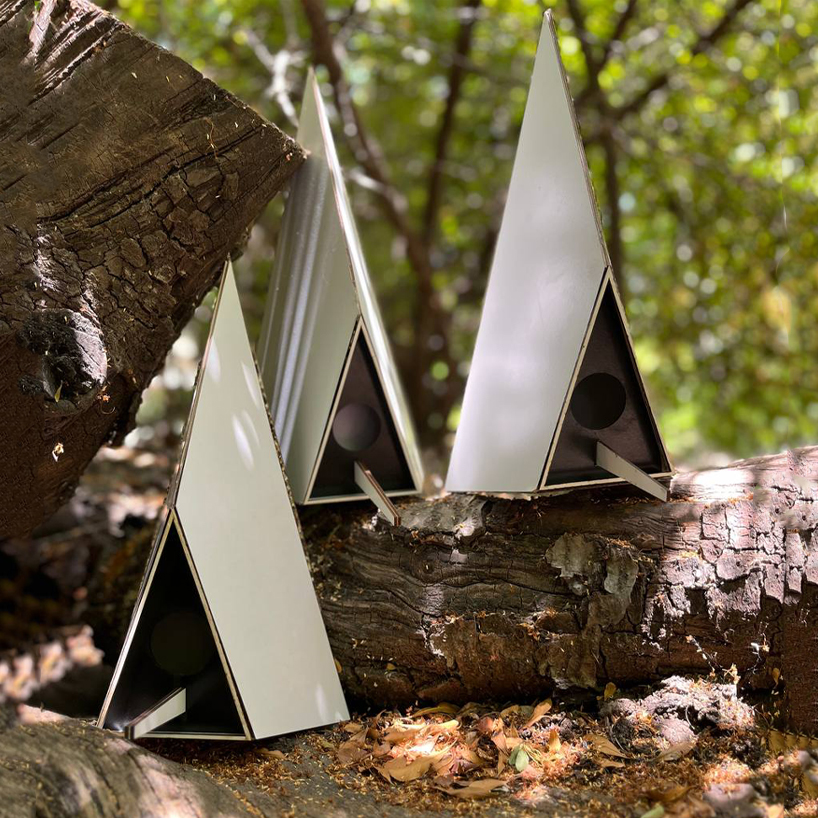
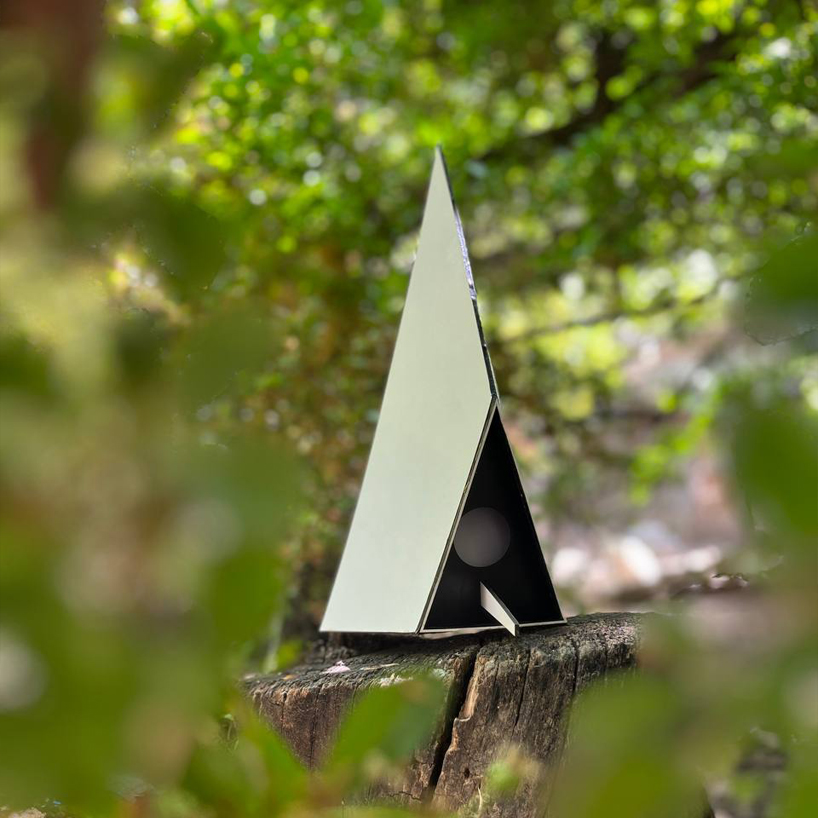
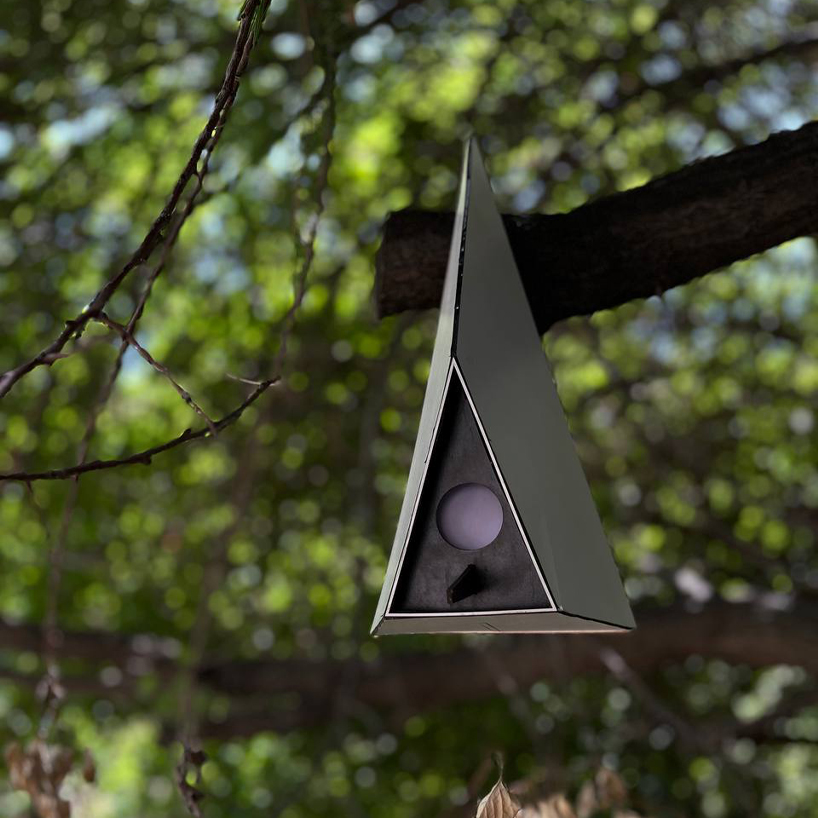
The choice of the pyramid shape for the shelter was not merely an aesthetic decision. It was chosen for its core structural advantages:
- Exceptional Structural Stability: The pyramid shape allows for even distribution of weights and forces, granting the shelter high durability against weather elements and strong winds.
- Distinct Visual Identity: The geometric form creates a striking visual focal point wherever it is installed, adding aesthetic value to its surroundings.
- Installation Flexibility: Each pyramidal unit can be rotated and mounted in various directions, allowing it to adapt seamlessly to different installation surfaces.
Smart Design: Details that Create an Ideal Sanctuary
The N+Nest design goes beyond the exterior to focus on intricate details that ensure the birds’ comfort and safety:
- Sustainable and Natural Materials: The units are constructed from weather-resistant wood, ensuring long-term durability while providing natural thermal insulation—warm in winter and cool in summer.
- Protection from the Elements: The strategically extended roof offers effective protection from rain and snow. Carefully calculated small ventilation openings promote air circulation, preventing overheating and reducing moisture buildup that can lead to mold and rot.
- Easy Maintenance: The units are equipped with removable side panels, making periodic cleaning and maintenance straightforward and significantly extending the shelters’ lifespan.
An Integrated System: From a Single Unit to a Avian Community
The project’s creativity extends beyond a single unit to creating a miniature ecosystem:
- Modular Assembly: Multiple N+Nest units can be easily assembled together to form larger, more complex structures. This feature not only provides space for a single bird family but also encourages different bird species to coexist in one community, promoting urban biodiversity.
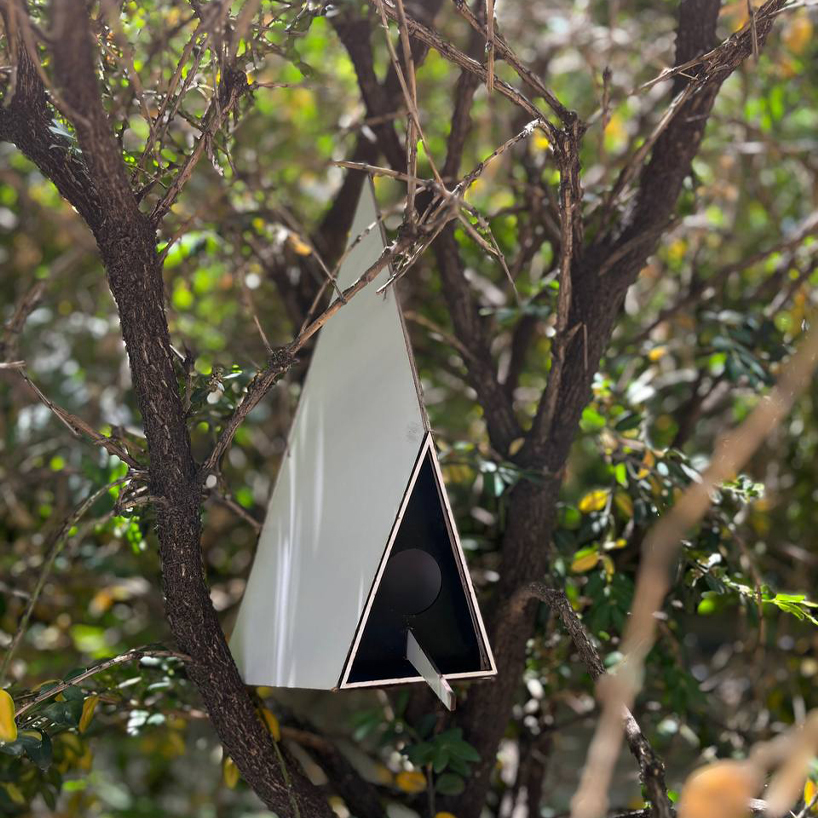
- Versatile Mounting Methods: The system is designed for ultimate installation flexibility, supporting attachment via screws to natural branches, as well as secure mounting on both vertical smooth surfaces (like building walls) and horizontal flat surfaces (like balconies).
The Creative Journey: From Studio Idea to Real-World Application
The development of N+Nest was part of a comprehensive educational studio project, aimed at merging theory with practice:
- Digital Modeling: The journey began with precise 3D modeling using advanced architectural software.
- Precision Manufacturing: Using laser-cutting technology, the digital design was translated onto wooden panels with extreme accuracy, ensuring each piece was perfectly cut.
- Assembly and Installation: The students manually assembled the pieces and proceeded to install the prototype in its final location, gaining invaluable hands-on experience in construction and placement.
The Project’s Legacy: Towards a More Sustainable and Humane Architecture
The N+Nest project is more than just a birdhouse; it is a miniature model of a future architectural vision. It demonstrates that architectural design can play a pivotal role in solving small-scale environmental problems with a significant impact. By combining modular engineering, sustainable materials, and contextual adaptability, the project offers a solution that can be seamlessly integrated into the urban landscape of Tehran and any other city worldwide, encouraging the development of greener, more vibrant cities.
✦ Archup Editorial Vision
The N+Nest project stands as an inspiring model of architecture with a positive environmental impact, where students transformed a simple idea (a birdhouse) into an intelligent modular system that combines the structural stability of the pyramid shape with flexibility to adapt to various environments. Critique: Although the project is exceptional in its design and sustainability, the original article could have been enriched with more detailed technical information on the exact type of wood used and its resistance, or field test results measuring the adoption rate of these shelters by birds compared to traditional models. Finally, the project remains practical proof of architectural design’s ability to create innovative solutions that promote coexistence between modern life and nature, serving as an inspiration for future designs in the field of ecological architecture.
Brought to you by the ArchUp Editorial Team
Inspiration starts here. Dive deeper into Architecture, Interior Design, Research, Cities, Design, and