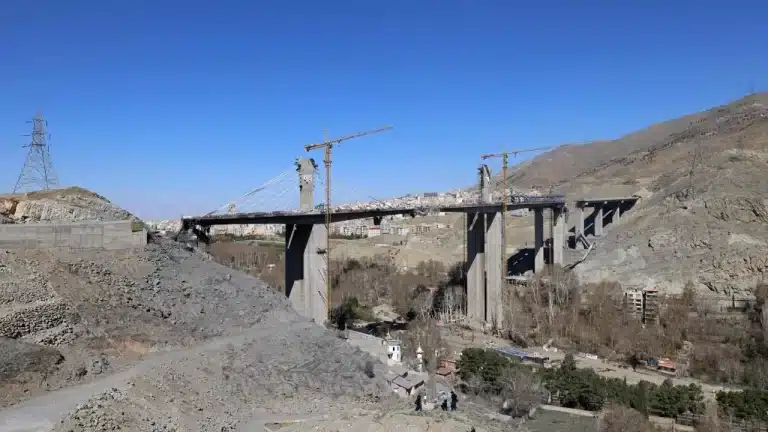
B1 Bridge Attack Marks Escalation in Iran Infrastructure Targeting

A major bridge linking Tehran and Karaj has been destroyed in an April 2026 strike. The B1 Bridge served as critical infrastructure for Iran’s capital region. Its collapse has disrupted daily mobility and raised questions about civilian infrastructure protection during conflict.
Strategic Infrastructure Becomes Military Target
The B1 Bridge represented modern engineering designed to support Tehran’s metropolitan expansion. The structure connected vital corridors across the Tehran-Karaj route. However, strikes on April 2 damaged key sections of the bridge, leading to partial collapse.
Iranian authorities report civilian casualties from the attack. Meanwhile, international observers question whether such buildings qualify as legitimate military targets. The bridge primarily served civilian transportation needs across one of Iran’s busiest urban corridors.
Pattern of Civilian Infrastructure Damage
Reports indicate the bridge attack forms part of broader infrastructure targeting. Moreover, strikes have allegedly affected universities, schools, and hospitals throughout the conflict. These facilities traditionally receive protection under international law.
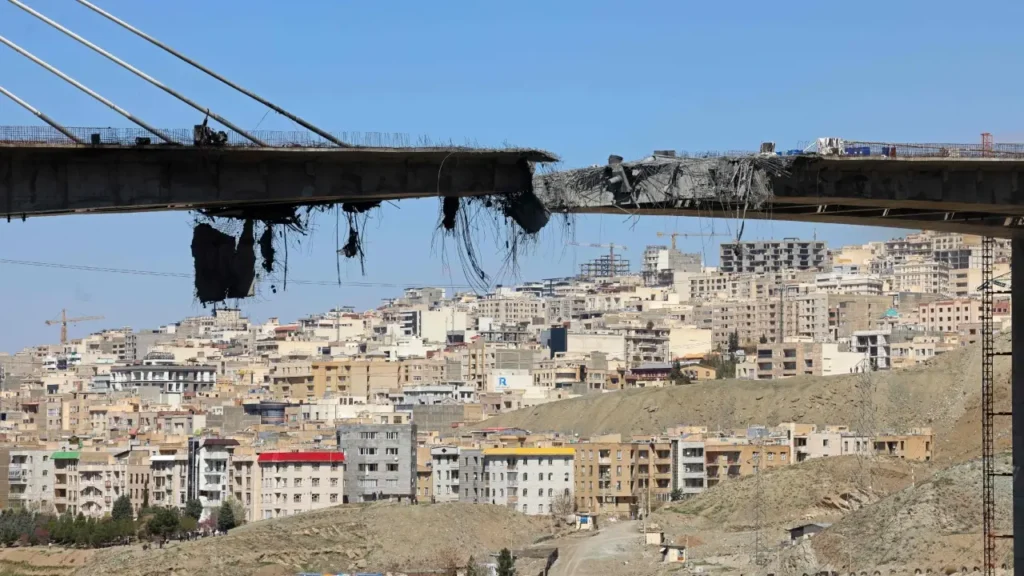
The severed bridge deck frames the dense urban fabric of the metropolitan region. Image © AFP news
Critics describe the expanding scope of attacks as crossing established boundaries. Therefore, questions arise about accountability for targeting civilian construction. The destruction impacts everyday life, education, and public services across Iranian cities.
International officials characterize the strikes as violations of established norms. Furthermore, they cite civilian deaths, including women and children. Many observers use the term war crimes when describing these attacks on essential urban planning infrastructure.
Architecture Under Geopolitical Pressure
The B1 Bridge destruction demonstrates how infrastructure becomes weaponized during conflict. Consequently, buildings and bridges lose their neutral status. They transform into both instruments and casualties of geopolitical power struggles.
Iranian officials assert their response follows principles of national sovereignty and self-defense. Nevertheless, the physical rupture created by the bridge collapse extends beyond engineering failure. It represents broader fractures in economic stability and territorial connectivity.

The incident highlights tensions between military strategy and civilian protection. Additionally, it reveals how modern warfare increasingly targets the foundations of civil society. Essential architecture that enables daily life becomes collateral damage in larger conflicts.
A Quick Architectural Snapshot
The B1 Bridge integrated structural efficiency with regional connectivity across the Tehran-Karaj corridor. Its engineering represented Iran’s infrastructural ambitions for metropolitan expansion. The structure stood as a symbol of large-scale construction projects supporting rapid urban growth before its destruction in April 2026.
✦ ArchUp Editorial Insight
The destruction of the B1 Bridge reflects a broader shift in how infrastructure functions within modern conflict. Bridges, highways, and transit networks no longer serve purely civilian purposes in the eyes of military strategists. They become leverage points in geopolitical negotiations. The decision to target such structures stems from calculated pressure tactics designed to disrupt economic stability and daily mobility. This approach treats civilian inconvenience as an acceptable cost of strategic gain. Meanwhile, the bridge itself represented Iran’s investment in metropolitan expansion and regional connectivity. Its construction responded to rapid urbanization and population growth demands. The attack therefore disrupts not only concrete and steel but also long-term development planning. Infrastructure becomes both shield and target in asymmetric warfare.
This project is the logical outcome of urbanization pressure + geopolitical tension + the weaponization of civilian infrastructure.