

Biophilic Innovation: Sylvia Richards’ Mass Timber Lab for Biotech Company

In the heart of New Hampshire’s forests, architect Sylvia Richards has designed a mass timber building for Adimab, a biotechnology company specializing in antibody development. Completed in May 2024, the 27,000-square-foot facility embodies a thoughtful balance between cutting-edge technology and biophilic design principles. The project prioritizes sustainability while fostering a collaborative and innovative environment for scientists and staff.
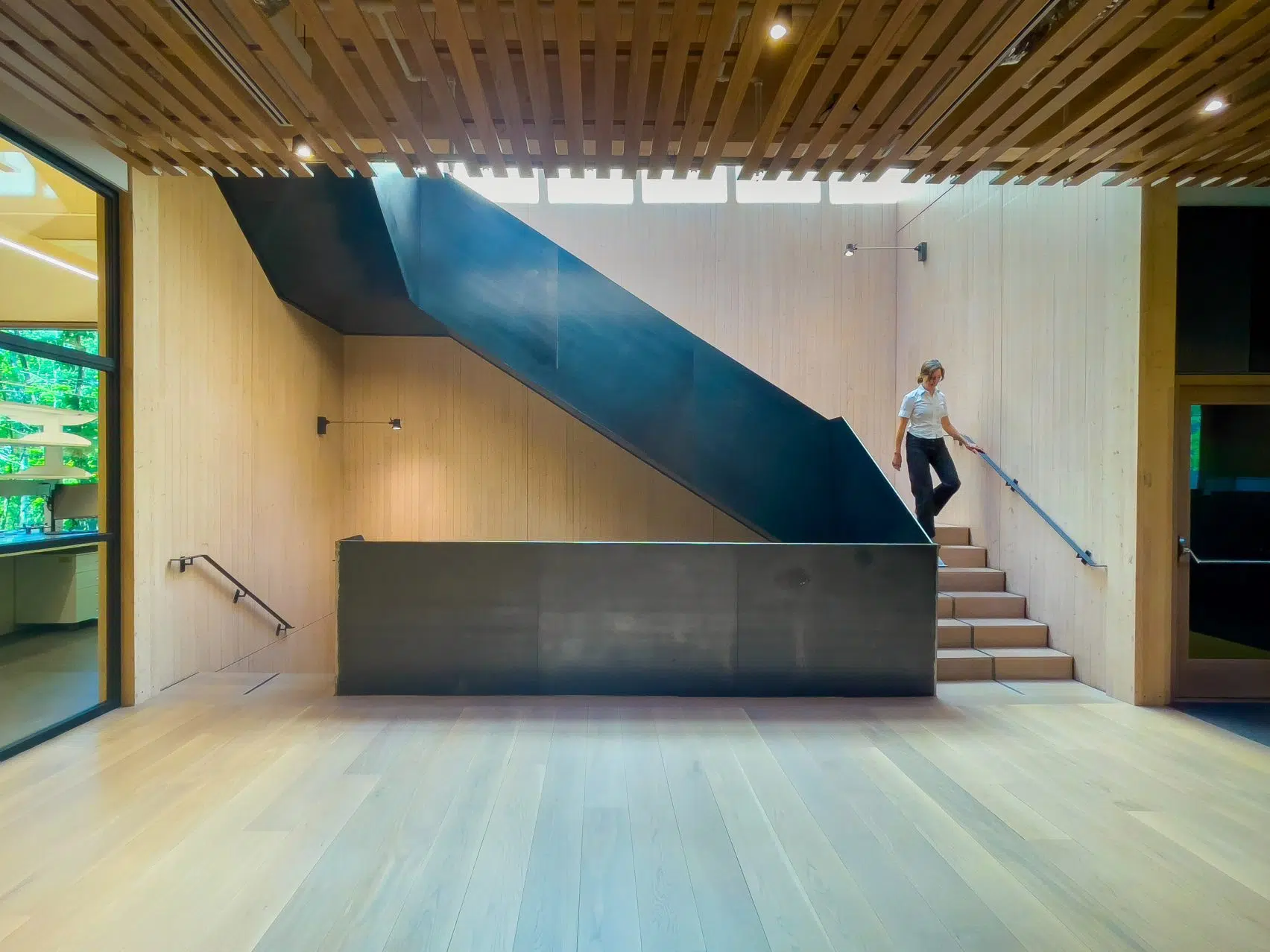
The building’s structure prominently features exposed mass timber elements, including columns and beams, along with cross-laminated timber (CLT) panels for walls and roof. These choices reduce the building’s carbon footprint while establishing a warm, natural aesthetic that connects occupants with the surrounding woodland. Exterior façades use locally sourced untreated timber, allowing the wood to age gracefully into a soft silver tone over time. Large windows and strategically placed skylights ensure abundant daylight throughout the interiors, creating an environment that supports both productivity and well-being. Brutal, rigid industrial designs are avoided in favor of human-scaled spaces that encourage interaction and discovery.

Architectural Concept and Design
The laboratory is organized into distinct functional zones, carefully layered to optimize workflow and communication. Open-plan labs and office areas are grouped around central collaboration hubs. Breakout spaces, quiet zones, and meeting rooms are strategically distributed to provide both interaction and privacy. The building layout responds to site topography and maximizes views of the surrounding forest, integrating nature into daily operations and research activities.

Program and Spatial Organization
| Zone | Function |
|---|---|
| Ground Floor | Main laboratories, prep areas, collaborative workstations, meeting rooms |
| First Floor | Offices, administrative spaces, quiet research areas, break zones |
| Roof Level | Skylights, mechanical equipment, green roof terrace for staff relaxation |
Materiality and Construction
Exposed mass timber defines the building’s structural and aesthetic character. Columns, beams, and CLT panels are carefully detailed to ensure precision and durability. Timber surfaces are left natural inside to create a tactile, human-centered environment. Exterior timber is sourced locally and untreated, allowing natural weathering to enhance the façade over time. Structural steel is minimized, used only where additional support is necessary, allowing timber to remain the dominant visual and structural element.

Sustainability Features
The building employs passive strategies such as natural ventilation, daylighting, and thermal mass regulation. Active systems include high-efficiency HVAC, photovoltaic panels on the roof, and rainwater collection for irrigation and non-potable uses. These measures enhance environmental performance while maintaining a biophilic atmosphere that connects occupants with the surrounding forested landscape.

Architectural Analysis
Sylvia Richards’ design demonstrates how mass timber construction can merge environmental responsibility with high-performance laboratory requirements. Spatial organization supports efficient workflow while providing comfortable, human-scaled spaces. The timber structure reinforces a sense of connection to nature, counterbalancing the technological and mechanical requirements of a biotech facility. The design is both functional and poetic, illustrating that sustainability, wellness, and innovation can coexist in a single architectural solution. Architecture here is a dialogue between built form and landscape rather than an imposition.

Project Importance
This project shows architects and designers that high-tech facilities can be sustainable and human-centered. It contributes to mass timber and laboratory building typologies by demonstrating environmental stewardship, efficient workflow, and biophilic integration. The design highlights the importance of natural materials, daylighting, and connection to context. In an era of climate consciousness and workplace well-being, this building serves as a model for future scientific facilities.

✦ ArchUp Editorial Insight
Sylvia Richards’ design for Adimab’s 27,000-square-foot mass timber laboratory in Lebanon, New Hampshire, exemplifies a harmonious blend of biophilic design and high-performance scientific infrastructure. The building, constructed with cross-laminated timber (CLT) and glulam beams, integrates seamlessly into the surrounding forested landscape, reflecting Adimab’s commitment to ecological and human health. Strategic window placements and expansive glazing ensure abundant natural light, fostering a connection between the interior spaces and the natural environment. The open-plan layout and exposed timber elements create a warm, inviting atmosphere, challenging traditional perceptions of sterile laboratory settings.
Despite its aesthetic appeal, the project raises considerations regarding the long-term durability and maintenance of mass timber in a laboratory context. Ensuring structural integrity and meeting stringent laboratory requirements, such as vibration control and HVAC efficiency, necessitated careful design and engineering. The integration of vibration isolation mats and strategic placement of mechanical systems within the timber framework demonstrates the adaptability of mass timber to meet these challenges.
Nonetheless, Adimab’s mass timber laboratory stands as a pioneering example of sustainable and human-centered design in the biotech industry. Its innovative approach offers valuable insights for future laboratory designs, emphasizing the potential of mass timber to create environments that support both scientific advancement and occupant well-being.

Conclusion
The Adimab laboratory represents a milestone in biophilic design and mass timber construction. Sylvia Richards created a building where science, sustainability, and human experience coexist. Interior spaces are bright and inviting, while timber elements convey warmth and structural honesty. The project proves that laboratories can be both efficient and inspiring. By integrating nature, materiality, and technology, the building offers lessons for architects seeking innovative, environmentally responsible, and human-centered solutions in modern architecture.

Explore the Latest Architecture Exhibitions & Conferences
ArchUp offers daily updates on top global architectural exhibitions, design conferences, and professional art and design forums.
Follow key architecture competitions, check official results, and stay informed through the latest architectural news worldwide.
ArchUp is your encyclopedic hub for discovering events and design-driven opportunities across the globe.
Brought to you by the ArchUp Editorial Team
Inspiration starts here. Dive deeper into Architecture, Interior Design, Research, Cities, Design, and cutting-edge Projects on ArchUp.


