

Brutalist Concrete in Eastern Europe A Socialist Legacy Carved in Stone

Introduction
After World War II, Eastern European countries faced a daunting task: rebuilding not just their cities, but their national identity. In this transformative moment, Socialist Brutalist architecture emerged as a powerful, unapologetic response to the challenges of the era. More than just a style, it became a symbol—of strength, unity, and the ideological vision of socialist regimes. Concrete wasn’t simply a material; it was a political statement.
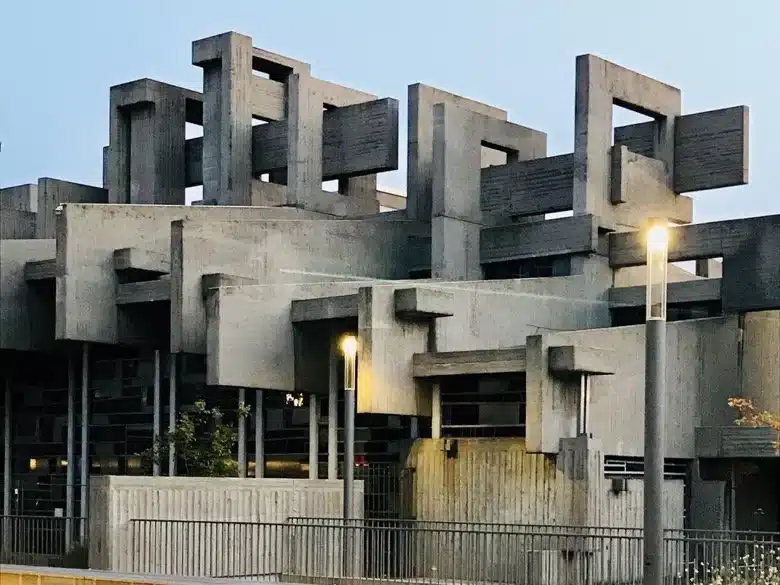
Brutalism: A Form Shaped by Function and Ideology
The word Brutalism doesn’t imply ugliness or chaos, as it might suggest at first glance. It comes from the French béton brut, meaning “raw concrete.” Socialist Brutalist architecture is marked by massive structures, exposed materials, and an emphasis on function over decoration.
For socialist governments, it was more than an aesthetic—it was an expression of order, equality, and resistance to Western capitalism.
Why Did Socialist States Embrace Brutalism?
The decision wasn’t purely architectural. It was driven by practical and ideological motives:
| Aspect | Key Motivation |
|---|---|
| Economic | Concrete was affordable, abundant, and allowed for rapid construction. |
| Political | Monumental design reflected the power and permanence of the state. |
| Ideological | Rejection of capitalist luxury and individualism in favour of uniformity and collectivism. |
| Social | Aimed to provide mass housing and public infrastructure efficiently through Socialist Brutalist architecture. |

Landmark Brutalist Structures in Eastern Europe
Here are some standout examples of Socialist Brutalist architecture that continue to shape the region’s visual and cultural memory:
| Country | Landmark | Purpose |
|---|---|---|
| Bulgaria | Buzludzha Monument | Headquarters for the Socialist Party. |
| Yugoslavia | Podgaric Monument | Memorial to anti-fascist fighters. |
| Hungary | Former Budapest TV Center | State media and broadcasting. |
| Romania | Communist-era housing in Bucharest | Large-scale public housing projects. |
How Did Brutalism Affect Everyday Life?
Though often criticised for its cold appearance, Socialist Brutalist architecture had a profound impact on people’s lives.
The positives:
- Quickly addressed housing shortages.
- Emphasised functionality and practical design.
- Created a sense of shared identity within communities.
The negatives:
- Perceived as harsh, soulless, and inhuman.
- Associated with bureaucracy, surveillance, and control.
- Often neglected post-socialism due to its rigid structure and unpopular image.

From Forgotten to Celebrated: The Fate of Brutalist Buildings
With the fall of socialist regimes, many of these Socialist Brutalist architecture buildings were abandoned or demolished. Yet, a growing number of architects, artists, and historians are re-evaluating their significance—not just as relics of a past ideology, but as architectural time capsules.
Preserving or repurposing these buildings is now seen by some as a way to engage with a complex past rather than erase it.
Brutalism’s Quiet Comeback
Today, the echoes of Brutalism are being felt in unexpected places—minimalist designs, curated exhibitions, and modern buildings inspired by its raw, honest style.
While the full return of concrete blocks may be unlikely, the underlying values of clarity, functionality, and bold visual identity are quietly making a comeback.
Conclusion
Brutalist architecture in Eastern Europe wasn’t just about design—it was about defining an era, one slab of concrete at a time. Whether seen as oppressive or authentic, Socialist Brutalist architecture structures continue to provoke thought and reflect the complex relationship between architecture and ideology.
✦ ArchUp Editorial Insight
This article explores the socialist legacy of Brutalist architecture in Eastern Europe through a historical and visual lens. The featured imagery captures the raw materiality of exposed concrete, monolithic forms, and rigid urban layouts that embody the ideological expression of the era. While the narrative effectively outlines political motivations and cultural shifts, it stops short of critically assessing how these buildings perform in contemporary urban life. Could the reinterpretation of these structures serve modern needs without erasing their past? Still, the article contributes meaningfully by positioning Brutalism not just as an aesthetic, but as a socio-political artefact worthy of renewed examination.
Explore the Latest Architecture Exhibitions & Conferences
ArchUp offers daily updates on top global architectural exhibitions, design conferences, and professional art and design forums.
Follow key architecture competitions, check official results, and stay informed through the latest architectural news worldwide.
ArchUp is your encyclopaedic hub for discovering events and design-driven opportunities across the globe.


Almost bullshit. Probably/mostly ai.