Building a conical theater decorated with mosaics

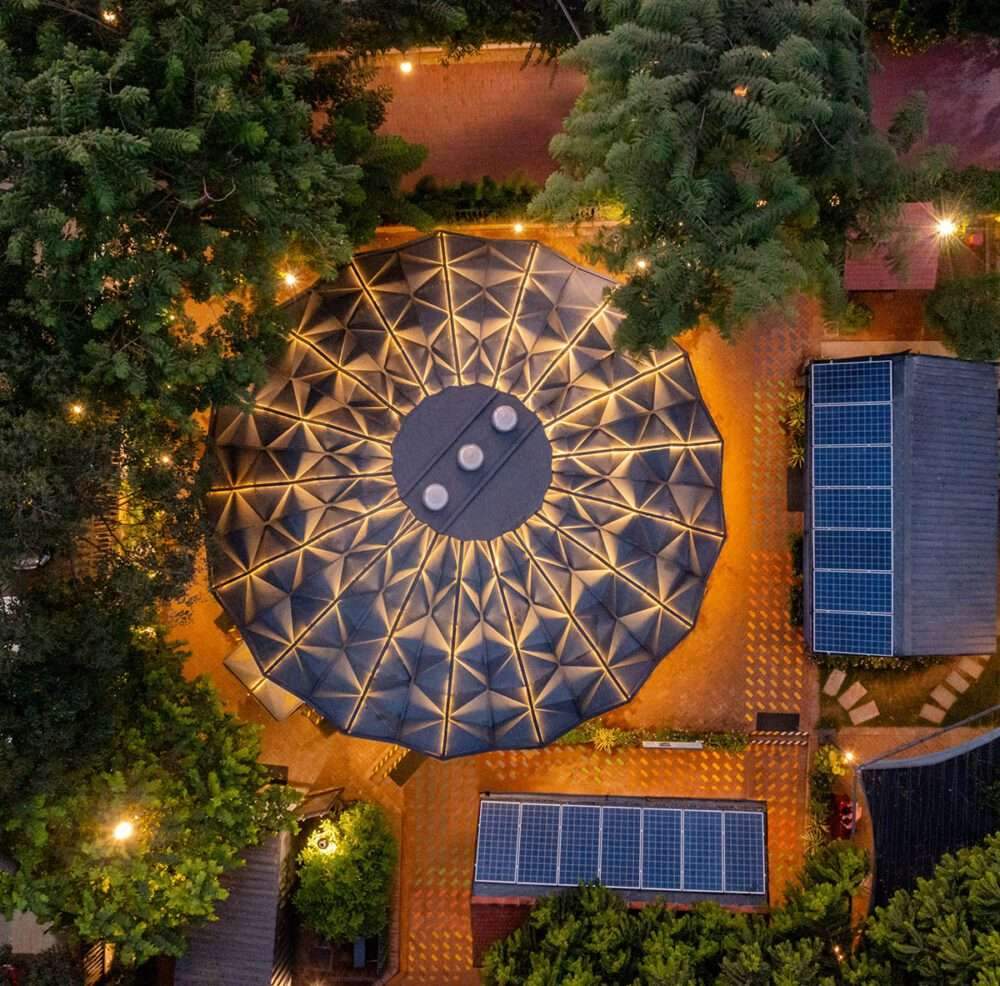
Building a conical theater decorated with mosaics,
The interdisciplinary design practice and Black Design Studio have built a multi-functional conical performance space,
Manufactured from triangular planes for material and structural efficiencies in Ahmedabad, India.
Named after Darwin Bucky, the structure was envisioned as a black box that could be used as an exhibition hall.
Or a city hall, or an exhibition center, or a fairground.
Andblack design studio designed the place to be placed in the category of public parks,
fairgrounds or even in the city center.

Ahmedabad was chosen as the cultural context, with similar performance theaters dotted across the city.
The prototype, which has a diameter of 12 metres,
has been driven through multiple cultural events to investigate user demand for an architectural product
that it occupies as a functional black box theater and gallery space, with a maximum occupancy of 100 people.
Format and concept
As temporary visitors to this planet, it is important that we leave behind little traces that may affect our future generations.
Therefore, it is important to coexist with nature, rather than live in it.
Thus, non-permanent buildings are the future.
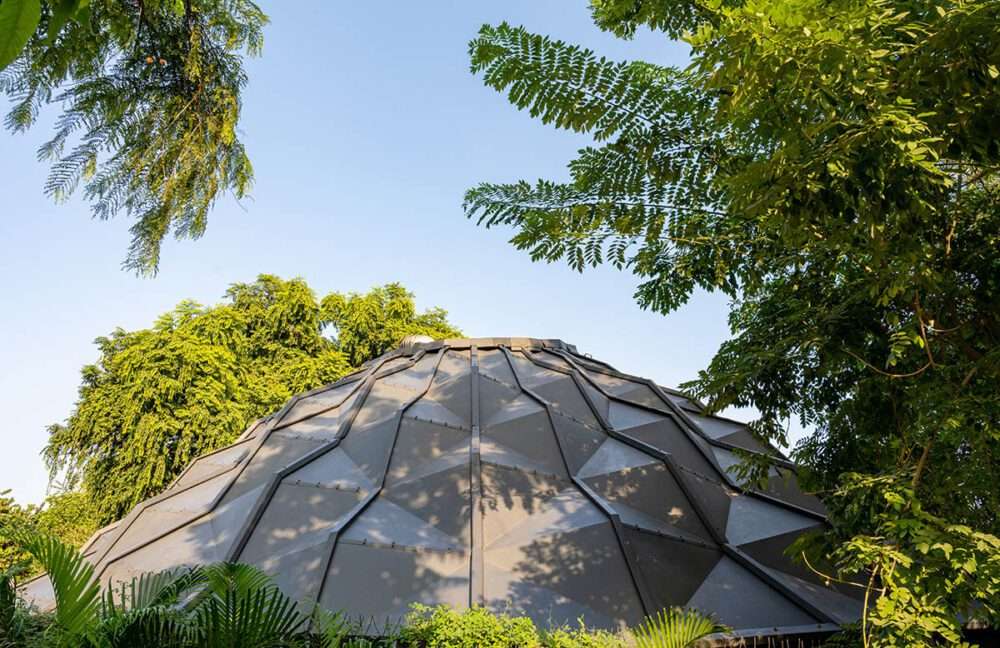
Where Darwin Buckey aims to strike a balance between materialism and technological advancement in the field of design, involving artisanal knowledge of metal as a material.
The design process includes highly efficient parametric models that allow customization of many variables to achieve the specified size.
The computational model can adapt the core diameter and dynamic heights to achieve material efficiency through improved tessellation.
Assembly and materials
The Darwin Bucky is designed as a prefabricated assembly of parts that can be dry-assembled on site and disassembled when required.
It is made of old materials such as steel, wood, aluminum and glass,
and the durability and cost of Bucky are comparable to those of traditional buildings.
It does not require a base or foundation to build upon,
and does not require heavy equipment for transportation and installation.
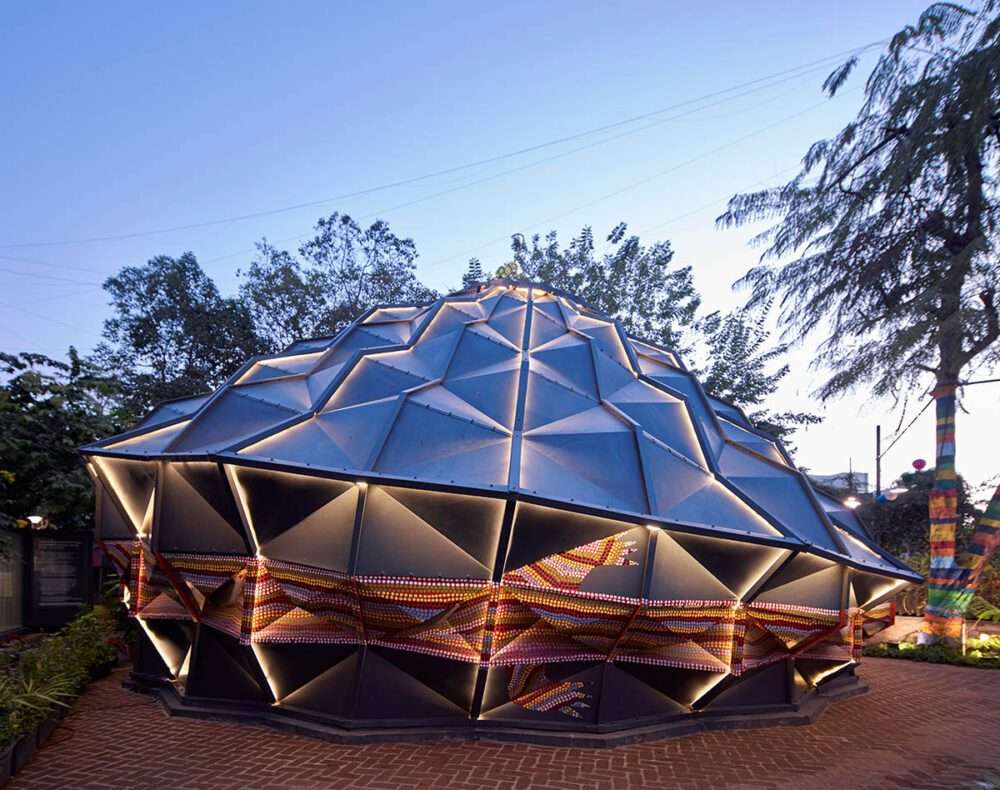
These unique factors make the Darwin product ideal for locations where road access is difficult,
electricity is scarce, and excavation is undesirable.
The idea of the model is guided by its structural performance.
Thus the aesthetics is a derivative of the performance design approach.
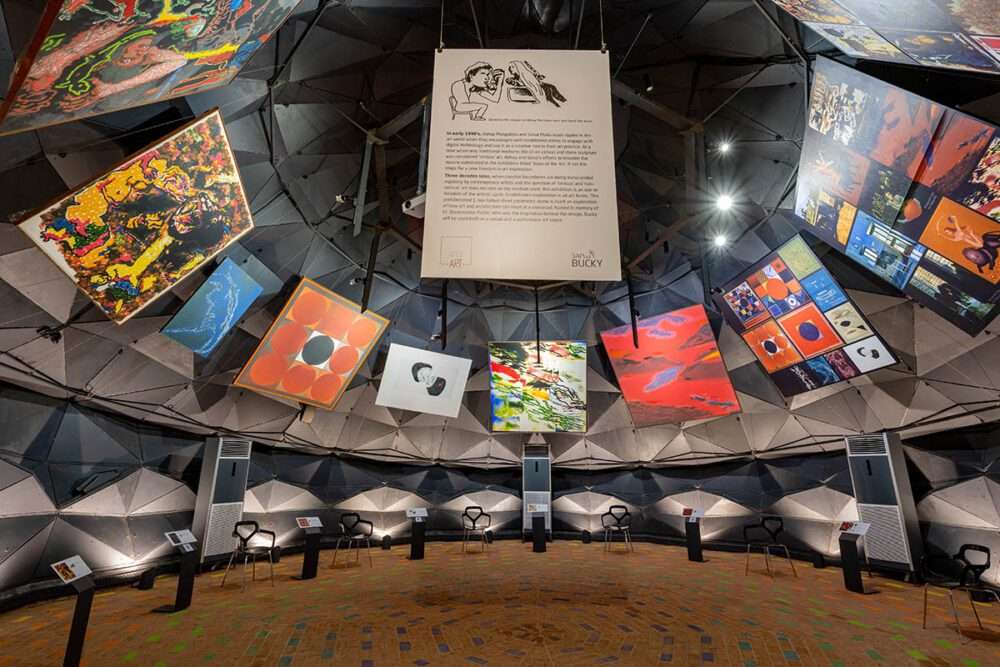
The Darwin Bucket is also designed to encapsulate an area with half the material required by conventional structures,
thus optimizing the use of steel for material efficiency.
Lightweight insulated modular panels are prefabricated and flat packed for efficient transportation.
In addition to skeletal stability, the conical shape and triangular planes on the fascia respond well to desirable acoustics.