

Cardboard: From Packaging Material to an Innovative Architectural Cornerstone

It is one of the most familiar materials on the planet, with approximately 72 million tons produced annually worldwide. Many of us come into contact with cardboard at least once a day, yet it is rarely considered to be anything other than packaging.
However, the idea of using cardboard as a building material is not new. Writing on this topic for a thesis at Delft University, Jerzy F. Latka presents a compelling argument for architects to seriously consider using more of this product in their designs, tracing its use back to 8th-century China.
Case studies for structures made of cardboard have existed for over 150 years, with prefabricated cardboard houses first presented at the World’s Fair in Paris in 1867. More recently, the schemes developed by Japanese architect Shigeru Ban, who uses cardboard tubes as structural elements, have become widely known. By 1991, he had completed his famous Paper Arbor library in Zushi, Japan, recognized as the first permanent building to use cardboard tubes structurally.
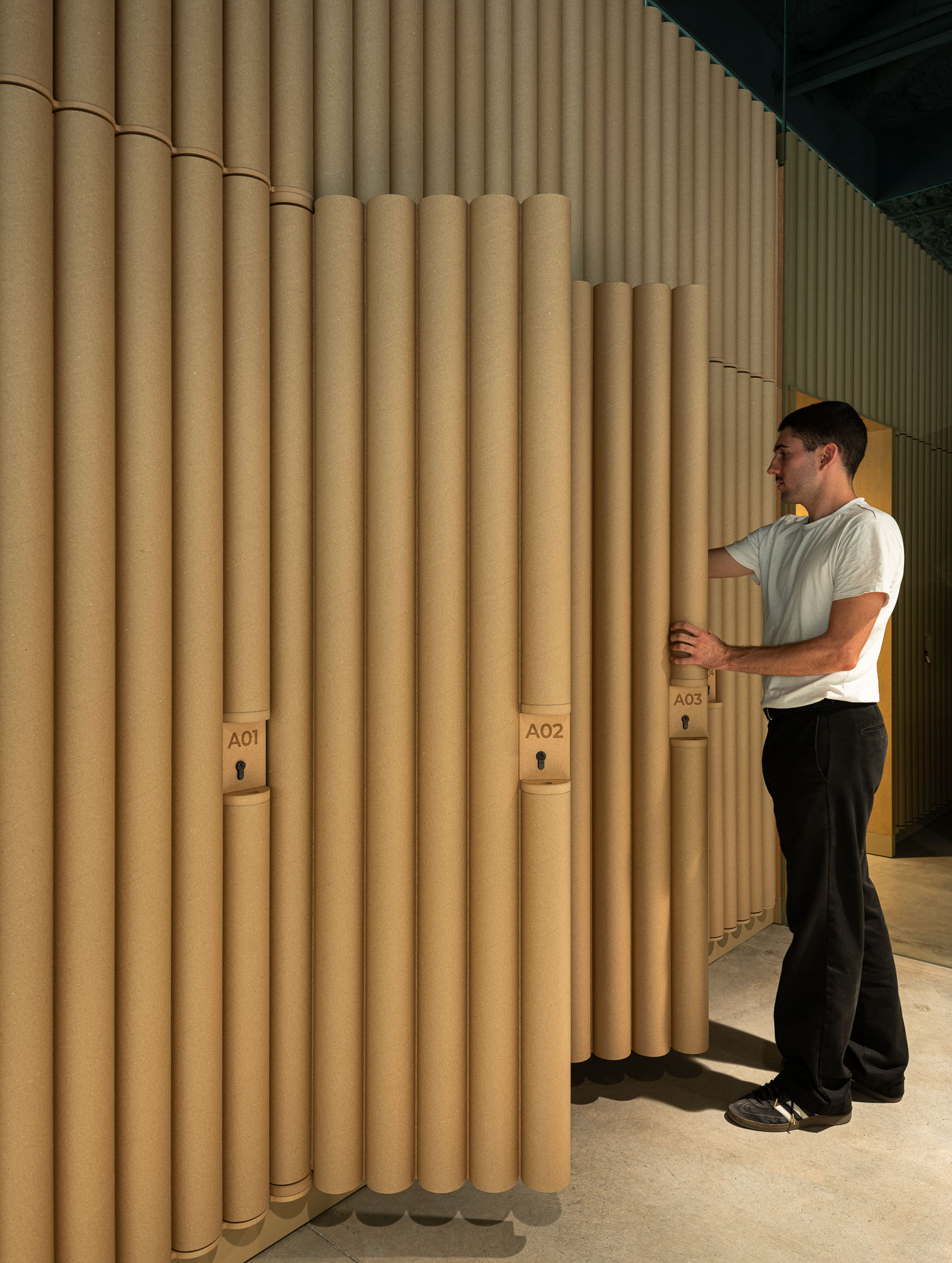
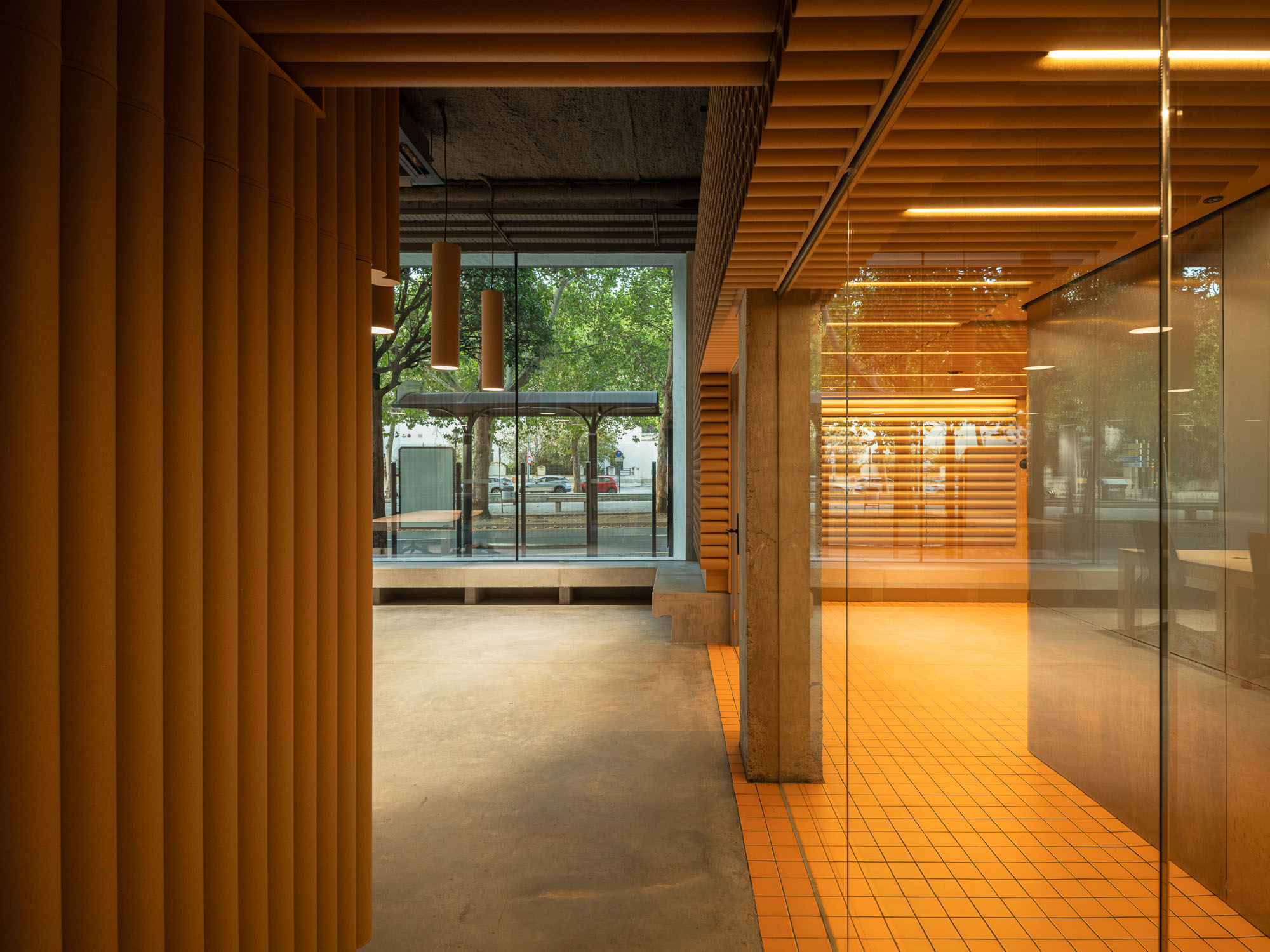
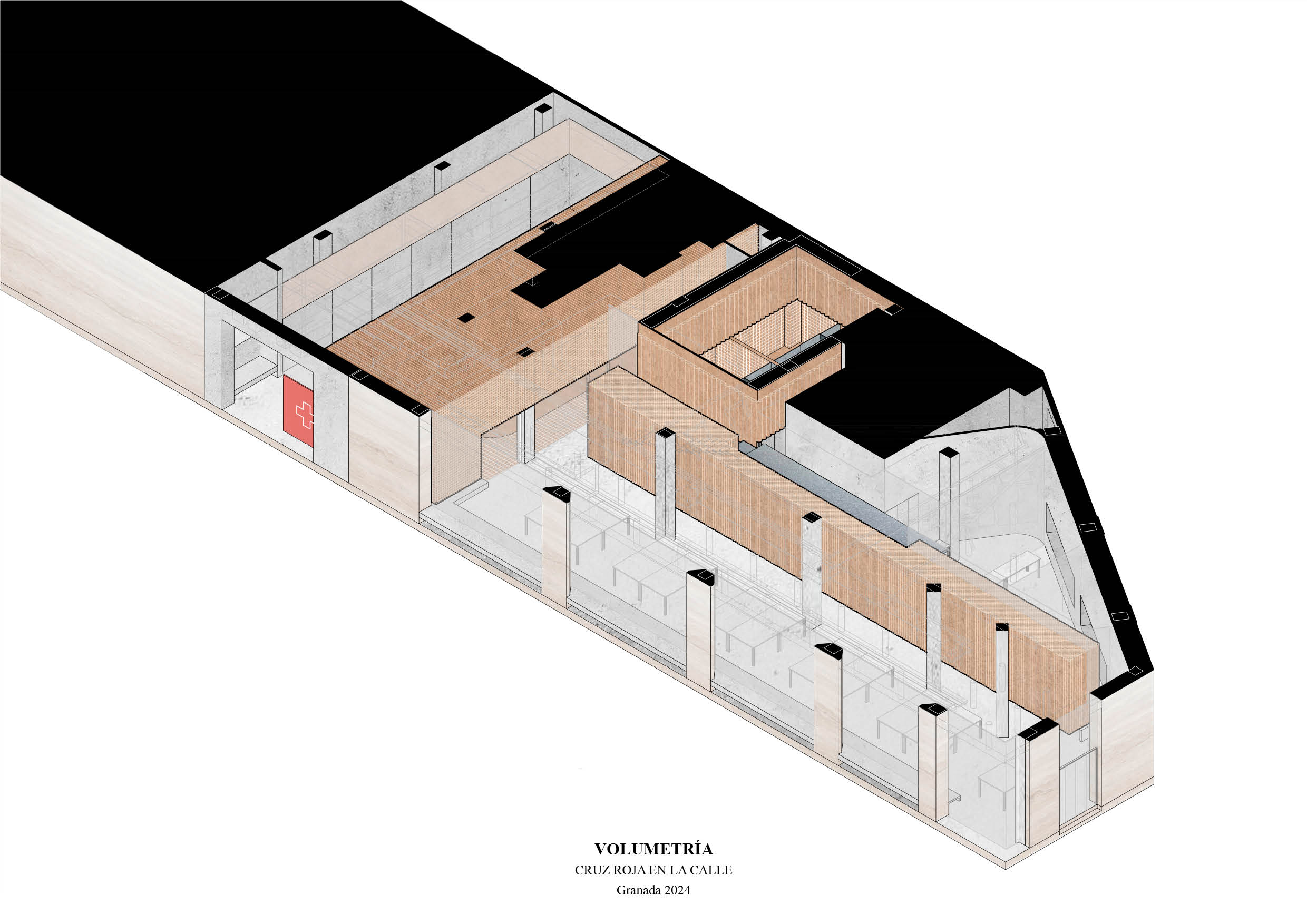
The list continues into 2024, when Tomás García Píriz Studio unveiled the stunning “Red Cross in the Street” headquarters in Granada, Spain. Here, cardboard is used in a way that practically mimics and celebrates the material, rather than hiding it. Alongside MDF, cardboard becomes a remarkably robust solution with very simple installation processes and low associated costs.
In the lobby area, cardboard is used for a false ceiling, as an acoustic trap, for ventilation, and to create separate enclosed areas within an open space. To the eye, its resemblance to wood creates a warmer, more natural feeling. As a low-impact material, the design’s carbon footprint is significantly lower than steel or cement, supporting the Red Cross’s environmental goals. The visual impact is unforgettable, which is crucial for the cause.
The office spaces were partitioned using cardboard tubes, enhancing the feeling of transparency and sustainability. The Tomás García Píriz Studio project is a resounding success on all fronts: aesthetically, as a complement to the organization’s sustainability ambitions, and ethically. A finalist worthy of winning the Architizer A+ Awards.
✦ ArchUp Editorial Insight
This article explores the innovative and often overlooked potential of cardboard as a legitimate, sustainable, and aesthetically versatile building material, tracing its historical use and highlighting a contemporary project by Tomás García Píriz Studio. While the argument for cardboard’s ecological and practical benefits is compelling, the article could be strengthened by a more critical examination of its limitations, such as long-term durability concerns, fire resistance, and performance in diverse climates, which are crucial for architects considering its adoption. Nonetheless, the piece successfully reframes a ubiquitous material into a symbol of architectural ingenuity, demonstrating how low-tech, sustainable solutions can achieve high-impact visual and functional results, pushing the boundaries of conventional construction.
Brought to you by the ArchUp Editorial Team
Inspiration starts here. Dive deeper into Architecture, Interior Design, Research, Cities, Design, and cutting-edge Projectson ArchUp.


