Chapel design in the form of a folded concrete structure

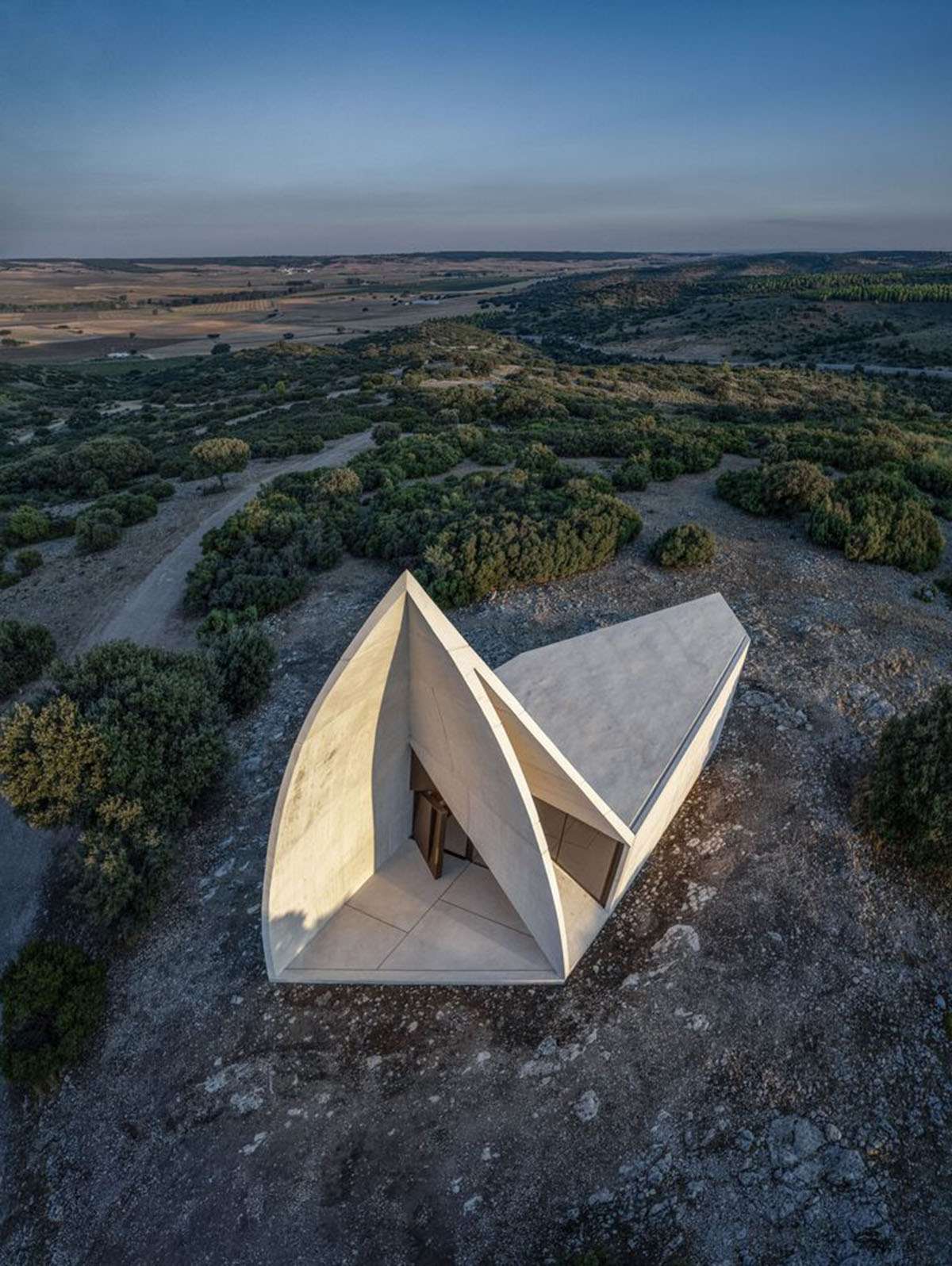
Chapel design in the form of a folded concrete structure,
Formed using concrete walls and a folded corner,
this chapel appears as a sculptural structure on the site without providing a sharp description of the façade.

Design Location
This small chapel was designed by “Sancho Madridius” in Madrid, on the site of the hills in Spain,
and was given the name “La Villa”.
It is located on a mountainous location in Cuenca,
on a rural estate with centenary oaks and truffle cultivation.
Design Features
The studio jointly designed a chapel and a house for the royal family,
with a single curved fold being used to design the chapel.
Conceptually and in its approach to the chapel in Valleacerón,
these folds were made using reinforced concrete so that the walls could function as one.
The architects followed the same principle of structure, form and space, in the design,
so that each component could function as a whole.
The walls allow the penetration of light that defines the use and character of the chapel,
the studio has created a curved fold.
This is in order to give this specific shape “in response to the complex external pressures of a topological action.”
The design was not created using the origami technique, because its formal appearance is a reinterpretation of topological expression,
which also reflects structural equilibrium, while responding to these external strains.
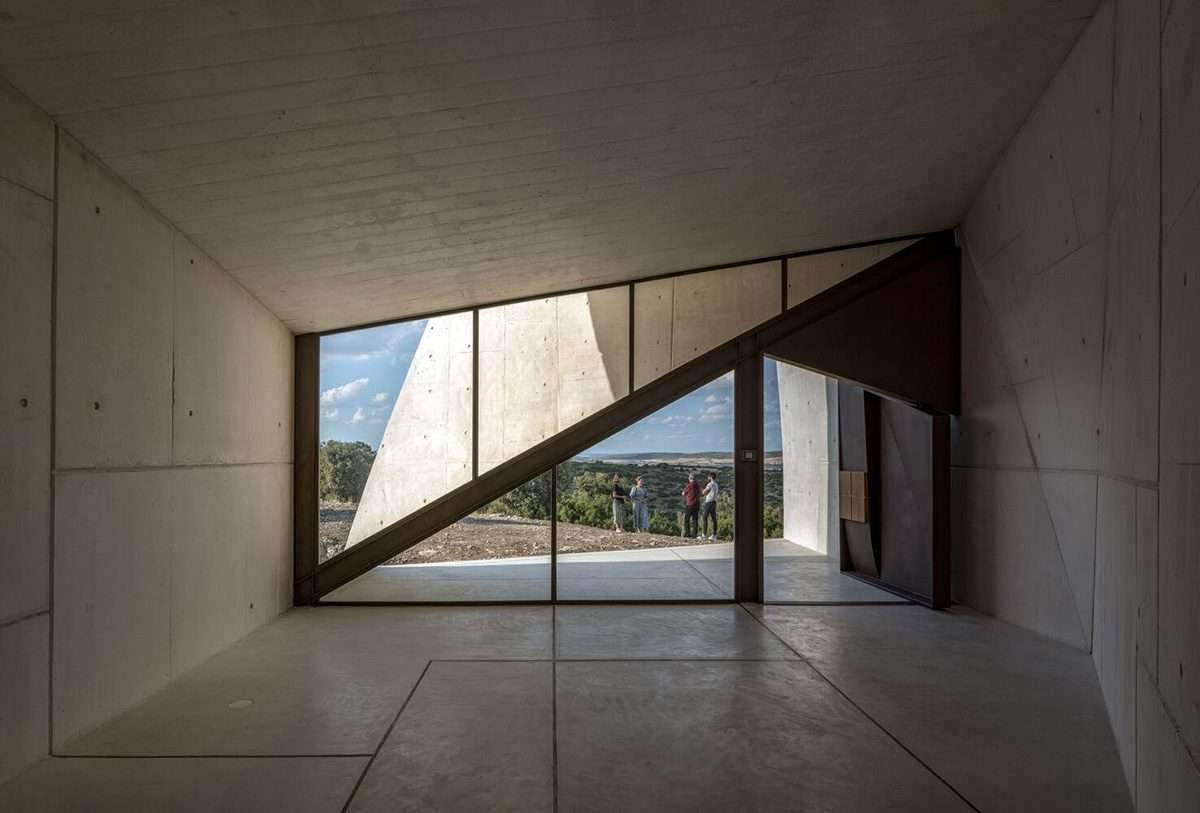
The design is created with a spacious entrance that welcomes and leads to a “pressed end”,
as well as a large cross suspended in concrete.
It penetrates the fold and creates light apertures facing certain directions,
casting different lights throughout the day, modifying the interior space little by little, regularly and continuously.
While the spatial experience is presented in the opposite direction to that transmitted in the chapel of Valleacerón.
The architects who designed the project chose the exact location of the church as a reference point from the entrance to the estate and from the road leading to it,
around which it would turn on approach.
When visitors look at the church from all sides, they find that it does not give any idea of the location of the entrance,
due to its introverted structure, and the magnificent entrance to the chapel is determined by the extension of the curved section in the foreground.