

Contemporary Lighthouses: From Navigation Tools to Sustainable Architectural Icons

Lighthouses have long stood as steadfast symbols in our collective consciousness, representing safe harbor in ocean storms, witnesses to the solitude of remote places, and a source of inspiration for travel literature. With the advent of advanced technology, particularly GPS satellite navigation, their traditional functional role has become nearly obsolete. This shift has opened the door for architects and designers to reimagine these structures not as relics of the past, but as living entities pulsating with new functions. Today, contemporary architecture is transforming lighthouses from isolated navigational towers into vibrant civic hubs, iconic sculptures, temporary art installations, renewable energy stations, and creative spaces for artists.
Redefinition: What is a Lighthouse in the Modern Era?
The classic definition of a lighthouse as a tower containing a light to guide ships is no longer sufficient. The contemporary lighthouse is a structure that operates in the liminal space between land and water, often acting as a mediator between the two elements. Its core function has expanded beyond guidance to making the invisible visible—whether by revealing environmental data, highlighting the cultural identity of a place, or creating new visual and sensory experiences. It has evolved from purely functional infrastructure into a platform for artistic, environmental, and technological expression.
Pioneering Models: Six Projects Reshaping the Concept of the Lighthouse
The following six projects offer inspiring, practical models for this transformation, ranging from projects under construction to ambitious conceptual designs, each exploring a different dimension of the new, multifaceted lighthouse.
- Sun Tower: A Cultural Beacon on the Shores of Yantai
· Design: Open Architecture
· Location: Yantai, China
· Status: Finalist for the 2025 A+ Awards
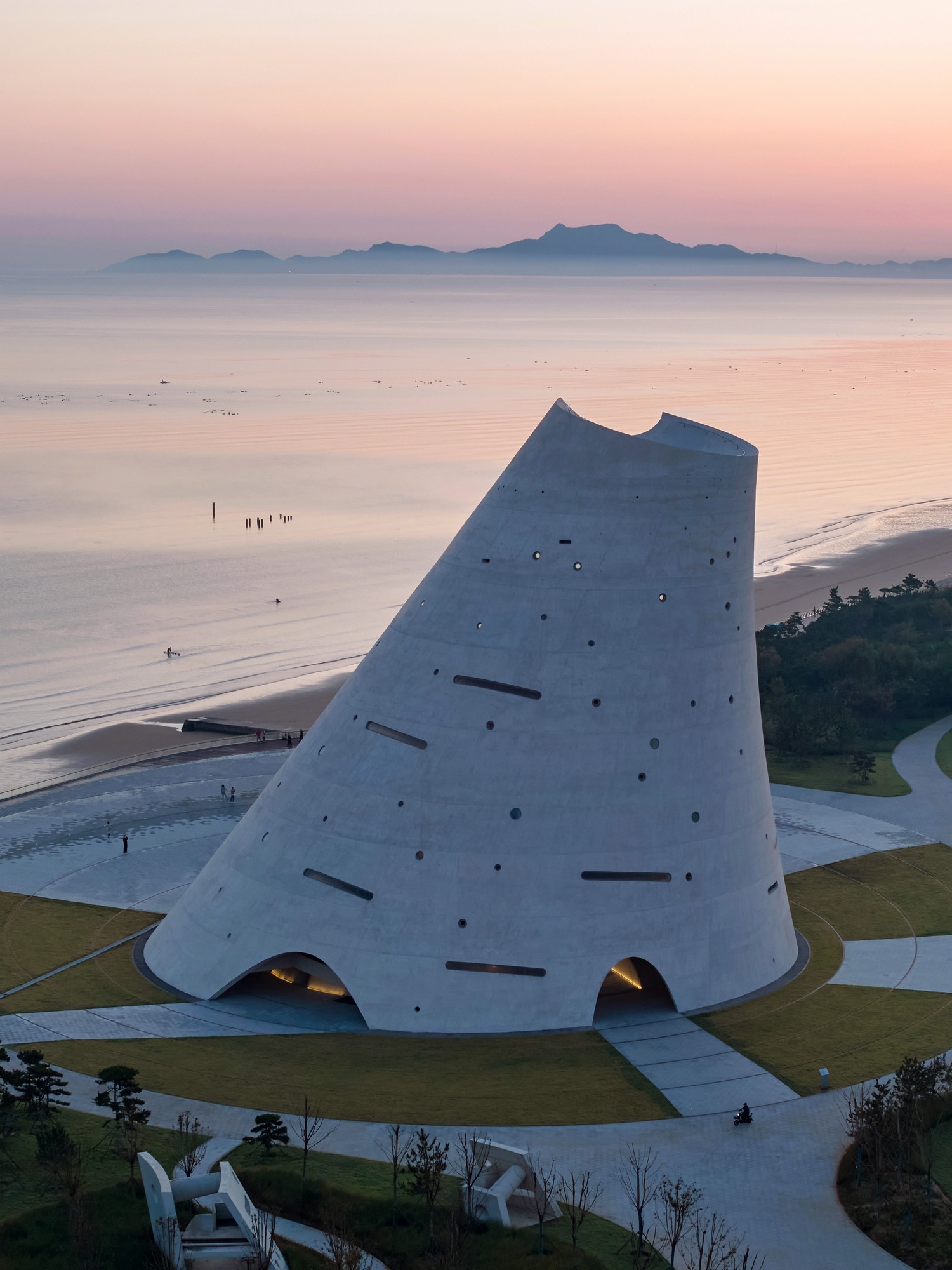
The Sun Tower does not merely draw formal inspiration from lighthouses; it recreates their core essence as a point of attraction and guidance, but on an urban, cultural level. Located in the Yantai Yeda development zone, this edifice occupies a strategic position on the threshold between land and sea. The design, sliced in two, is not just a bold gesture but a functional one that allows sunlight to pass through and reveals the vibrant internal structure to the outside world. Integrating an open-air theater, digital exhibition spaces, a library, and a café, it transforms the idea of a lighthouse from a place of observation into an active cultural destination that dialogues with nature and enriches urban life.
- Evolution Lighthouse: A Conceptual Vision for a Self-Sufficient Future
· Design: Archi Siminy Architecture
· Location: Conceptual Design
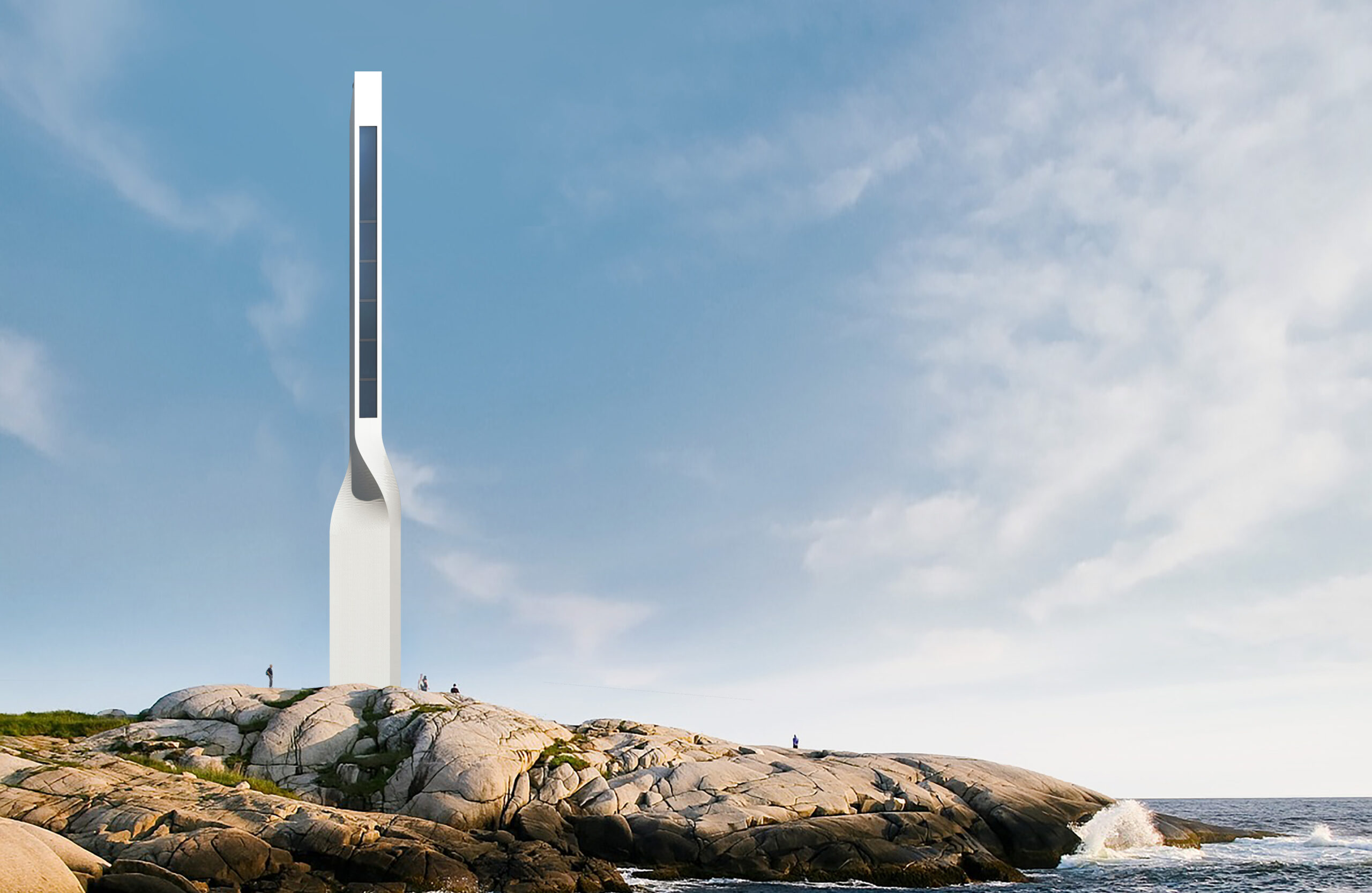
This conceptual project challenges the very idea of the lighthouse, arguing that its traditional purpose has become outdated. Instead, it explores how this unique architectural typology can be transformed into a comprehensive, self-reliant project. The design leverages the intrinsic characteristics of a lighthouse—its coastal location, height, and relative isolation—and repurposes it as a destination for eco-tourism. The metallic structure houses not only hotel units but is also a self-sufficient power station reliant on wind turbines, creating a model for sustainable tourist infrastructure that integrates renewable energy and communications into a single fabric.
- Lightsails: The Lighthouse as a Temporary Interactive Sculpture
· Design: Söhne & Partner Architects
· Location: Millstatt, Austria
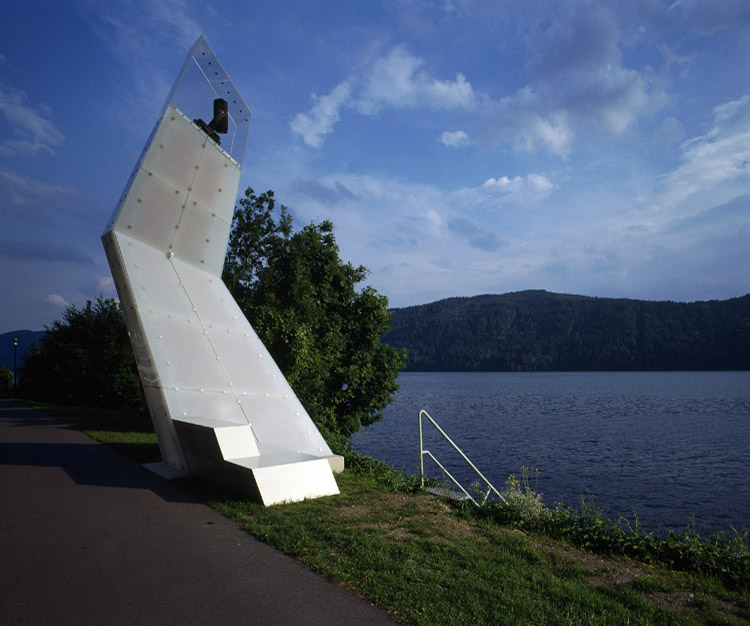
This project offers a poetic and temporary interpretation of the lighthouse’s role. At the Austrian State Exhibition on Lake Millstätter, seven luminous sails replaced a traditional stone tower. Each sail acts as a symbolic guiding beacon, or “luminous space,” directing visitors through the exhibition grounds. However, these new lighthouses are alive and interactive; their lighting responds to the movement of people nearby, and their colors change with temperature fluctuations, transforming the surrounding space into a dynamic, ever-changing canvas—redefining guidance as a sensory and aesthetic experience.
- Observation Tower: The Lighthouse as a Community Recreation Facility
· Design: Rysy Architekci
· Location: Warsaw, Poland
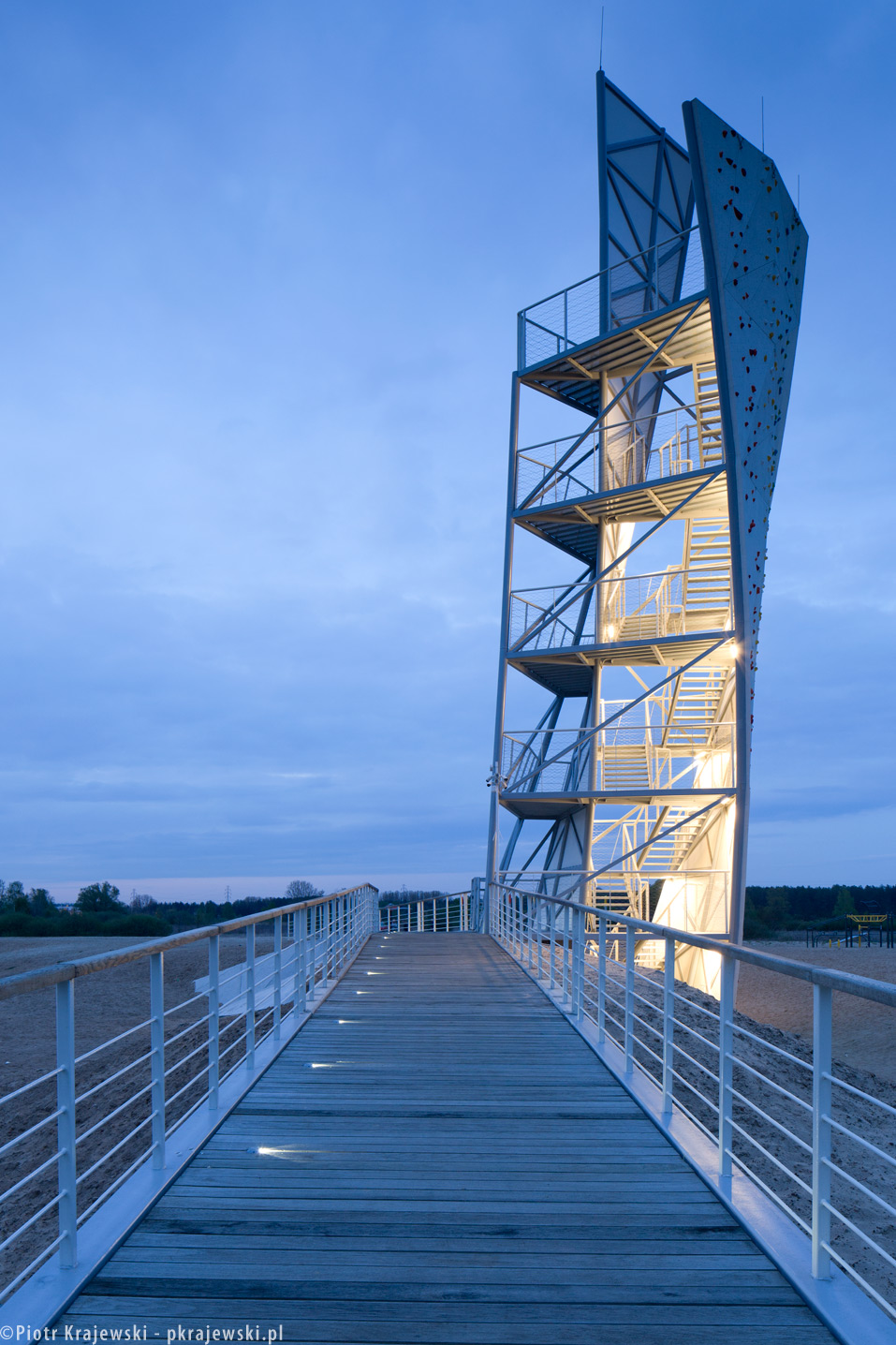
This project demonstrates how a lighthouse can be integrated into a city’s internal fabric and become a hub for community activity. Located on Warsaw’s Bardowskiego Lagoon, this lightweight steel tower combines the traditional function of an observation tower with active recreation by incorporating a climbing wall into its design. Thus, it transforms from a passive landmark to be viewed into a recreational infrastructure activated by the community. At night, the tower glows as a vertical, luminous sign, reclaiming the lighthouse’s role as a source of light but in a recreational context, illustrating a new relationship between water and the urban landscape.
- Aleurion Lighthouse Project: A Dialogue Between Heritage and Modernity
· Design: Bo.M Design Studio – Vasilis Mylonas
· Location: Volos, Greece
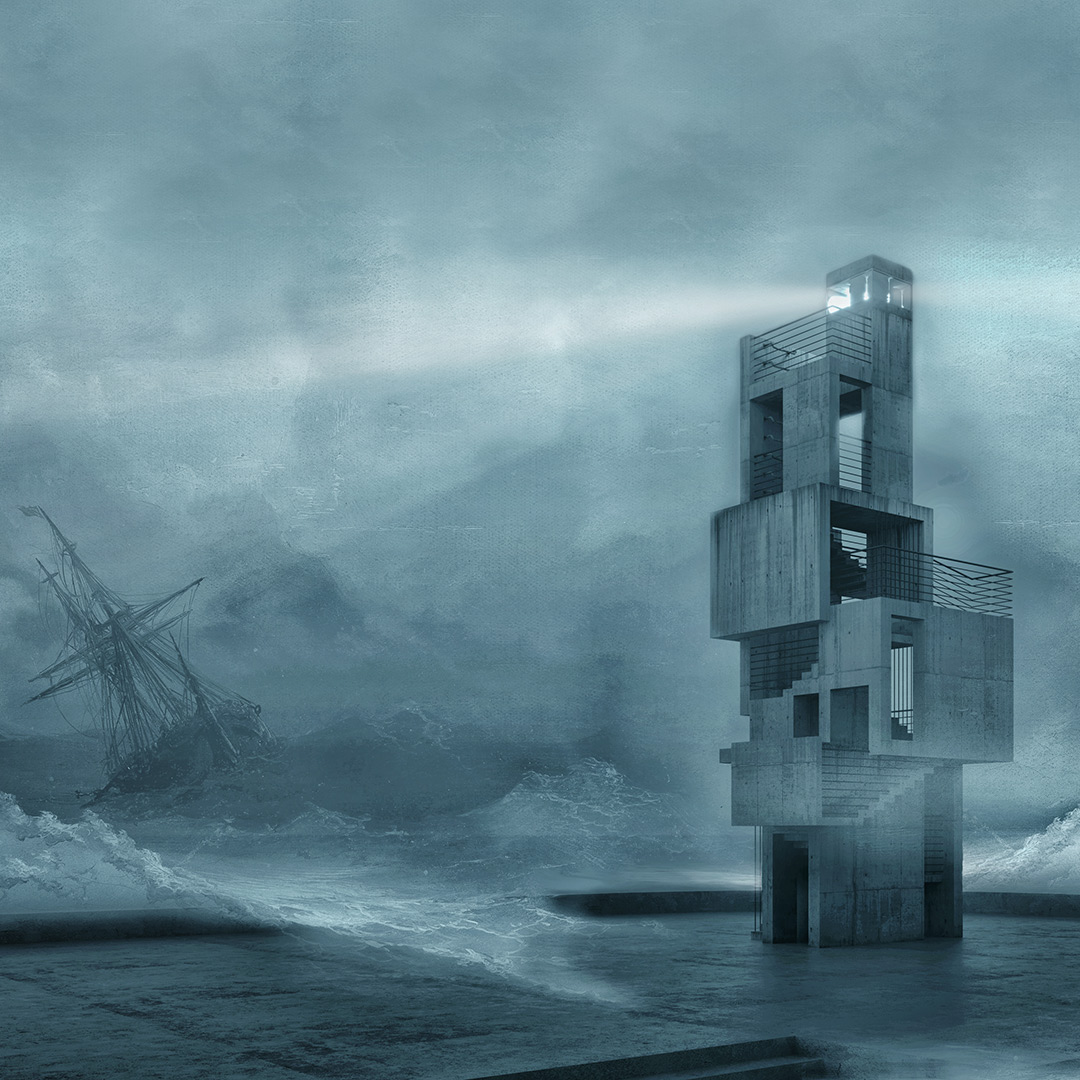
This proposal for the port of Volos creates a link between the oldest traditions of maritime safety and the latest architectural concepts. The design is inspired by the “aleurion” of Xerxes, one of the earliest navigation aids in history. It reinterprets the idea of stacked stone blocks in a modern mold using rounded concrete cubes. The 14.25-meter-high structure is not just a maritime marker but a public cultural lighthouse; an internal staircase invites visitors to ascend and experience changing views of the Gulf of Volos, turning the waterfront promenade into a visual and cultural adventure and representing the city’s edge with a contemporary civic symbol.
- Lighthouse Turbine Hotel: Recycling Old Infrastructure
· Design: Margot Krasojević Architecture
· Location: Jeju, South Korea
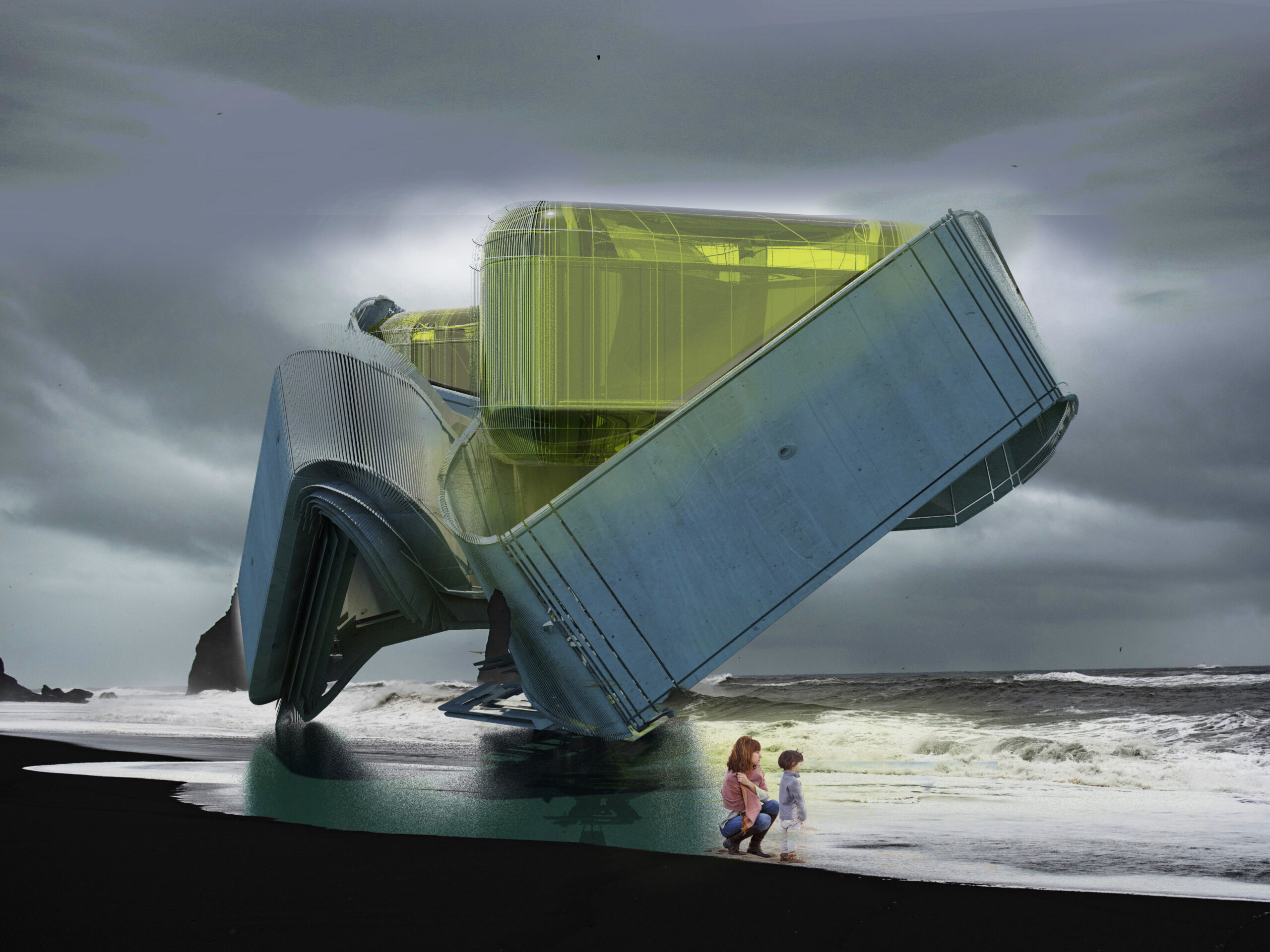
This ambitious project presents one of the most radical solutions, not only redefining the lighthouse’s function but also upcycling existing infrastructure—an old oil drilling platform. The design creates a hybrid entity between renewable energy infrastructure and luxury hospitality. The structure, resembling a ship, is made of advanced ETFE material resistant to harsh conditions and is powered by three wind turbines that harness wave energy. This project offers not only unique accommodation but also positions itself as a living research platform, engaging guests in the experience of sustainability and renewable technologies, proposing that structures with obsolete functions can be radically redefined rather than demolished or abandoned.
Conclusion: The Future of Lighthouses as Experimental Platforms on the Edge of the World
Together, these projects form a powerful statement about the future of these structures. Lighthouses have transcended their role as static symbols of the past to become living experimental platforms on the edge between the terrestrial and marine worlds. The future promises lighthouses not just for guidance, but for learning, playing, living, creating, and environmental preservation. Architecture has successfully transformed a symbol of isolation into a bridge for community and environmental connectivity, proving that any architectural typology, no matter how traditional, is capable of evolving to meet the needs of the age.
✦ ArchUp Editorial Insight
The article traces the functional and symbolic transformation of the lighthouse from an isolated navigational tower to a multi-purpose platform integrating community and environmental services. An analysis of the presented projects reveals a focus on symbolic and environmental value that can sometimes overshadow the direct functional clarity of the interior spaces, where a multiplicity of uses blurs the relationship between the design and its primary purpose for the end-user. Some designs rely on exceptional forms that may consume structural resources and energy exceeding the expected functional return, potentially undermining their long-term efficiency as sustainable projects. However, these projects collectively succeed in establishing an architectural dialogue with the coastal context, creating new visual and physical relationships between land and water that enrich the urban experience.
Brought to you by the ArchUp Editorial Team
Inspiration starts here. Dive deeper into Architecture, Interior Design, Research, Cities, Design, and cutting-edge Projectson ArchUp.


