Daniel Valle Architects Redefines Public Restrooms with Sustainable Renovation Near Daegu’s Susongmot Lake

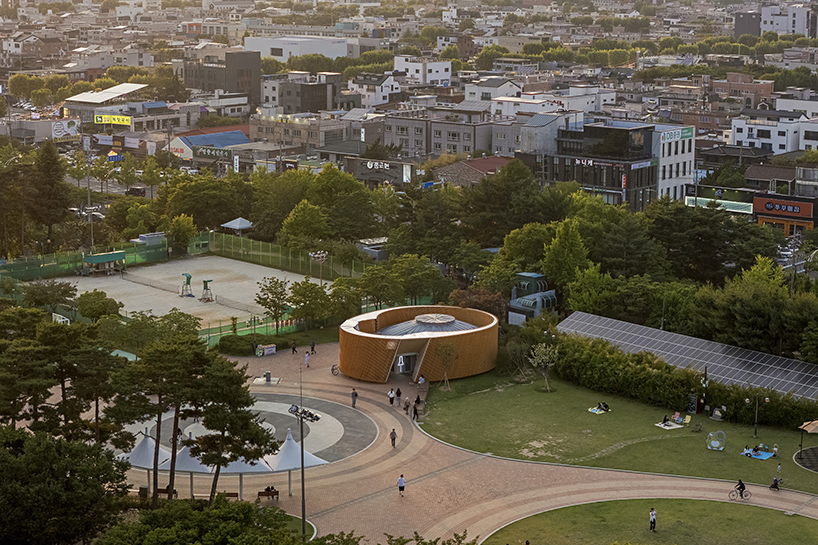
Nestled along the southern edge of Susongmot Lake in Daegu, South Korea, a 1990s-era public restroom has been transformed into a model of functional innovation and ecological harmony by Daniel Valle Architects. This renovation reimagines the relationship between built form and natural surroundings through adaptive structural interventions, material ingenuity, and a commitment to environmental integration.
A Design Prioritizing Openness and Light
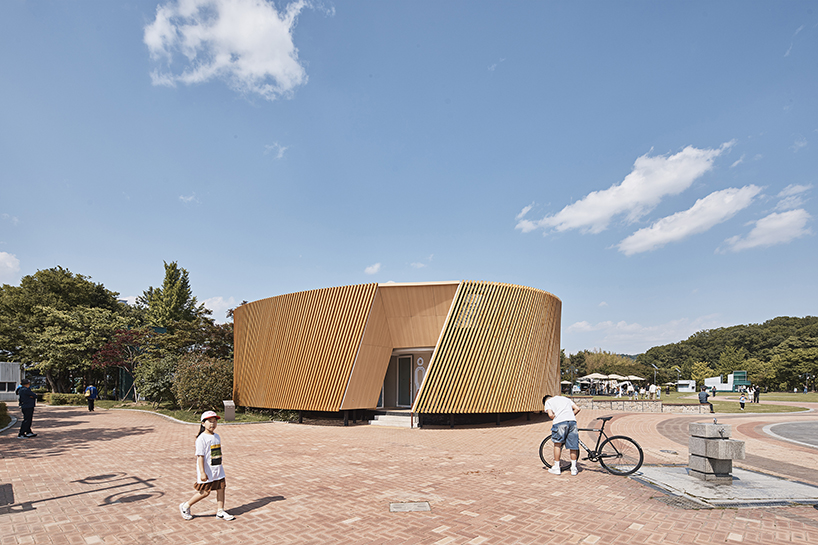
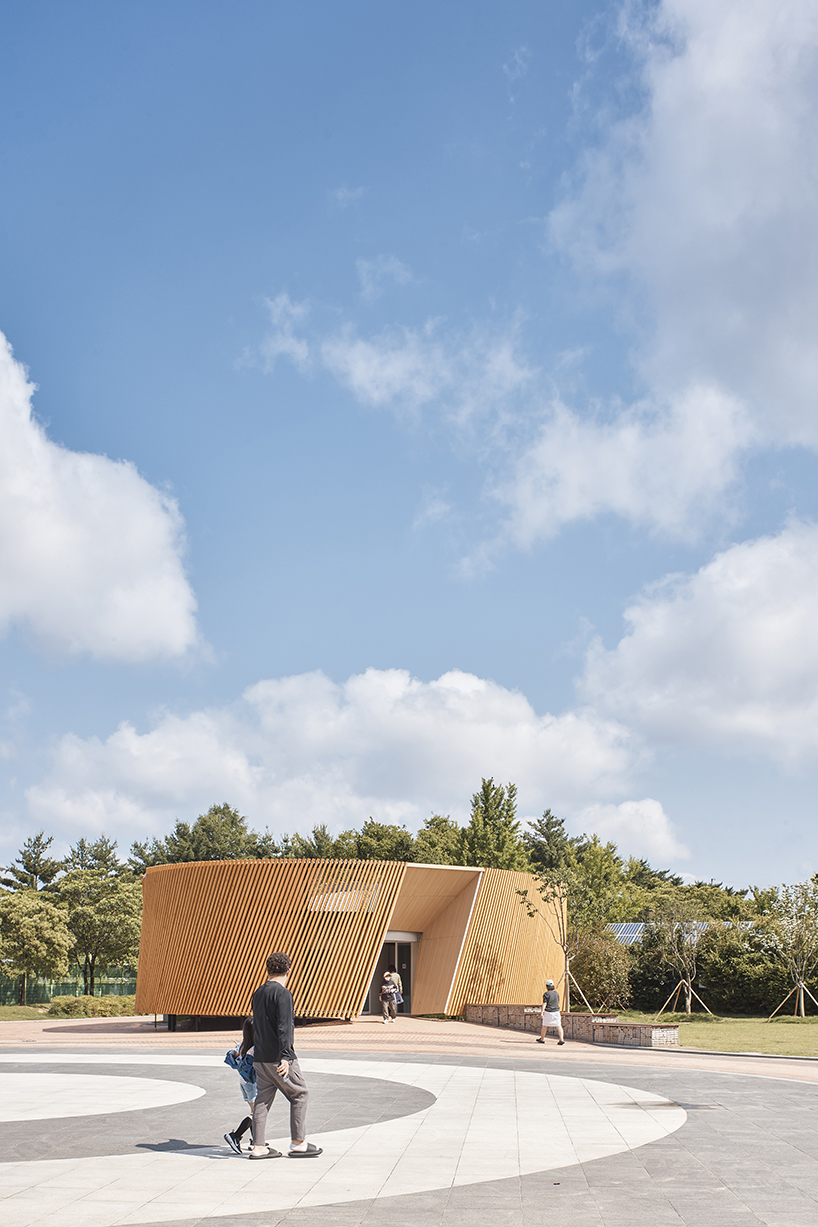
The project dismantles the original concrete and stone walls, replacing them with a breathable, double-layered timber façade composed of 450 vertically slatted wooden battens. These battens are strategically angled to filter natural light while maintaining visual privacy a balance rarely achieved in public utility design. The result is an interior bathed in diffused daylight, reducing reliance on artificial lighting and enhancing user comfort.
Seasonal Adaptability and Ecological Engagement
Beyond aesthetics, the façade is designed to evolve with the landscape. Climbing plants are encouraged to grow across the structure, gradually weaving the building into its lakeside context. Select battens also incorporate small bird nests, turning the restroom into a micro-habitat. This dual-purpose approach reflects a growing architectural trend: infrastructure that serves both people and ecosystems.
From Utility to Landmark
By merging sustainable materials, biophilic design, and spatial reconfiguration, Daniel Valle Architects elevates a mundane public facility into a dynamic, seasonally responsive landmark. The restroom now acts as a catalyst for ecological awareness, demonstrating how even the most utilitarian spaces can foster connections between urban life and nature.
✦ ArchUp Editorial Insight
This project by Daniel Valle Architects rethinks public infrastructure as a living interface between humans and nature, blending functionality with poetic environmental stewardship. While the timber façade’s permeability is commendable, its long-term durability in Daegu’s humid climate could warrant further discussion especially regarding maintenance and material weathering. That said, the integration of nesting spaces and climbing vegetation is a masterstroke, proving that small-scale interventions can ripple into broader ecological impact. A bold step toward architecture that doesn’t just occupy space but nurtures it.
Brought to you by the ArchUp Editorial Team
Inspiration starts here. Dive deeper into Architecture, Interior Design, Research, Cities, Design, and cutting-edge Projectson ArchUp.