DISLOCAL_ Experimental University Program 2021-2022

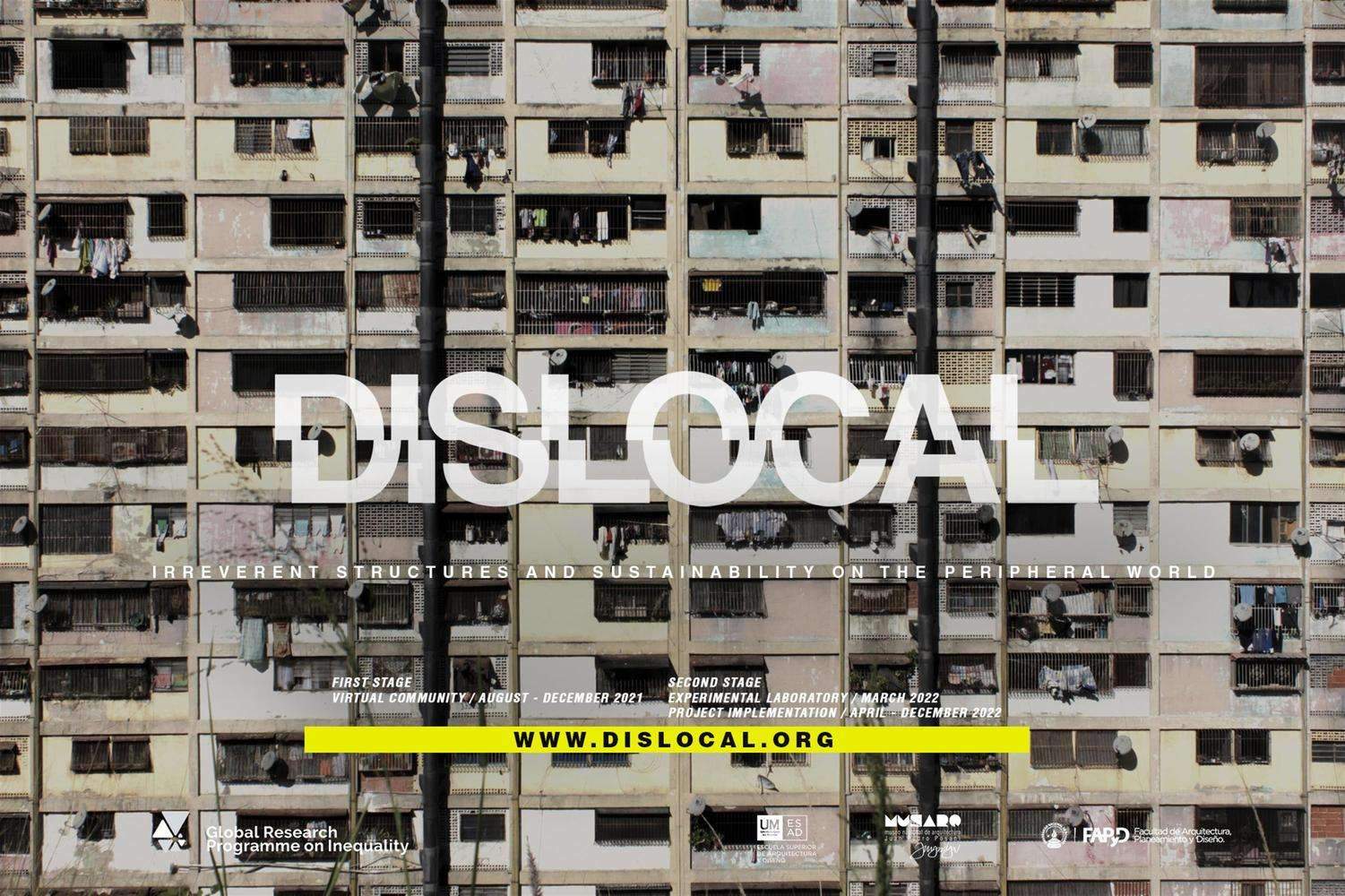
DISLOCAL_ Experimental University Program 2021-2022: Irreverent structures and sustainability on the peripheral world, led by Venezuelan architects and a network of global cooperation.
Venezuelan architects from different latitudes have surprisingly joined together with their allies in the world, through an educational platform that seeks to “build and not simulate reality with an eye on the peripheral globe.”
The program is open to students of all levels and from anywhere on the planet, who will have the opportunity to train in local projects, exploring the peripheries as part of a fresh and challenging context where new spaces of architecture open up.
The 2021-2022 cycle will jumpstart through a Virtual Community format, which offers academic credits adaptable to different university systems: a trimester, a summer school, an internship experience, a research project, or a work of scientific accreditation for studies of postgraduate.
This is followed by an experimental laboratory in Central America where students will come into contact with sensitive projects in fertile communities and territories. And finally, it will culminate in the implementation of a project built in a community of Caracas, Venezuela.
The program has the support of the Global Research Program on Inequality, different universities and institutions in Latin America and the world, and high-profile professionals experts in architecture, urban planning, anthropology, sociology, engineering, and sustainability, who will guide the processes of the network, facing complex situations immersed in the fabric of the city, and will certify the knowledge applied by Dislocal.
First Stage
- Virtual Community / August – December 2021
16 weeks >> 5 blocks >> 5 topics on urban regeneration and sustainability >> - Block 1. Resilience, urban regeneration, and habitat transformation for emerging landscapes.
- Block 2. Ecology, resource management, nature, and energy optimization in the tropics.
- Block 3. Technological implementation, systems, and efficient endogenous structures.
- Block 4. Local skills, capacity development, and self-sufficiency in popular settlements.
- Block 5. Experiments in the global periphery. Scalable intelligences for the prototyping of sustainable structures in Caracas.
Second Stage
- Experimental Laboratory in Central America / March 2022
- Project Implementation in Caracas, Venezuela / April – December 2022
To discover all the details go to DISLOCAL website and get in touch to register.
IG: @dis_local
Check out all events from here.