Dome Villa in Bali: The Fusion of Organic Architecture with Jungle

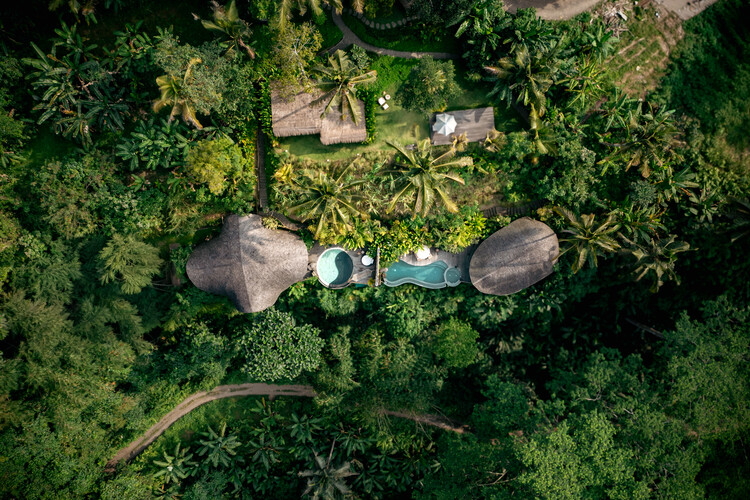
In the heart of the lush jungles of Kedewatan, Bali, where dense greenery meets a enchanting atmosphere, Dome Villa stands as a testament to the potential of organic architecture to merge with nature. This project is not merely a traditional shelter but a manifestation of an architectural philosophy that redefines the relationship between dwelling and environment through fluid forms and the use of natural materials.
Design Philosophy: The Dome as a Symbol of Openness and Shelter
The villa’s design draws inspiration from the timeless geometric form of the dome, which embodies a balance between a sense of shelter and openness to the surroundings. It is not just a roof but a comprehensive environment where the boundaries between inside and outside dissolve. The gentle curves of the structure emerge as if a natural extension of the land’s topography, reinforcing the sensation that the building was born from the womb of the jungle, not imposed upon it.
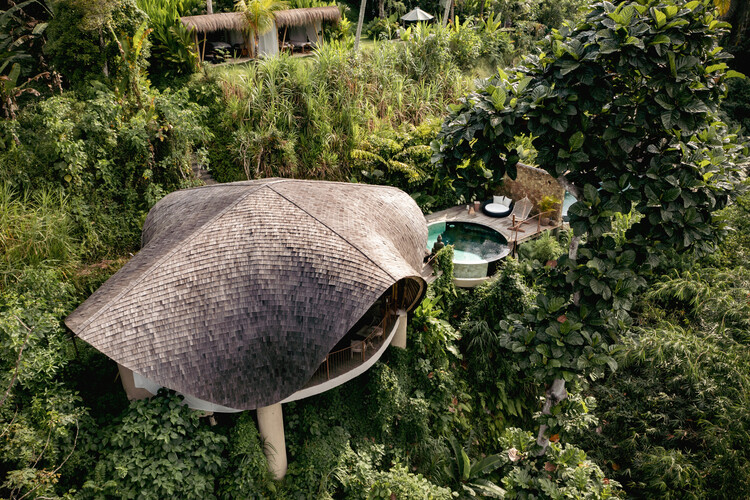
Structural System: The Brilliance of Bamboo Construction
The villa’s structural system represents a qualitative leap in the art of bamboo construction. The arched bamboo frames spring directly from the ground, avoiding the use of traditional straight columns. This design not only creates an aesthetic form but also generates a feeling of continuity and flow. This structure forms a continuous structural envelope that provides remarkable structural integrity while maintaining a sense of lightness and transparency, allowing the spaces to breathe freely.
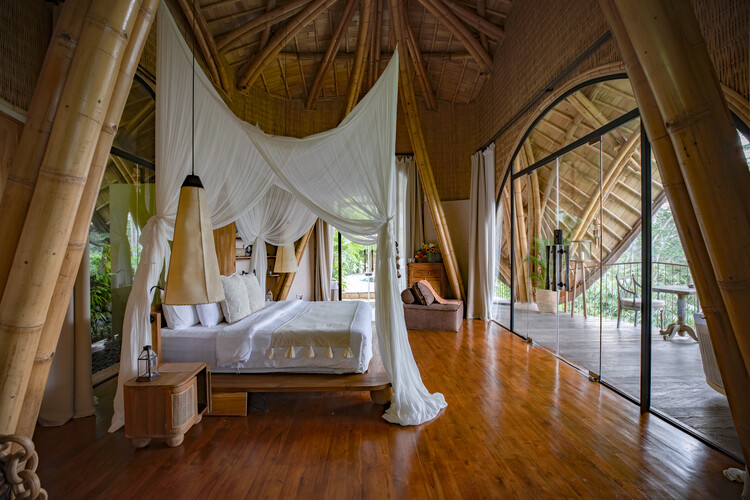
Interior Layout: A Journey Through Interconnected Spaces
The villa’s space is distributed across three interconnected volumes that flow smoothly and harmoniously between them:
· The Master Bedroom: Forms the heart of the villa, surrounded by walls of textured natural limestone, lending a sense of authenticity and stability. The room is furnished with custom local artisan pieces designed specifically for the space, supporting local crafts and enhancing an authentic Balinese identity.
· The Semi-Open Bathroom: Represents an intelligent transition from the enclosed world to the open one. Through its direct connection to a private garden, it achieves an advanced dissolution of conventional boundaries, offering a unique bathing experience amidst nature.
· The Indoor Jacuzzi: The tub is seamlessly integrated into the overall layout, enhancing the concept of personal wellness within a framework of natural living.
Materials and Finishes: A Celebration of Nature and Local Craftsmanship
The project relies on an entirely natural material palette, embodying architectural honesty and rooting the project in its environment:
· Bamboo: Not just a building material, but an aesthetic and structural statement.
· Limestone: Imparts durability and a natural coolness to the interior walls.
· Slate Stone: Used for flooring, enhancing the visual connection to the earth.
· Ulin Wood: Used for furnishings and details, known for its high resistance.
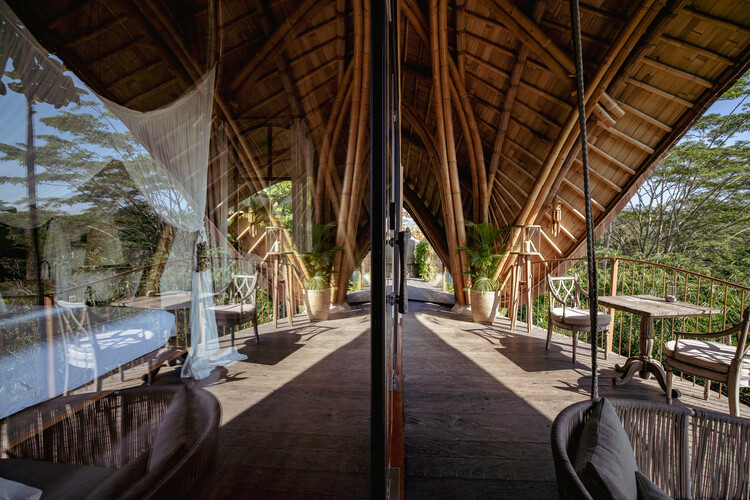
Sustainability and Biophilic Comfort: Nature’s Technology
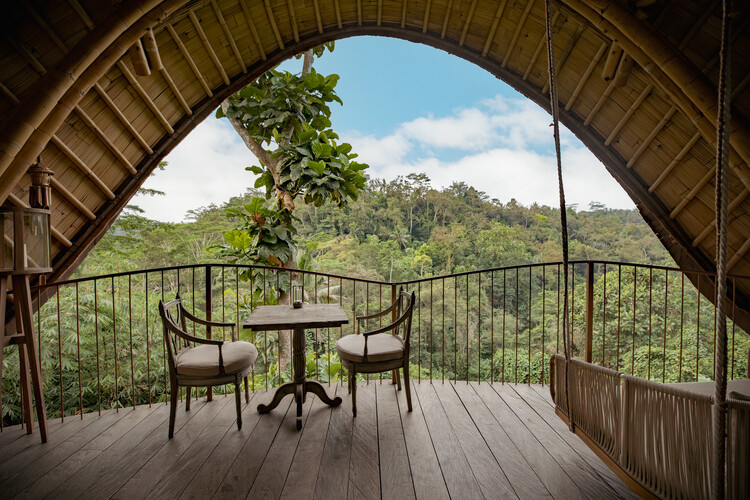
The villa’s design excels in achieving high biophilic comfort using purely natural solutions. The expansive arched roof provides complete shade, reducing solar heat gain. Simultaneously, the woven bamboo surfaces and wide ventilation openings allow for the passage of filtered natural light and cool air currents, creating a comfortable indoor climate without the need for mechanical cooling systems for most of the year.
Sensory Experience: A Symphony of Light, Air, and View
Dome Villa offers not just a dwelling, but a comprehensive sensory experience. It is a journey between dappled sunlight filtering through the bamboo weave, the air currents moving through the spaces, and the stunning panoramic views of the valley and jungle. This continuous sensory interaction creates an atmosphere of renewal and relaxation, where architecture, landscape, and craftsmanship converge to nurture body, spirit, and environment simultaneously.
✦ Archup Editorial Insight
The article discusses the project’s ability to achieve visual integration with the natural environment through its organic forms and local materials. The design raises questions about the efficiency of the semi-open space in providing privacy, the potential vulnerability of the wooden structures to weathering despite their aesthetic appeal, and the management of ventilation in the enclosed sections of the curved structure. The architectural form’s capacity to create a visual dialogue with the site’s topography remains the most distinctive feature of the spatial experience.
Brought to you by the ArchUp Editorial Team
Inspiration starts here. Dive deeper into Architecture, Interior Design, Research, Cities, Design, and cutting-edge Projectson ArchUp.