Doriza Design Converts Stone Building into Drakoni House

Greek studio Doriza Design has transformed a 19th-century stone building into Drakoni House, a rustic holiday home located in the village of Pano Pines, Crete. The 45-square-metre structure, originally built from local stone and uninhabited since 1920, has been meticulously restored with an emphasis on preserving its historical and architectural integrity.
Respecting Tradition and Context
The exterior alterations to Drakoni House are minimal and reversible, maintaining the traditional appearance of the building. Doriza Design focused primarily on the restoration and reinforcement of the original stone masonry, reconstructing only the collapsed sections. This careful approach ensures that the building remains in harmony with the traditional culture and architecture of the settlement.
An Inviting Entrance
A low stone wall encloses the entrance courtyard, providing privacy and a cozy outdoor space featuring a bench and a hot tub. This area serves as a welcoming prelude to the home’s interior.

Interior Layout and Design
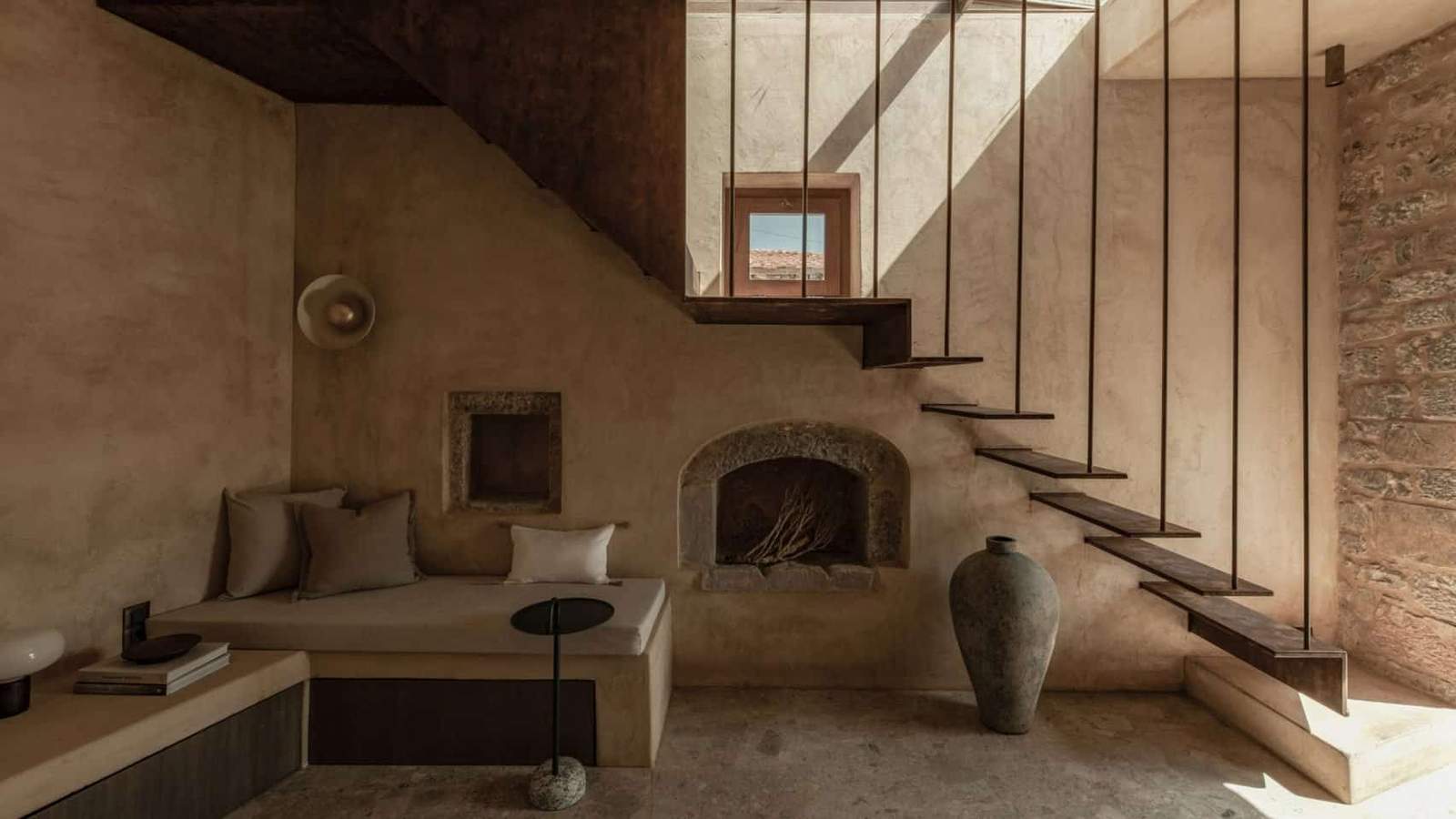
Inside, the home is organized around a central stone arch that delineates the bedroom from the living, dining, and kitchen areas. The compact living space features built-in bench seating, a fireplace, and a kitchen counter, all integrated into the corners to maximize space.
Living area of Drakoni House
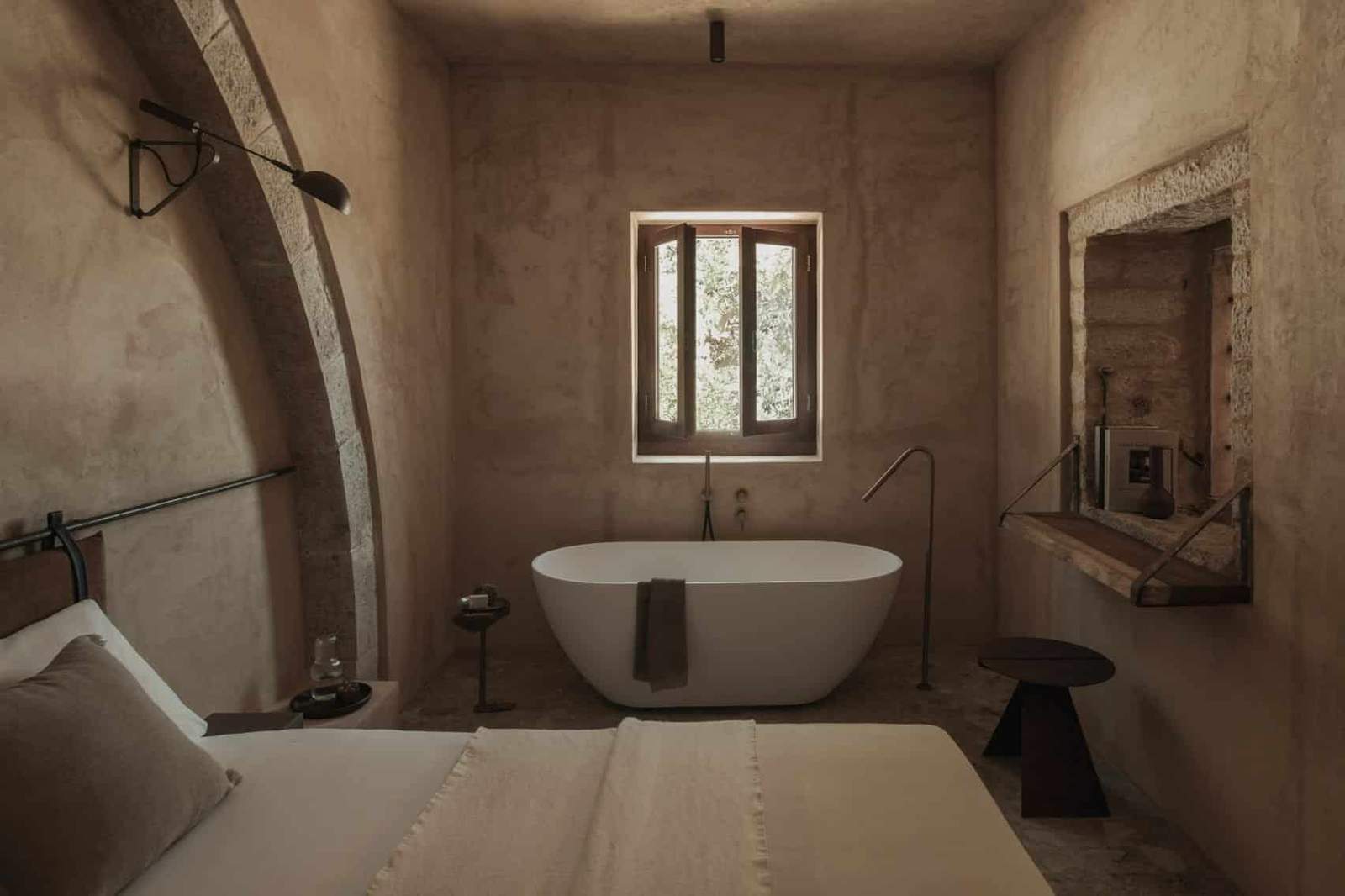
The bedroom is designed with a free-standing bath at one end and a toilet at the other, providing functional yet aesthetically pleasing accommodations. Deep-set windows offer views of the surrounding landscape, and a small internal opening connects the two main spaces visually.
Aesthetic Harmony
The design employs rough plaster, weathered metal, and irregular stone to create a sense of historical continuity. The materials are chosen for their “intentional deterioration and conscious imperfection,” bringing a balanced, harmonious feel to the space.
Conclusion
Doriza Design’s careful restoration of Drakoni House preserves its historical charm while making it a functional and inviting holiday home. The blend of traditional materials and modern amenities, along with the minimal yet impactful interventions, exemplify a respectful and thoughtful approach to architectural renovation. This project is a testament to how historical buildings can be adapted for contemporary use while maintaining their cultural significance.
Finally, find out more on ArchUp: