
Dubai 2025: A Maturing Urban Landscape Redefines the Real Estate Sector

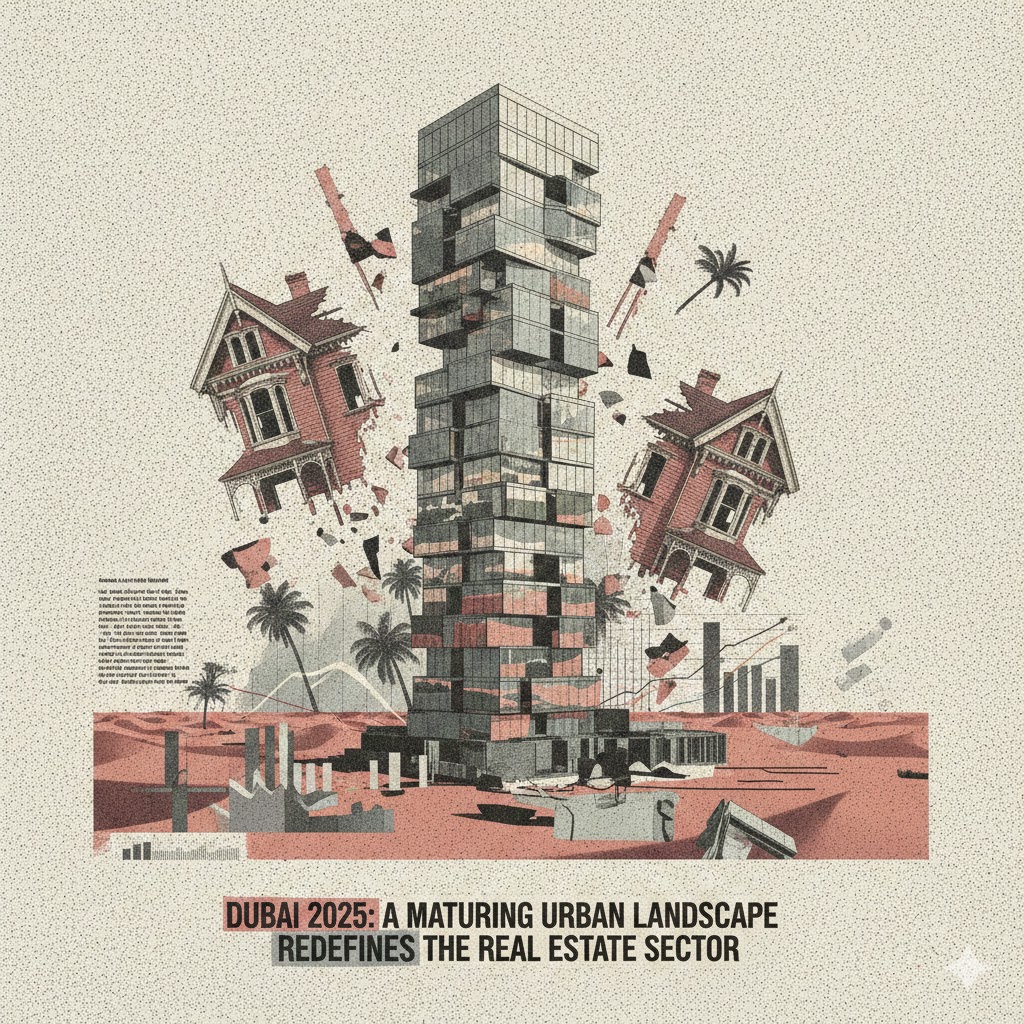
In 2025, Dubai’s real estate landscape reached a historic milestone, marking its highest performance since the sector’s inception. Total real estate transactions amounted to AED 917 billion, generated through more than 270,000 registered transactions, reflecting a shift from rapid expansion toward institutional maturity and sustainable urban growth.
This evolution aligns with the objectives of the Dubai Real Estate Strategy 2033, which emphasizes urban quality, spatial efficiency, and integrated development, reinforcing Dubai’s position as a globally competitive city shaped by long-term planning.
Real Estate Investment as an Urban-Shaping Force
During the year, real estate investments reached approximately AED 680 billion across 258,600 investments, highlighting continued momentum in the development of mixed-use districts and high-density urban nodes that integrate residential, commercial, and leisure functions.
The rise in new investors, exceeding 129,000 entrants, underscores the transformation of Dubai’s property market into a platform for long-term urban commitment, supported by a regulatory environment designed to promote stability rather than short-term speculation.
Social Participation and Inclusive Urban Growth
Women investors played an increasingly visible role in shaping the city’s built environment, with investments totaling AED 154 billion. This trend reflects a broader shift toward inclusive urban participation, where real estate development functions as a catalyst for social and spatial transformation, not solely capital accumulation.
Luxury Real Estate and the Architectural Identity of the City
Luxury real estate developments recorded investments of AED 3.98 billion, driven by architecturally distinctive projects that contribute to Dubai’s evolving skyline and reinforce its reputation as a global laboratory for contemporary design and landmark architecture.
Meanwhile, the average transition period from tenant to property owner, recorded at 4.8 years, points to increasing residential stability and the gradual formation of long-term urban communities.
A Polycentric Urban Geography
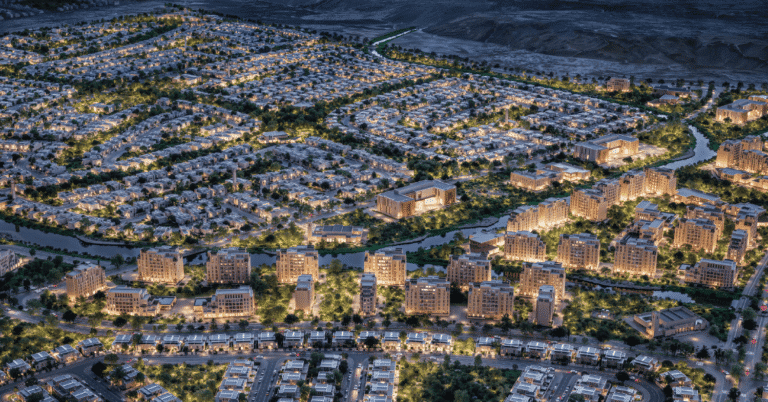
The spatial distribution of market activity reflects Dubai’s ongoing transition toward a polycentric urban structure. Areas such as Business Bay, Dubai Marina, Palm Jumeirah, Al Barsha South Fourth, and Dubai Airport City emerged as key urban anchors, combining density, infrastructure, and diversified land use.
Mortgage activity also concentrated in strategic districts, indicating sustained confidence in Dubai’s long-term urban resilience and the durability of its planning frameworks.
Looking Ahead to 2026: Stabilising the Urban Rhythm
As Dubai enters 2026, market indicators suggest a period of price flatlining, accompanied by a renewed emphasis on design quality, planning compliance, and architectural performance. This phase signals a recalibration of growth, reinforcing Dubai’s capacity to maintain urban vitality while consolidating its position as a resilient, future-oriented metropolis.
✦ ArchUp Editorial Insight
Dubai’s 2025 real estate performance reflects a decisive shift toward Contemporary Urbanism, where scale is increasingly matched by institutional discipline and long-term planning logic. The record transaction volumes and investment flows signal a maturing market that leverages mixed-use density, polycentric growth, and regulatory stability to shape the Urban Fabric beyond speculative cycles. However, while capital intensity and luxury-led development reinforce Dubai’s global positioning, questions persist regarding Contextual Relevance, particularly in balancing landmark-driven Architectural Ambition with everyday housing affordability and social continuity. Yet the growing participation of long-term investors and homeowners, alongside inclusive capital engagement, suggests an evolving alignment between market forces and urban life. As growth stabilizes, Dubai’s emphasis on design quality and Functional Resilience positions the city to consolidate form, function, and governance into a coherent metropolitan model.

★ ArchUp Technical Analysis
ArchUp: Technical Analysis of Urban Transformation and Real Estate Maturation in Dubai 2025
This article provides a technical analysis of Dubai’s real estate market performance in 2025, serving as a case study in the transition from quantitative expansion to qualitative sustainable urban growth. To enhance archival value, we present the following key economic and geographical data:
The total value of real estate transactions reached a historic level of AED 917 billion, across more than 270,000 transactions. The majority of this value was directed toward developmental investments, which amounted to AED 680 billion distributed across 258.6 thousand investments, reflecting a shift favoring long-term development over short-term speculation.
In terms of geographical and functional distribution, a transition toward a polycentric city model is evident. Major active hubs have emerged such as Business Bay, Dubai Marina, Palm Jumeirah, Al Barsha South 4, and Dubai Airport City, forming integrated urban complexes that combine residential density, infrastructure, and commercial functions. In the luxury real estate sector, projects with distinctive architectural signatures attracted investments worth AED 3.98 billion, contributing to shaping the city’s visual identity.
At the level of social indicators and demographic stability, the average transition time from renting to ownership of 4.8 years indicates increasing stability in new urban communities. Furthermore, women’s investments in the real estate sector reached AED 154 billion, reflecting an expansion in social participation in shaping the urban fabric.
Regarding future performance, projections for 2026 indicate a phase of price stabilization (flatlining), with a growing focus on design quality, planning efficiency, and urban compliance. This reinforces Dubai’s image as a resilient city capable of readjusting its growth without compromising its investment appeal.
Related link: Please review this article to compare sustainable urban trends in another major city:
Lagunen II: Redefining the Relationship Between Climate and Urban Functions.


✅ Official ArchUp Technical Review completed for this article.