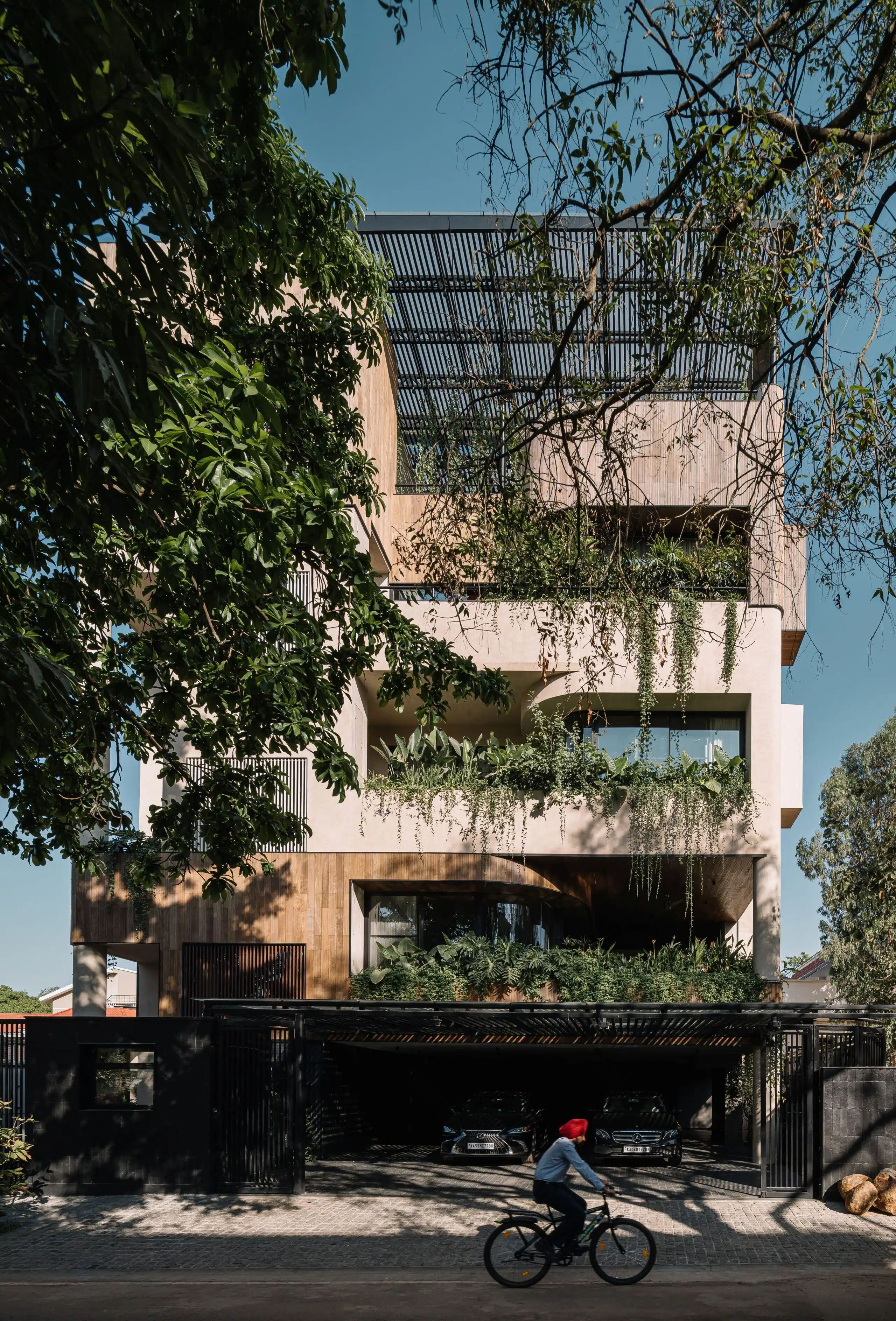
Ebiúna House in Rural São Paulo: Architecture of Harmony with Nature and Functional Simplicity

Spatial and Architectural Context: A Home Beyond Urban Rhythm
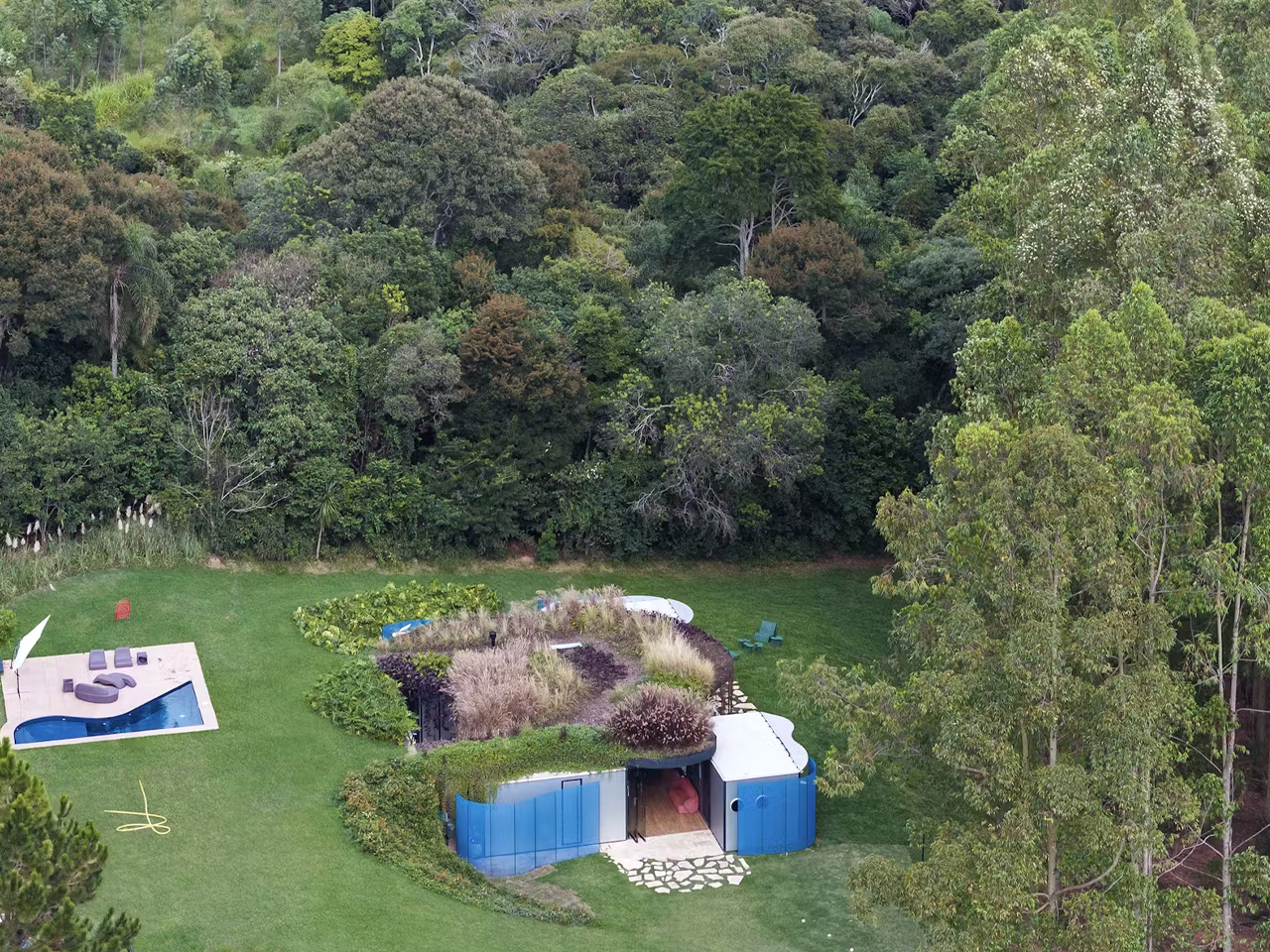
The “Ebiúna House”, designed by architect Rodrigo Ohtake, is nestled in a rural setting on the outskirts of São Paulo. This spatial choice is far from a minor detail. Indeed, it strongly reflects the architect’s intent to create a space that counters the city’s hustle and offers a calm sense of detachment from its daily noise.
Modular Structure: Flexibility in Design and Function
One of the most striking features of this project is its use of a modular framework that adapts to the evolving needs of the family. The building components were developed in collaboration with SysHaus, a company specializing in prefabricated systems. This significantly accelerated the construction process and reduced material waste.
Thanks to this structure, every part of the house can be easily reconfigured to serve multiple purposes, such as:
- Daily living
- Personal relaxation
- Family or social gatherings
Indoor-Outdoor Relationship: Transparency as an Architectural Medium
The exterior façade is clad in sky-colored steel panels, creating a surface that constantly interacts with changes in natural light. Meanwhile, the glass walls extend the visual field outward. This design dissolves the visual barriers between the interior and the surrounding nature.
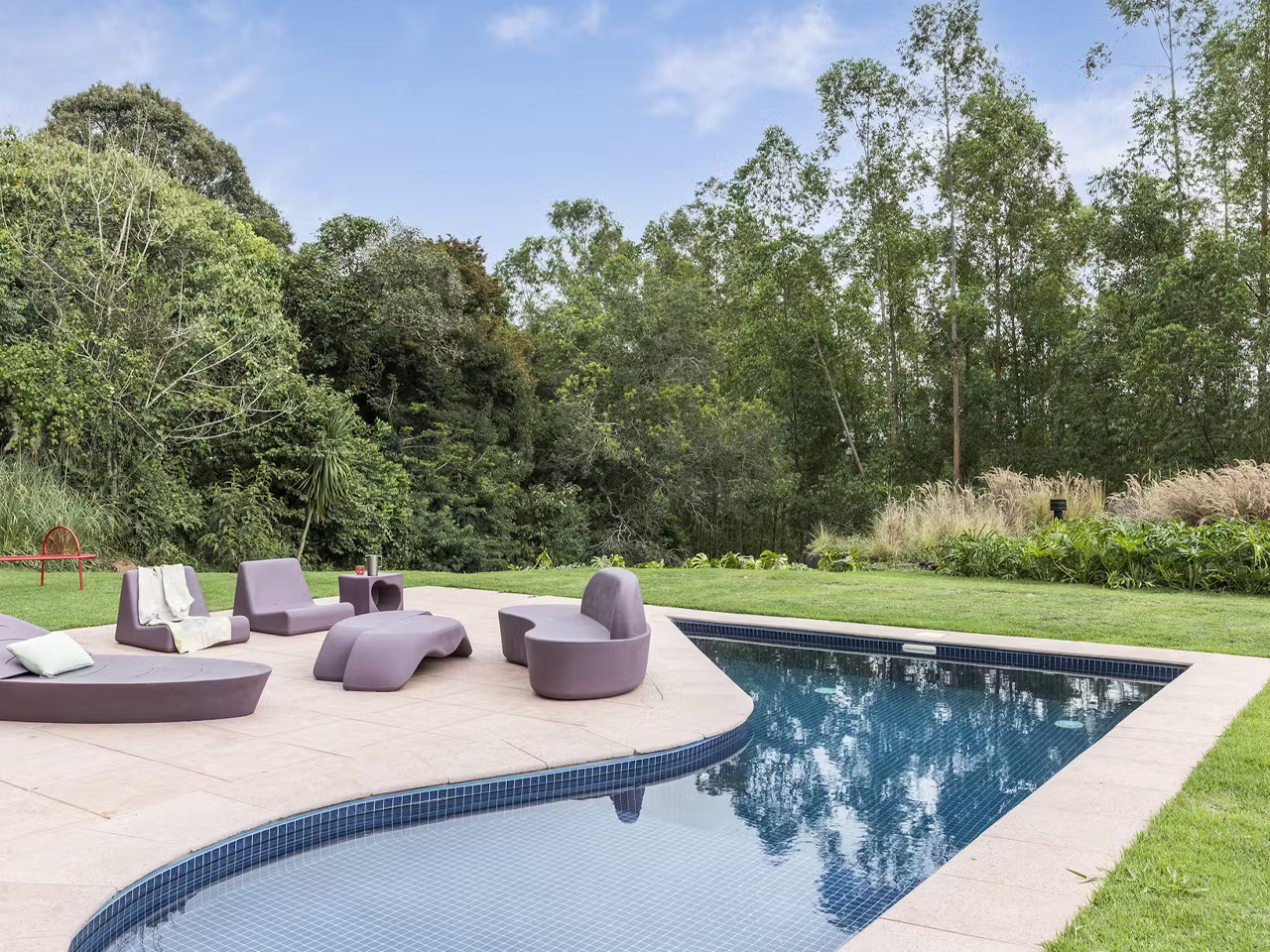
This transparency enhances what could be described as visual integration. The landscape is not seen merely as a backdrop, but as an organic part of daily living.
An Architectural Approach Rooted in Environmental Harmony
Ohtake embraced a principle of not imposing architectural mass on the site. In other words, the goal wasn’t to erect a “visual landmark.” Rather, it was to achieve what could be called architectural fading—a home that seamlessly becomes a natural extension of its environment.
Small Details, Profound Impact
In the bedrooms, the designer chose to forgo curtains. This simple architectural decision invites residents to engage with natural light from the moment they awaken. It enhances a sense of openness and strengthens their connection to both biological rhythms and the surrounding ecology.

Interior Spaces: A Balance Between Openness and Order
Stepping inside the house, one notices a thoughtful balance between comfort and function. The living area is not isolated; rather, it seamlessly connects with the dining and kitchen zones. This creates a visual and spatial flow that enhances interaction among family members.
Color as a Medium of Harmony
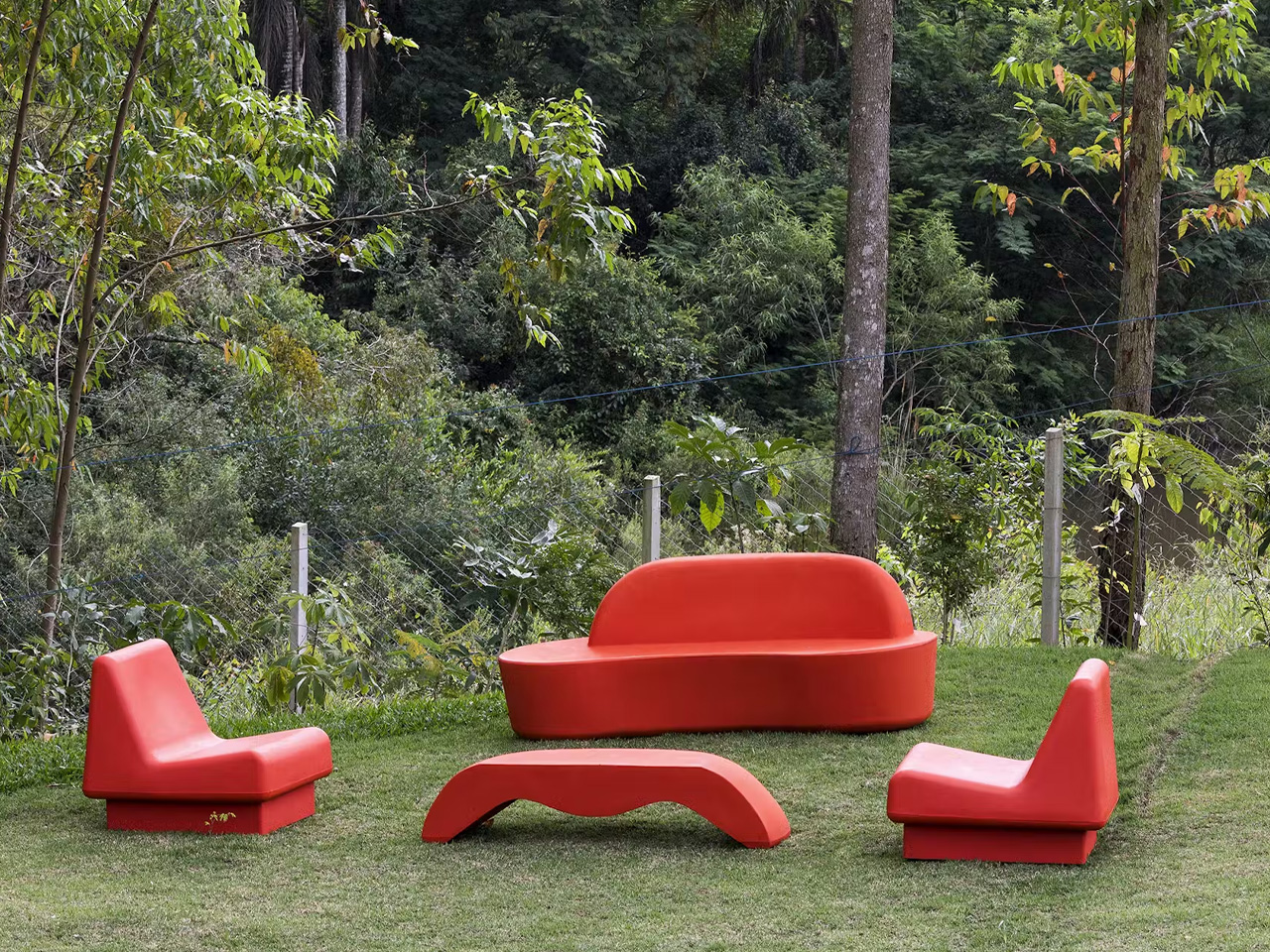
Orange plays a significant visual role in the interior. It generates a warm tone that harmonizes with other design elements—especially in contrast to the lush green visible from outside. This contrast fosters a rich indoor atmosphere without becoming visually overwhelming.
The Kitchen: Functional Design with Deliberate Details
The kitchen is outfitted with custom cabinetry and modern appliances. These elements are not arranged purely for aesthetic appeal. They also support efficient daily movement and meet the family’s practical needs. Even smaller spaces are carefully planned—integrated storage units help maintain a sense of order and spatial flexibility.
Room Distribution: Privacy Without Seclusion
One of the advantages of the modular design lies in its ability to strike a fine balance between privacy and openness. Bedrooms are arranged in a way that grants each resident a personal space without disconnecting them from the home’s collective atmosphere. Meanwhile, shared areas remain open and bathed in natural light, encouraging everyday gatherings.
Curated Transparency and Carefully Selected Materials
The house avoids heavy internal partitions, allowing light and air to move freely throughout. This architectural transparency is supported by materials like glass and steel. However, it never feels cold or industrial. Warm-toned textures and soft accents have been thoughtfully integrated to reinforce a sense of welcome and comfort.


Sustainability as a Design Principle: Genuine Environmental Efficiency
The home goes beyond providing comfort and functionality—it also demonstrates a strong commitment to environmental performance.
The prefabricated structure not only accelerates construction but also significantly reduces the waste associated with traditional building methods.
Moreover, the highly thermally efficient exterior envelope helps maintain a stable indoor temperature year-round. This design minimizes reliance on air conditioning or heating systems.
Site as an Environmental Factor: Light and Air Without Extra Cost
The home’s location was chosen with careful consideration of natural ventilation and daylight access to the interior spaces.
This approach goes beyond aesthetics—it enhances environmental efficiency and reduces overall energy consumption.
Functionality Meets Simplicity
Through the combination of thoughtful efficiency and attention to detail, the house becomes more than a shelter;
it serves as a model for a balanced lifestyle. Here, the modular framework supports a seamless flow between activity and rest.
A Reflection of Architectural Philosophy
Overall, Rodrigo Ohtake’s Ebiúna House reflects an architectural mindset that rejects spectacle and embraces harmony with the surrounding environment as a core value. The materials used are not meant to impress visually but to deepen the sense of connection to the place.
Rather than imposing itself on nature, the home seeks to blend into it—as though it were a natural extension of the terrain.
An Open Architectural Question
Faced with this vision, we are invited to ask a simple yet profound question:
Can architecture become a vessel for calm and belonging—without sacrificing its functionality or social role?
The Ebiúna House appears to offer a quiet, confident answer to this question—without making noise.


✦ ArchUp Editorial Insight
The Ebiúna House project blends formal simplicity with conceptual depth, offering an architectural vision rooted more in environmental harmony than in visual distinction.
From an analytical standpoint, the design succeeds in presenting a flexible and efficient architectural solution suited to contemporary lifestyles. This is particularly notable through the use of a modular system that allows spatial reconfiguration based on need. The emphasis on natural light and ventilation further reflects a clear environmental awareness.
However, from a critical perspective, one might question whether this pursuit of architectural fading has resulted in a loss of distinct architectural identity. While the project fulfills its functional and aesthetic goals, it arguably lacks a striking or memorable element. This absence means it might not achieve iconic status within the contemporary Brazilian architectural landscape.
The Ebiúna House stands as a mature example of sustainability and spatial integration—one that may not provoke controversy or awe, but rather invites quiet reflection.
Explore the Latest Architecture Exhibitions & Conferences
ArchUp offers daily updates on top global exhibitions, conferences, and professional art and design forums.
Follow key competitions, check results, and stay informed through the latest news worldwide.
ArchUp is your encyclopedic hub for discovering events and design-driven opportunities across the globe.