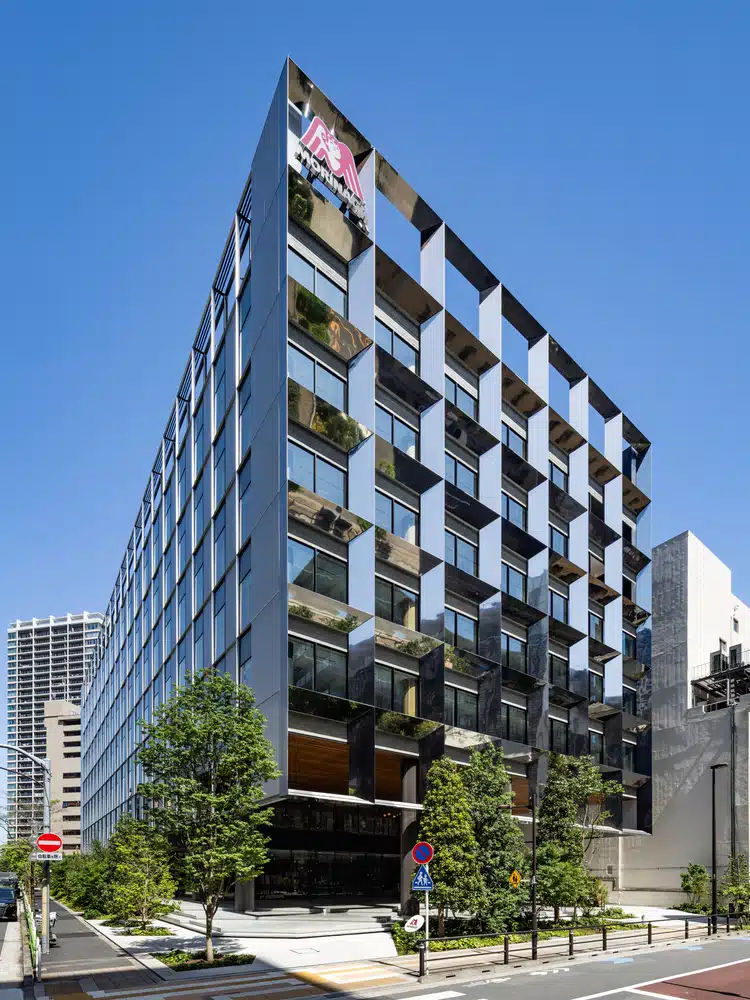
ECoRE Building Project: Redefining Interaction and Collaboration in Engineering Education Environments

Concept of Educational and Engineering Building Design
The design of educational and engineering buildings plays a pivotal role in enhancing interaction among users. Research and educational spaces are not merely places for conducting experiments and lessons; they also extend to fostering communication and collaboration between students and faculty members.
Guiding Activity and Movement
The design illustrates how a building’s layout can influence individual movement and activity distribution. By thoughtfully directing pedestrian pathways, buildings can encourage natural interaction among different groups, thereby promoting educational collaboration and creating a dynamic environment within the campus.
Integration with the Campus Context
Positioning the building at the end of a major campus axis highlights the importance of integrating the new structure with the existing environment. This integration facilitates connectivity between the main campus and newly developed areas, contributing to the expansion of academic and research activities without disrupting the continuity between different parts of the campus.


Distribution of Functions Within the Building
The interior spaces of educational and research buildings contribute to supporting multi-dimensional programs. The presence of advanced laboratories and essential research facilities allows students and researchers to conduct sophisticated experiments and studies, thereby enhancing the academic environment and encouraging scientific innovation.
Modern Education and Interactive Spaces
Providing next-generation learning spaces reflects a trend toward integrating modern technology and interactive learning methods in interior design. These educational environments support hands-on learning and group discussions, contributing to the development of students’ skills and stimulating critical thinking.
Supporting Faculty and Administration
The internal structure also includes dedicated spaces for faculty members, department heads’ offices, and administrative offices. This organization enhances coordination among various departments and functions, facilitating efficient management of academic and research operations and ensuring continuity and smooth daily workflows within the building.


The Shared Vertical Space and Its Social Role
The shared vertical space represents the heart of modern educational and research buildings, serving as a hub for gathering individuals and exchanging knowledge. These dynamic areas are not merely passageways but function as spaces for social and professional interaction, reflecting the social energy of the building’s surrounding environment.
Enhancing Institutional Identity
This space contributes to creating a distinctive identity for the College of Engineering, providing a focal point that brings together students and faculty members. Its design, which encourages informal meetings and group discussions, transforms the space into an effective intellectual and social element that strengthens institutional belonging and stimulates creativity and collaboration among diverse users.

Building as a Hub for Thinking and Collaboration
Today, multidisciplinary research buildings are more than just places for study; they function as centers for thinking and collaboration across various fields. Through intelligent design, research information can be organized thematically, facilitating accessibility and promoting shared use among researchers and students.
Enhancing Spaces and Their Impact on Institutional Culture
Modern designs focus on improving the quality of interior spaces to support continuous interaction and collaboration. This approach extends beyond immediate benefits, influencing the institutional culture in the long term by fostering critical thinking, innovation, and teamwork within the College of Engineering for decades to come.

✦ ArchUp Editorial Insight
The design of the ECoRE building can be seen as a valuable experiment in organizing educational and research spaces, where the core concept of the shared vertical space and the integration of learning and research areas provide opportunities to enhance user interaction. Positively, the project demonstrates a focus on stimulating interdisciplinary collaboration and connecting interior spaces with the broader campus environment, which can serve as an inspiration for future academic building designs.
However, there are certain aspects that may pose challenges in practical implementation. For instance, the heavy emphasis on open spaces and continuous interaction may create pressures on privacy and susceptibility to distractions during intensive work periods. Additionally, organizing functions along vertical axes may not suit all learning or research styles and might require adjustments to meet the diverse needs of users. Moreover, integrating all user groups, students, researchers, faculty, and administration, within a single environment can present logistical challenges related to movement management, space maintenance, and optimal utilization of facilities.
This project can be leveraged as a case study in academic architecture, particularly to understand the relationship between open-space design, circulation, and social interaction, with an emphasis on balancing innovative spatial concepts with practical functions and user comfort. It also offers a lesson on the importance of studying user behavior and real-world needs before implementing radical design solutions in large educational buildings.