EDGE Explorer: Balancing Ruggedness and Interior Space

Brutalist Architecture and Its Influence on Explorer Vehicle Design
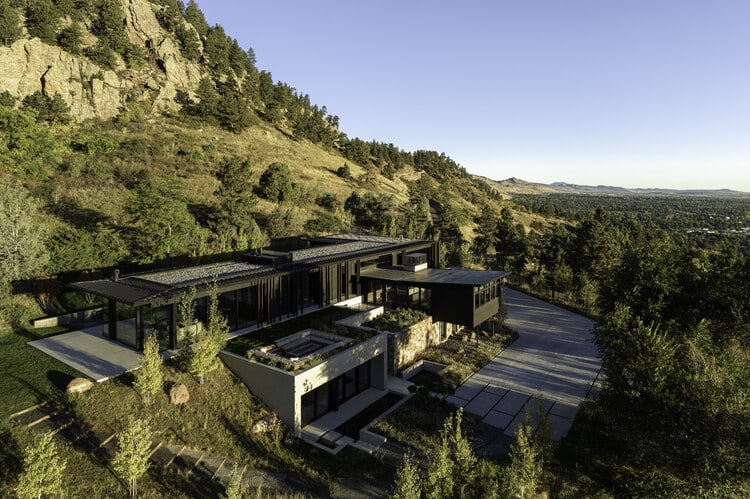
Brutalist architecture has long attracted followers who appreciate structural honesty and bold design. In recent years, the overlanding world has begun to adopt some of the principles of this style, particularly in the design of vehicles and trailers intended for exploration and long-distance journeys.
Design Focused on Ruggedness and Functionality
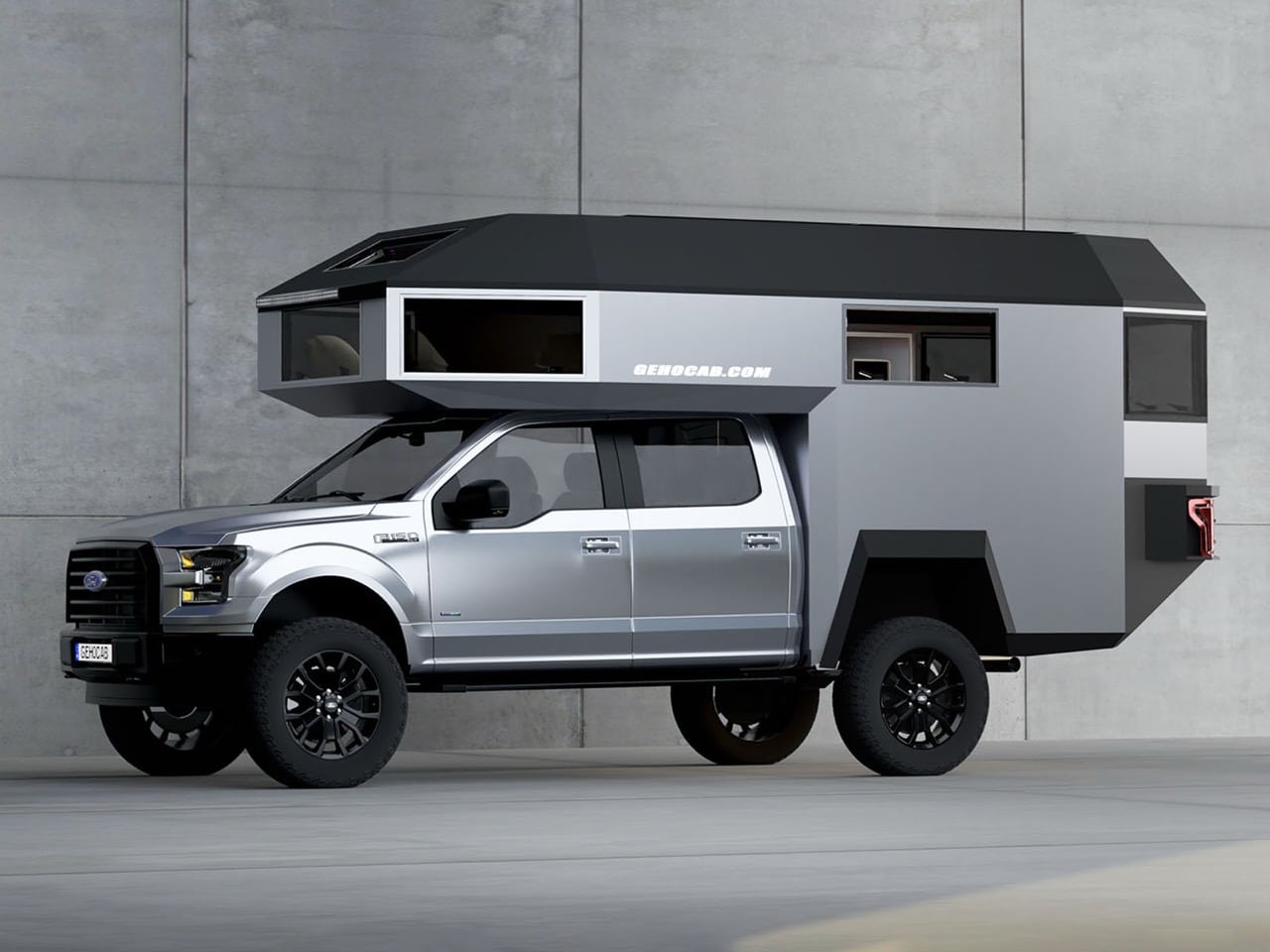
Key characteristics of Brutalist architecture, such as pronounced angular forms, flat surfaces, and treated raw materials, translate into explorer vehicles through multi-faceted shapes and solid profiles. This type of design conveys a sense of strength and durability, emphasizing that the vehicle is not merely a means of transport but a tool ready to tackle harsh terrains and extreme conditions.
Structure and Accessories as Symbols of Functional Purpose
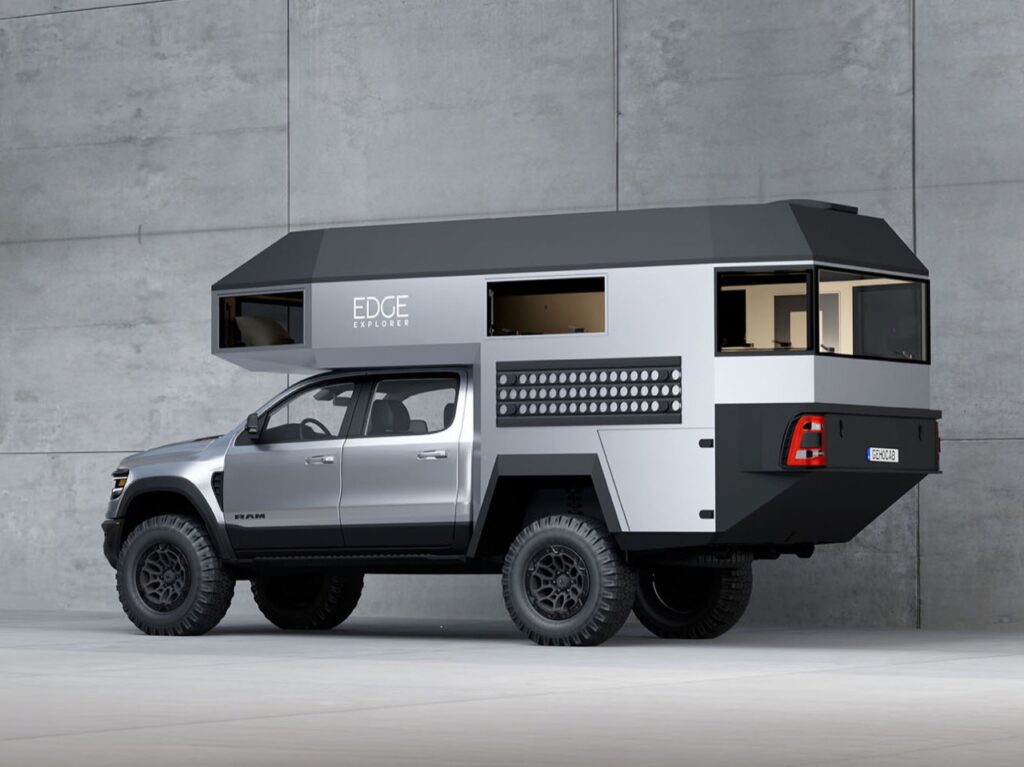
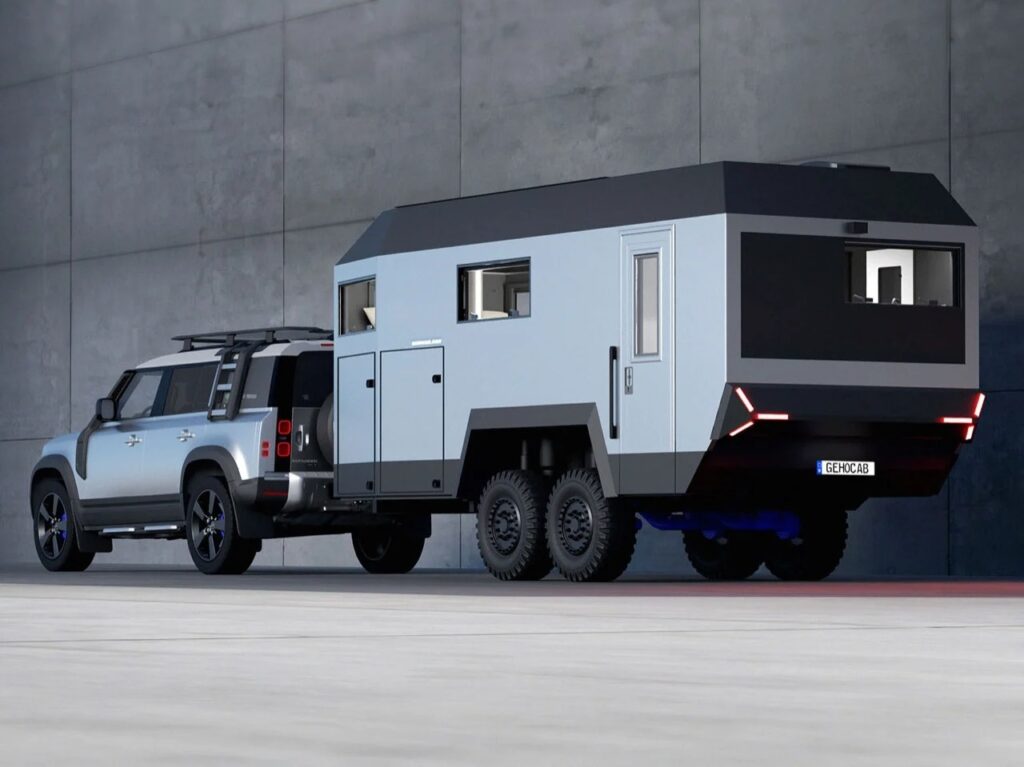
In this context, we see two distinct designs sharing the same aggressive design language: one is a cabin mounted on a truck, and the other is an independent trailer with a dual-axle setup. Both feature clear attributes such as flat roofs designed for solar panels and sharply positioned windows, reflecting an emphasis on functional details rather than ornamentation or conventional aesthetics.
Contrast with Traditional RV Design
This approach rejects the curves and twists common in traditional recreational vehicle design, shifting the focus toward efficiency and visual ruggedness. The result is a design space closer to that used in modern electric vehicles and military equipment, reflecting a philosophy rooted in purpose and the ability to face off-grid natural challenges.

Sharp Design and Engineering Precision
The overall impression of this aesthetic approach suggests meticulous planning. One can imagine that the designers handled the materials with strict discipline, eliminating any unnecessary soft or curved forms. For instance, wheel arches are cut at sharp angles, giving the unit as a whole a sense of stability and solidity, even when stationary and unused.
Material Usage and Structural Techniques
The trend toward lightweight, high-strength structures has become a core element in modern explorer vehicle design. Utilizing advanced materials and techniques borrowed from motorsports or aerospace engineering allows the creation of sharp, complex surfaces while ensuring durability and effective insulation.
The Relationship Between Technology and Design
This approach demonstrates how technology can support both functional and aesthetic design simultaneously. Selecting high-performance materials enables designers to achieve sharp, intricate shapes that are difficult to realize with traditional materials, reflecting a design philosophy that prioritizes precision, durability, and engineering innovation before any practical use of the vehicle.

Integration Between Design and Host Vehicle
The truck-mountable cabin can be considered one of the most user-friendly versions of explorer vehicles, as it is designed to seamlessly integrate with the large trucks that dominate the overlanding scene. This integration demonstrates how design can leverage the size and structure of the host vehicle to provide additional functionality without compromising stability or performance.
Small Details and Their Visual Impact
Beyond the cabin’s overall aggressive form, the design shows attention to fine details. For example, the use of a honeycomb pattern on the side panel adds both visual and tactile dimension, reflecting consideration for aesthetic appeal, not just large-scale shapes. These subtle details enhance the sense of engineering care and a commitment to the user experience.
Reinterpreting Classic Features
The overhanging front compartment above the truck cab represents a classic feature in this type of vehicle, but here it has been reimagined cleverly. Large panoramic windows offer wide views from the sleeping area, increasing the sense of spaciousness and connection to the surrounding environment. This optimal use of space also emphasizes the cabin’s heavy, aggressive exterior lines, illustrating how functionality and aesthetics can harmoniously coexist.


The Trailer: Enhancing Stability and Exploratory Capability
The trailer represents a logical evolution of the explorer vehicle concept, taking sharp, functional design to its maximum potential. The use of a dual-axle setup allows the long explorer unit’s weight to be distributed evenly, maintaining stability even on rugged terrain. This type of engineering solution is commonly employed in military trailers and equipment designed for harsh environments, reflecting careful attention to weight management and dynamic performance.
Flat Roof and Sustainable Energy
The trailer also features a flat roof equipped with a full array of solar panels, illustrating how design can integrate sustainable energy sources without compromising stability. This approach highlights the importance of balancing functional efficiency with smart spatial planning.
Interior Organization and Center of Gravity Management
The dedicated front service unit houses batteries, water tanks, and other systems, helping to keep the center of gravity low and ensuring that the main cabin remains clutter-free. This intelligent organization reflects a design philosophy centered on efficiency, where every element is considered to serve the vehicle’s overall purpose without compromising safety or comfort.

Contrast Between Rugged Exterior and Comfortable Interior
Despite the vehicle’s sharp, functional exterior, the interior design provides a surprisingly calm and open space. Large horizontal windows play a pivotal role in breaking up the massive outer panels, allowing natural light to flow in and creating a sense of spaciousness within the cabin.
Exploratory Design Philosophy
This contrast between a strong exterior and a comfortable interior is a hallmark of advanced explorer vehicle design. The vehicle is perceived as a solid fortress, ensuring protection and stability, while offering a human-centered, comfortable interior environment. The core idea is to combine external durability and functionality with internal comfort and appeal.
Leveraging the Structure to Create Open Space
The interior design takes advantage of the monocoque structure, which allows for an open floor plan without the need for massive internal supports. This approach makes the space feel larger and more expansive than its actual dimensions, reflecting the design’s ability to balance strength, simplicity, and comfort simultaneously.


Digital Models as a Tool for Visualization and Planning
It is important to recognize that many of the stunning images presented for explorer vehicles are, in fact, high-quality digital models (CGI) rather than photographs of actual production units. This technique has become common in the world of design and engineering, allowing designers to showcase the overall concept and experiment with form and function before committing to the high costs of manufacturing.
The Benefit of Using Digital Visualizations
Digital models enable design teams to test and communicate their vision in an engaging and easily understandable way. They also help stakeholders imagine the vehicle’s potential capabilities. The absence of complete details, such as performance specifications or realistic interior shots, indicates that the project is still in its early stages, reflecting the preliminary nature of the concept phase compared to final production.
Digital Models as a Statement of Vision
Beyond being a planning tool, these images also serve as a declaration of the project’s design intent and philosophy. They illustrate the overall direction of the design and demonstrate how functionality and aesthetics are integrated, making them a powerful tool for communicating with audiences and design enthusiasts before actual implementation.
✦ ArchUp Editorial Insight
The motivation for GEHOcab’s EDGE Explorer Trail stems from the capital cycle associated with investments in overlanding and expedition equipment, with adherence to safety standards, weight distribution, and the use of sustainable energy as key financial considerations. Constraints related to insurance, field logistics, and labor costs necessitated the adoption of a lightweight, high-durability monocoque structure and the division of the units into a truck-mountable cabin and a dual-axle trailer to ensure stability across varied terrains.
The resulting spatial configuration represents a functional balance between load distribution, a low center of gravity, and internal passenger flow paths, with the integration of solar energy systems and essential services without causing functional congestion. High-quality digital images serve as a tool for visualization and feasibility assessment prior to production, presenting the project’s functional statement within a bureaucratic and economic context. This makes the final structure more a reflection of financial and regulatory constraints than purely an aesthetic choice.