

Egg Box Sneakers: When Waste is Transformed into Art in the Hands of Kibardin

In a world groaning under the weight of plastic waste and industrial by-products, designer Vadim Kibardin introduces his revolutionary conceptual project, “Egg Box Shoes,” proving that luxury and sustainability are not opposites. This work exists in that fascinating space where high art meets street fashion, guided by a philosophy of sustainable design that challenges what we think we know about materials and value.
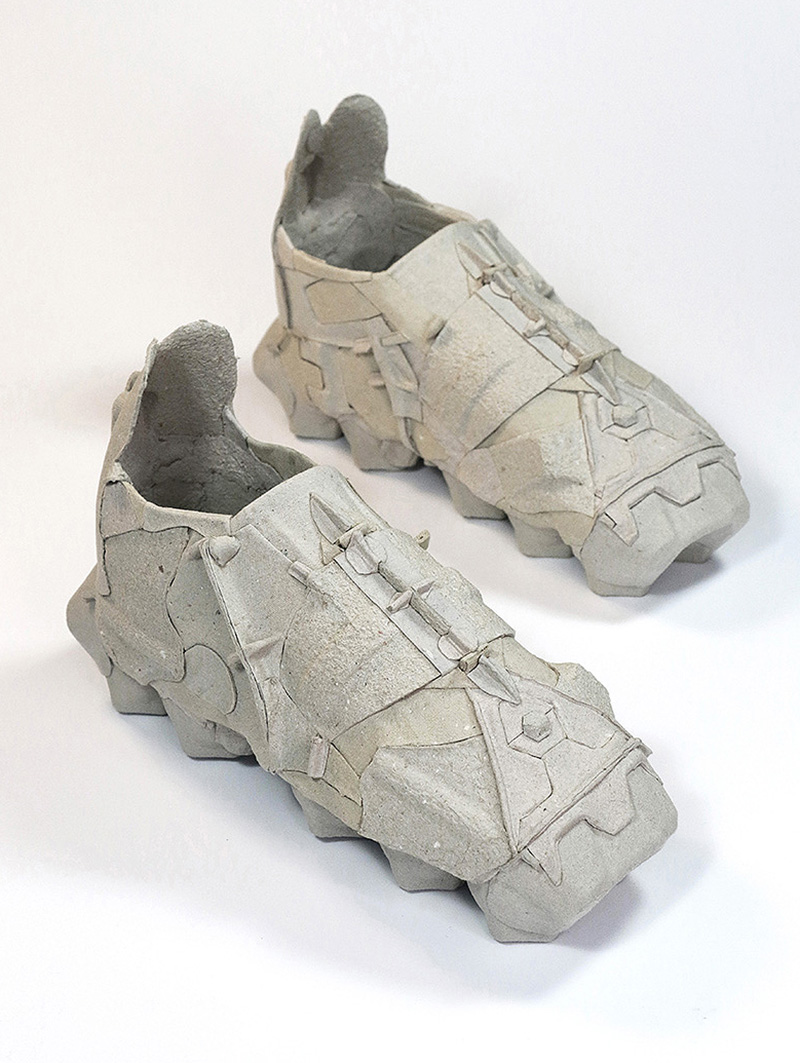
From the Breakfast Table to the Fashion Runway: The Journey of an Egg Carton
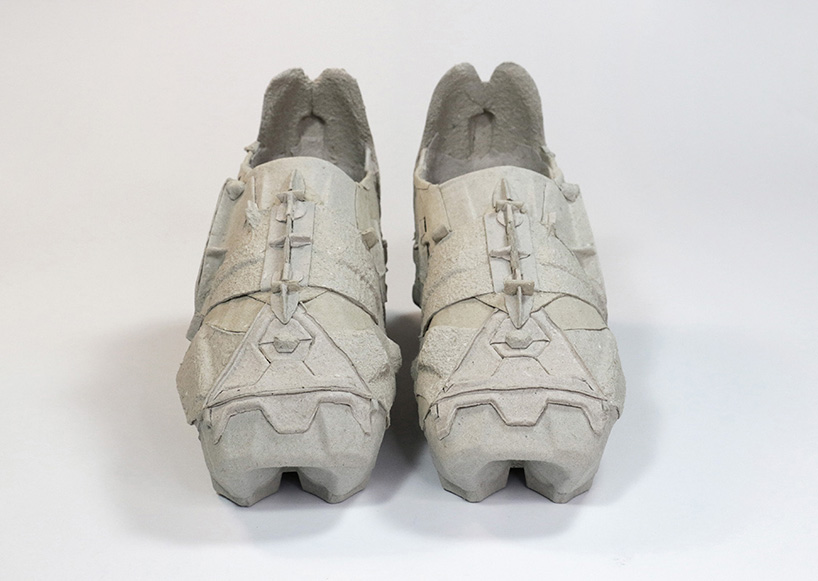
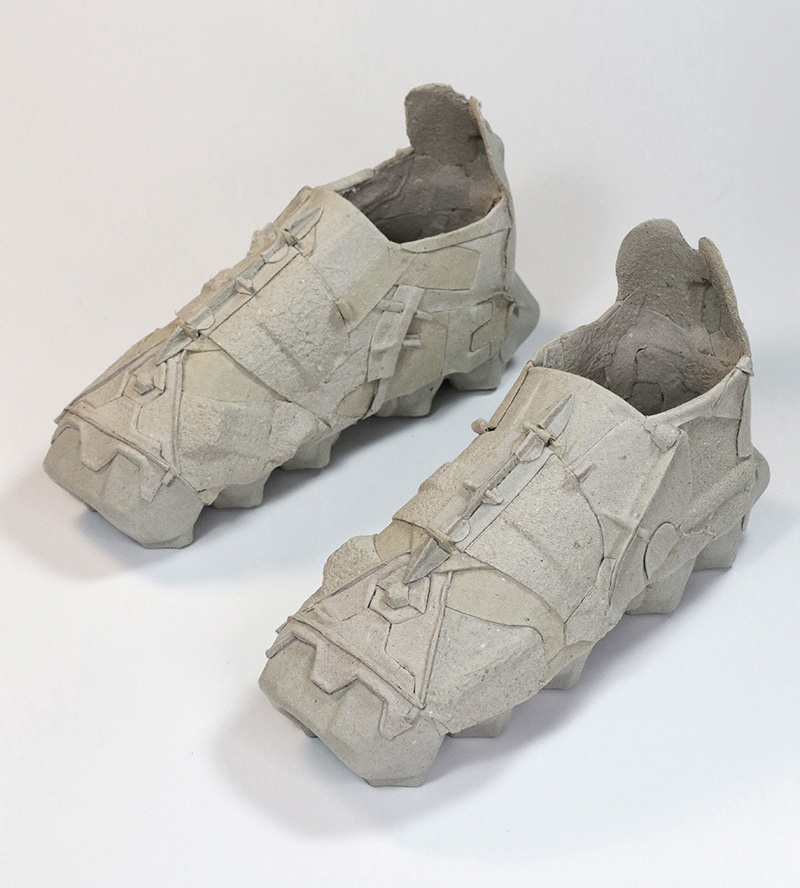
At the heart of this project lies a radical process of transformation. What appears to the ordinary eye as a used egg carton is transformed into a precious raw material in Kibardin’s workshop. Each pair of these sneakers is a unique piece, fully handmade, with 100% of packaging waste being recycled to create sculptures that wear the silhouette of modern athletic shoes.
Kibardin uses only two types of egg cartons, challenging himself and the viewer with the possibilities of this seemingly low-value material. Through this self-imposed constraint, the designer deeply explores the structural and aesthetic potential latent within this simple material, transforming it from a symbol of consumption and waste into an icon of creativity and awareness.
Vadim Kibardin: Two Decades of Silent Dialogue with Discarded Materials
The Egg Box Shoes project is merely a new chapter in an exploratory journey that has lasted twenty years. Designer Vadim Kibardin has dedicated a significant part of his career to maintaining a continuous dialogue with discarded materials, particularly cardboard, paper, and packaging.
His practice has always focused on re-evaluating the value inherent in what we throw away. He does not see an egg carton as trash; he sees a record of food’s journey, a story of consumption, and the potential for rebirth. Through his designs, Kibardin attempts to show us how these materials can be remade into objects that not only catch the eye but also invite the hand to touch and explore, thereby engaging both the visual and tactile senses in an integrated experience.
The Philosophy of Transformation: When Constraints Become Drivers for Creativity
This project clearly reflects Kibardin’s methodology, which is based on a comprehensive philosophy of transformation. In his world:
· Waste is transformed into raw material: The source is free and available everywhere, redefining the concept of scarcity.
· Simplicity is transformed into functionality: The complexity of the design lies not in the multiplicity of materials, but in the ingenious use of a single one.
· Constraints are transformed into tools for experimentation: The challenge posed by the cardboard’s fragility and perishability does not restrict the design but pushes it towards more creative and innovative solutions.
Through this fusion of profound sustainable thinking and a sculpted form that redefines beauty, the Egg Box Shoes project skillfully highlights the clear intersections between material innovation, environmental awareness, and conceptual design, offering a powerful statement that the future of design lies in reimagining the past, not solely in inventing the new.
✦ Archup Editorial Insight
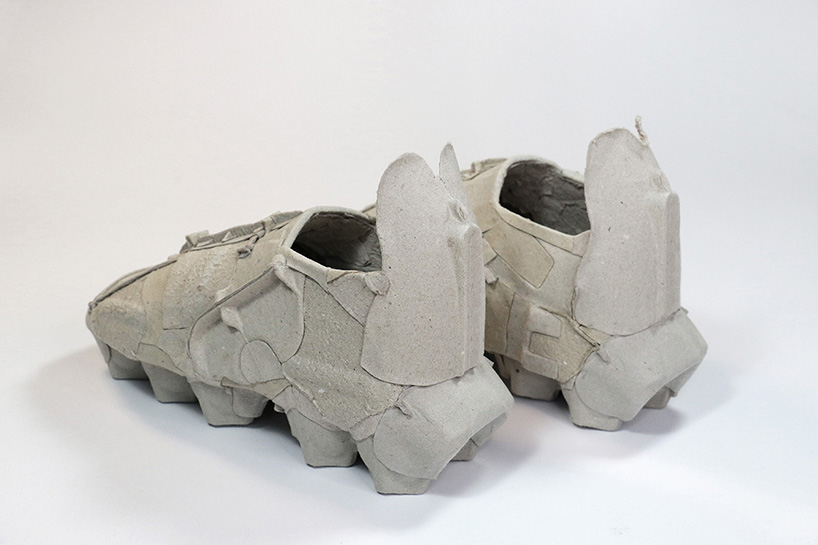
The project presents an attempt to convert egg carton waste into sneaker prototypes, aiming to merge sustainability with conceptual design. The design relies on a single material that is inherently structurally weak and not engineered to withstand the mechanical stresses from walking or environmental factors like moisture. The final form raises questions about the gap between the conceptual aesthetic value and the practical functionality of the shoe, where functional performance remains constrained by the properties of the primary material. The reliance on fully manual manufacturing limits the possibility of replicating the model consistently, hindering its transition from an art piece to a widely viable product. The focus on the raw, superficial texture of the material reduces opportunities for developing a more diverse visual language. Despite this, the work provides a tangible approach to expanding the dialogue around material reuse, with a clear focus on the sensory aspect of the user’s experience with the recycled product.
Brought to you by the ArchUp Editorial Team
Inspiration starts here. Dive deeper into Architecture, Interior Design, Research, Cities, Design, and cutting-edge Projectson ArchUp.


