The Historic Buildings of the South Street Seaport
1 October، 2025 @ 8:00 am - 31 December، 2026 @ 5:00 pm
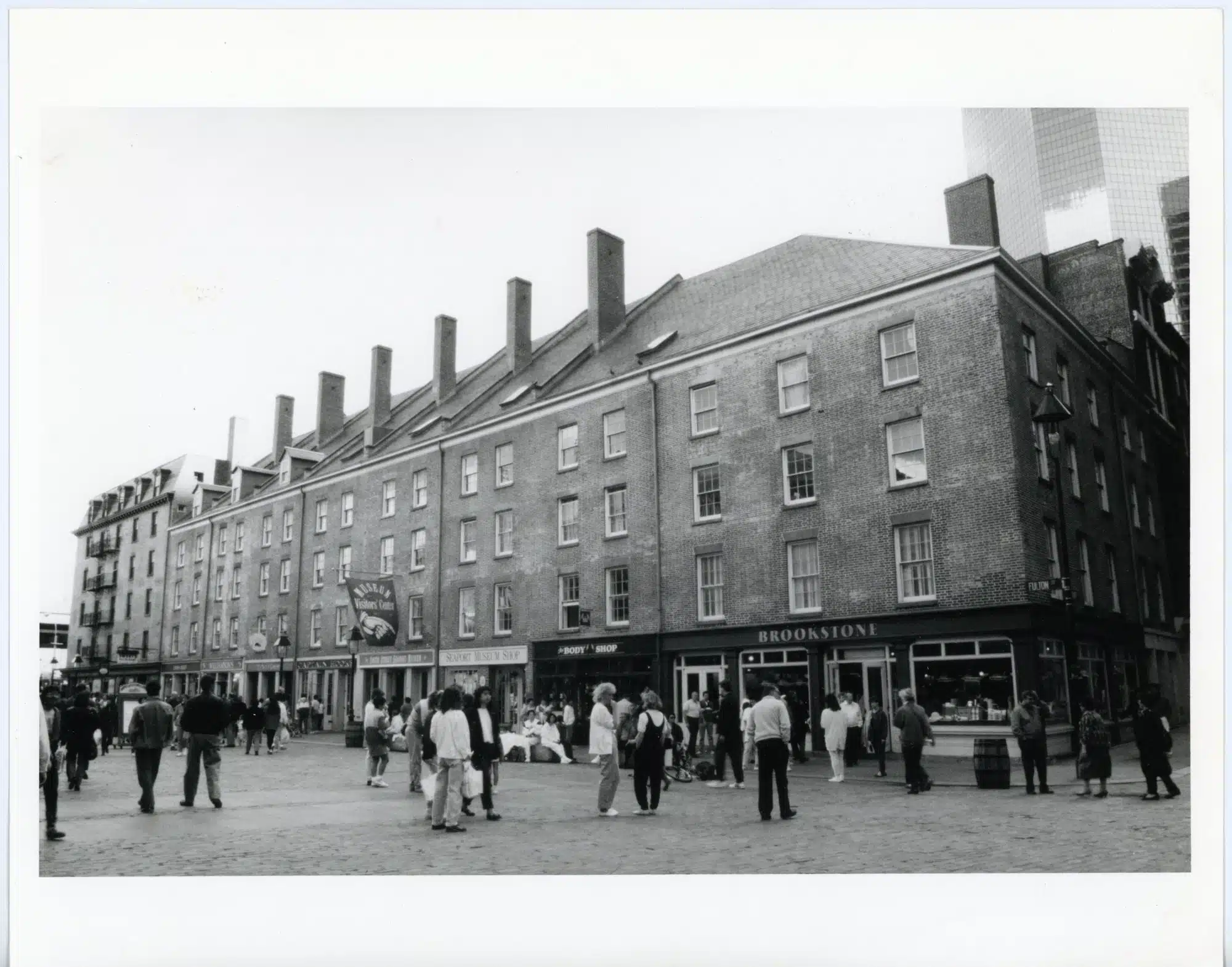
The Historic Buildings of the South Street Seaport exhibition is an amazing journey through the ups and downs of one of the most lively cultural areas of New York City. The exhibition not only narrates about the city using the maritime silhouette but also shows that restoration and adaptation can happily survive together in a modern city context. It takes the visitors’ time traveling and leads to seeing how the old warehouses, counting houses, and piers are no more merely commercial centers but lively public spaces.
The Seaport is a witness to the history of the urban setting, revealing the delicate balance of the three components of craftsmanship, history, and innovation. The exhibition, through the use of drawings, photographs, and even physical fragments, documents the processes of the preservation and the transformations that have made it possible for the waterfront area to keep its historical character and adapt it to new demands. It has set the stage for a discourse on what it means to protect the past in a metropolis that is changing so fast. At the same time, the architecture of the South Street Seaport reflects such stories and events as stronghold, continuity, and even rejuvenation, thus providing great insights to architects, designers, and urban thinkers.
This exhibition is a golden chance to scrutinize the architectural DNA of the Seaport, taking and examining not only its visual attractiveness but also its social and economic function. It shifts the historical preservation discourse to an ongoing dialogue between time and function rather than a static display of the past.
Content
The show allows people to experience the South Street Seaport’s architectural and cultural development. The transformation of a working port into a living museum of maritime heritage is illustrated through historical drawings, archival images, and digital reconstructions. The displays also showcase the skills used in the construction of the district’s very first buildings, like brick warehouses and timber-framed shops built to survive the city’s ever-changing weather.
Interactive maps and models are among the tools that allow visitors to follow the Seaport’s architectural path and recognize the changes in the district’s urban fabric throughout centuries. With the new interventions, modern building elements get added with a finite understanding of painstaking care that guarantees a balance is maintained between the old and new. Rather than recreating the past, these interventions are like transparent layers that let history be visible while accommodating the present.
The emphasis goes further by looking at the social aspect of the site besides just that of preservation. The exhibition brings forth the point that the Seaport has been turning from a mere tourist attraction into a community space where history meets commerce, culture, and education. Being a dual identity, this situation strengthens the idea that heritage should not be made to remain untouched, but rather, active use is what keeps the memory alive.
Architectural Analysis
The South Street Seaport is a perfect example of how buildings can express the rhythm and the durability of a city’s past. Besides, the bright and colorful material language of brick, wood, and cast iron gives the city an industrial character that is all its own. The proportionate dimensions, the repetition of facades, and the presence of open bays are nothing but the demonstrations by the builders of the logic of utility, but with careful restoration, they are now elevated to be pieces of art of everlasting beauty.
The methods of preservation adopted focus entirely on the materials used and thus are very much authentic. Instead of replacing original surfaces, they were reinforced, and the contemporary insertions were made in a manner that is very clear and thus not confusing to the viewer as to what is historical and what is modern. This design philosophy is in a way that surrenders to the original fabric by granting it the love of being the only one, while at the same time keeping the site active.
In a major way, the exhibition prompts a discussion about the limits of restoration. Is it possible for a place to be real when the whole of its economic and social functions have been changed? Does adaptive reuse preserve or alter the soul of architecture? The exhibition proposes that authentic preservation is not in the duplication but rather in the creation of continuity through responsible transformation.
Project Importance
The exhibition provides a heavy lesson about cities that can grow yet keep their architectural memory. For architects and designers, it reveals the necessity that adaptive reuse be considered a strategy that is consistent with the historical conservation and the sustainability. The Seaport, with its repurposing of the existing buildings, not only reduces environmental waste but also keeps cultural meaning.
The above project still further reveals the link between architecture and the collective identity. The Seaport’s transformation demonstrates that heritage areas can become even more important when accommodating contemporary social and cultural needs. It imparts the lesson that conservation is not merely an act of nostalgia but rather a forward-thinking process that interlinks the past with the present.
The exhibition in the current urban landscape, which often sees modernization as a threat to the historical fabric, is a powerful reminder that progress and preservation can be two sides of the same coin. It shows that heritage architecture can still foster new creativity without compromising authenticity, thus becoming a model for the future of restoration in different parts of the world.
✦ ArchUp Editorial Insight
The exhibition manages to exhibit the South Street Seaport as a vibrant archive of nautical architecture. The way it is structured underlines visual rhythm, material texture, and the difference between restored and modern components. The design technique conveys the mood of the waterfront very accurately and gently. On the other hand, the exhibition questions the issue of authenticity and the extent of commerce’s influence. In other words, by making historical neighborhoods attractive for culture, do they then keep their core or fall into the trap of commodification? This contradiction is the source of the intellectual depth of the exhibition. Besides, its combination of rigorous research and easy understanding has made it an important factor in today’s urban heritage comprehension.
Conclusion
The exhibition of the Historic Buildings of the South Street Seaport is not just a visual time travel; it is a paradigm shift in how cities evaluate their architectural heritage and how they sustain it. It shows that buildings can go through changes without losing their essence, and thus, preservation and innovation can live together in the same urban space.
In the eyes of the architectural community, the Seaport is an instance that thoughtful design can not only bring about the revival of old structures but also impart modernity to the original concept as well. It does not cease to point out that architecture is a dynamic practice that gets its shape from the surroundings, memory, and adaptability. The exhibition on the heritage site has brought forth the notion that sustainable development is not replacing the past but rather, understanding and incorporating it. By letting the Seaport’s spirit linger on, the project reinterprets preserving as a creative act that links the past with the present and opens up new ways of thinking in urban design.
Explore the Latest Architecture Exhibitions & Conferences
ArchUp offers daily updates on top global architectural exhibitions, design conferences, and professional art and design forums. Follow key architecture competitions, check official results, and stay informed through the latest architectural news worldwide. ArchUp is your encyclopedic hub for discovering events and design-driven opportunities across the globe.
Brought to you by the ArchUp Editorial Team
Inspiration starts here. Dive deeper into architecture, interior design, research, cities, design, and cutting-edge projects on ArchUp.