The Brazilian Pavilion Explores Amazonian Infrastructures at the Venice Biennale

The Brazilian Pavilion at the Venice Architecture Biennale presents an immersive architectural experience inspired by the infrastructures shaped by Amazonian societies over thousands of years. The exhibition highlights how these communities combined technical knowledge with harmony toward nature, creating urban systems that long preceded contemporary models.

An Architectural Vision Rooted in the Land
The exhibition reinterprets the natural landscape as an integral part of the built environment, inviting visitors to rethink the bond between humans and the earth. The interior spaces guide the audience through contrasting scenarios—from evocations of forests and fertile grounds to design proposals that question how cities might evolve if they relied on the wisdom of ancestral infrastructures.

A Design Based on Balance
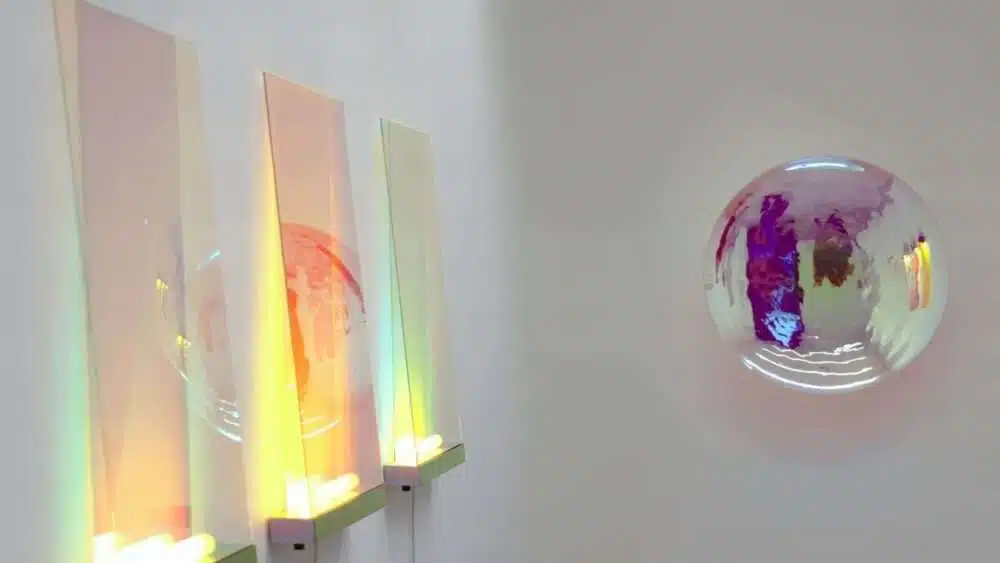
The pavilion’s spatial concept relies on minimal yet precise structural solutions, including suspended elements and reusable surfaces. These interventions create a dynamic setting with a temporary character while carrying long-lasting value in their message. The composition emphasizes equilibrium between materials and volumes, immersing visitors in an environment that feels alive and responsive.
From Garden to City
One of the pavilion’s central features is the Garden Platform, a design intervention that transforms a rigid structure into a living natural setting. Native plant species are integrated not only for their visual effect but also to reflect ecological cycles and how they might be absorbed into urban life. The installation opens up possibilities for imagining cities that reinvent themselves by learning from nature instead of resisting it.

Architecture as a Mediator
Rather than presenting static models, the exhibition stages a comprehensive experience that positions architecture as a mediator between humans and the environment. Every element from grounded installations to suspended panels underscores the idea that architecture is more than construction; it is a practice capable of reshaping cultural and spatial relationships.

✦ ArchUp Editorial Insight
The article introduces an architectural project with a balanced visual composition. Stone and glass merge to establish a contemporary identity. The imagery shows a careful play of light and shadow, while horizontal lines reinforce a sense of openness. Still, a question arises about its contextual relevance. The design looks more global than locally responsive. Despite this critique, the project’s strength lies in its material clarity. It offers an enduring presence and the potential to inspire future design directions.
Explore the Latest Architecture Exhibitions & Conferences
ArchUp offers daily updates on top global architectural exhibitions, design conferences, and professional art and design forums.
Follow key architecture competitions, check official results, and stay informed through the latest architectural news worldwide.
ArchUp is your encyclopedic hub for discovering events and design-driven opportunities across the globe.