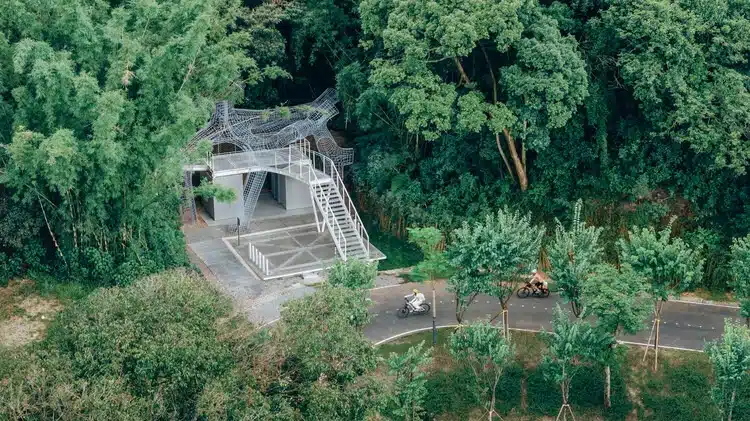
FNN Sustainability Center Design: Integrating Architectural Programs with Sustainable Practices

FNN Sustainability Center Design
The FNN Sustainability Center was designed within the machinery maintenance facilities of Tekfen Construction in the city of Gebze, encompassing a variety of architectural programs including an archive, a museum, and administrative offices. The building’s design reflects a balance between different functions in terms of openness and privacy, tailored to the nature of each internal program.
Focus on Construction Material
Steel stands out as a key element in the design, not only as part of the building’s structural framework but also as a visual component contributing to the architectural identity of the center. This emphasis on steel reflects the industrial character of the site and strengthens the relationship between the building and its surrounding functions, including the steel manufacturing workshop within the project area.
Organization of Different Programs
The nature of the programs inside the building varies:
- Archive: A fully enclosed program to ensure the protection of documents and stored materials.
- Museum: A fully open program that allows easy access and interaction with visitors.
- Administrative Offices: Operate as a semi-open, semi-enclosed entity, providing privacy for staff while maintaining visual communication with the surrounding environment.
Formation of a Unified Mass
One of the main design objectives is to create a cohesive architectural mass that unifies the different programs within a single structure. This unity ensures visual and functional harmony between the archive, museum, and offices while maintaining a clear and consistent architectural identity.


Archive and Offices Design
The archive room was designed as a fully enclosed area, relying on reinforced concrete in its structure to ensure durability and protection. In contrast, the administrative offices were designed to showcase the building’s full steel framework, with transparent glass façades that allow natural light to flow and enhance the sense of openness.
The Museum as a Meeting Point
At the intersection between the fully enclosed and fully open programs, the museum was positioned to function as a lobby and a central meeting point between the two different functions. This design makes the museum a natural link, connecting the privacy provided by the archive with the openness offered by the open program.
Integrating Functions While Maintaining Fluidity
The exhibition area was integrated with the offices in a way that allows the shared spaces to be utilized efficiently, while libraries were placed on surfaces that require acoustic separation within the offices. Meanwhile, transparency was maintained in the remaining walls, providing extended sightlines and reinforcing the sense of open space.
Additionally, the design emphasizes smooth circulation within the building, enabling seamless movement between different areas and creating a cohesive and balanced architectural experience.


Building Envelope and Its Environmental Function
The building’s exterior envelope was designed from perforated metal to surround the entire structure, taking into account its multiple uses. This envelope contributes to the creation of interior gardens and green spaces by adjusting the distances between different parts of the building, adding an environmental dimension and providing a flexible and sustainable environment.
Protecting the Building and Enhancing User Comfort
The envelope helps prevent direct sunlight from reaching the offices, creating a more comfortable working environment for employees. This design also allows for controlled use of natural lighting, reducing the need for excessive air conditioning.
Interior Gardens and Airflow
An internal green courtyard was created, encompassing the archive, offices, and exhibition area, allowing natural airflow and continuous circulation throughout all spaces. Small water features were integrated within the gardens to provide fresh air and resting areas for staff, enhancing the overall quality of the work environment and creating breathable zones for employees.


Green Roof and Its Multiple Uses
The building’s green roof was designed as an extension of the environmental envelope, contributing to the creation of a green environment for the interior workspaces. In addition, the roof has become a versatile area, with seating zones that can be used for hosting guests or holding events, adding a social dimension and extra flexibility to the building’s design.


Sustainability and Energy Efficiency
The FNN Sustainability Center demonstrates its commitment to environmental design by achieving LEED Platinum certification. This was made possible by the building’s ability to generate approximately 45% of its energy needs through multiple strategies, including:
- Efficient use of green spaces,
- Selection of plants suitable for both interior and exterior environments,
- Smart lighting design to reduce energy consumption,
- Use of photovoltaic panels to generate electricity.
This achievement reflects the project’s ability to combine architectural beauty with environmental sustainability, making it a model for sustainable building projects.

✦ ArchUp Editorial Insight
The FNN Sustainability Center provides a clear example of integrating multiple architectural programs with environmental strategies such as the metal envelope and green roof, reflecting a strong awareness of sustainability and energy efficiency within an industrial building design. The clear organization of different functions and the transparency in certain areas, which encourages visual interaction among users, can be seen as a limited yet tangible positive aspect.
However, several considerations may limit the project’s effectiveness in certain contexts. Despite the attention given to the environmental envelope and interior gardens, the circulation spaces between different programs may be somewhat complex for first-time visitors, requiring clear signage to facilitate navigation. Additionally, the emphasis on showcasing steel and concrete in the offices and archive might reduce the sense of warmth or psychological comfort in some areas. Likewise, partially converting spaces into multi-functional areas may place pressures on daily management, especially when hosting events or accommodating large groups.
Despite these reservations, elements of the project can serve as a model for future industrial or administrative building designs, particularly regarding the integration of sustainability, flexible space usage, and interaction between different programs. The focus on materials and structural design also provides lessons in applying sustainable solutions without compromising the building’s visual identity, making the project a valuable case study for architects and students interested in the intersection of industrial design and sustainability.
information about the project
- Architects: ACARARCH
- Area: 3370 m²
- Year: 2020
- Photographs:Egemen Karakaya, İbrahim Özbunar