Casa EV Design Explores the Integration of Privacy and Nature in Urban Living

Design Challenges in a Crowded Urban Environment
Designing a residence in the heart of one of Guadalajara’s busiest neighborhoods posed a significant challenge, particularly due to the proximity of the residential club and the entrance kiosk. These conditions imposed constraints on privacy and spatial planning, necessitating innovative solutions to achieve a balance between comfort and seclusion.
Achieving Privacy and Intimacy
The family desired a home that offers a cozy and private atmosphere, prompting the designers to conceive spaces that remain insulated from external interferences. For instance, rooms and architectural strategies were oriented to ensure a constant sense of security and comfort within the house, while making balanced use of natural light and surrounding views.
Merging Comfort with Fluidity
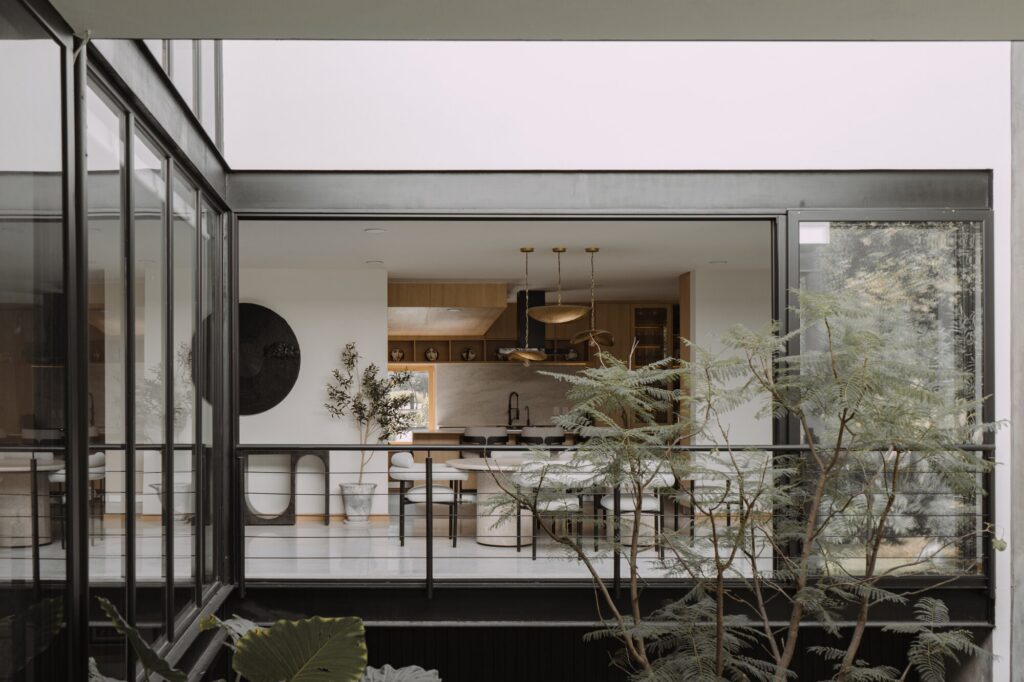
Moreover, the design focused on creating seamlessly connected interior spaces while maintaining the privacy of each area. This approach enhances the daily experience of the residents, allowing them to feel openness in shared spaces, while each individual retains privacy within their own rooms.
Exploring Materials and Embracing Authenticity
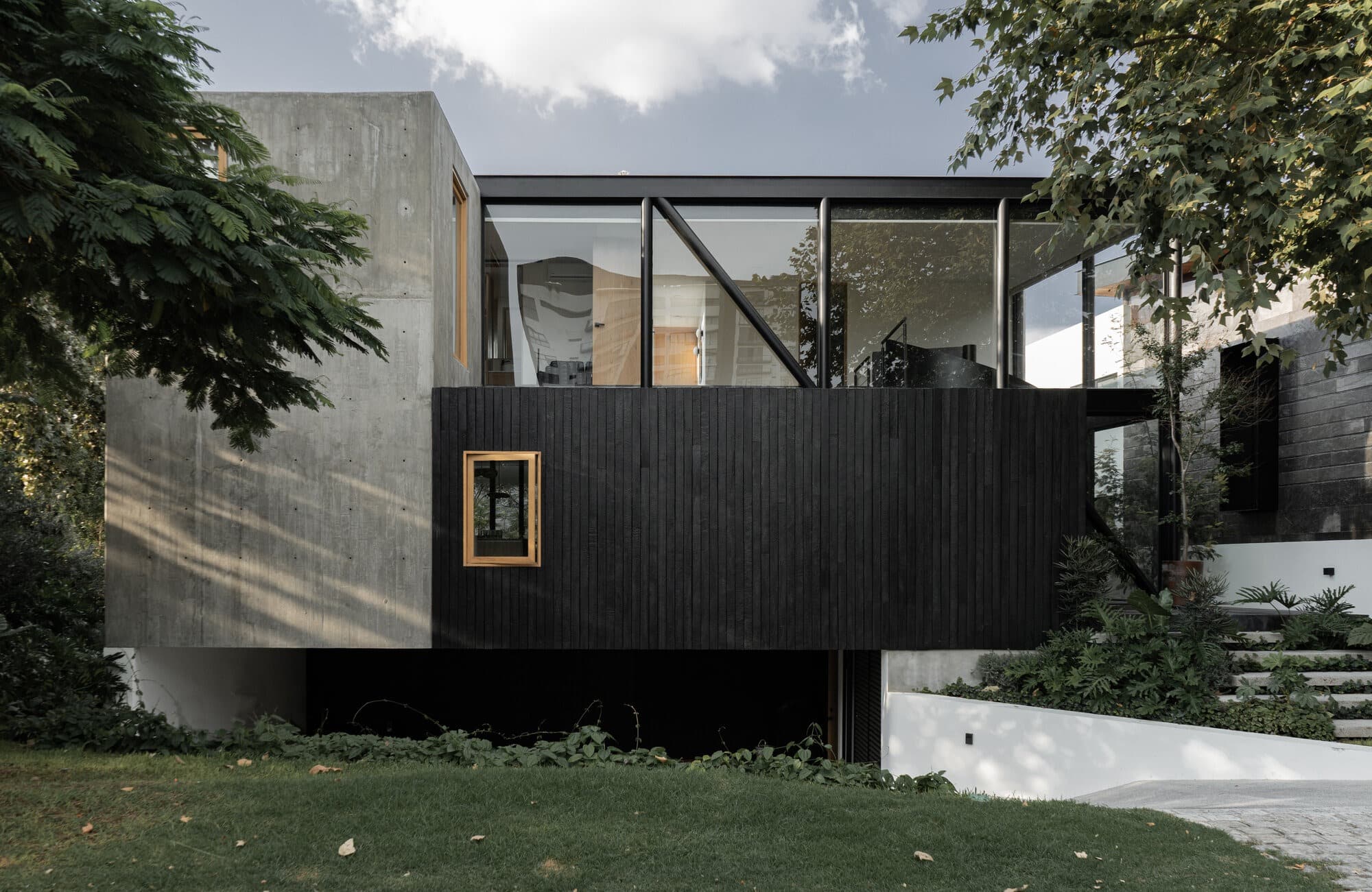
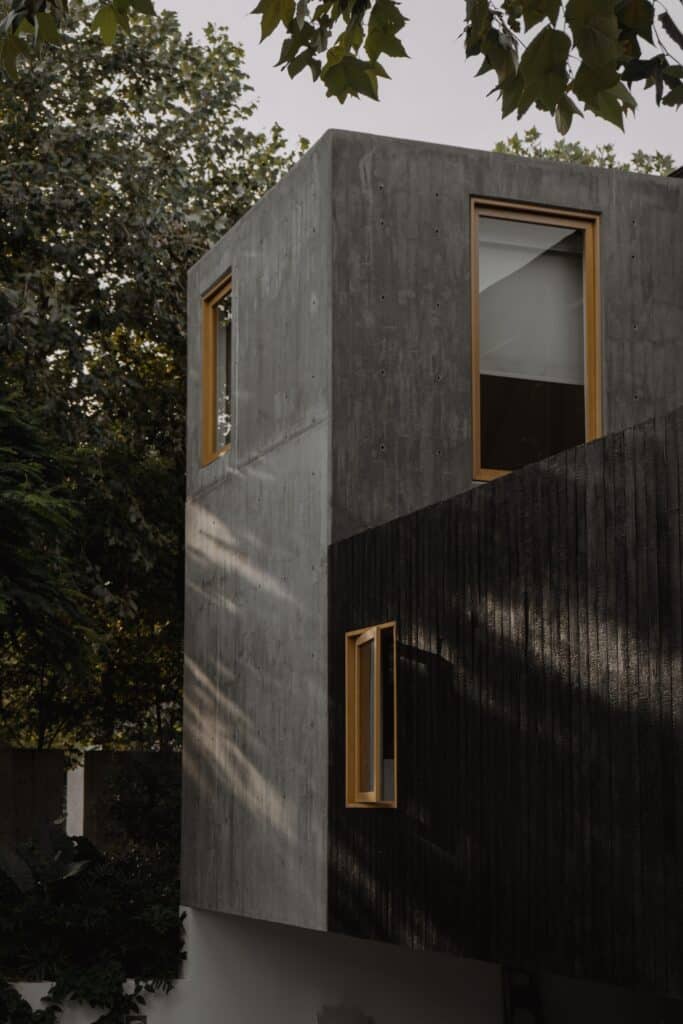
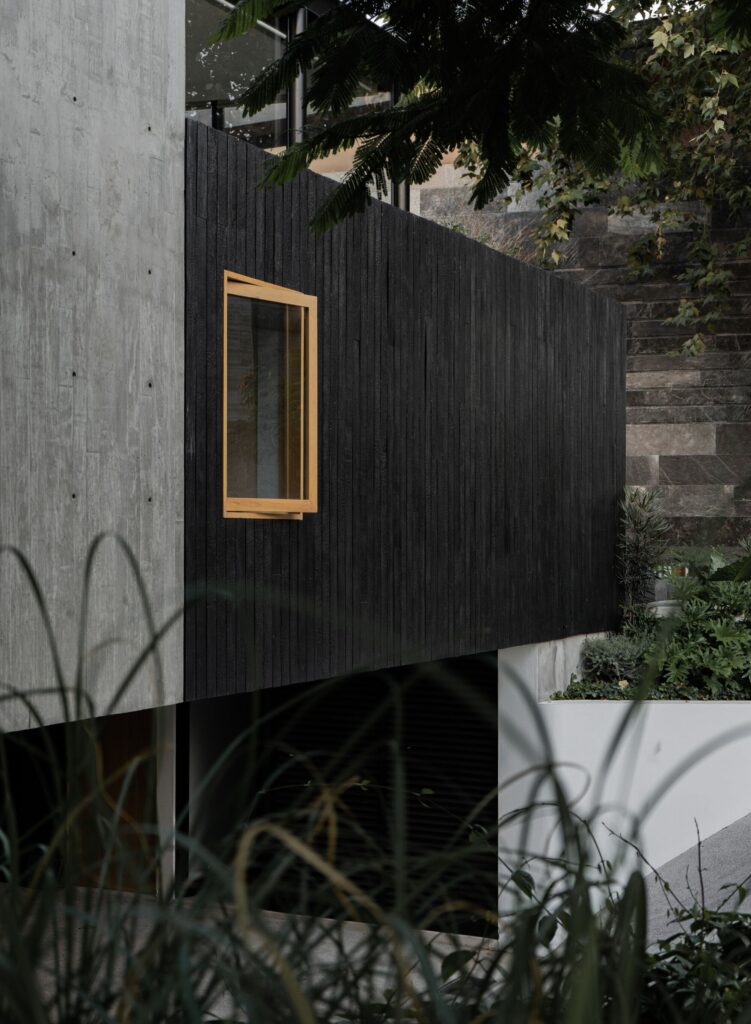
In the pursuit of authenticity, the designers embraced the use of innovative materials, such as charred wood.
Japanese Technique and Its Application in Design
This traditional Japanese technique imparts a deep and distinguished appearance to the wood, reflecting a strong sense of history on the building’s main façade. Furthermore, it helps create a unique link between modern design and the surrounding environment, enhancing harmony between the structure and its natural and cultural context.
Combining Aesthetics with Functionality
Beyond its aesthetic appeal, this method also provides durability and resistance to external elements, making it both a practical and sustainable choice. It embodies a design philosophy that seamlessly unites beauty and functionality.
Connecting Spaces through Interior Bridges
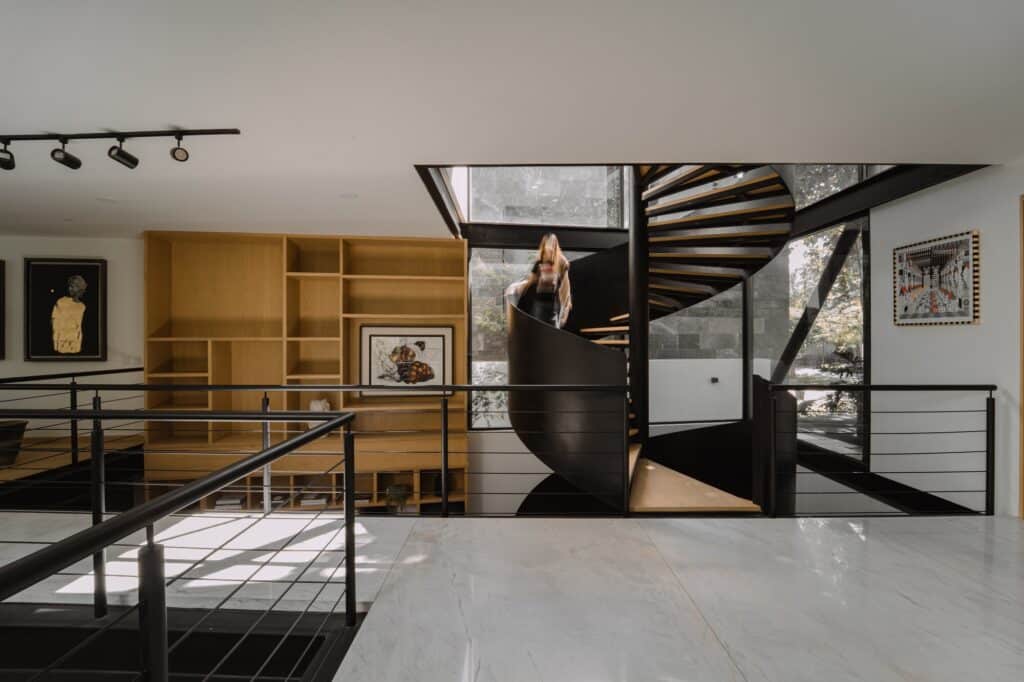
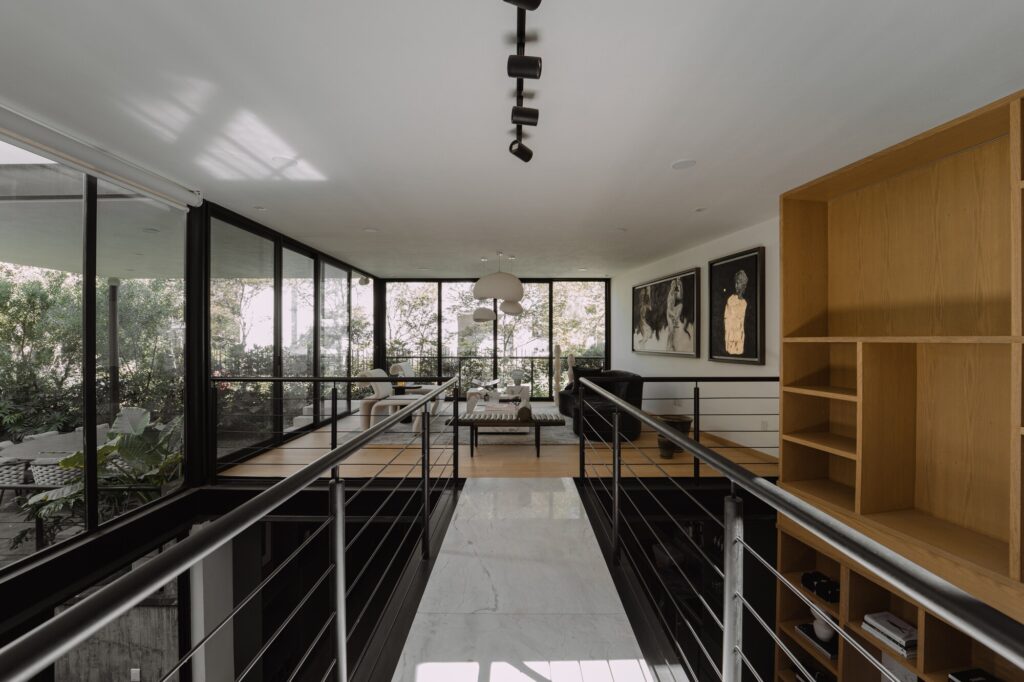
The architectural design of “Casa EV” is manifested in the interior bridges that link different areas, encouraging residents to move through the house smoothly and effortlessly. These bridges offer a holistic spatial experience, where shared and private areas naturally intertwine, fostering family interaction without compromising privacy.
The Staircase as a Focal Point
At the heart of the project, a black wrought-iron staircase spans the three levels of the residence. This staircase is not merely a means of moving between floors; it serves as both a sculptural and functional element, unifying vertical circulation within the home while adding a distinctive aesthetic dimension to the interior spaces.
Harmony between Movement and Design
By combining the bridges with the central staircase, the design achieves a harmony between daily movement and architectural beauty, making the interior experience of the house more dynamic and engaging, while preserving intimacy and privacy.
Exterior Design as a Functional and Aesthetic Element
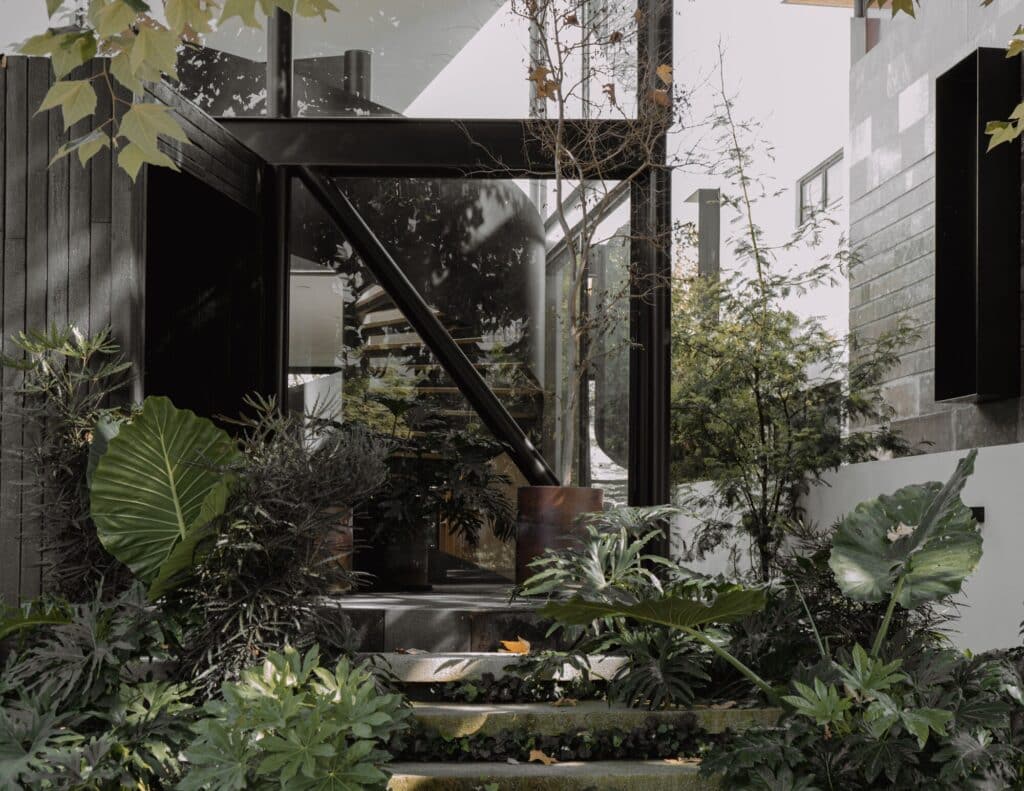
The exterior design of “Casa EV” plays a fundamental role in enhancing privacy, as the property is entirely surrounded by vegetation that serves as a natural visual barrier. This strategy reduces the need for traditional high walls, creating a sense of openness and connection with the surrounding environment.
Respecting Coexistence with Community and Environment
These design solutions reflect a respect for harmonious coexistence with neighboring communities, where the landscaping encourages positive interaction with the environment without imposing solid barriers that separate the building from its context.
Gradual Evolution of the Landscape
Over time, the surrounding landscape evolves to become an integral part of both the entrance and the architecture itself, adding a dynamic and sustainable dimension to the home’s design. The outdoor spaces become an extended sensory experience that reflects a balance between nature and architecture.
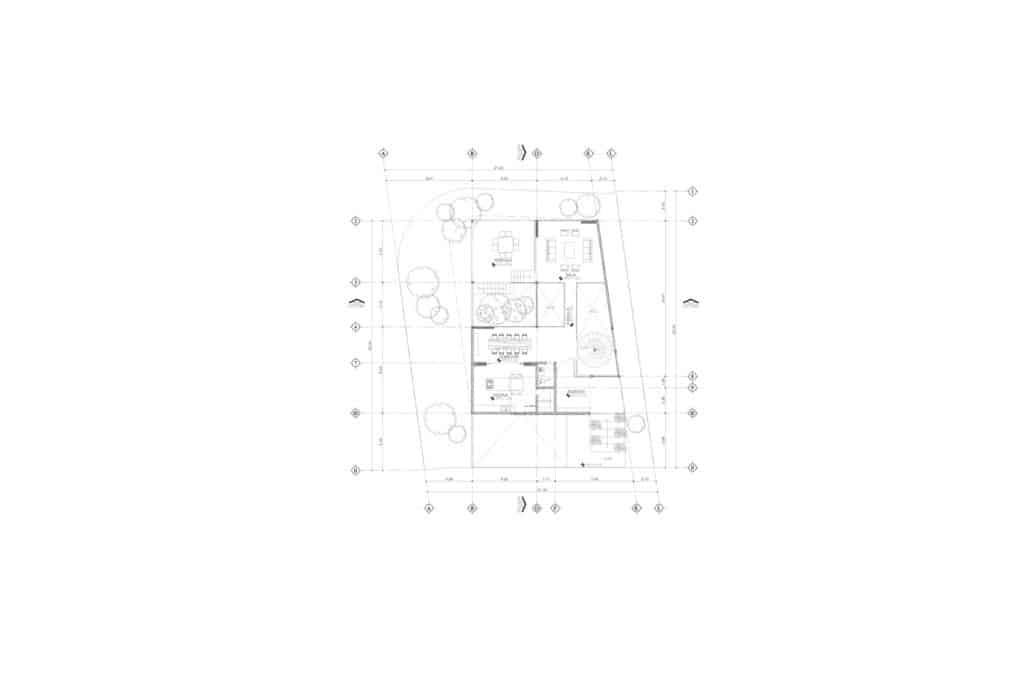
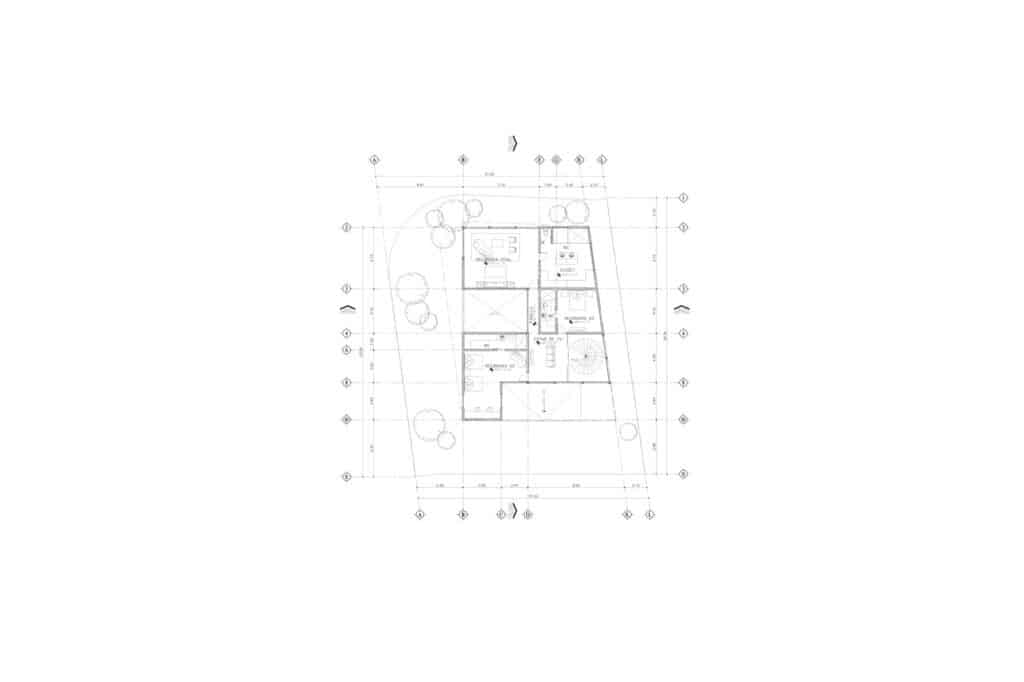
Functional Diversity of Interior Spaces
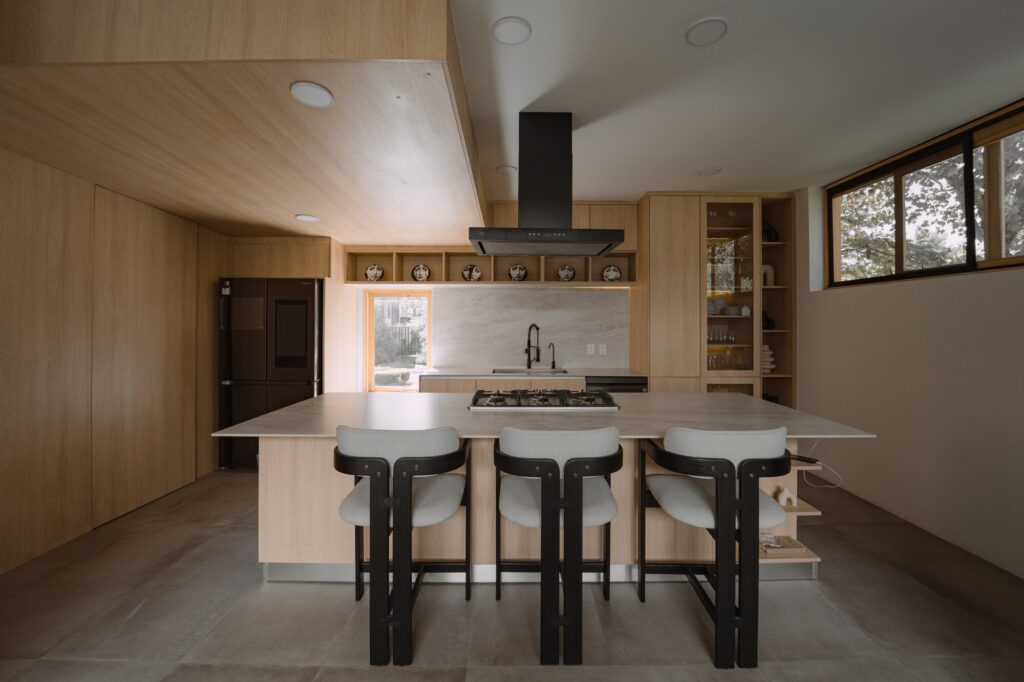
The interior layout of “Casa EV” offers a variety of social areas, including the kitchen and dining room, alongside multiple living rooms and terraces distributed across different levels. This arrangement allows residents to move freely and interact with the surrounding natural spaces, enhancing a sense of openness and comfort.
Integrating Nature into Daily Life
Through terraces and rooms with open views, residents can enjoy the surrounding natural environment directly from inside the home, enriching the living experience and creating a renewed connection between the interior and exterior.
Specialized Spaces Adding a Unique Character
Among the home’s distinctive spaces is the “Man’s Room,” specifically designed for hunting activities. This room exemplifies how individual needs can be seamlessly integrated into the overall design, adding a personal and unique dimension to the residential experience.
Structural Framework and Architectural Details
The home’s structural framework, featuring exposed matte black beams, imparts a serious and industrial character, enhancing contemporary aesthetics and clearly highlighting the architectural lines. These beams go beyond their structural function, playing a key role in defining the visual character of the interior spaces.
Blending Natural Materials with Modernity
The black beams harmonize with the craftsmanship of American oak woodwork, creating a balance between the industrial character and the natural warmth of wood. This combination of different materials contributes to the creation of unique and simple designs, giving the home a sense of comfort and intimacy while maintaining a modern and elegant appearance.
Enhancing the Residents’ Sensory Experience
Through the interplay between metal beams and wooden carpentry, the sensory experience of the inhabitants is enriched, allowing them to feel harmony among the various interior elements and enjoy a visual and tactile balance that merges modernity with authenticity.
Woodwork and Its Role in the Interior Atmosphere
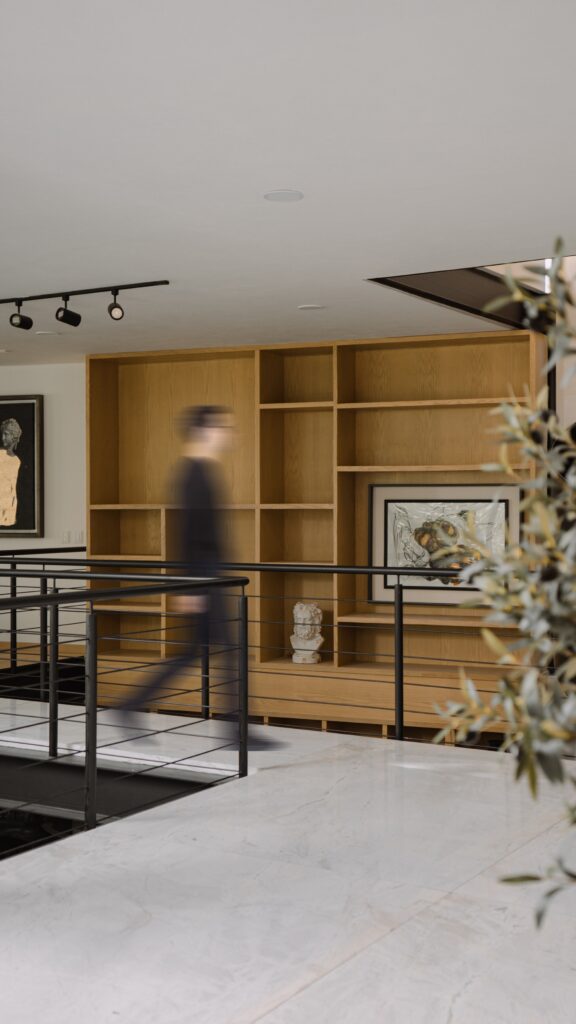
Woodwork serves as a central element in creating a warm and welcoming atmosphere within “Casa EV.” The tones of American oak integrate seamlessly with the overall design, forming a color palette that resonates with the surrounding natural environment, enhancing the sense of comfort and warmth inside the interior spaces.
Double-Height Bookshelf as a Visual Element
Among the standout features of the design is a double-height bookshelf. Its role extends beyond functionality, serving as a central visual element visible from various angles within the house, adding a dimension of elegance and distinction to the interior design.
Enhancing Interior Architecture through Details
By combining natural materials with prominent architectural features like the bookshelf, the interior architecture is enriched, offering a comprehensive visual and sensory experience. This balance between function and beauty gives the home a unique and enjoyable character for its residents.
The House as an Integrated Work of Art
“Casa EV” transcends the traditional concept of a residence to become a model of integrated architecture, where all elements intertwine to form a harmonious and visually striking ensemble.
Merging Innovation with Comfort
The design possesses a unique ability to combine architectural innovation with everyday comfort, making the home not merely a living space, but also a reflection of the residents’ identity and personal desires.
Expressing Personality through Design
Through this approach, every interior and exterior element becomes part of a design language that reflects the culture and lifestyle of the inhabitants, giving “Casa EV” a distinctive and unique character within the contemporary architectural scene.
✦ ArchUp Editorial Insight
It is evident that the Casa EV project offers a clear approach to integrating privacy with openness to nature, and its use of materials such as charred wood and American oak demonstrates a keen attention to detail and innovative application of traditional elements. The central staircase and interior bridges also add a consistent dynamic dimension, contributing to a smooth circulation experience within the house.
However, there remain certain aspects that warrant critical consideration from a broader architectural perspective. The complex spatial layout and multiple terrace levels may pose challenges for daily practical use or long-term maintenance. Additionally, reliance on strong visual elements such as metal beams and wooden surfaces could limit future flexibility for modifications or expansions. The close integration between interior design and surrounding landscapes also makes the project sensitive to environmental changes or community restrictions, which may impact operational sustainability.
From an architectural standpoint, this project can serve as a valuable case study on how to integrate privacy and natural surroundings within an urban residence, with particular focus on movement and circulation within the home, as well as innovative use of traditional materials. It can also provide a basis for comparing architectural solutions in dense urban neighborhoods, emphasizing the balance between aesthetics and functionality rather than merely visual appeal.
information about the project
- Architects: herchell arquitectos
- Area: 538 m²
- Year: 2023
- Photographs:eyesofmemo