Grainger Fully Lets 132-Home London Scheme in Under Four Months

UK-listed residential landlord Grainger has reported total rental growth of 3.1% for the four months to the end of January, describing the performance as strong and in line with market guidance, despite being slightly below the 3.6% growth recorded last year. The unaudited update also confirmed that occupancy remains high at 96%.
Build-to-Rent Demand in London
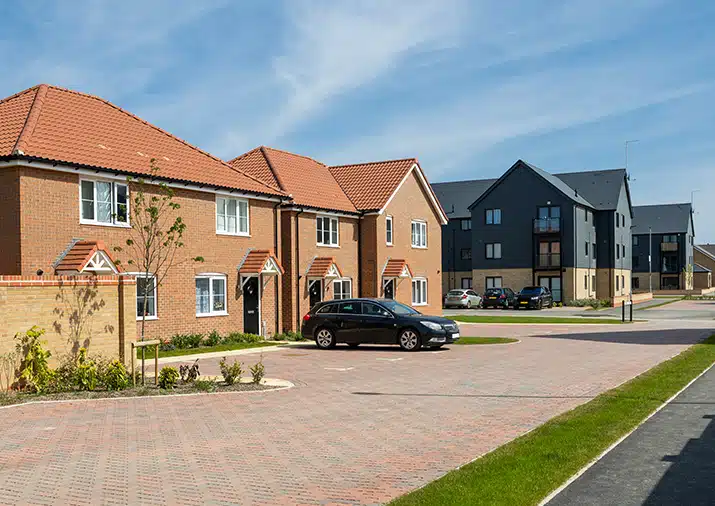
Grainger highlighted that its newly completed Seraphina Apartments development in London was fully let in less than four months, pointing to strong demand within the build-to-rent sector. The scheme comprises 132 homes and forms part of the wider Fortunes Dock regeneration project in Canning Town, east London.
Expansion Across Cities and Transport Hubs
Beyond London, Grainger has completed Glasshouse Square, a 468-home build-to-rent development in Bristol, and has commenced construction on a £75 million, 179-home scheme adjacent to Guildford Station, in partnership with Network Rail. The company has also acquired a 195-home scheme in Chiswick through its Connected Living London joint venture with Places for London, Transport for London’s property arm.
Strategic Shift Toward Institutional Rental Housing
In October, Grainger stated it is on track to deliver a 50% increase in earnings over the next five years. This growth strategy reflects the firm’s ongoing shift toward the build-to-rent model, reinforced by its registration as a Real Estate Investment Trust (REIT) last September, aimed at attracting a broader range of investors.
A Forward Look for Architects and Urban Designers
For architects and urban planners, Grainger’s rapid leasing performance underscores the growing importance of design-led build-to-rent housing, particularly when integrated into urban regeneration schemes and transport-linked sites. The success of developments like Seraphina Apartments highlights how architectural quality, density management, and long-term livability are becoming critical factors in shaping the next generation of rental-led urban housing across the UK.
✦ ArchUp Editorial Insight
Grainger’s recent performance update positions build-to-rent as an increasingly dominant strand within Contemporary UK residential development, closely tied to urban regeneration and transport-oriented planning. Projects such as the fully let Seraphina Apartments in Canning Town reflect a model where density, professional management, and long-term rental occupation reshape the urban fabric, often replacing speculative, short-term housing delivery. However, this rapid absorption also invites architectural scrutiny: high occupancy and rental growth do not automatically equate to spatial quality, social integration, or functional resilience for long-term residents. The emphasis on scale and investor confidence risks standardising layouts and material expression unless design ambition is actively protected. Nevertheless, when aligned with regeneration frameworks and transit hubs, build-to-rent offers architects a platform to rethink durability, livability, and the architectural role within institutionally owned housing.