

Hadrian’s Aqueduct: Reviving a 2,000-Year-Old Architectural Marvel to Combat Greece’s Water Crisis

Greece’s water shortage crisis has escalated beyond warnings into a critical emergency. The challenge is no longer confined to heatwaves and drought but now threatens the agricultural sector and intensifies pressure on resources during peak tourism seasons. Amid this crisis, a sustainable solution has emerged from an ancient relic: Hadrian’s Aqueduct. This architectural marvel, built two millennia ago, is now writing a new chapter in its history, proving that answers to our contemporary challenges may be deeply rooted in our past.
Historical Roots: A Roman Empire Building for a Sustainable Tomorrow
Hadrian’s Aqueduct was constructed in the 2nd century AD (circa 118-138 AD) by direct commission of Roman Emperor Hadrian to meet the growing water demands of ancient Athens. It represented an exceptional engineering feat for its era.
· Astonishing Length: The aqueduct stretches 15 miles (equivalent to 24 kilometers).
· Long Lifespan: It remained a vital water source for over 1,300 years, witnessing successive civilizations.
· Periods of Neglect and Revival: It fell into disuse during the Ottoman occupation, only to be revived in the 19th century when Greece became a modern state to combat escalating water shortages. It continued its function until the 1920s when it was supplanted by modern installations like the Marathon Dam.
The Aqueduct’s Current State: A Hidden Architectural Treasure Beneath the Modern City
Despite nearly a century of official disuse, the waters of Hadrian’s Aqueduct have never ceased flowing.
· Vital Pathway: Water continues to flow from Mount Parnitha towards the city, passing through seven municipalities: Acharnes, Metamorfosi, Heraklio, Marousi, Chalandri, Pefki, and part of the Athens municipality.
· Well Network: Out of the 456 original wells that formed the network, 390 have been located to date.
· Visible Presence: Of these wells, 228 are visible, and 174 can be found in public spaces, forming a living archaeological fabric that the city celebrates.
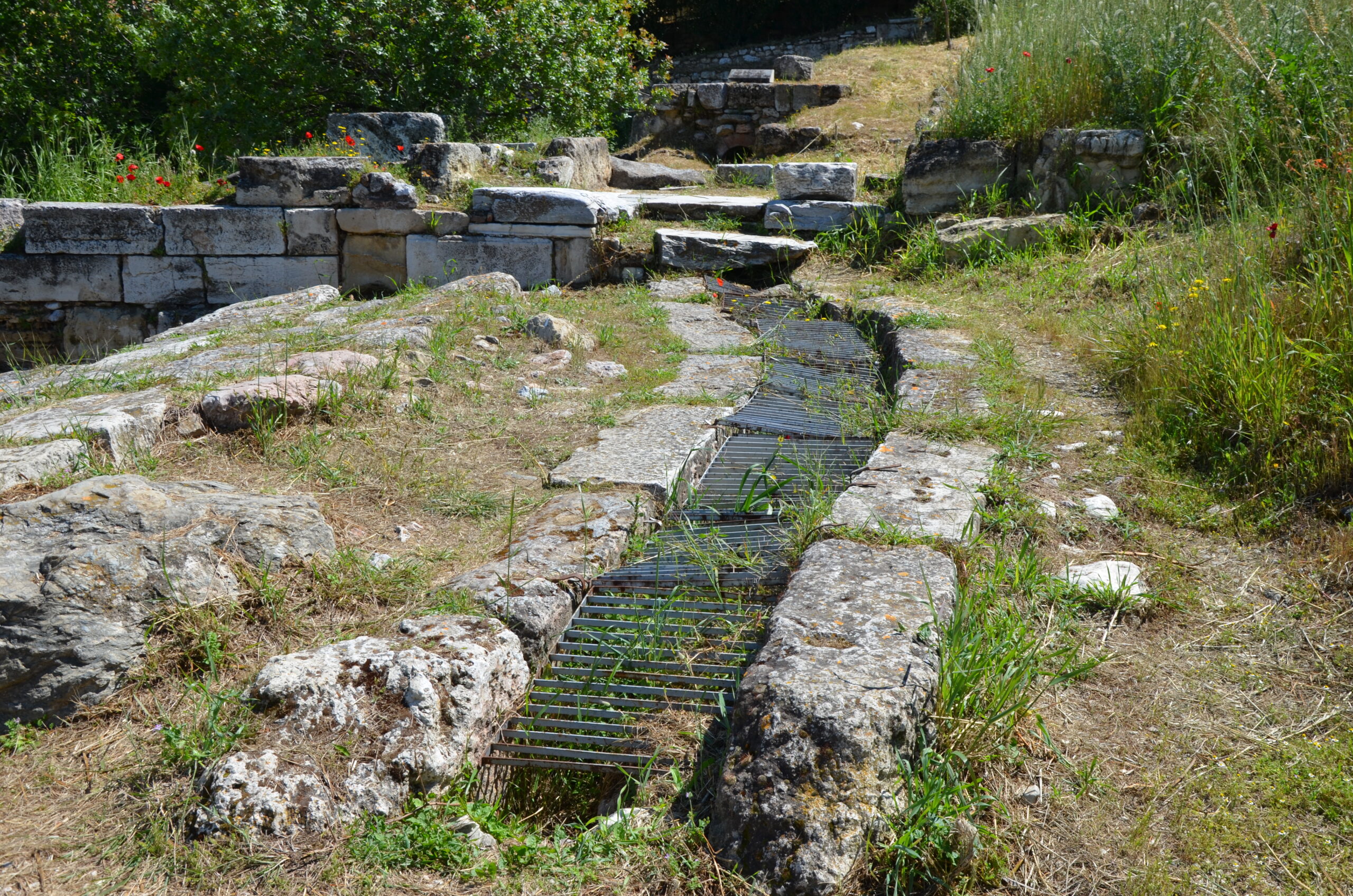
The 2018 Restoration Project: A Holistic Vision Bridging Past and Future
The ambitious restoration project launched in 2018 with a threefold objective, transforming the aqueduct from a mere relic into an active partner in urban development:
- Preserving the Monument: Ensuring this architectural legacy endures for future generations.
- Sustainable Functional Use: Directly utilizing the aqueduct’s water for local irrigation, alleviating pressure on public water networks.
- Enhancing Biodiversity and the Ecosystem: Enriching the green spaces the aqueduct passes through and turning them into vital corridors for biodiversity.
The project has already succeeded in creating broad cultural awareness through water reuse and the rehabilitation of surrounding pathways, an achievement crowned by the Chalandri Municipality winning first prize in the 6th International Award for Urban Innovation in Guangzhou (2023), in the “Sustainable Management of Cultural Heritage” category.
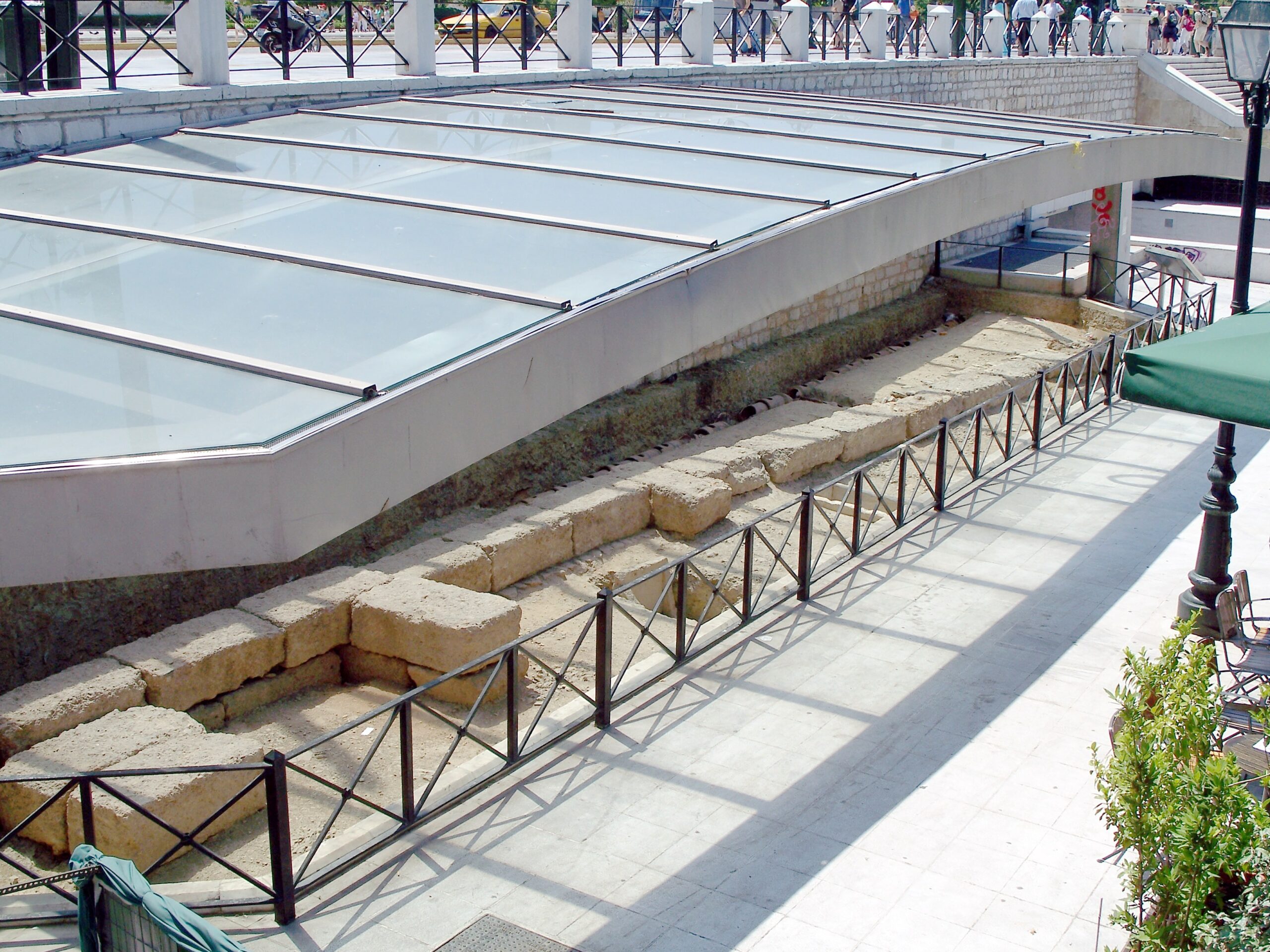
An Athenian Precedent: The Peisistratean Aqueduct as a Living Model of Functional Heritage
Hadrian’s Aqueduct is not the first in Athens to be brought back to life. For decades, the National Garden of Athens has been irrigated by the Peisistratean Aqueduct, built in the 6th century BC, which still collects water from Mount Hymettus to this day. This model raises a crucial philosophical and practical question: Should preserved architectural heritage remain in active use, or should it be frozen in time as a mere museum piece?
Global Models: When Heritage Becomes Living Infrastructure
The Greek experience is not isolated. Pioneering global examples prove that integrating heritage into daily life is not only possible but can be more sustainable:
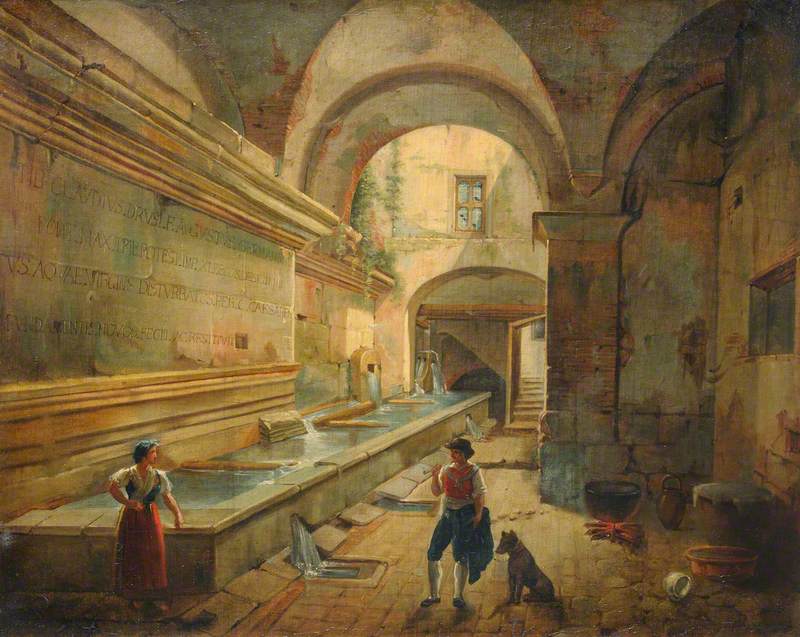
· Italy: The Aqua Virgo aqueduct in Rome, built in 19 BC, still supplies water to some of the city’s historic fountains.
· Iran and Oman: Qanat systems (or “Aflaj”), some up to 3,000 years old, remain a vital water source for agriculture and are listed as both cultural and functional heritage.
· Peru: Ancient irrigation canals and Inca agricultural terraces are still used in the harsh climates of the Andes, testifying to the adaptive capacity of ancient engineering.
· Japan: In cities like Kyoto and Kanazawa, canals still provide water for gardens and temples and are even used as modern systems for preventing seasonal rain floods.
Redefining “Heritage Preservation”: From Static Artifacts to Active Partners
These successful models compel us to reconsider the traditional concept of heritage preservation. The word “preservation” has historically been associated with isolating monuments from daily life and treating them as fragile entities. However, reality proves that these structures are often more resilient and integrated more deeply with the environment than their modern counterparts.
The new approach, embodied by Hadrian’s Aqueduct, calls for:
· Functional Integration: Transforming heritage into part of the solution to a city’s current problems.
· Leveraging Technology: Combining the robustness of ancient structures with the precision offered by modern monitoring and maintenance technologies.
· Inherent Sustainability: Utilizing the intelligent solutions embedded in these constructions, which were designed to be environmentally compatible from the outset.
Conclusion: The Past as a Reservoir for the Future
Hadrian’s Aqueduct is no longer just a stone line beneath the feet of modern Athens; it has been transformed into a lifeline that tangibly contributes to addressing contemporary environmental challenges. It offers a clear lesson to urban planners and architects worldwide: The past is not a heavy burden to bear but a rich reservoir of sustainable solutions. By respecting these monuments and reimagining their role, we not only preserve history but also build a more resilient future using tools whose efficacy has been proven over thousands of years. The real question is no longer whether we can use the past, but are we intelligent enough to learn from it?
✦ ArchUp Editorial Insight
The article discusses the revival of Greece’s historic Hadrian’s Aqueduct as a response to water scarcity, presenting a model for integrating historical infrastructure into the functional fabric of modern cities. The restoration process presents challenges in reconciling the structural requirements of contemporary irrigation networks with the strict constraints of preserving historical integrity, which may limit its operational efficiency compared to purpose-built modern solutions. Constructively, the project demonstrates the potential to transform a historical relic from a static entity into an active component of the city’s environmental infrastructure, thereby enhancing its resilience in addressing climate challenges.
Brought to you by the ArchUp Editorial Team
Inspiration starts here. Dive deeper into Architecture, Interior Design, Research, Cities, Design, and cutting-edge Projectson ArchUp.


