
Hatai Bangkok: When Architecture Becomes Living Memory and Shared Identity

Project “Hatai”: Redefining the Relationship Between Architecture and Local Identity
Reviving Urban Memory Through Design
In the heart of Bangkok, on the former grounds of the Narai Hotel, the “Hatai” project emerges as a bold architectural endeavor to revive the spirit of place. This is not just a typical real estate redevelopment, it goes further, aiming to establish a dialogue between architecture and memory, clearly reflecting an effort to weave Thai heritage into the fabric of contemporary design.
The Lantern Language: Between Local Craftsmanship and Sculptural Dimension
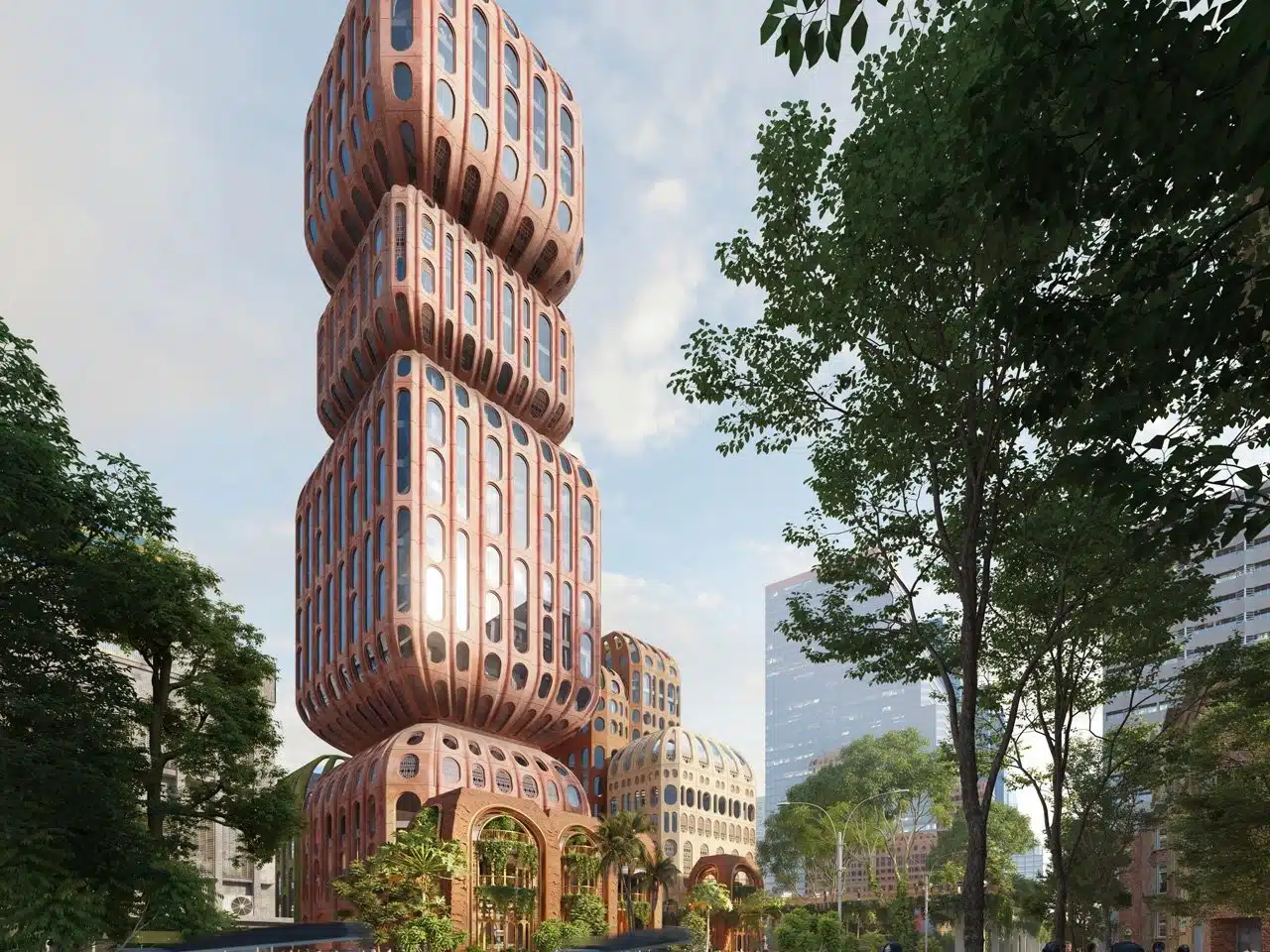
The façade of the new buildings, including two hotels, one bearing the historic name “Narai”, draws inspiration from the form of traditional lanterns, a deliberate and meaningful choice. The softly arranged structures create a visual effect full of warmth, consciously evoking classic Thai craftsmanship.
This gentle visual composition stands in stark contrast to the rigid, characterless towers that dominate Bangkok’s skyline, adding a new architectural sense of softness and emotional connection to the place.
Public Spaces as Tools of Belonging
At ground level, the project unfolds as a miniature civic village. Shaded squares beneath lantern structures, planted with local vegetation, feature a shrine and an open market, all seamlessly aligned with a carefully restored canal.
Here, traditional elements are not used as symbolic ornamentation, they are activated to serve a vital social function: inviting people to gather, linger, and engage with the space.
Restoring the Flow of Life Through Canals and Pathways
By restoring the old canal and carving out an interconnected network of public walkways, the project not only revives a forgotten water element but also brings back the rhythm of everyday life in Thai cities. This open infrastructure doesn’t just facilitate movement, it enhances the sense of belonging and opens the door for community interaction, making the project a living model of architecture that listens to its environment and culture, rather than imposing itself upon them.

Thai Lanterns as an Architectural Symbol
A Luminous Tribute to Local Heritage
At the heart of the Hatai project’s design, traditional Thai lanterns emerge not merely as decorative elements, but as a conceptual foundation. The towers go beyond being tall structures, they are luminous markers that embody the delicacy of paper and bamboo, radiating a festive glow. This visual approach is not just a symbolic gesture; it is a direct expression of a desire to honor local heritage while simultaneously weaving new experiences into the fabric of the modern city.
When Architecture Becomes an Invitation to Participate
The design is not content with aesthetic beauty alone. The softly layered, rounded forms that gracefully capture light redefine the relationship between people and place. They create shaded environments, pockets of calm, and spontaneous moments that invite interaction.
In doing so, the building transforms from a silent object into a social entity, one that invites residents and visitors alike to pause, observe, and participate.
Heatherwick’s Vision: Towards a New Urban Hospitality
An Architectural Statement in Its First Thai Appearance
For Heatherwick Studio, Hatai is not just a new project on the map, it is an architectural statement contemplating the future of cities and hospitality. Through a thoughtful integration of commerce, community, and nature, the project seeks to dismantle the traditional boundaries between inside and outside, guest and resident, old and new.
The Courtyard as a Pulse of Daily Traditions
At the center of this concept lies the open courtyard, set to host a traditional market and a variety of event spaces. This courtyard is not merely an architectural void, it is a meeting point that revives the city’s social vitality, transforming into a lively, tradition-rich hub for all, rather than an exclusive enclave reserved only for guests.

Beyond Aesthetics: Architecture as a Means to Revive Memory
Restoring Emotion in a City Overshadowed by Modernization
The Hatai project does more than offer a beautiful design; its ambition reaches beyond surface aesthetics to restore what the city has lost, human detail, emotional depth, and visual storytelling.
In response to the harshness and emptiness left by Bangkok’s rapid modernization, Thomas Heatherwick’s vision emerges as a conscious attempt to reconnect the built environment with its authentic cultural roots. The goal is not to create a luxury destination, but to craft a narrative that truly belongs to the city and its people.
Global Design with Local Roots
A Visual Language of Identity
From the symbolism of lanterns illuminating the façades to the revival of the old canal, every element of the design carries the spirit of Thai national heritage.
Rather than imposing an external vision upon the site, Hatai offers a model of what architectural design can become when it is grounded in local meaning, without losing openness to global innovation.
Toward 2027: When Architecture Becomes a Cultural Bridge
Celebrating Place, Not Reducing It
When the project opens in 2027, Hatai is expected to become more than just an urban landmark; it will serve as a living cultural bridge, linking past and present, locals and visitors, architecture and community.
The place offers more than just a new space, it brings warmth, memory, and the spirit of community back to the heart of the city. In doing so, it affirms that the best architecture is not that which imposes itself, but that which reflects and celebrates the soul of its setting.

✦ ArchUp Editorial Insight
There is no denying that the Hatai project represents an ambitious aesthetic and human-centered experiment, one that aims to redefine the relationship between the city and its people. Its design places heritage at the core of the equation, offering a model of what architecture can become when it draws from the roots of place and engages with the community rather than overlooking it.
Yet, legitimate questions remain regarding the project’s ability to deliver on its promises in a tangible way. Integrating elements such as an open market and a public canal into a high-end hospitality development may face challenges of practical usage, particularly in the contrast between elite visitors and local residents.
Moreover, the use of strong visual symbols, like lanterns, carries the risk of slipping into mere formalism if not supported by a genuine, everyday experience that reconnects people with the place.
Hatai thus stands at a crossroads: it may become either an inspiring project that revives the city’s memory or merely a visually striking façade within a wave of accelerated real estate development. Ultimately, its fate will be determined not by its ambitious design intentions, but by how successfully those principles are brought to life on the ground.
Prepared by the ArchUp Editorial Team
Don’t miss the chance to explore more from Architecture in fields like Design and Projects on the ArchUp website.


