A New Museum of Architecture and Design Takes Shape on Helsinki’s Waterfront

Helsinki has unveiled the selected design for its forthcoming Museum of Architecture and Design. It is set in a prominent location along the city’s South Harbor. The proposed building takes the form of a low, triangular-based pavilion. It seeks to negotiate between the historic urban fabric and a contemporary architectural presence.
Reading the Form
The design is structured around the idea of a pavilion-like building. It is a horizontal volume that stays close to the ground yet asserts itself. This is through its diagonally stepped walls and triangular façades. These elements extend inside, forming staircases and exhibition spaces. They suggest a continuous architectural language rather than a mere exterior gesture.
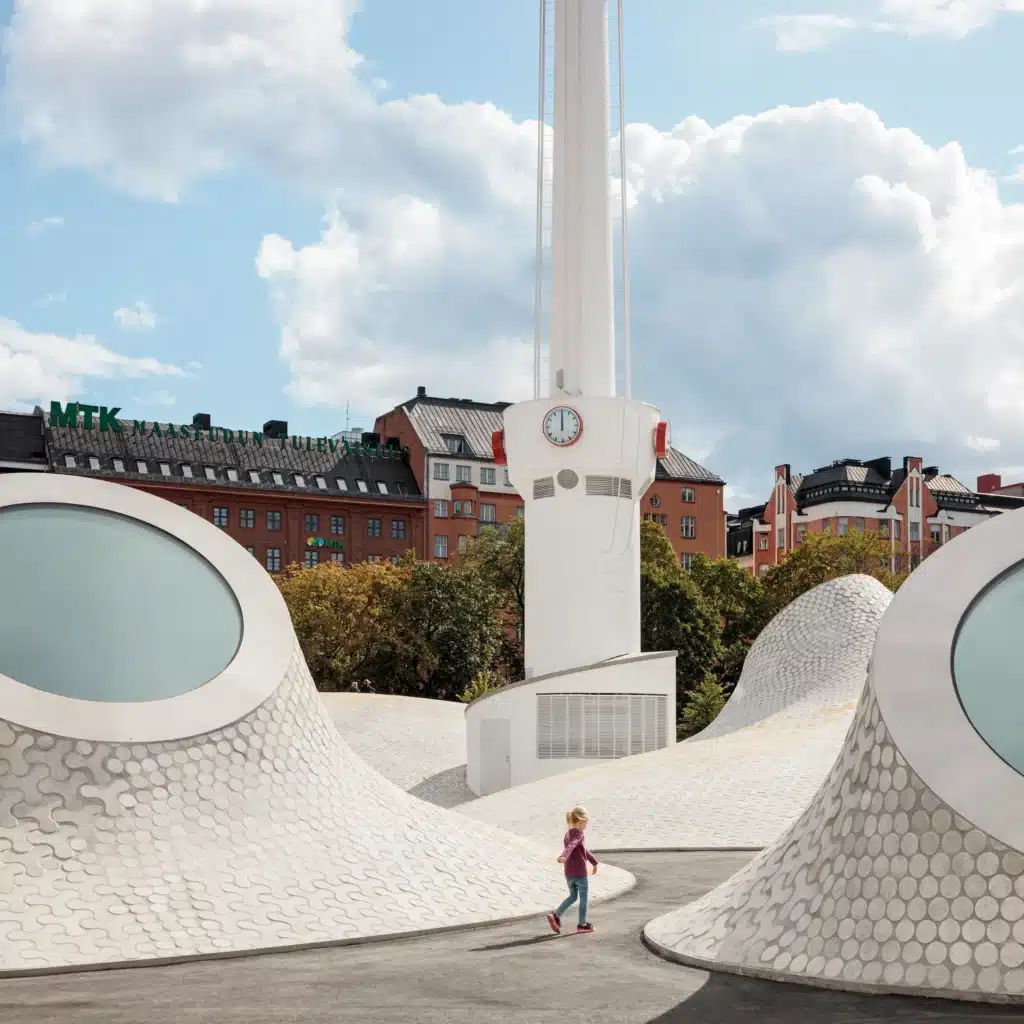
Still, one question arises: does the reliance on repetitive triangular motifs risk monotony? While they establish a recognizable identity, without careful treatment through materials, light, and scale, the geometry could become a constraint rather than a strength.
Relationship with the City
A key strength of the scheme is its decision not to obstruct panoramic views from Tähtitorninvuori Hill toward the harbor. This is a sensitive urban move that acknowledges the city’s layered history. At the same time, the horizontal profile may make the building less legible from a distance. This is in comparison to other cultural landmarks in Helsinki. It raises an architectural dilemma: should a national museum stand out as an icon, or merge discreetly into its setting?
Public Spaces
Opening the museum towards the sea with terraces and outdoor galleries is a clear attempt to extend cultural life into the public realm. Yet, in a city known for harsh winters and strong winds, the usability of such spaces throughout the year remains uncertain. Without thoughtful environmental strategies, these outdoor areas risk becoming symbolic rather than lived spaces.
Critical Takeaway
The project balances architectural presence with urban sensitivity. Yet, it leans heavily on a single geometric concept to drive its identity. The ultimate success of the museum will not be defined solely by its exterior silhouette. It will also be defined by how convincingly it integrates exhibitions, public life, and the surrounding city into a coherent architectural experience.
✦ ArchUp Editorial Insight
The proposed Museum of Architecture and Design in Helsinki emerges as a low triangular pavilion, balancing contemporary presence with integration into the city’s historic harbor. Its sloping façades and interior continuity create a coherent spatial language. Yet, the reliance on a single geometric motif risks visual repetition and limited variety. While preserving key sightlines toward the waterfront is commendable, one may question whether the building asserts itself as a landmark or retreats too quietly into context. Still, the extension of cultural life through terraces facing the sea offers an urban gesture of significant public value.
Explore the Latest Architecture Exhibitions & Conferences
ArchUp offers daily updates on top global architectural exhibitions, design conferences, and professional art and design forums.
Follow key architecture competitions, check official results, and stay informed through the latest architectural news worldwide.
ArchUp is your encyclopedic hub for discovering events and design-driven opportunities across the globe.