
HowArchitectureIsHelpingSaveThailand’sElephantswithEmpathyandCare

In the quiet village of Taklang, nestled in northeastern Thailand, a subtle architectural movement is taking shape—not one driven by grandeur or spectacle, but by care, coexistence, and ecological awareness.
Thai architect Boonserm Premthada has brought this vision to the global stage through his project “Elephant Food House,” presented at the 24th International Exhibition of Triennale Milano , under the theme “Inequalities.” But more than an architectural display, it’s a statement—a gentle yet powerful reminder that design can be a tool not just for humans, but for all living beings.
A Hidden Crisis
Taklang Village is home to over 200 elephants, many of whom live alongside local families who have cared for them for generations. Yet, as forests shrink due to deforestation, climate change, and expanding agriculture, food sources for these animals are disappearing.
What was once a natural cycle—where elephants roamed freely and found enough vegetation to eat—has become increasingly fragile. Today, villagers must supplement their diet, often walking long distances to gather fresh plants.
This growing imbalance inspired Boonserm to ask a simple question:
How can architecture help feed not just people, but also those who share our world?

Reimagining the Rice Barn
At the heart of the project lies a familiar rural structure—the traditional Thai rice barn. Usually built on stilts to protect grain from moisture and pests, these wooden structures are a staple in the countryside.
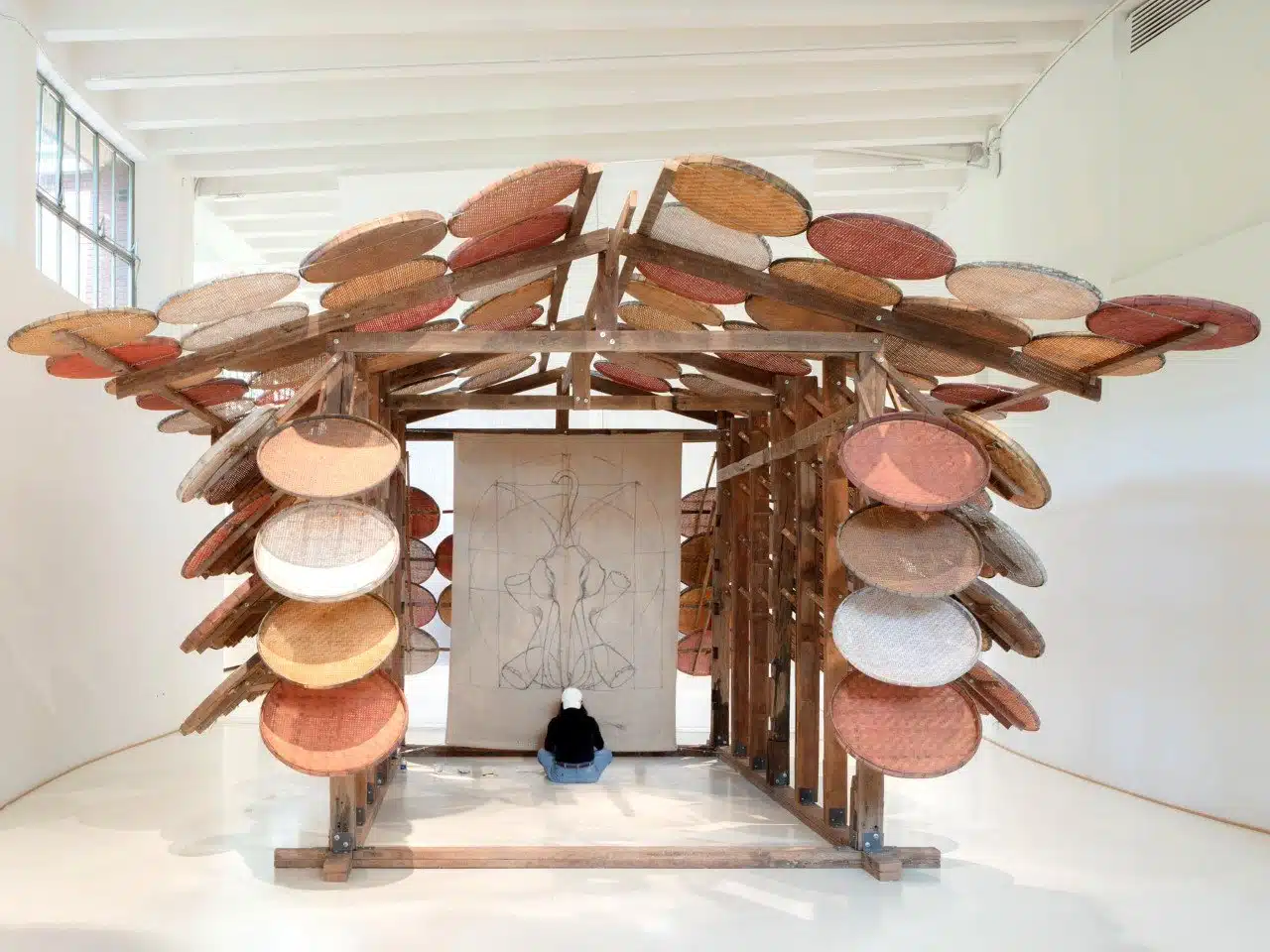
Premthada reimagined them as Elephant Food Houses —small shelters scattered along forest paths where villagers can leave bundles of fresh plant matter for the elephants. More than just storage units, they act as rest stops, shade providers, and gathering points for both elephants and caretakers.
| Design Element | Description |
|---|---|
| Frame | Locally sourced timber |
| Walls & Roof | Bamboo and palm leaves |
| Floor | Raised on stilts for ventilation and protection |
| Ventilation | Natural airflow to keep food dry |
These structures aren’t flashy or futuristic—they’re made with locally available materials like bamboo and woven baskets, scaled up and repurposed into architecture. Their lightweight, breathable design makes them perfectly suited to the tropical climate.

Architecture That Breathes
The Elephant Food Houses aren’t just about storing food; they’re part of a daily rhythm. Elephants walk long distances each day, and these shelters offer places to pause, rest, and digest—something vital for their health.
In a way, these buildings encourage movement, just like the old seasonal migrations used to do. They create moments of connection—between elephants, humans, and the land they both depend on.
From Taklang to Milan
Inside the halls of Triennale Milano, Premthada recreated a version of the Elephant Food House using the same natural materials found in Thailand. But what caught visitors’ attention was a symbolic centerpiece: a sculpture called the Vitruvian Elephant , inspired by Leonardo da Vinci’s famous Vitruvian Man.
Crafted from handmade paper produced using elephant dung, the sculpture symbolizes the natural cycle of waste and renewal.
As Premthada explains: This paper, made from elephant dung, became the starting point of my design philosophy—one that centers both nature and the creatures we share it with.

Architecture as Empathy
For Premthada, inequality isn’t only a human issue—it’s about how we treat other species, too. His work challenges the idea that architecture should serve only people, proposing instead that it can be a space of shared care.
Inequality, he says,
isn’t about giving rights to animals. It’s about cultivating empathy within humans.
So the Elephant Food House becomes more than a shelter—it becomes a framework for thinking differently about how we live together, not just with each other, but with the environment and the creatures around us.
Toward a Shared Nation
He calls this vision a Human and Non-Human Nation —a future where humans don’t see themselves as separate from nature, but as part of a larger, interconnected system.
Architecture, in this context, isn’t about dominance. It’s about presence. About listening. About building spaces that welcome, rather than control.
Conclusion: Sheltering With Care
The Elephant Food House reminds us that meaningful architecture doesn’t always need to be monumental. Sometimes, its most important role is simply to provide shelter—with humility, intention, and care.
Whether standing in the dense forests of Taklang or inside a gallery in Milan, its message remains the same:
Architecture isn’t always about showing strength. Sometimes, it’s about expressing kindness.
✦ ArchUp Editorial Insight
From a professional design perspective, what stands out in the Elephant Food House is how it transforms architecture from function to relationship. Premthada didn’t just build structures—he created spaces for human-animal interaction rooted in care. The use of local materials, familiar forms, and deep environmental awareness shows that impactful design doesn’t need complexity. It needs intention
ArchUp strives to document the architectural and urban journey in the Arab world through precise editorial content and rich analyses that reflect the depth of design and the diversity of architectural schools. The editorial team consists of specialists committed to covering all the latest developments in the field. You can always learn more about our editorial team or contact us to contribute or participate in building this open knowledge archive.


