Infill Architecture: Transforming Urban Constraints into Design Opportunities

Infill architecture goes beyond merely building on unused urban plots it’s an exercise in turning limitations into catalysts for innovation. Architects today face tight spaces, restrictive zoning laws, and the challenge of balancing privacy with openness. Yet, these constraints often lead to some of the most expressive and efficient architectural solutions.
Far from being a compromise, infill projects serve as design laboratories for testing new structural systems, material applications, and spatial strategies. Vertical stacking integrates multiple programs within narrow footprints, while open floor plans and column-free layouts enhance adaptability over time. Light and air are carefully channeled through corner setbacks, open circulation, and rooftop terraces that maximize usable space.
In some cases, adaptive reuse becomes the ultimate infill strategy reimagining existing structures with upgraded façades, reconfigured interiors, and improved street-level engagement. These interventions prove that revitalizing a building’s original footprint can be as impactful as starting from scratch, offering a fresh urban presence while preserving embodied energy.
The featured projects below demonstrate that successful infill architecture is defined not by scale but by strategy. Through vertical layering, hybrid programming, lightweight construction techniques, and smart engagement with site conditions, architects turn constraints into opportunities—transforming underutilized plots into high-performance, connected urban spaces.
1. Vertical Stacking: Maximizing Narrow Footprints
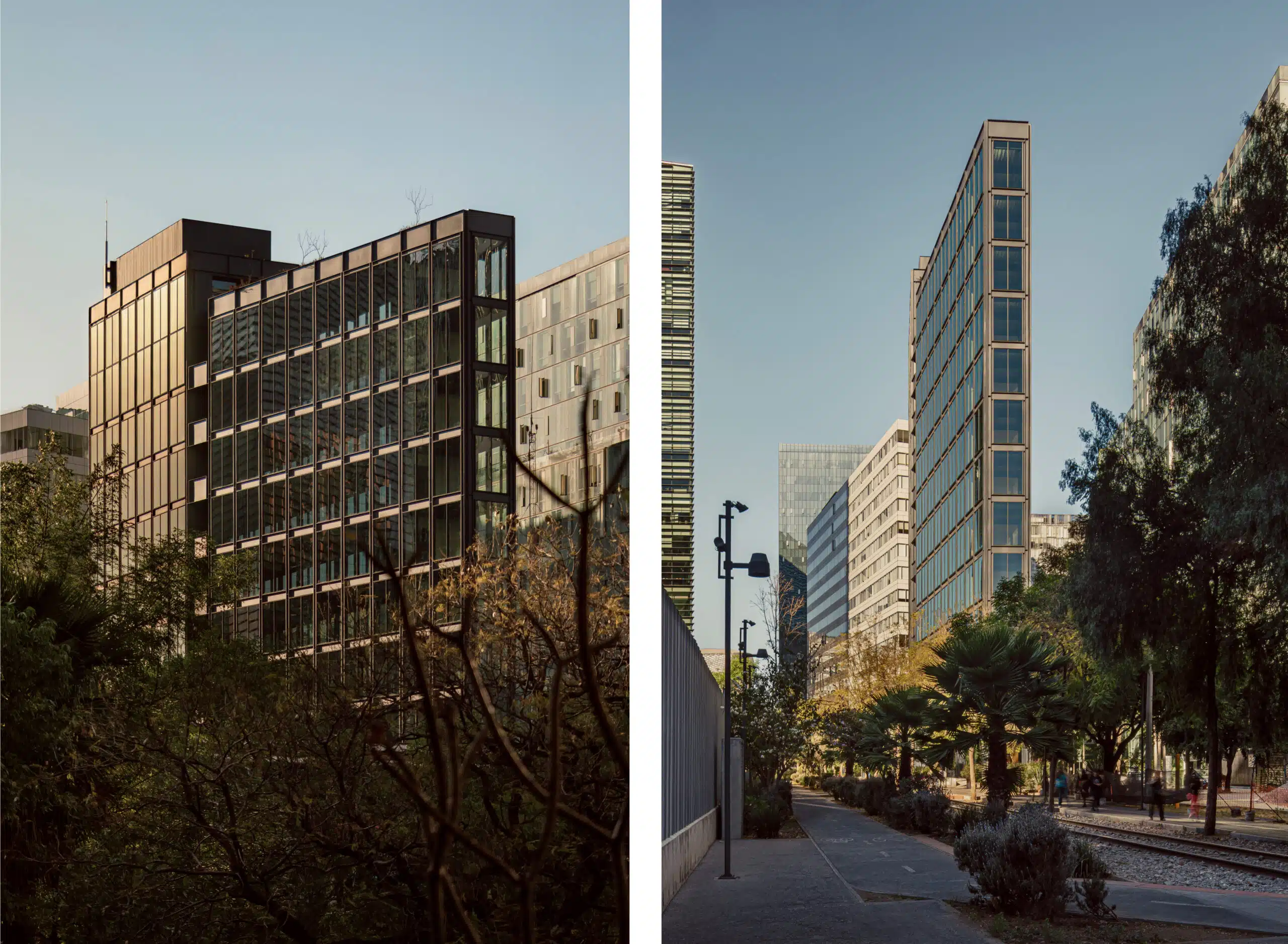
Ferrocarril de Cuernavaca 780 by HEMAA, Mexico City

This innovative office tower transforms a narrow, underused plot into a vertical structure that reflects the site’s industrial heritage and urban ambitions. Sandwiched between a tight street and the revitalized Cuernavaca railway (now a linear park), the building exemplifies spatial efficiency and contextual integration.
Design Highlights:
- Aesthetic proportions inspired by classical architecture (base, shaft, capital).
- Structural façades enable flexible, column-free layouts.
- Expansive glazing floods interiors with natural light.
- Ground-floor café and green terraces create a welcoming threshold.
- Automated parking system across 13 underground and above-ground levels.
The 13th-floor setback offers sweeping views of Mexico City’s skyline, while rooftop gardens enhance sustainability. By dedicating part of its site to the public, the project revitalizes its neighborhood bridging a busy street and park to foster community connectivity.
2. Contextual Identity: Strong Urban Presence
QO by Archetonic, Mexico City
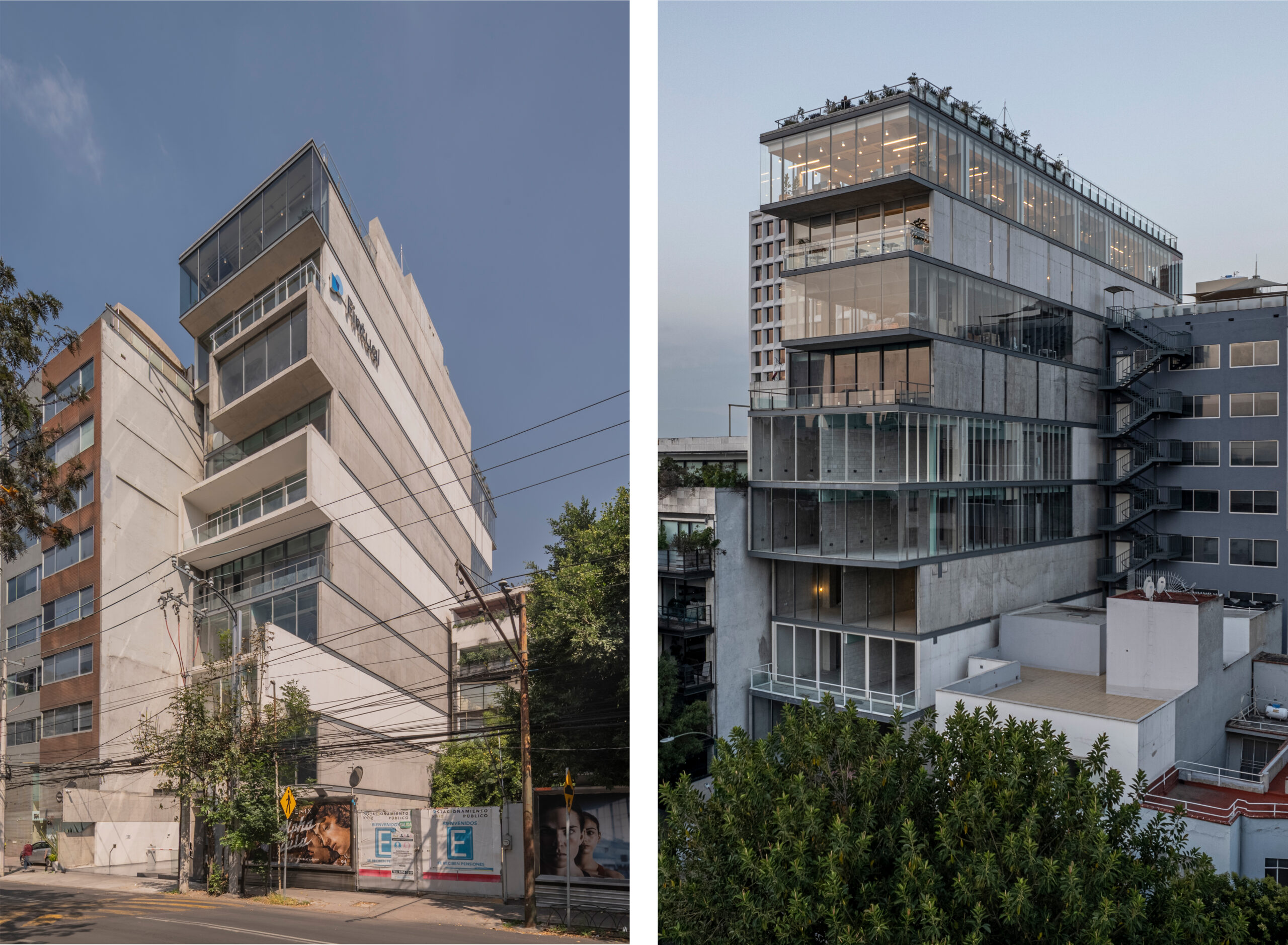
This mixed-use infill development links two bustling streets near Condesa and Roma, adjacent to Chapultepec Forest. Its slender rectangular form responds to dense urban conditions with overlapping floor plates that create generous terraces.
Key Features:
- Glass façades maximize daylight and skyline views.
- Exposed concrete adds visual depth and urban character.
- Hybrid programming (residential, office, retail) within a 10-meter-wide footprint.
- Ground-floor café activates street engagement.
Despite tight site constraints, QO seamlessly integrates into its surroundings, proving that thoughtful design can elevate limited urban land.
3. Multifunctional Optimization
Better Together by VIVE Design Studio, Thailand
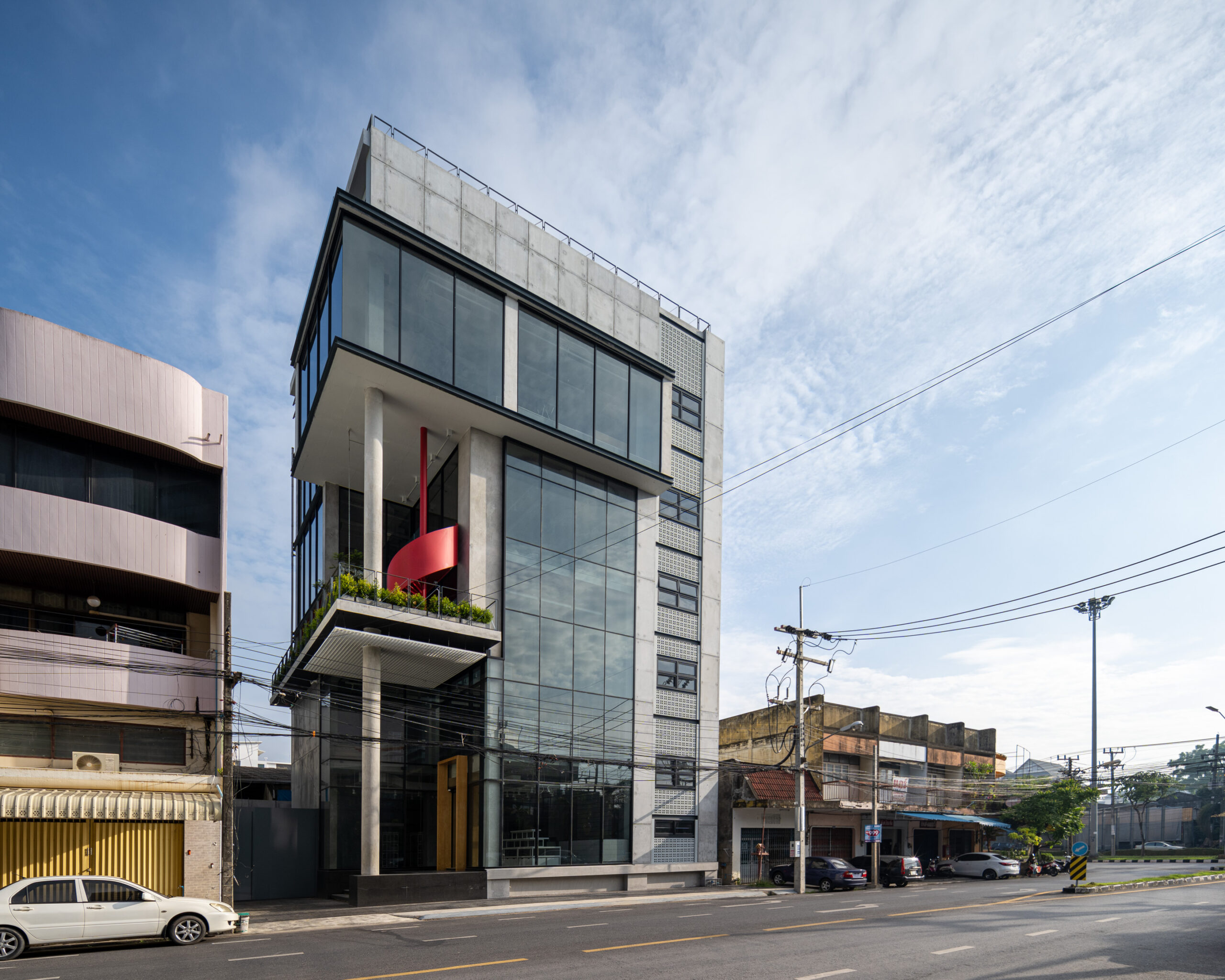
This six-story “all-in-one” destination packs retail, coworking, cafés, and meeting spaces into just 1,000 sqm. Vertical stacking and intentional boundary-blurring between floors foster spatial continuity.
Standout Elements:
- Retail on lower floors, coworking and cafés above.
- Playful spiral staircase and open façades enhance vibrancy.
- Compact yet socially engaging design.
The project maximizes its vertical form to connect people, functions, and experiences.
4. Shaping Constraints into Design
Soseum by SML + Coom Partners, Seoul
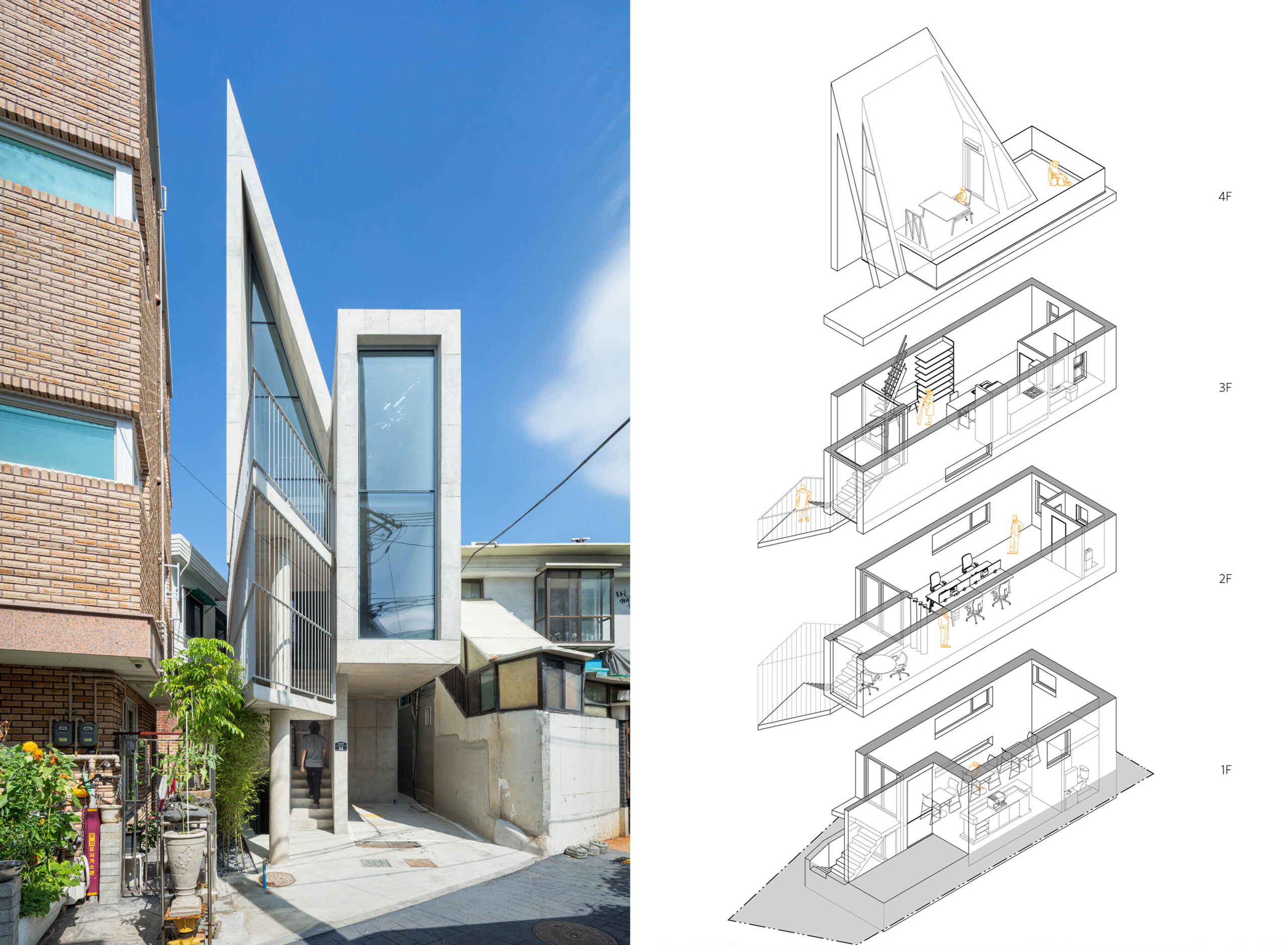
Built on a 5.6 x 17m plot, this family home uses setbacks, sloped roofs, and strategic fenestration to optimize light and airflow. An open staircase creates porous boundaries, enhancing the sense of space.
5. Adaptive Reuse for Cultural Vision
Leica Gallery by Format Architecture, NYC
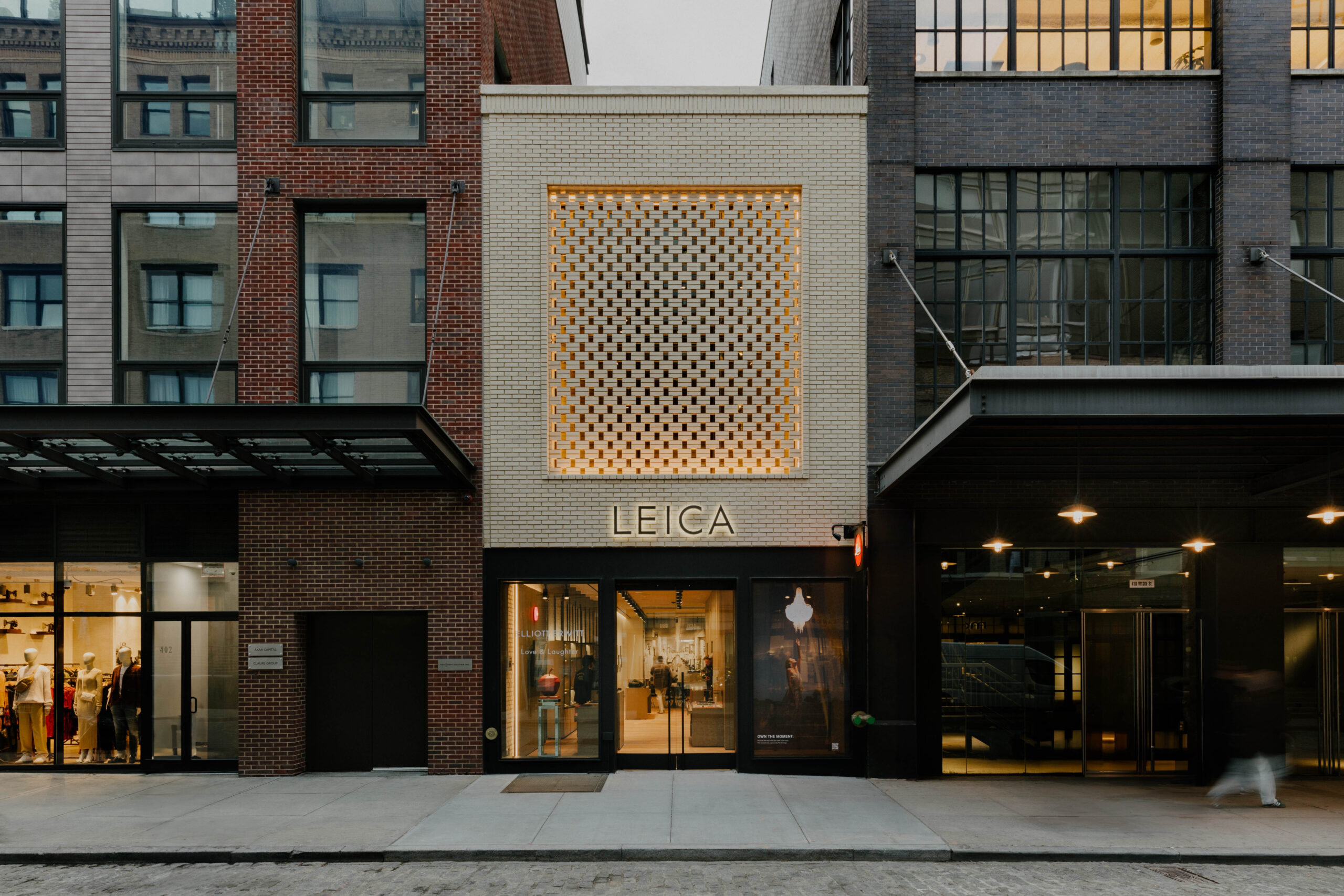
This two-story gallery embraces its modest footprint with a redesigned façade, skylights, and an outdoor terrace. It demonstrates how small-scale infill can enhance cultural visibility.
✦ ArchUp Editorial Insight
Infill architecture redefines urban limitations as creative opportunities, blending functionality with contextual sensitivity. Projects like Ferrocarril de Cuernavaca 780 and QO showcase how vertical stacking and hybrid programming can turn tight plots into dynamic spaces. However, some designs risk prioritizing form over long-term adaptability, potentially limiting future usability. Despite this, infill architecture’s greatest strength lies in its ability to weave new life into neglected urban fabric, proving that even the most constrained sites can foster innovation and community connection.