Intangible Cultural Heritage Center: An Architectural Landmark Preserving the Spirit of Korean Heritage

Introduction: Where Contemporary Architecture Meets Authenticity
In the heart of the Gwongmyeong region, rich with its intangible cultural heritage, the Intangible Cultural Heritage Center rises as a unique architectural landmark. This project, designed by GAGAHOHO Architects, represents a living bridge between the antiquity of the past and the modernity of the present. Its role extends beyond mere preservation and documentation to creating an interactive environment that revitalizes heritage and integrates it into the life of the community.
Intangible Treasures: The Cultural Legacy of Gwongmyeong
The city of Gwongmyeong is home to an exceptional collection of intangible cultural practices of high artistic and academic value, which the Center is dedicated to preserving and presenting to the public. Among its most prominent treasures are:
· Gwongmyeong Nongak Music: These are traditional farmers’ music and dance arts, passed down through generations for over 450 years in the Suha-dong and Hagon-dong areas. This music is still played in its authentic form, preserving historical rhythms and melodies.
· Sodo Songs: A type of ancient Korean folk singing that originated in the northwestern provinces of Hwanghae and Pyeongan, reflecting the spirit and culture of those regions.
· Established Living Practices: Alongside the officially recognized heritage, local communities maintain other practices such as Abang-ri farming songs and the Abang-ri tug-of-war rituals, confirming the continuity and presence of this heritage in daily life.

An Architectural Vision: A Dialogue Between Wood, Brick, and Light
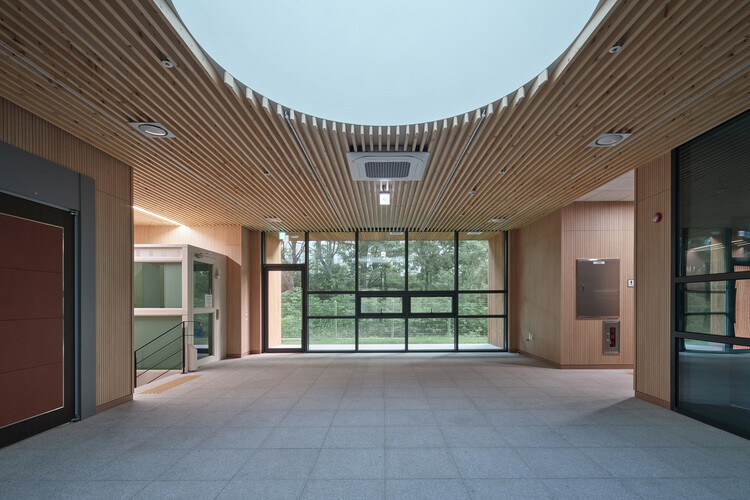
The design philosophy of the Center is manifested through a meticulous dialogue between materials and architectural elements, aiming to create a sensory experience that reflects the depth of the heritage it houses.
· The Language of Materials: Wood and Brick
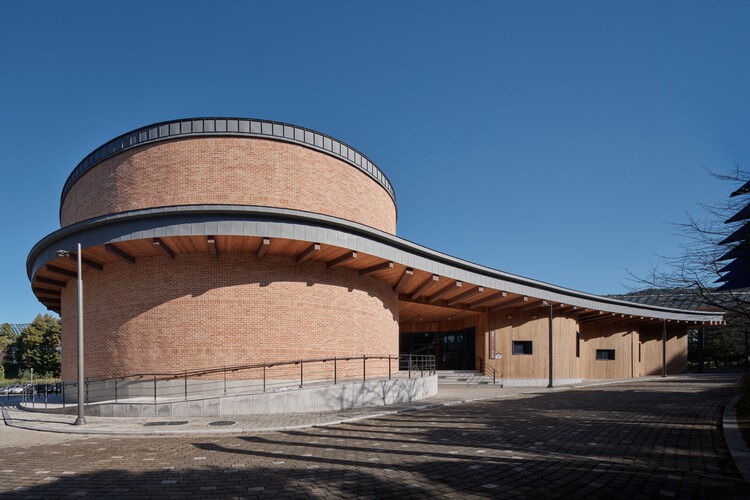
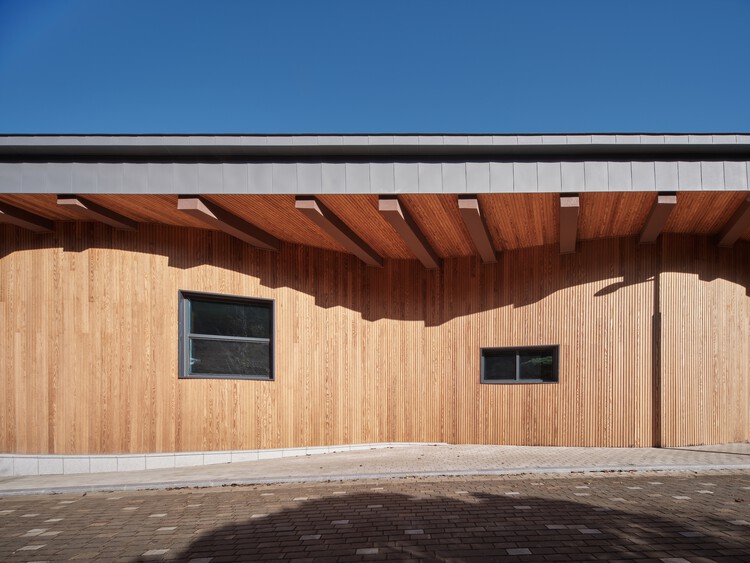
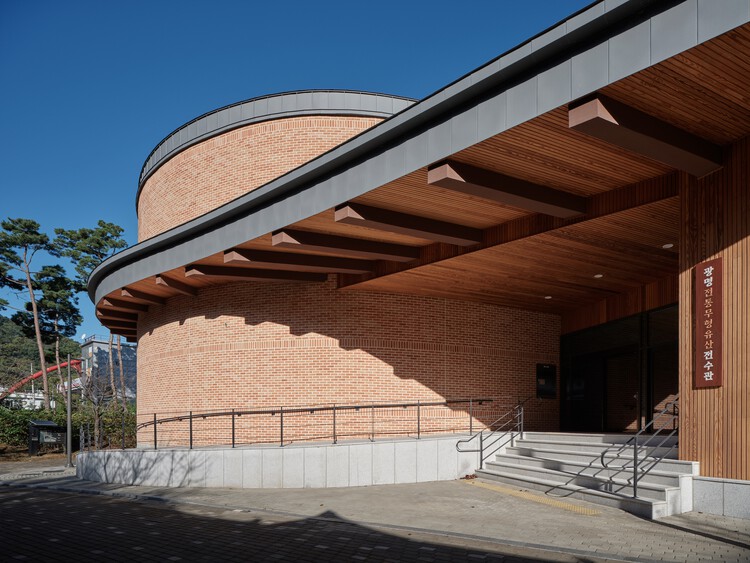
The design utilizes wood not just as a building material, but as a symbol of traditional Korean craftsmanship and warmth, creating familiar and welcoming atmospheres. Alongside it, contemporary brick is used to form a texture harmonious with the surrounding environment, providing a sense of solidity and continuity. This blend of the organic and the industrial creates a unique visual identity for the building.
· Shaping Spaces and Volumes
The interior spaces are designed to allow visitors to flow naturally between different exhibition areas, while the exterior spaces integrate with the surroundings, encouraging community interaction. Passageways and openings guide the gaze and create a visual frame that connects the displayed heritage elements inside the Center with the life outside.
· Sustainability and Identity: A Delicate Balance
The concept of sustainability in this project is not limited to environmental aspects but extends to include cultural sustainability. The design seeks to reduce the carbon footprint through solutions like natural ventilation and lighting, while simultaneously emphasizing the local cultural identity, making it a model for responsible architecture that respects its place and function.
Conclusion: More Than Just a Building
The Intangible Cultural Heritage Center in Gwongmyeong is more than just a building; it is a vessel for collective memory and a space for contemporary creativity. By intelligently integrating traditional materials like wood and brick within a modern design language, the Center succeeds not only in preserving intangible heritage but also in revitalizing it and making it relevant to new generations, affirming that architecture can be a powerful medium for preserving cultural identity.
✦ Archup Editorial Insight
The article discusses the role of architecture as a medium for preserving cultural identity through a project that integrates contemporary construction techniques with traditional crafts. The volumetric composition relies on adjacent blocks that create sharp separations between exhibition spaces, potentially hindering the formation of a connected and unified visitor path. The material dialogue between wood and brick appears as a superficial layer in some areas without fully exploring their structural potential, while the relationship between the transparent glass facade and the surrounding urban context creates a clear visual disconnect. The distribution of light openings in the ceilings produces non-uniform lighting contrasts that may distract from the exhibited artifacts. However, the reliance on a high-level ventilation system via roof openings achieves notable efficiency in maintaining a stable indoor climate for the main halls without significant mechanical energy consumption.
Brought to you by the ArchUp Editorial Team
Inspiration starts here. Dive deeper into Architecture, Interior Design, Research, Cities, Design, and cutting-edge Projectson ArchUp.