1983 Building Project: Reorganizing Interior Spaces and Enhancing Visual Flow

Interior Space Organization and Flow Enhancement
The interior intervention in the building, constructed in 1983, proposes a carefully considered adjustment focused on clarifying spatial organization and enhancing the flow of movement within the spaces. One of the most notable changes is the exchange of locations between the kitchen and the bedroom, contributing to a more efficient distribution of daily functions.
Through the design, the view is guided from the entrance through a gradual opening, progressively revealing a comprehensive perspective of the volumes and dimensions within the living area, thereby enriching the user experience and providing a better understanding of the interior space.


Enhancing Shared Spaces and Visual Connectivity
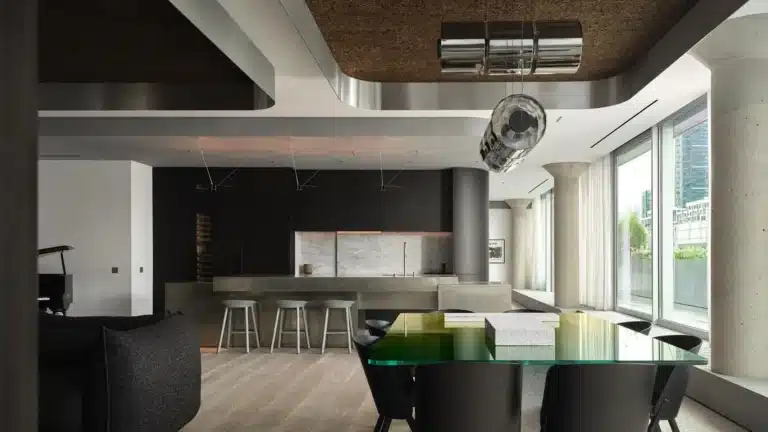
The kitchen opens onto the living room, contributing to the creation of a shared space that encourages interaction and flexible use of the area. Expanding the openings in the living room further enhances the sense of continuity between indoors and outdoors, making natural light and surrounding views key elements in enriching the spatial experience.
Bathroom Design with Privacy Levels
The bathroom layout is designed with a consideration of graduated privacy, accommodating different uses and time periods. This approach ensures a more comfortable and suitable experience for all users while maintaining the essential functions of the space.


Material Selection and Enhancing Spatial Identity
The design relies on the use of natural and durable materials that reflect the building’s sustainability and the integration of interior elements. The existing wooden ceilings are preserved and repainted to harmonize with the joinery crafted from ash and solid oak, highlighting the new interventions within the interior space.
Walls are coated with a layer of lime plaster, while the fireplace, constructed from raw clay bricks, regains its structural role at the heart of the living area, becoming a pivotal element that connects function with aesthetics. This use of materials demonstrates careful consideration of building materials in interior design.
Emphasizing Existing Volumes and Enhancing Visual Experience
Every design intervention aims to highlight the quality of the existing volumes and reinforce the identity of the place, providing a cohesive spatial experience that balances old and new elements.

✦ ArchUp Editorial Insight
It can be observed that the interior intervention reflects a focus on organizing interior spaces and redistributing functions in a way that allows greater fluidity and a cohesive spatial experience. The use of natural materials and the preservation of wooden ceilings further reinforce the sense of continuity and spatial identity, representing a clear positive aspect of the project.
However, the project may remain limited in terms of the interventions’ ability to explore broader spatial possibilities, such as maximizing natural light or creating more dynamic interactions between different areas. The emphasis on preserving existing elements may also reduce opportunities for innovation or the introduction of more flexible design solutions that accommodate diverse user needs.
This project can serve as a case study in architecture, illustrating how a balance can be achieved between maintaining the identity of an old building and organizing modern functions, while acknowledging that such interventions often require a deeper study of how to integrate innovation with existing elements in a more cohesive manner.