Japanese Wooden Pagodas Lightweight Engineering Brilliance

Introduction
At the heart of Japan, Japanese wooden pagodas stand as both spiritual icons and remarkable feats of architecture. These multi-tiered towers, built centuries ago, are more than just religious landmarks—they’re living proof of a deep understanding of nature, seismic forces, and structural adaptability.

Why Wood?
In Japanese culture, wood is more than a building material—it reflects a philosophy of harmony with nature.
Unlike heavy stone structures that crack or collapse under pressure, wood is flexible and responsive. In pagodas, builders placed a central pillar known as the shinbashira, stretching from the foundation to the top. This column serves as the spine of the building, absorbing and distributing shock during earthquakes.
Earthquake Resistance, By Design
Most of these pagodas have stood the test of time—and earthquakes—for hundreds of years. Their resilience is thanks to three key elements:
| Element | Role in Earthquake Resistance |
|---|---|
| Central pillar (shinbashira) | Absorbs vibrations and keeps the structure stable. |
| Semi-independent floors | Each tier can shift slightly, reducing overall stress. |
| Flexible wooden framework | Wood doesn’t crack easily and absorbs shock effectively. |
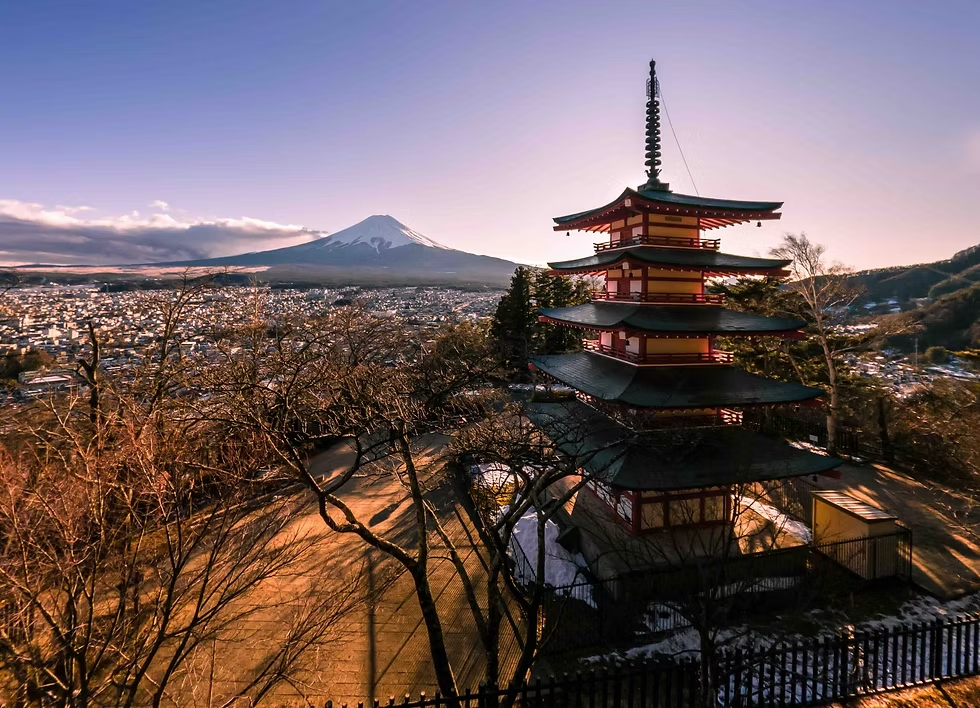
Simple Beauty, Complex Craftsmanship
While their appearance may seem modest, pagodas are built with exceptional precision and care:
- No metal nails are used—just traditional Japanese joinery techniques, where wooden pieces are interlocked with impressive accuracy.
- The gradually widening roofs help stabilize the tower and reduce wind pressure.
Inspiration for Modern Architecture
The clever design of traditional pagodas continues to influence contemporary architecture in Japan. Several modern buildings have borrowed structural ideas from these ancient towers:
| Building | Location | Inspired Element |
|---|---|---|
| Tokyo Skytree | Tokyo | Uses a central shock-absorbing column like the shinbashira. |
| New university buildings | Kyoto | Incorporate wood as a flexible structural material. |

Conclusion
Japanese pagodas are more than sacred spaces—they’re quiet lessons in smart, resilient design. Built with simple materials and refined techniques, they offer solutions that were far ahead of their time and continue to shape architectural thinking today.
✦ ArchUp Editorial Insight
This article explores Japanese wooden pagodas as enduring examples of lightweight seismic architecture. The imagery reveals tiered, timber-framed structures anchored by central pillars, with gently sloped roofs and modular layering that echo a natural hierarchy. While the visuals emphasize craft and spatial grace, the article could have delved deeper into the ongoing relevance of these principles in contemporary architecture. How are modern Japanese buildings evolving this ancient logic beyond cultural symbolism? Despite this gap, the piece successfully underscores how tradition and technique intersect to create timeless structural resilience worth revisiting in today’s design conversations.
Explore the Latest Architecture Exhibitions & Conferences
ArchUp offers daily updates on top global architectural exhibitions, design conferences, and professional art and design forums.
Follow key architecture competitions, check official results, and stay informed through the latest architectural news worldwide.
ArchUp is your encyclopedic hub for discovering events and design-driven opportunities across the globe.