
Jinan Tower Redefines the Relationship Between the River and Urban Interior Spaces

A Soaring Tower in the Heart of Jinan
This soaring tower, rising to a height of 360 meters and comprising 62 floors, is located in the Central Business District of Jinan, Shandong Province, China. The tower was designed to serve as a focal point within the urban landscape, expressing the region’s growth and economic dynamism.
Urban Context and Symbolism
The city’s Central Business District is known for five supertall buildings that represent diverse natural and cultural elements such as mountains, springs, lakes, rivers, and urban life. The tower reflects the theme of the “river,” drawing inspiration from the relationship between nature and urban living.
Location and Connection to the Surroundings
The tower stands east of a major public park known as Ribbon Park and adjacent to the district’s main boulevard, creating a balance between dense green spaces and accessibility and transportation. This location enables visitors and residents to experience a seamless interaction between nature and urban infrastructure.
Interior Design
The interior spaces of the tower were designed to provide an integrated and distinctive experience, including the grand lobby, sky lobby, and office floors. The design focuses on integrating aesthetics and functionality in a way that supports daily use and enhances user interaction with the space.


The River-Inspired Design Concept
The tower’s interior design reflects the idea of connecting architecture with nature, drawing inspiration from the unique landscape of the Yellow River that flows north of Jinan. The design aims to offer a sensory experience that blends natural beauty with fluid movement throughout the building.
The Three Expressions of the River
The beauty of the river is represented through three distinct forms:
- Calm Serenity: The upper reaches of the river are characterized by tranquility and stillness, reflecting a sense of relaxation and contemplation.
- Meandering and Turbulent Currents: In the middle sections, dynamic movement emerges, expressing the river’s ever-changing nature and bringing vitality to the interior spaces.
- Expansive Horizons: The lower stretches are defined by openness and breadth, creating a feeling of spaciousness and extended perspectives.
Spatial Organization
The tower is divided into three primary interior zones, each inspired by one of these expressions. Each zone offers a distinct experience aligned with the river concept, while maintaining a logical sequence that guides users smoothly through the building.

Grand Lobby Design
The grand lobby represents an architectural interpretation of the river’s expansive lower stretches, where a spacious environment has been created to استقبال visitors and provide a powerful visual experience that reflects a spirit of openness and extension.
Visual Elements and Materials
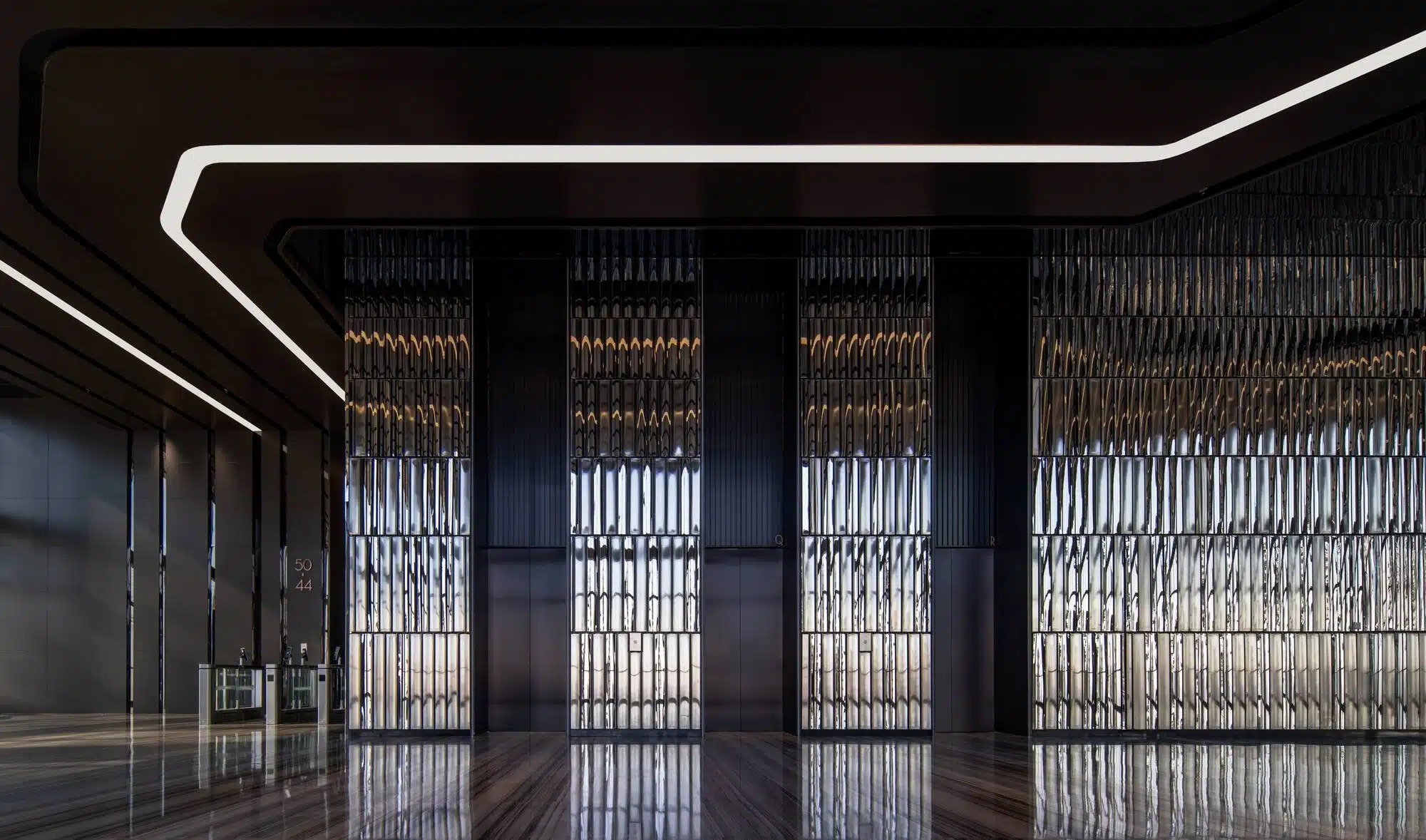
The walls feature marble-like materials in warm tones, evoking the sense of layered sedimentation and a monumental rocky presence. In contrast, the dark-colored flooring and ceilings enhance visual focus on the walls, creating a balanced contrast that draws attention to the natural details inspired by the river.
Interaction with the Space
The design combines a sense of spaciousness with visual drama, allowing visitors to engage with the space in a fluid and harmonious manner, while maintaining coherence between materials, colors, and the overall character of the environment.


Standard Floors and Sky Lobby
The standard floors reflect the vitality and constant transformation of the river’s middle sections, as they were designed to enhance activity and support the daily experiences of users within the building.
Materials and Architectural Details
Marble surfaces in warm tones, adorned with diverse patterns, contribute to expressing the power of flowing water and the movement of the river. This reinforces a sense of dynamism and natural momentum within the space.
The Sky Lobby and Upper Serenity
Located on the thirty-fourth floor, the sky lobby offers panoramic views of the city, inspired by the calm serenity of the river’s upper reaches. This space serves as a tranquil retreat away from the bustle of urban life. Curved stainless steel panels with polished, mirror-like finishes capture the delicate lines of the sky, creating shifting visual effects throughout the day and providing visitors with a continually renewed sensory experience.

Design Vision and Spatial Integration
The project seeks to achieve comprehensive harmony between interior and exterior spaces through an interior design that reflects the symbolic theme of the river.
Integrating Nature and Culture
The design incorporates the diverse landscapes of the Yellow River into the interior spaces, while highlighting the cultural and historical background of Jinan. This approach allows the building to express its regional identity in subtle ways, strengthening the sense of belonging and connection to place for both users and visitors.
Creating a Unified Experience
Through this integration, the spaces transform into a connected and cohesive environment, where the visual and natural influence of the river flows throughout the building. This enhances a sense of unity and comfort among its users, offering a balanced urban experience that combines activity and vitality on one hand, and serenity and openness on the other.

✦ ArchUp Editorial Insight
It can be observed that Jinan Tower presents several positive aspects in integrating nature into interior spaces, such as using the river theme to organize internal zones and introduce visual and sensory diversity into the user experience. However, the heavy reliance on symbolism and relatively costly materials may limit the design’s adaptability to everyday use and long-term functional demands. In addition, distributing the river’s different expressions across multiple floors could create challenges in maintaining visual coherence and a unified building identity, particularly on heavily used office floors.
Nevertheless, this experience offers valuable insights for architecture and planning. It highlights how natural and symbolic elements can be gradually integrated into interior environments while carefully considering functional requirements. Such an approach can help develop new models that balance sensory stimulation with practical user needs. The project also underscores the importance of studying site conditions and urban connectivity in shaping the overall building experience, an aspect that can be leveraged in future projects to strengthen the relationship between the built environment and its surrounding natural context.



