

Jiuzhou Bay Port 2026: A Transit Hub and Urban Complex in Zhuhai

Jiuzhou Bay Port 2026 is a large scale urban development in Zhuhai. The project redefines the traditional function of a port. It transforms the area from vehicle infrastructure into a vibrant, pedestrian focused center. Spanning 1.8 million square feet, the main port and transit hub will link the Greater Bay Area through road, rail, and sea. This design enhances integration in cities and urban planning.

Design Inspired by Maritime History
The city’s rich maritime history inspires the project’s architectural design and masterplan. Planners leveraged the strategic location near the Pearl River Delta to merge the project’s functions with its natural surroundings. The design of Jiuzhou Bay Port 2026 moves beyond functional transport requirements. It creates an integrated urban environment that reflects the local identity. This project will be added to the archive of major urban works.

An Integrated Community for Residents and Visitors
The Jiuzhou Bay Port 2026 project integrates mixed-use buildings and structures. These include office spaces, residential units, and retail stores. Planners designed these elements to support new residents and visitors. This approach turns the port area into a destination active around the clock. The interior design focuses on creating practical, attractive environments. It also adheres to sustainability standards for resource use.

A Transit Hub Connecting the Greater Region
At its core, Jiuzhou Bay Port 2026 is an advanced transportation center. The new ferry terminal will open this summer. This marks a significant step in the project’s construction process. The terminal facilitates maritime movement, while the road and rail networks ensure seamless integration with land-based transport. You can follow the latest news on the project’s developments.
Architectural Snapshot : The port transforms from an infrastructure for vehicles into an urban destination for people.

✦ ArchUp Editorial Insight
The imperative to economically integrate the Greater Bay Area creates an inevitable demand for high-capacity transit nodes. This logistical pressure triggers a predictable development pattern: state backed, large scale infrastructure optimized for maximum throughput. The decision to embed residential and retail functions is a standard financial strategy to de-risk the massive initial capital expenditure on transit hardware.
The resulting 1.8 million square foot mixed use complex is not an isolated architectural decision. It is the physical manifestation of a system that prioritizes economic connectivity and rapid, schedule driven deployment. The building’s form is the logical consequence of a regional logistics problem, with its layout and scale dictated by the flow of people and capital, not by purely spatial or aesthetic ambitions.

★ ArchUp Technical Analysis
Technical Analysis of the 2026 Jiuzhou Bay Port:
This article provides a technical analysis of the Jiuzhou Bay Port development project, serving as a case study in transforming logistical infrastructure into an integrated urban center.
The project spans a total area of 1.8 million square feet (approximately 167,225 square meters), functioning as a major transport hub connecting maritime, land, and rail transport within the Greater Bay Area.
The architectural and urban design is based on integrating multiple functions above and around the transport infrastructure. In addition to the ferry terminal and transport center, the complex includes residential spaces, offices, and retail shops.
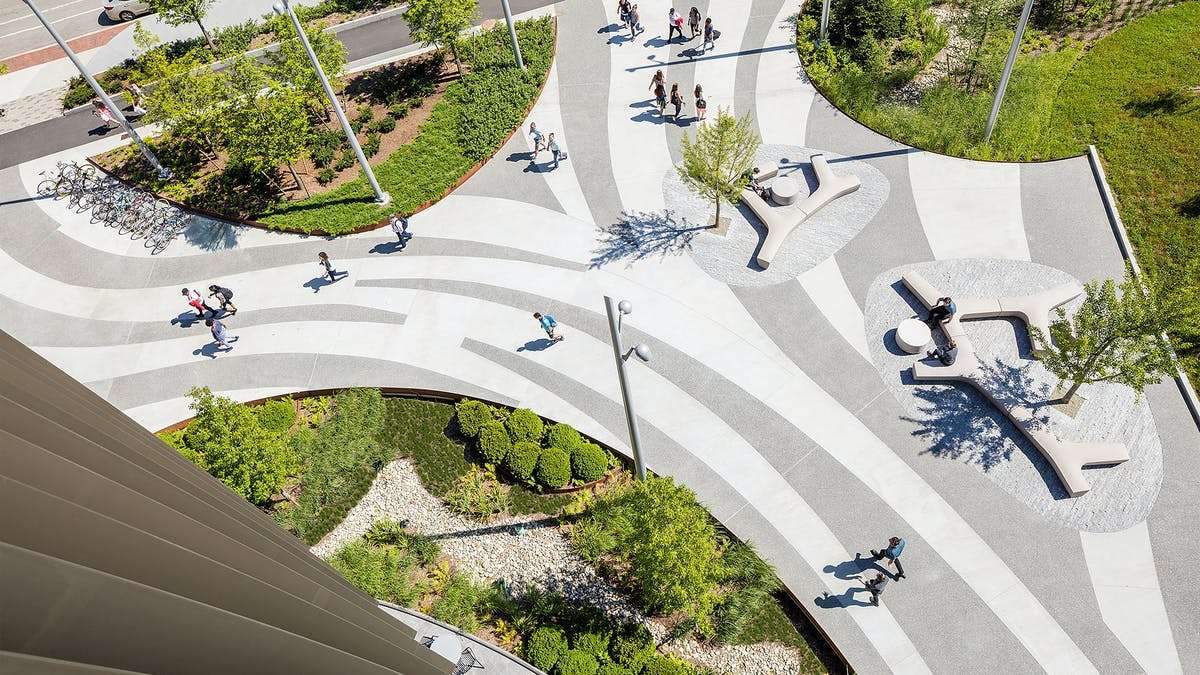
In terms of functional performance, the project transforms Zhuhai city’s waterfront into an extended public space. This includes the creation of parks, plazas, and a seaside promenade that prioritizes people over vehicles.
Related Insight: Please review this article to compare another project that redefines the relationship between transport infrastructure and urban development:
Urban Infrastructure: Inauguration of the Central Bypass in Cologne





✅ Official ArchUp Technical Review completed for this article.