Lakefront Home: Where Architecture Meets Art and Nature

Lakefront Home: Architectural Simplicity in Harmony with Nature
An Architectural Gesture Toward Minimalism
Nestled in a quiet rural setting in the northern suburbs of Detroit, surrounded by trees and overlooking a lake that flows into the Rouge River, this home stands as a clear example of architecture that embraces simplicity, both in its external form and interior detailing.
The architects adopted a “minimalist” approach in the design of this residence, reducing the number of elements to the bare essentials without compromising on comfort or elegance. This was clearly reflected in the choice to use just two main materials throughout the interior and exterior finishes: white ash wood, which brings warmth and a natural feel, and black slate, which provides visual balance through its depth and calm tone.
Design and Site Integration
The site itself plays a key role in the architectural experience. The house does not stand apart from its natural surroundings but rather appears as though it belongs to them, modest and fully in tune with the colors and materials of the environment. This harmony is reinforced by the choice of natural materials that blend gently with the wooded and watery landscape.
Behind the Design
The project was developed by the architecture firm Disbrow Iannuzzi, based in Ferndale, Michigan. The design team was keen to instill a spirit of architectural clarity, avoiding unnecessary complexity and bringing users closer to nature through expansive openings framing the surrounding views and the efficient use of natural light.
Inside the Home: A Balance Between Art and Nature
Harmony with the Natural Surroundings
This lakefront home in Michigan rises gently from its lush green environment, drawing upon a rich legacy of traditional woodworking that is deeply rooted in the region’s history. It’s evident that the design was inspired by nature, not only in its materiality but also in its openness and excellent ventilation, which transform the home into an organic extension of the surrounding landscape.
A Sculptural Form with an Artistic Identity
The house carries a sculptural presence that captures attention, yet never overshadows the natural beauty around it. On the contrary, it resonates with its surroundings in a deliberate and thoughtful way, as if each angle was shaped to complement the nearby plant life and water elements.
This harmony was no coincidence. The homeowner is not just an ordinary resident but a former art curator specializing in Asian art and the owner of an art gallery. Over the years, he has dedicated himself to cultivating and shaping the environment around the home, adding a deeply personal and artistic dimension that is reflected in the layout, spatial arrangement, and framed views throughout the design.
Y-Shaped Design: Geometry That Directs Space
A Floor Plan That Reshapes the Experience
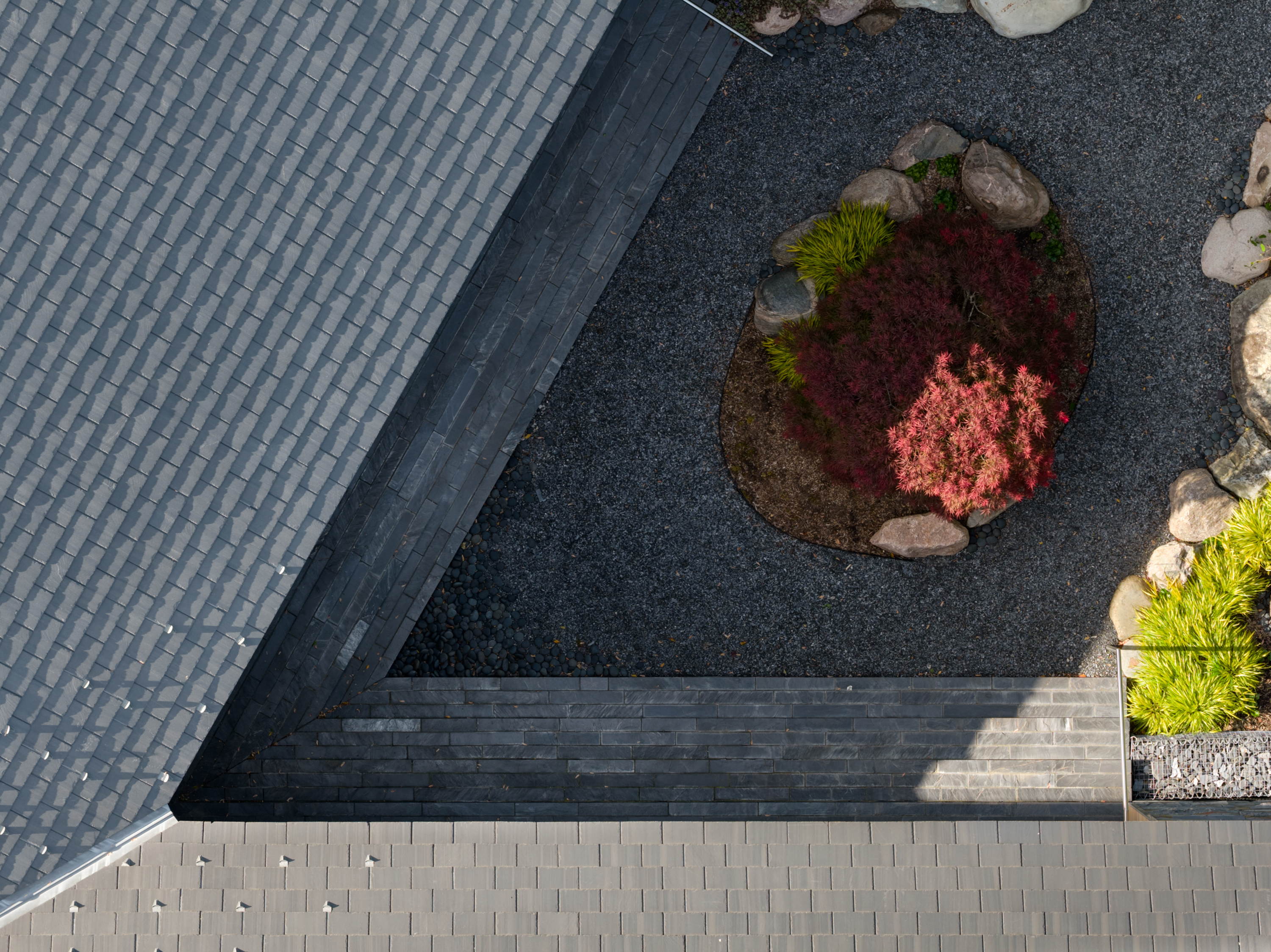
The architectural structure of the home is organized around a Y-shaped floor plan, an intentional design strategy that helps distribute the building’s main volumes in a way that creates distinct, independent wings. This configuration not only organizes the interior space efficiently but also strengthens the connection between the home and its surroundings, as each wing is oriented toward a different view of the surrounding landscape.
A Façade That Responds to Sunlight
The home’s exterior façades are clad in slate stone, serving not only a visual function but also a dynamic role in the building’s interaction with its environment. As described by the architects:
“Throughout the day, the stone façade shifts in appearance due to the movement of the sun. At certain times, the veins and variations within the stone become instantly visible. When the sunlight is more intense and direct, the shadows and light spread across the wall’s surface highlight the slate’s texture and dramatic qualities.”
This ongoing interaction between light and material brings vitality to the façade, turning it into a living surface that changes constantly, enhancing the sense of time and presence within the architectural space.
Functional Interior Layout: A Role for Every Wing
Diverse Uses within Architectural Harmony
Inside the home, functions are precisely distributed across the three wings created by the Y-shaped design. Each wing serves a distinct purpose: one is dedicated to rest and sleeping areas, another is designed for social gatherings and daily activities, and the third provides a private, welcoming space for guests.
A Single Material to Unify the Interior Experience
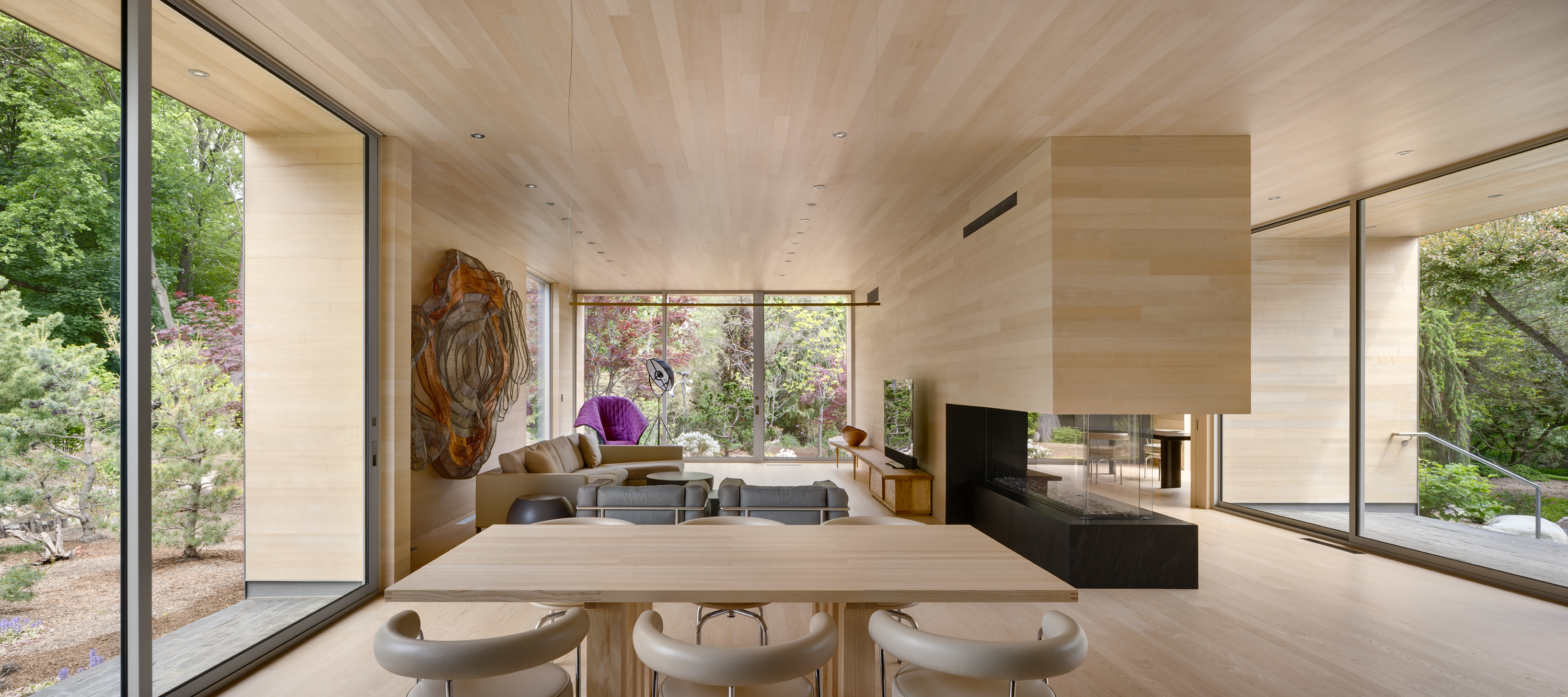
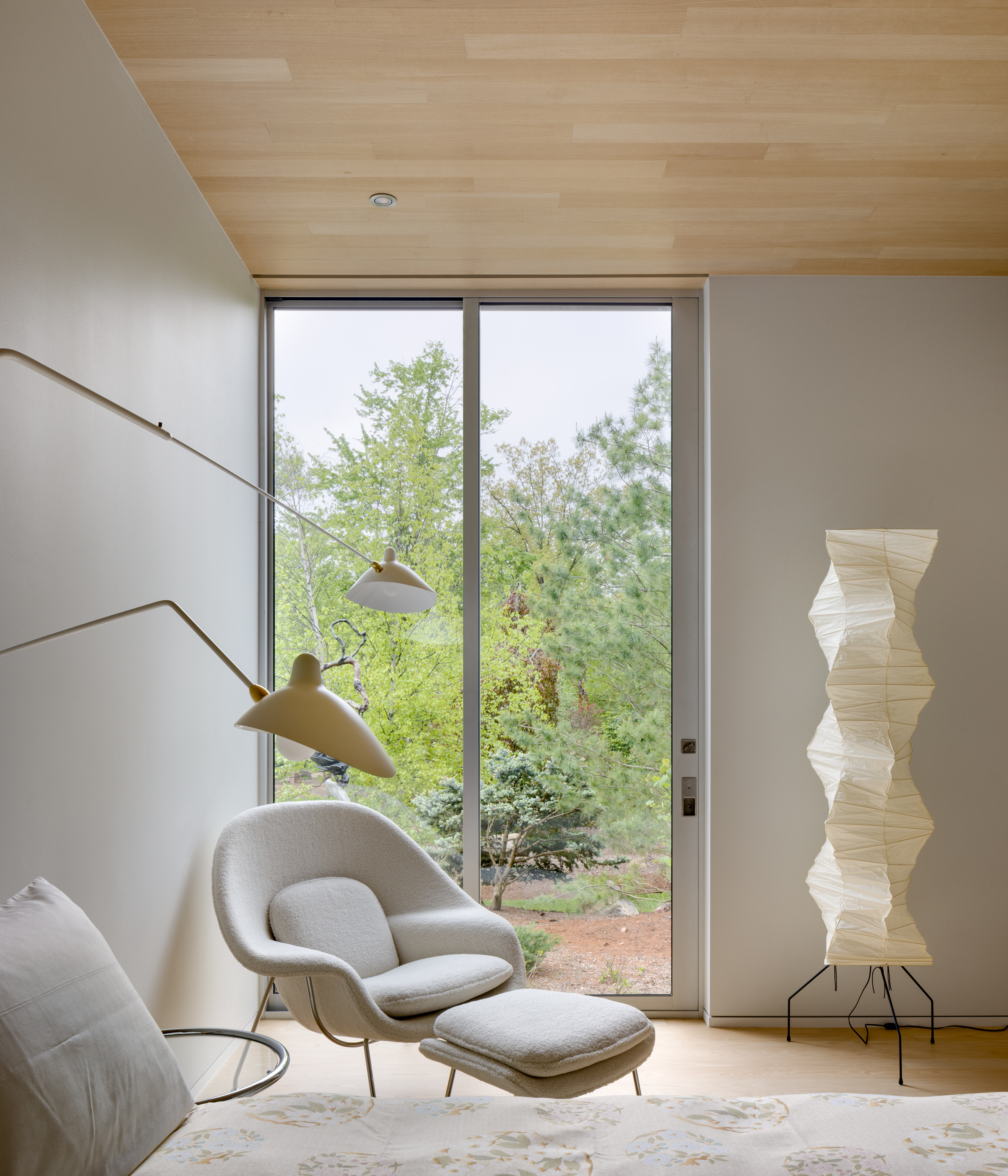
The interior design features full cladding in white ash wood, covering walls, floors, and ceilings alike, which creates a cohesive visual experience reminiscent of modern rural cabins. This approach not only enhances visual harmony but also fosters a sense of spatial unity, as though the entire interior forms one continuous, uninterrupted volume.
A Warm and Natural Atmosphere
Beyond formal consistency, the wood introduces a sensory and material warmth that makes the space feel more comfortable and human. The material contributes to a serene, private ambiance, perfectly aligned with the home’s peaceful natural setting.
Natural Light Gracefully Flowing Through the Space
Wood as a Light-Reflecting Element
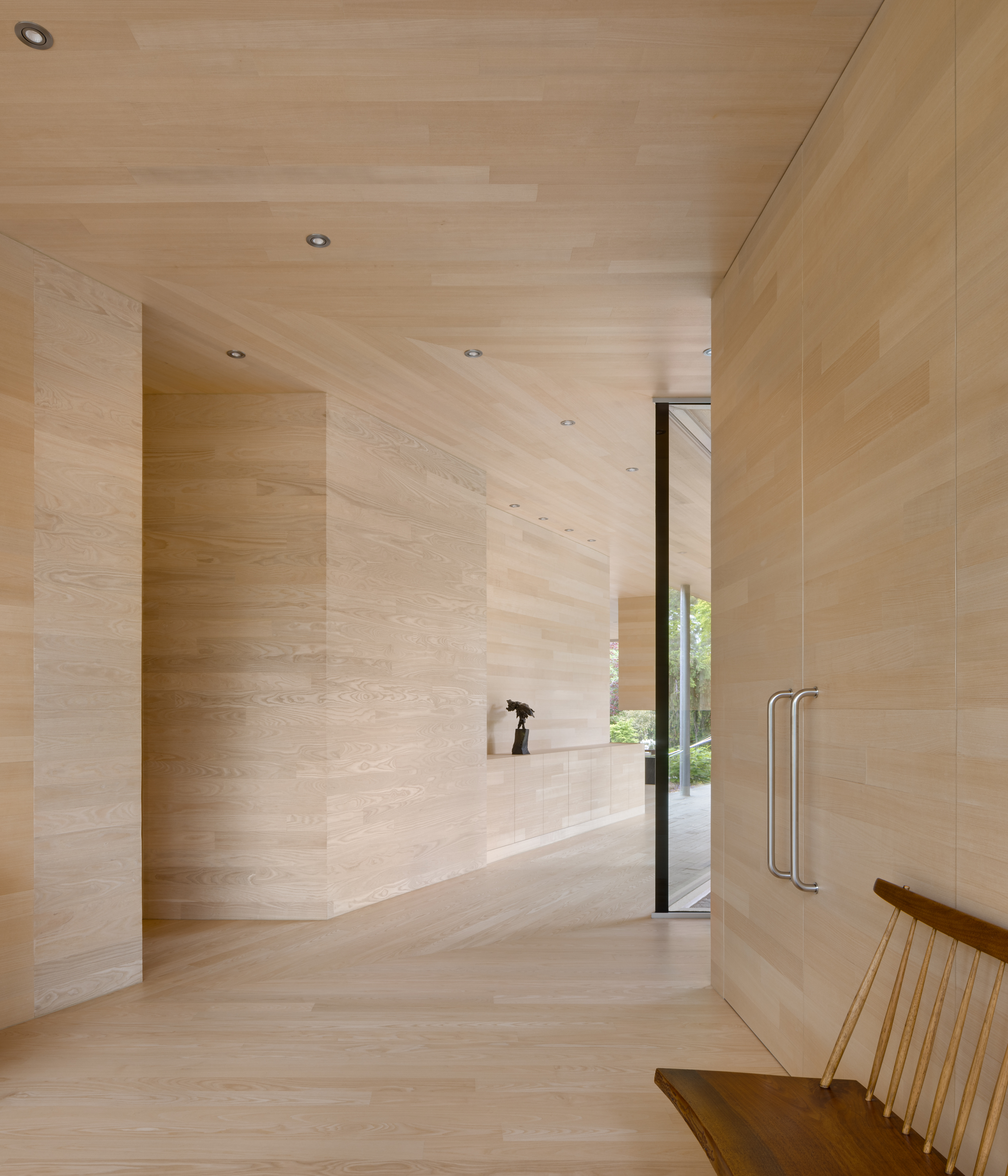
The use of white ash wood in the interior was not merely an aesthetic or material choice, it also served a functional role in enhancing lighting quality. The light, natural tone of the wood helps reflect sunlight rather than absorb it, allowing natural light to enter and diffuse effectively throughout the various rooms and spaces.
Strategic Openings to Direct Light
This effect is further amplified by the architects’ placement of large openings on all four sides of the home, allowing daylight to stream in throughout the day. The ongoing interplay between sunlight and the home’s minimalist geometric surfaces creates poetic scenes of light and shadow, constantly reshaping the interior as time passes.
An Ever-Changing Sensory Experience
This deliberate choreography of light and shadow produces a sensory experience that continuously evolves, deepening the connection between architecture and time, and infusing the home with a sense of life that never stands still.
Smart Detailing: When Wood Speaks the Language of Transformation
Subtle Shifts in Cladding Patterns
The use of wood in this home goes beyond a unified cladding approach. It extends to carefully considered, fine details that lend the space a dynamic character. At key transitional points within the house, a subtle transformation occurs in the way the wood is cut:
The pattern shifts from quarter-sawn to plain-sawn while maintaining a consistent plank width of 4 inches. This nuanced visual cue helps differentiate spaces without relying on sharp boundaries or color changes, revealing a refined sense of quiet, understated interior design.
Where Art and Architecture Meet
One of the interior walls integrates an artistic element that reflects the homeowner’s relationship with the space: a 15-foot-long wooden bench, crafted from a single slab of white ash. This particular piece was carefully selected for its striking cathedral grain, which contrasts with the rest of the wood cladding, giving it a unique artistic identity while remaining connected to the home’s core materiality.
The bench was designed to serve as a display platform for bronze sculptures from the client’s private collection, transforming the wood into a visual backdrop for art, rather than merely a construction material.
Art for a Single Eye: The Home as Both Artwork and Architectural Context
A Design That Responds to Place and Person
This project wasn’t simply about building a house in a beautiful natural setting, it aimed for something deeper: to create an autonomous architectural piece that not only completes the surrounding landscape but also reflects the owner’s personality, hobbies, and artistic sensibility.
Every detail of the design was the result of thoughtful planning, from the spatial arrangement to the orientation of views, making the home a personalized architectural masterpiece crafted entirely for its inhabitant.
Windows as Artistic Frames
As the architects describe:
“The calm and warm interior volumes serve as natural frames for carefully curated exterior views, much like the compositions found in Japanese woodblock prints.”
This analogy is no coincidence; the homeowner herself owns a collection of Japanese woodblock prints. From this connection emerges a deep relationship between the inside and outside: each window is not merely a source of light but a deliberate frame for a chosen scene, enhancing the daily visual experience and turning everyday views into quiet, contemplative works of art.

Nature as Part of the Interior Scene
A Design That Merges the Outdoors with the Indoors
In this project, the landscape was never treated as a mere backdrop for the building. Instead, the garden was meticulously designed to be experienced visually from within. Plant layers, exterior surfaces, and sculptural elements were all carefully placed to act as focal points from each interior space, just like curated works of art.
Architectural and Environmental Integration
What distinguishes this approach is that it doesn’t merely draw inspiration from nature, it incorporates it as an active design element. The result is an organic link between the built environment and the surrounding natural world, infusing the living experience with a sense of vitality and continuous connection to nature.
A Living Experience Enhanced by Beauty
This seamless integration of interior and exterior serves not only a visual function, but also has a deeper impact on the quality of daily life. With nature as a constant visual presence inside the home, the space is imbued with a quiet aesthetic energy that fosters a sense of comfort and harmony.

✦ ArchUp Editorial Insight
Undoubtedly, this project stands as a mature example of contemporary architecture, one that balances minimalism in form with richness in detail. The architects succeeded in using a limited palette of materials to create a sensorially rich experience, integrating nature into every corner of the home with a deep awareness of the site’s context.
However, despite the beauty of this approach, certain practical questions may arise. The extensive use of a single material, white ash wood, while aesthetically effective, may present future maintenance challenges, particularly in a moist environment near water. Likewise, the Y-shaped layout, while ideal in terms of lighting and views, could potentially compromise energy efficiency or privacy under specific climatic conditions or daily living needs.
Moreover, the connection drawn between framed natural views and the aesthetics of Japanese woodblock prints is an intelligent and artistically compelling reference. Yet it requires a trained eye to fully appreciate, making the aesthetic experience somewhat dependent on a cultural background that may not be universally shared among all users.
In the end, this home stands as a vivid embodiment of architecture as both art and experience, rather than a purely functional model. Its strength lies in the seamless integration of architectural and artistic elements, while its relative weakness may become apparent when viewed solely through the lens of everyday practical needs.
Prepared by the ArchUp Editorial Team
Don’t miss the chance to explore more from Architecture in fields like Material Datasheets and Interior Design on the ArchUp website.