

Launch of the First Waterless, Mushroom-Powered Toilet Building in Vancouver

At the heart of the UBC Botanical Garden, a small yet distinctive structure has emerged, offering a new vision for public facilities. Known as the MycoToilet, the project represents an architectural experiment that seeks to redefine the relationship between people and nature by merging contemporary design with natural biological systems.
An Architecture in Harmony with Nature
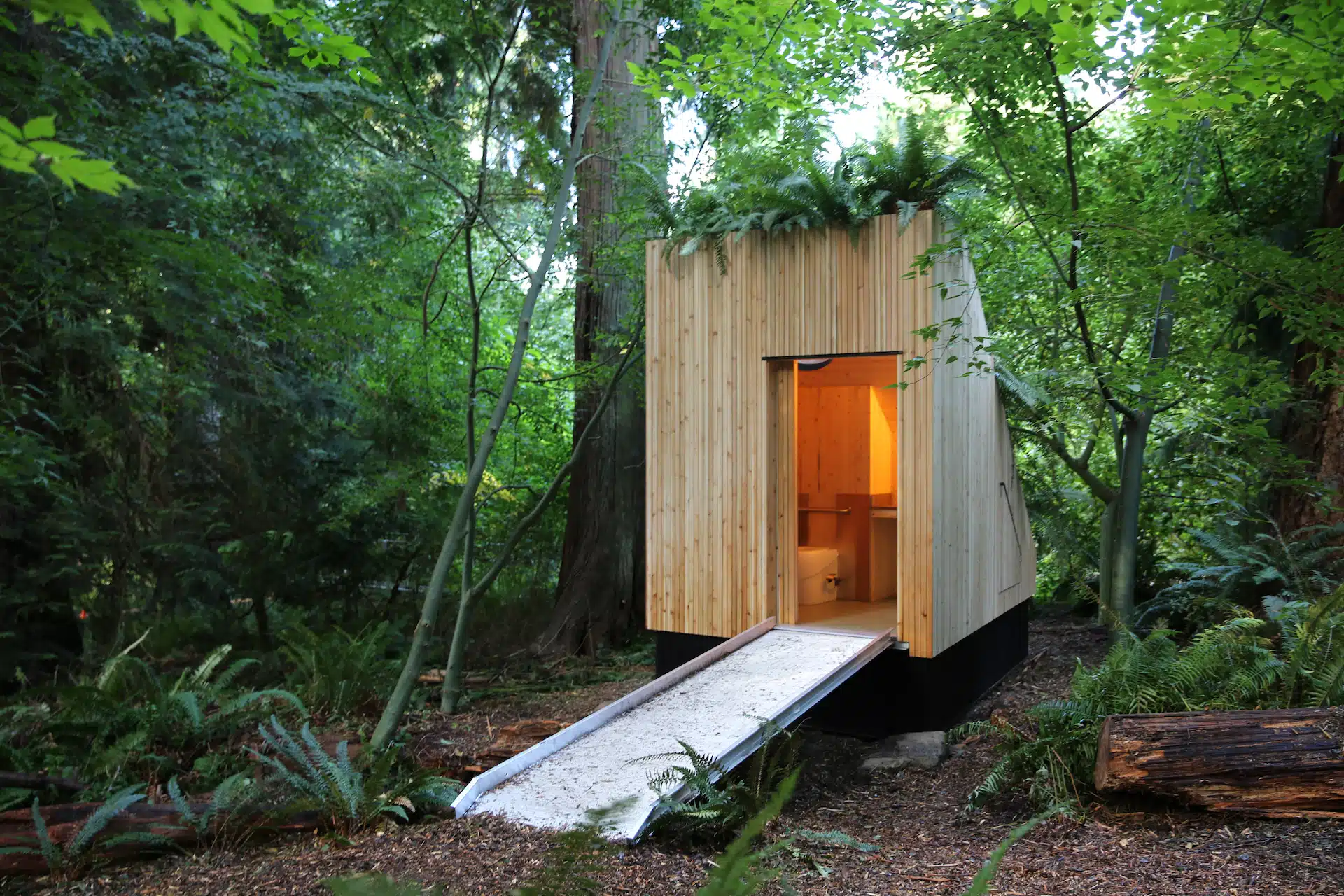
The building is designed to blend seamlessly into its surroundings. Constructed from prefabricated timber panels with an exterior of cedar partially charred for durability and antimicrobial protection, the structure sits quietly among dense trees. Above it, a green roof supports native plants, reinforcing the building’s integration into the landscape.

Interior Focused on Comfort and Function
Inside, the design departs entirely from conventional public toilets. Natural light streams through skylights, while timber and metal finishes create an atmosphere of cleanliness and calm. A ramp ensures accessibility, and built-in ventilation keeps the environment fresh and odor-free.

A System Powered by Mycelium
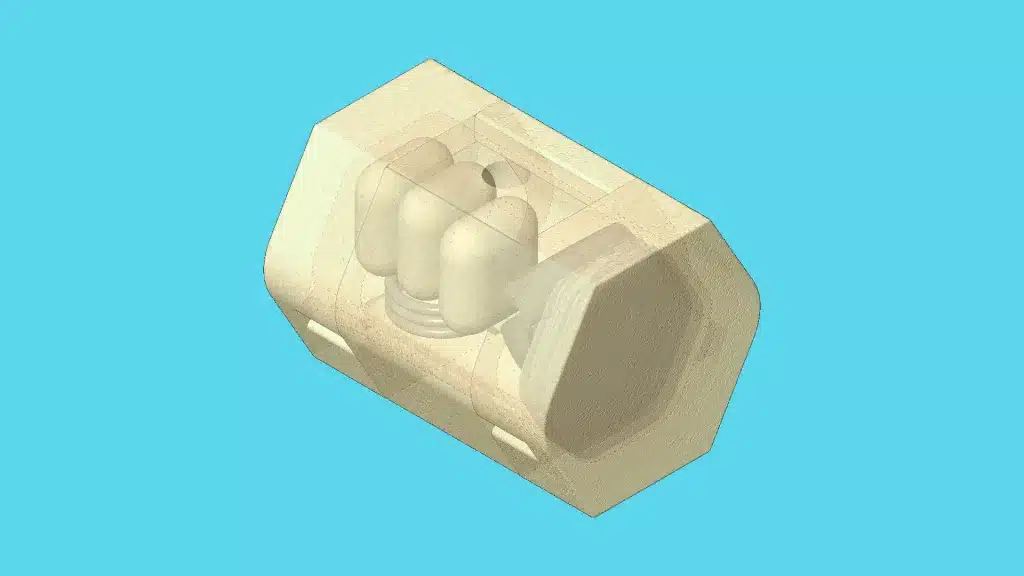
The building’s most striking innovation lies in its use of mycelium, the root network of mushrooms. Special compartments inside are lined with mycelium that absorbs odors and drives the natural breakdown of waste, turning it into organic matter without relying on water or chemical treatments.
A New Architectural Approach to Public Facilities
This prototype embodies a shift in architectural thinking. Beyond exterior form or interior comfort, it integrates biological systems into the very core of the building. The result is a public facility that balances sustainability with function, transforming sanitation from a burden on the environment into a harmonious part of it.
✦ ArchUp Editorial Insight
The article introduces the MycoToilet as an architectural proposition merging sustainability with experimental design in public facilities. The imagery highlights prefabricated timber construction, charred cedar cladding, and a green roof blending into the forest, creating a strong visual balance between structure and site. Yet, while the biological concept of integrating mycelium is evident, the spatial dynamics remain underexplored, particularly regarding daily user experience and interior atmosphere. Nonetheless, the project signals a constructive step toward rethinking architecture’s integration with ecological systems and advancing sustainable design strategies.
Explore the Latest Architecture Exhibitions & Conferences
ArchUp offers daily updates on top global architectural exhibitions, design conferences, and professional art and design forums.
Follow key architecture competitions, check official results, and stay informed through the latest architectural news worldwide.
ArchUp is your encyclopedic hub for discovering events and design-driven opportunities across the globe.


