
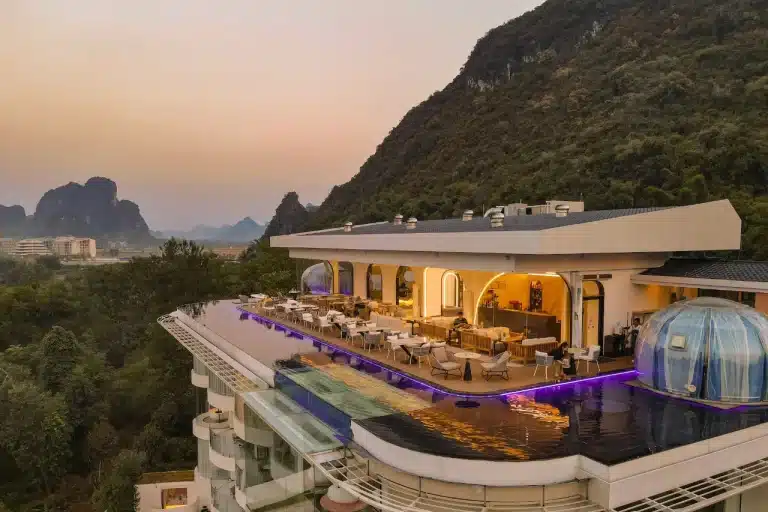
LS Hotel in Guilin Draws Attention for Avatar like Views

Avatar like views define the visitor experience at LS Hotel (Guilin Liangsu). The hotel sits among karst peaks in southern China. Its orientation frames dramatic limestone formations. These formations resemble the floating mountains in Avatar. This reflects a trend in architectural design that uses natural topography as a spatial guide. The project operates within Yangshuo’s existing tourism infrastructure. It offers a curated view of one of China’s most iconic landscapes.
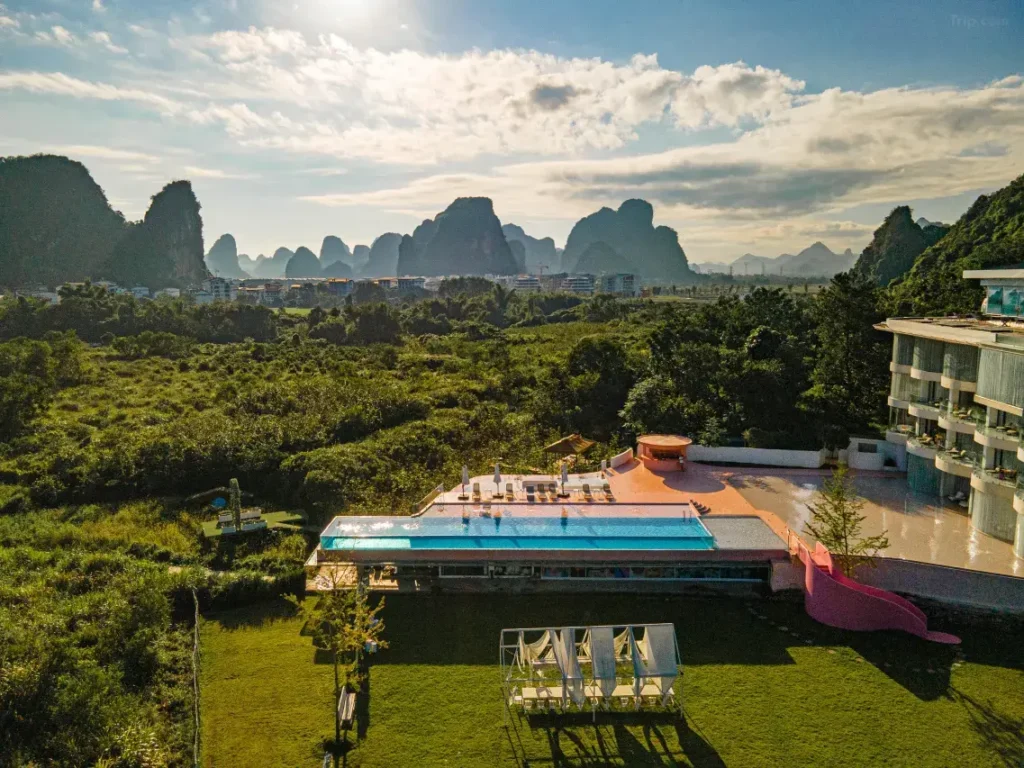
Design Concept
The layout favors clarity over formal experimentation. Large glass panels remove visual barriers. This keeps the terrain as the central focus. The approach aligns with minimalist trends in interior design. Neutral interiors amplify context rather than distract. Avatar like views are strongest at dawn. Morning mist softens the ridgelines, enhancing the effect. The design avoids symbolism. It relies instead on direct sensory engagement with the landscape.
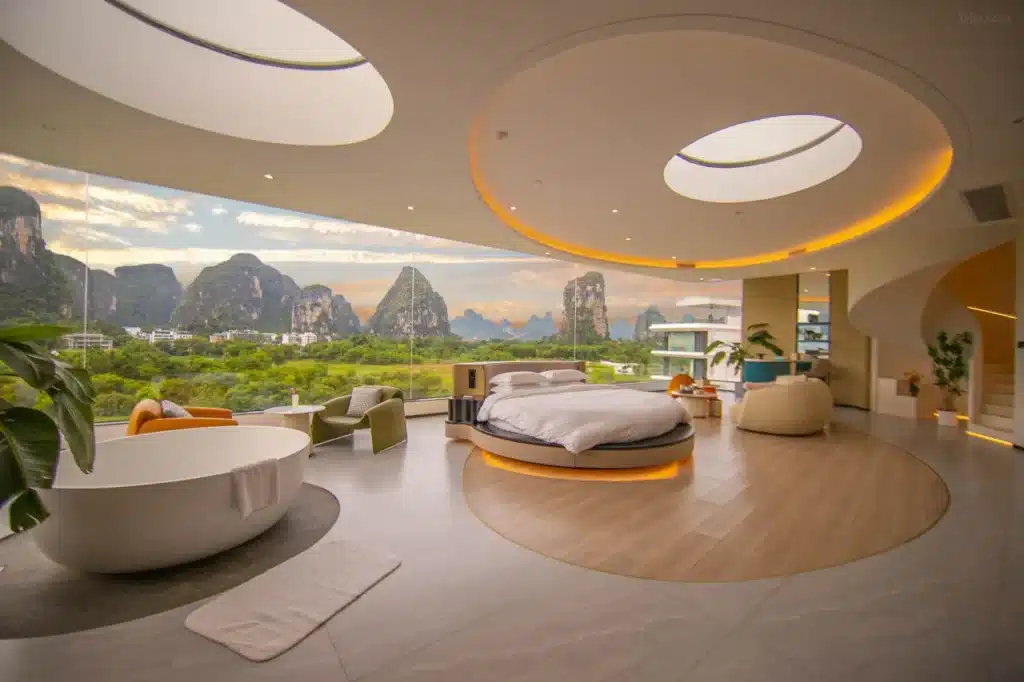
Materials and Construction
The project uses standard building materials: tempered glass, steel, and concrete. These support transparency but raise thermal concerns. Guilin’s humid subtropical climate challenges energy efficiency. Construction appears conventional. No public records link it to specialized construction firms. No architect is credited. This aligns with many regional projects in the archive.
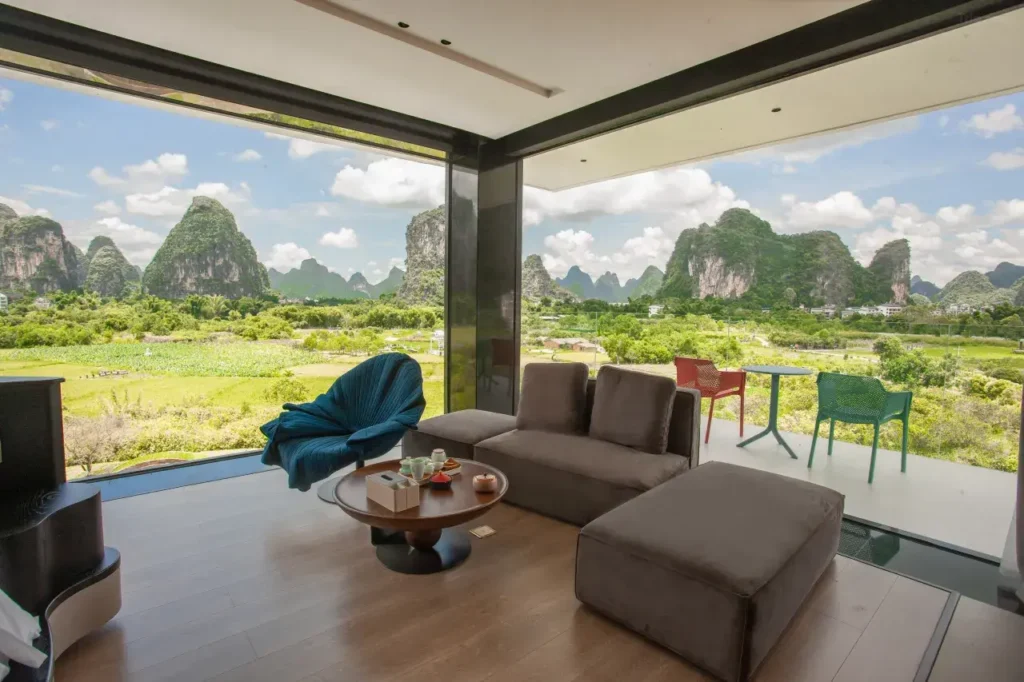
Urban and Environmental Context
The hotel lies in a tourism heavy zone. It mirrors trends in Chinese cities where scenic areas become luxury commodities. Room rates hover near $400 per night. This targets international guests, not locals. Avatar like views drive its market appeal. Social media and global news amplify its visibility. Yet there are no disclosed plans for ecological integration or community access.
Sustainability and Long-Term Impact
Visually, the hotel blends with its surroundings. But it lacks verified sustainability measures. There is no evidence of water reuse, passive cooling, or renewable energy. This gap is common in image focused hospitality buildings. Avatar like views captivate but they do not ensure responsible development.
Can visual impact justify the absence of environmental or social accountability?
Architectural Snapshot: LS Hotel in Guilin uses minimal structure and expansive glazing to stage cinematic karst vistas, reproducing Avatar like views without verified ecological or community based design strategies.
ArchUp Editorial Insight
The LS Hotel in Guilin leverages cinematic karst vistas to simulate Avatar like views, turning geological spectacle into a luxury commodity. The project relies heavily on glass façades and minimal form but offers no disclosed sustainability measures or social integration strategies. Its architecture functions more as a viewing frame than a responsive built environment. Still, it succeeds in translating landscape into experience a rare feat in image-driven hospitality. Whether this visual strategy holds meaning beyond viral appeal remains doubtful in an era demanding ecological accountability.



ArchUp: Technical Analysis of The LS Hotel in Guilin
This article provides a technical analysis of The LS Hotel in Guilin as a case study in hospitality architecture inspired by cinema and integrated with unique natural landscapes. To enhance archival value, we present the following key technical and design data:
The hotel is located in the Yangshuo area, renowned for its karst scenery in southern China. The design employs a “visual framing” strategy, utilizing floor-to-ceiling glass panels to eliminate barriers between the interior and exterior, providing uninterrupted panoramic views of the dramatic rock formations reminiscent of the mountains in the film “Avatar.” The average room rate is approximately $400 per night, positioning it as a luxury destination targeting international tourists.
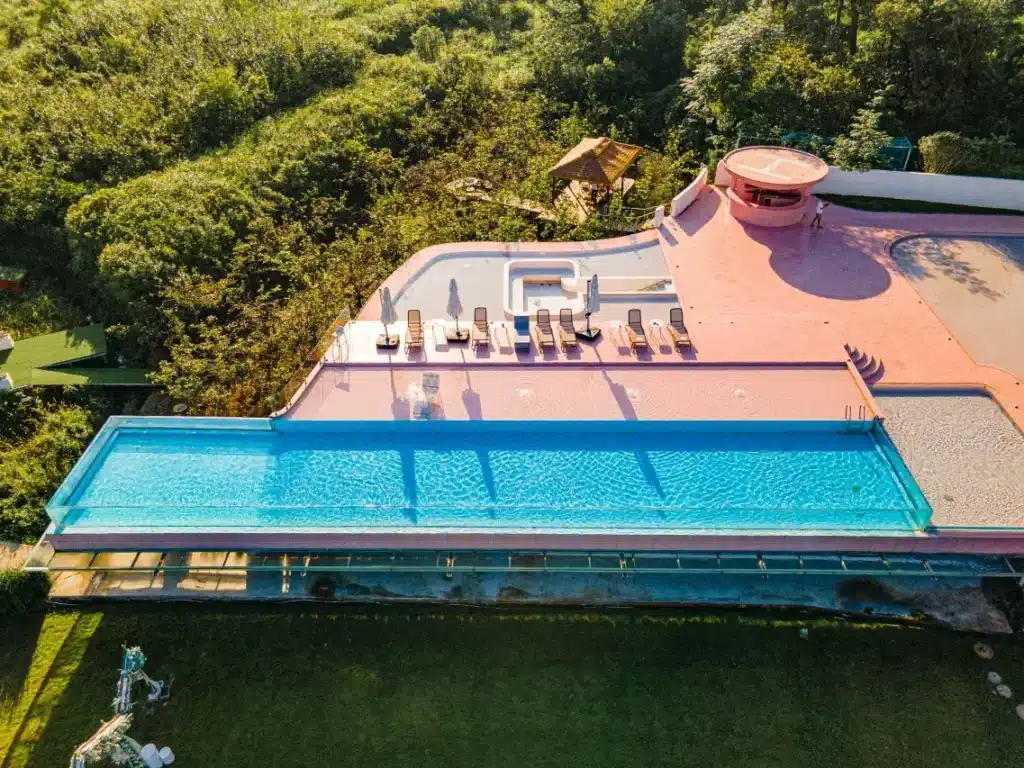
The structural system utilizes standard building materials including reinforced glass, steel, and concrete to achieve the desired visual transparency. However, in Guilin’s humid subtropical climate, the extensive use of glass may raise concerns about thermal efficiency and increased reliance on intensive cooling systems. Hotel amenities include an infinity rooftop pool and water slides, designed to enhance the experience of “merging” with nature.
In terms of environmental and social performance, the project lacks a declaration of clear sustainability standards or environmental certifications (such as LEED). There is no information available regarding renewable energy systems, water recycling, or passive cooling. While the hotel offers a visually stunning integration with the natural landscape, its actual environmental impact remains uncertain—a common challenge in luxury hospitality projects in sensitive natural areas that prioritize visual appeal.
Related Link: Please refer to this article for a comparison of other hotel projects integrating architecture with dramatic landscapes:
The Atari Hotel in Phoenix: The World’s First Interactive Hotel Inspired by Video Game Design
https://archup.net/atari-hotel-phoenix-playable-hotel/