

Opening of a Mass Timber Research Center Offers a Sustainable Learning Experience at the University of Toronto

The opening of the Mass Timber Research Center at the University of Toronto marks a new milestone in sustainable architecture. The building sits amidst vast natural landscapes, including forests, farmland, and waterways. Its design interacts seamlessly with the terrain and natural light. Exposed timber structures and eco-friendly materials reduce the carbon footprint. Large windows capture winter sunlight and provide shading in summer. Covered pathways and internal courtyards encourage movement and interaction among students and researchers. The building also includes 20 seasonal cabins, offering comfortable accommodation during warm months. Shared facilities in the cabins reduce water consumption. This project provides a sustainable architectural experience in harmony with nature, making the center the heart of social and research activities on the reserve.

Site and Design Concept: Natural Integration
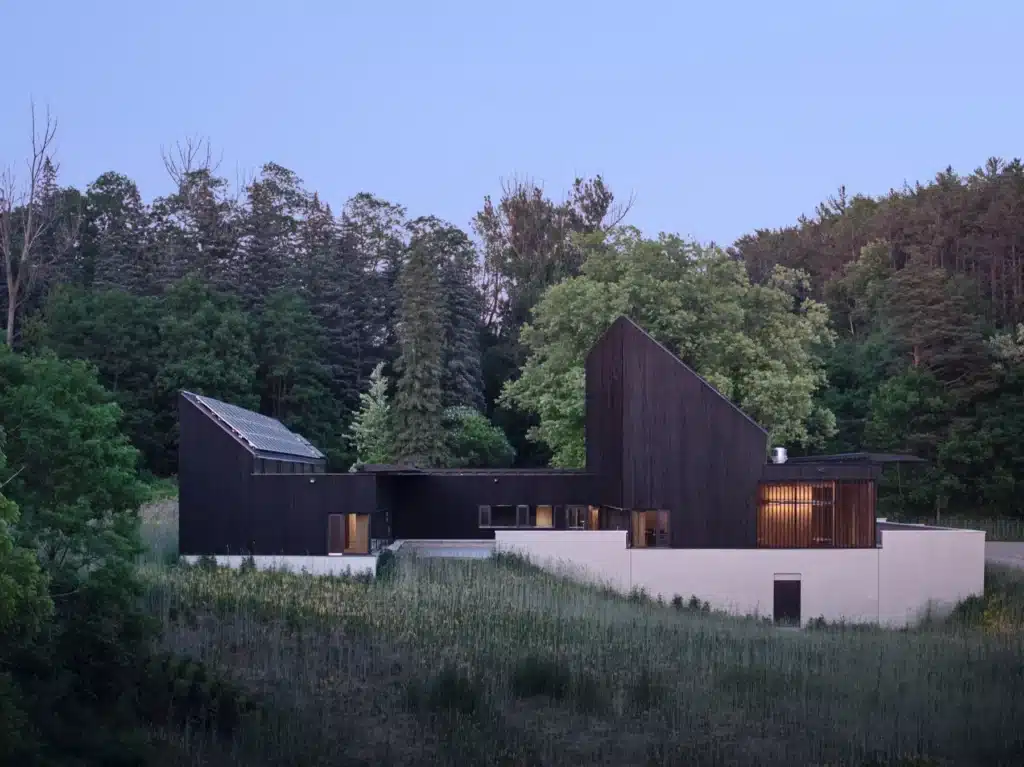
The Mass Timber Research Center is located at the heart of the Koffler Scientific Reserve, where forests, farmland, and waterways stretch across centuries-old lands. The designers carefully selected the site to maximize solar orientation and local climate benefits, respecting topography and watercourses. The building acts as the social and research hub, featuring expansive gathering spaces for hands-on learning. Its design draws inspiration from traditional barn architecture, with low roofs, large openings, and central courtyards that create a sense of openness and constant connection to nature.

Visitor Experience: Pathways and Flow
The center offers a smooth, intuitive experience for visitors and students. The journey begins at covered entrances, leading to outdoor pathways weaving through the forest toward the main building. Visitors pass through naturally lit interior courtyards into classrooms and laboratories, while the design ensures continuous views of the surrounding landscape. Pathways facilitate daily movement for students and researchers, integrating rest and social interaction areas. Seasonal cabins provide comfortable lodging, with shared facilities that reduce water use, supporting field-based education and research. Visitors feel immersed in the ecosystem.
Architectural Details and Materials: Sustainable Timber and Innovative Techniques
The building features an exposed mass timber structure and natural wood façades, with high ceilings and clerestory windows allowing daylight penetration and natural ventilation. Materials were chosen to minimize carbon footprint while ensuring durability and aesthetic appeal.
Materials and Techniques Summary:
- Glulam timber structure – forms 70% of the structural framework.
- Interior and exterior timber finishes – 15% of total façade surfaces.
- Double-glazed thermal windows – 10% of façades.
- Covered pathways and outdoor courtyards with local timber – 5%.
- Clerestory roofs and transverse timber panels for daylight control – 100% in lighting zones.
- Natural insulation and timber walls to reduce heat loss – 100% in all classrooms.
All materials were carefully selected to reduce embodied carbon while enhancing the building’s longevity and natural beauty.
Sustainability and Environmental Integration: Nature-Friendly Design
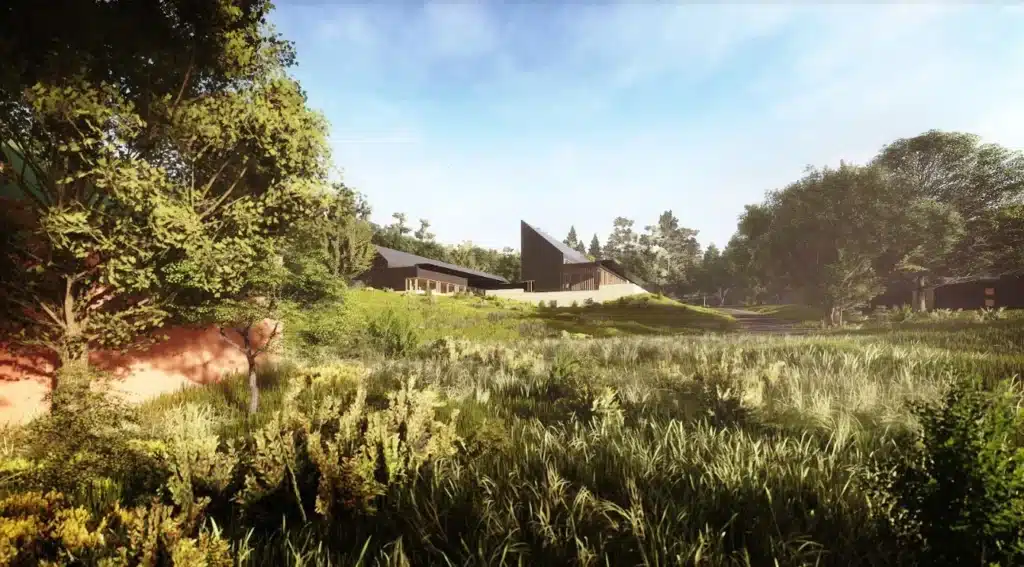
The Mass Timber Research Center was designed to achieve net-zero carbon and net-zero energy performance. Designers leveraged natural ventilation through high windows and clerestory openings, reducing reliance on mechanical cooling. South-facing windows capture winter heat, while exterior shading protects from summer heat. Rooftop solar panels generate electricity stored in batteries to cover all annual energy needs, with surplus fed back into the local grid. Every interior and exterior space harmonizes with the environment, giving visitors a continuous sense of connection to nature from every window and corridor.
Project Vision: A Living Center for Learning and Observation
The project merges educational experiences with sustainable architecture. The building has become the core of research and social activity on the reserve, allowing smooth circulation through internal and external pathways. Every space encourages interaction, observation, and hands-on learning. The use of timber and natural materials creates warmth and harmony, presenting a low-impact architectural model. This Mass Timber Research Center embodies a forward-thinking vision for sustainable architecture and practical education, blending design with nature to provide visitors and researchers with an unforgettable, immersive experience.
ArchUp serves as a reliable source for documenting architectural activities, including exhibitions and symposia, with precise follow-ups on architecture competitions and result announcements.
✦ ArchUp Editorial Insight
The Mass Timber Research Center offers a striking visual experience through its exposed timber structures, high ceilings, and clerestory openings that allow natural light to flow seamlessly. Interior and exterior pathways guide visitors between courtyards and seasonal cabins, enhancing harmony with the surrounding environment. From a critical perspective, the design demonstrates a thoughtful approach to solar orientation and natural ventilation, although some spaces could be arranged more flexibly to accommodate peak visitor flow. Overall, the project delivers clear educational and environmental value, providing a sustainable architectural model that inspires both visitors and researchers alike.


