

Myth and Architecture: How Stories Shape Our Spaces from Ancient Greece to the Virtual World

Introduction: Since the dawn of human consciousness, architecture has been more than just shelter from the elements; it has been the physical embodiment of a society’s worldview. Myth stands as a fundamental intersection between space-making and storytelling, where oral narratives transform into stone entities that create the world, explain it, and define our relationship with it. This article delves into the profound, symbiotic relationship between narrative and architectural form, tracing this connection from the campfires of ancient societies to the virtual reality screens of our digital age.
Foundational Myth: The Blueprint for the Ideal City
In ancient Greek civilization, myths evolved beyond entertainment to become a cultural and educational fabric. These stories were not mere fantasy but tools for deciphering the universe and establishing societal models. They can be categorized into:
· Cosmic Myths: Which sought to explain the origin of the cosmos.
· Theogonic Myths: Which detailed the complex relationships between gods and humans.
· Etiological Myths: Which provided explanations for natural phenomena.
· Foundational Myths: Which served as the spiritual and spatial blueprint for establishing cities and social structures.
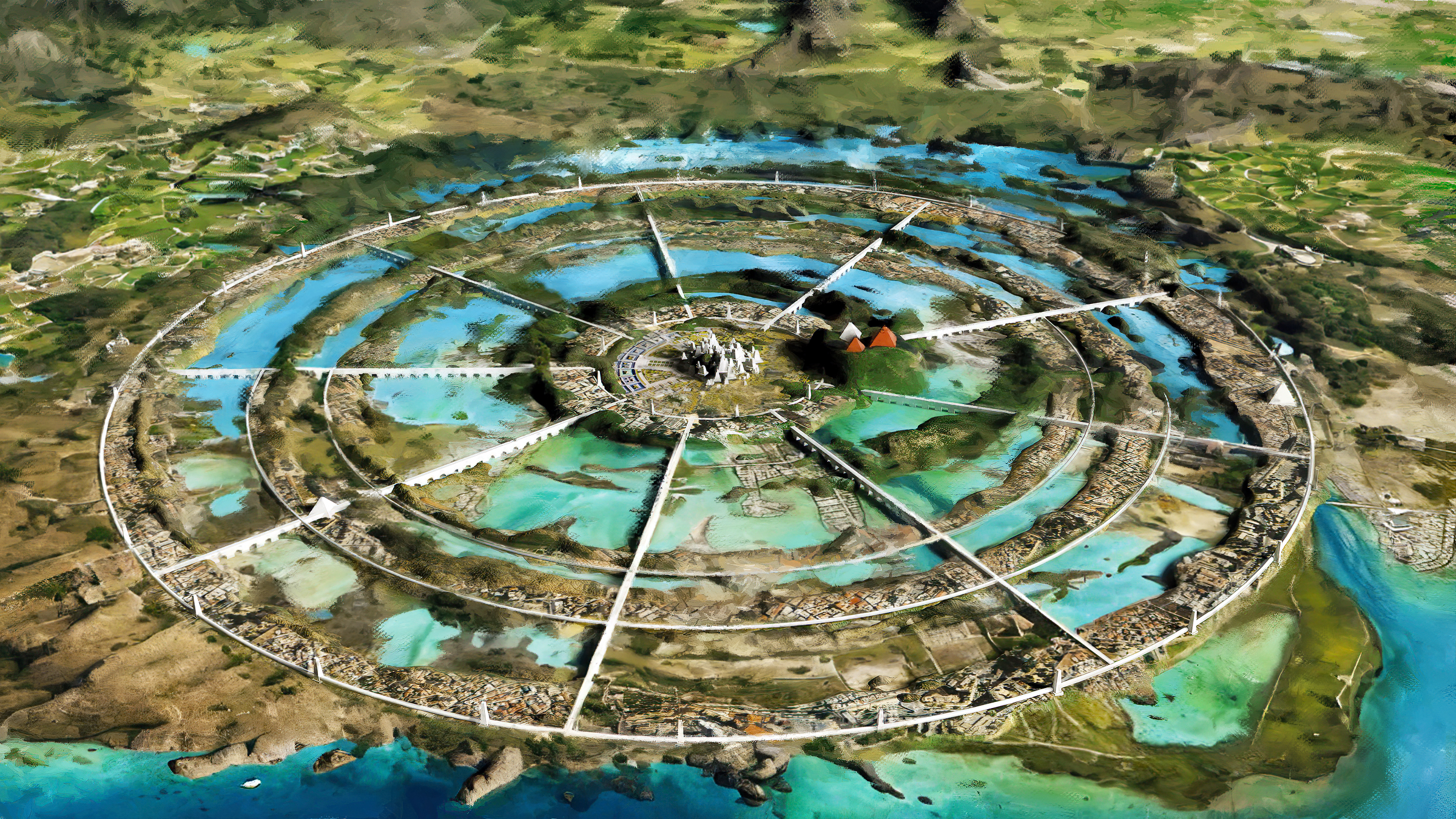
Within this framework, Plato emerged as one of the first thinkers to systematically employ myth. In dialogues like “The Republic” and “Laws,” he did not merely present abstract utopias but used the myth of “Atlantis” as an experimental platform. His description of the island with its concentric circles of water and land, and the palace of Poseidon at its center, was not just literary imagination. It was a living model to explore principles of governance, justice, and urban planning through a narrative vessel, making abstract philosophical ideas tangible and conceivable.
Thresholds and Journeys: The Narrative Structure of Sacred Space
Scholar Mircea Eliade delves into the idea that traditional buildings were not merely roofs over space but were “embodiments of the cosmos” (Cosmicization). Inhabited space was organized around a central axis (Axis Mundi) and oriented according to celestial cues (like the sunrise) to transform the chaotic world into a familiar, sacred one. This spatial translation of myth goes beyond decorative motifs to form the very bones of a project.
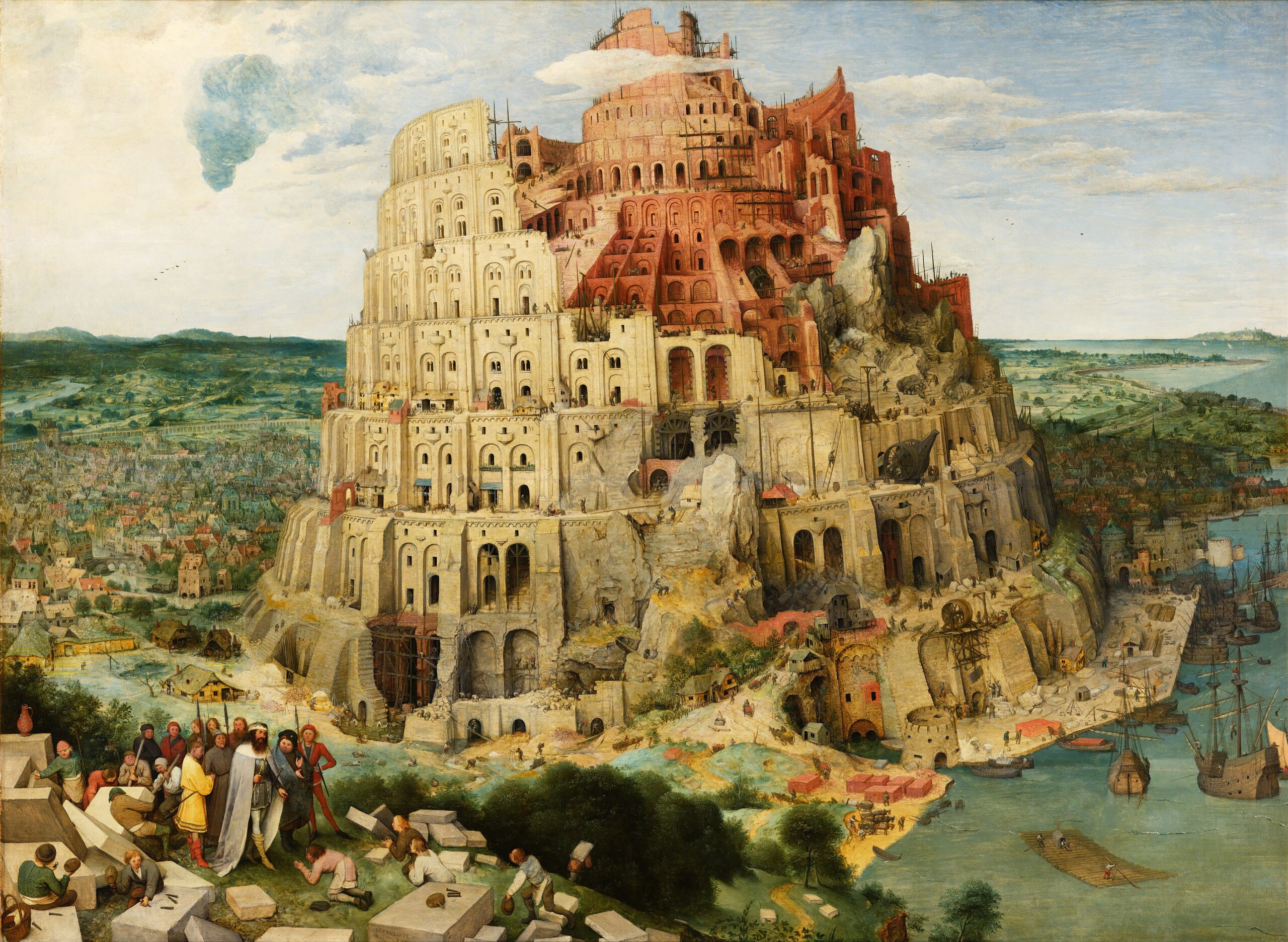
In parallel, Joseph Campbell, in his book “The Hero with a Thousand Faces,” presents the model of the “Monomyth,” which consists of stages: Departure (Separation), Initiation (Tests), and Return. This narrative structure strikingly mirrors the design of many architectural monuments throughout history:
· The Threshold: The gateway to a temple or a monumental entrance represents the hero’s crossing from the ordinary world into the special world, the moment the visitor leaves the outside behind in preparation for a different experience.
· The Road of Trials: The long corridors, successive staircases, and sequential chambers within a building represent the series of ordeals and tests the hero must overcome.
· The Sanctum: The central chamber or holy of holies represents the climax of the journey, the moment of attaining the treasure or insight, and the return with a boon to the world.
Living Examples: When Epics Become Stone and Earth
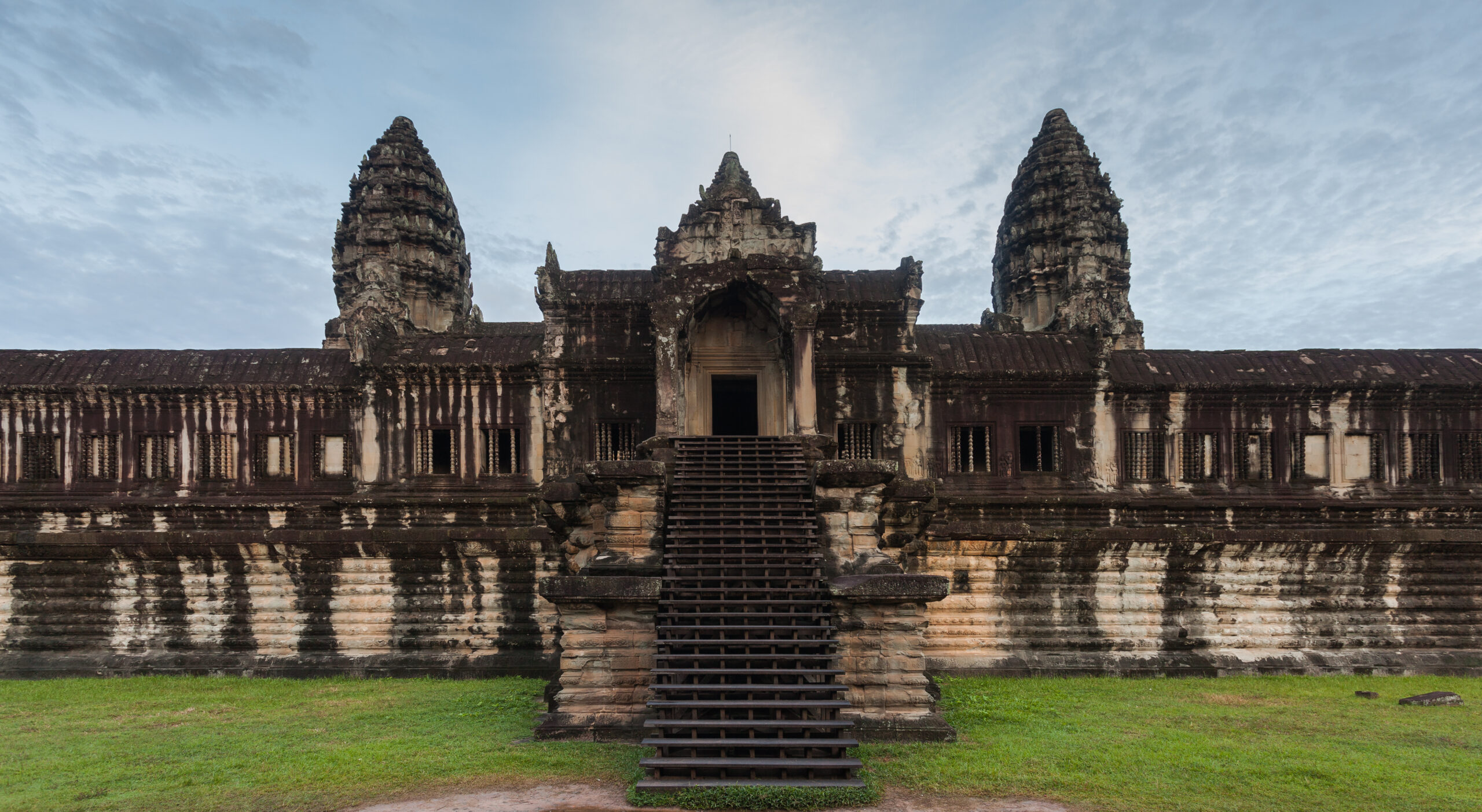
· Angkor Wat, Cambodia: The World Mountain Embodied: This colossal temple’s embodiment of the Hindu epics “Ramayana” and “Mahabharata” is not limited to the bas-reliefs covering its walls. The architectural design itself is a spatial reading of the epic. The graduated levels, the spiral-like ascent towards the central tower, and the distribution of subsidiary temples all re-represent the mythical geography of the Hindu universe, turning a temple visit into a pilgrim’s journey through a sacred story.
· The Hogan, Navajo Culture: The Cosmos in a Dwelling: The traditional dwelling of the Navajo people is a prime example of cosmic architecture. The circular form, natural materials of wood and earth, and the east-facing entrance to welcome the “Spirit that moves with the dawn” (the sun) are elements that reflect not only climatic needs. The four walls symbolize the four sacred mountains that define the Navajo world, while the domed roof represents the celestial vault. Thus, the Hogan becomes a microcosm of the world and an ordering of it, the place where rituals are hosted to maintain the balance of this world.
(The Continuity of Myth: From Peter Zumthor to the Virtual World
The connection between narrative and architecture has not been severed in the modern era; it has simply taken on more abstract and powerful forms.
· Bruder Klaus Field Chapel (Peter Zumthor): The Myth of Material and Sensation: Here, myth sheds its characters to become a purely sensory experience. The chapel does not tell a written story but stages a story of darkness and light, weight and lightness, charred wood and cool air. The enclosed, hollowed-out interior creates a powerful threshold that transports the visitor from the noise of the external world to the silence of the inner world, turning a physical journey into an internal, meditative one.
· The Jewish Museum Berlin (Daniel Libeskind): A Narrative of Fragmentation and Void: This project represents a qualitative leap in architectural storytelling. Instead of representing a linear story, Libeskind uses fragmented geometry, broken axes, and physically tangible voids (like the Holocaust Tower) to narrate a story of diaspora, loss, and absence that cannot be told in words. Here, architecture becomes the very language for recounting a painful history, forcing the visitor to physically experience sensations of disorientation and anxiety.
· Rebirth: Myth in the Digital Age: The digital age provides us with new tools to resurrect the traditions of oral storytelling. Technologies like Virtual Reality (VR) and Augmented Reality (AR) allow designers to create entire mythical worlds that were impossible to build physically. Meanwhile, video games have pushed the concept of architectural myths to an unprecedented level. They not only create mythical landscapes but also embed stories, codes, and rituals into their interactive structure, allowing the player to inhabit the myth and perform its rituals in real-time, becoming the hero in Campbell’s monomyth.
(H2) Conclusion: The Immaterial Memory – The Invisible Fabric of Place
While significant attention is directed toward preserving tangible material heritage—ruins, monuments, and listed buildings—it is the intangible aspect of culture that is the invisible fabric giving these stones their spirit and meaning. Myths, folklore, folk tales, and the imagination of collective memory are what quietly weave the relationship between people and place. They determine why one place is sanctified and another avoided, and how a story is told from one generation to the next. This invisible memory ultimately shapes how we inhabit spaces, remember them, and continually reimagine them, confirming that true architecture is that which continues to tell a story, even when tongues fall silent.
✦ Archup Editorial Insight
The article delves into the intrinsic link between mythical narrative and architectural form, highlighting the transformation of stories into physical structures that guide spatial experience. An analysis of the cited projects reveals that the dominance of an imposed narrative can restrict functional flexibility and the multiplicity of a space’s uses, as the building’s daily performance becomes subject to the rule of a single storyline. The reliance on intense abstraction of concepts in some designs creates a barrier between the design intent and the user’s sensory perception, potentially turning the space into a closed text requiring external interpretation rather than a living environment adaptable to changing patterns of use. However, the core value lies in this fusion’s ability to establish a deep-rooted spatial identity, granting the project a presence that transcends its immediate functional value to become a cultural archive that stimulates contemplation and perpetuates a dialogue between the past and the future.
Brought to you by the ArchUp Editorial Team
Inspiration starts here. Dive deeper into Architecture, Interior Design, Research, Cities, Design, and cutting-edge Projectson ArchUp.


