
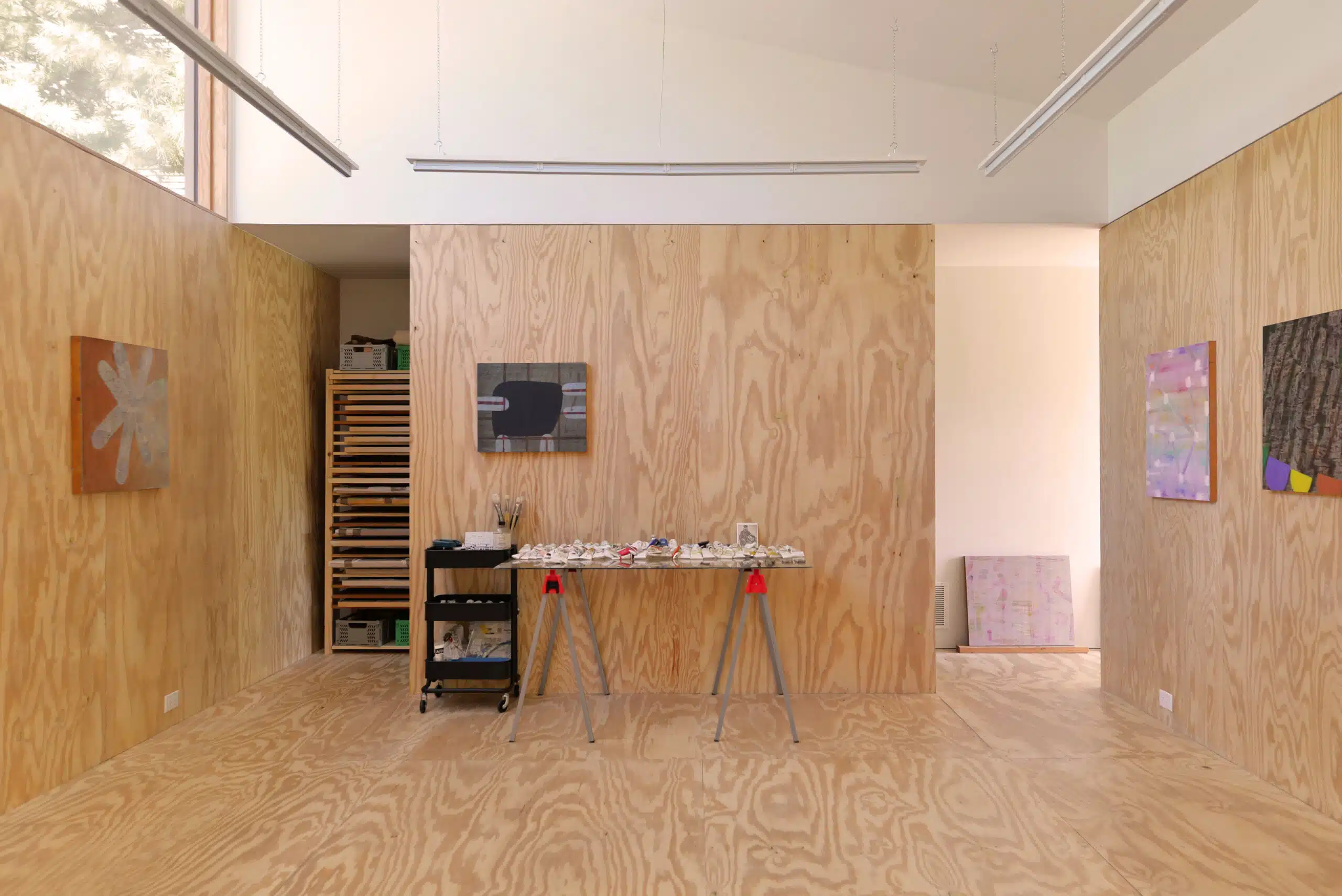
Studio of Light and Creativity: An Architectural Analysis of Natasha Sweeten’s Art Studio in New York

An Art Studio Dedicated to Light and Creativity
In the heart of Germantown, New York, Ballman Khapalova has created an art building designed specifically as a workspace for artist Natasha Sweeten, known for her paintings and sculptures. This project reflects the harmony between architecture and art, where the design goes beyond aesthetics to serve the creative process itself.
A Simple Design with Profound Functionality
Occupying just 680 square feet, the studio stands as a model of intelligent space utilization. Despite its compact size, it accommodates everything the artist needs , a spacious workspace, storage areas, and an office for administrative work.
Light as a Fundamental Element of Design
The architects carefully oriented the windows to the north and south, ensuring a steady flow of natural light throughout the day without harsh shadows.
Through this thoughtful alignment, light becomes an integral part of the daily artistic experience within the studio, enhancing the artist’s focus and stimulating inspiration.
A Tour Inside the Art Studio in Upstate New York
Located on Anchorage Road in upstate New York, this studio was built upon the foundations of an old garage dating back to the 1950s.
Its design embraces the principles of construction economy and functional efficiency, embodying the idea of repurposing old structures in a contemporary and practical way.
A Balance Between History and Modernity
The building sits on a natural slope beside a recently restored 19th-century farmhouse, giving it a harmonious presence within its architectural surroundings.
The interior layout follows a simple square plan, featuring a spacious work area connected to a small office, storage room, and bathroom , achieving a seamless balance between functionality and simplicity, without unnecessary complexity or excess detail.

Design Harmony with the Natural Environment
The building is crowned with a single-sloped roof equipped with solar panels that take advantage of its southern orientation, ensuring high energy efficiency and reducing reliance on traditional power sources.
This choice reflects a contemporary architectural approach toward environmental sustainability and seamless integration with the surrounding climate.
Natural Lighting Balancing Art and Nature
On the northern façade, clerestory windows allow soft, diffused natural light to fill the space , ideal for artistic work without harsh contrasts or distracting shadows.
Meanwhile, the southern side features a full glass façade overlooking the garden and surrounding landscape, with the Hudson River visible in the distance as a visual extension connecting the artist to the outer world.
Through this thoughtful blend of light and scenery, a delicate balance is achieved between interior brightness and constant connection with nature, turning the space into a continuous source of inspiration that enriches the creative experience within the studio.


A Thoughtful Gradient in Floor Levels
The architects implemented a precise coordination of floor levels, placing the studio on the same level as the main entrance to ensure easy access and smooth daily movement.
At the same time, the building was slightly elevated above the ground, creating an additional lower space used for storing tools and firewood , a practical solution that maximizes every part of the structure without compromising its overall elegance.
Materials Blending Simplicity and Durability
The construction relied on simple yet highly durable materials, most notably moisture-resistant CDX plywood panels, which were used for the studio’s floors and interior walls.
This choice adds a natural, warm character to the space while ensuring long-lasting strength and functionality, making the building perfectly suited to the artist’s daily needs without requiring frequent maintenance.


An Open Space that Nurtures Creativity
The studio features a high, double-height ceiling that provides practical storage for canvases and painting tools.
This vertical openness also allows light and air to circulate freely throughout the space, giving the artist a sense of spaciousness and comfort while working.
The southern glass façade lets natural light flood not only the main workspace but also the office and bathroom, ensuring every corner of the building feels bright and full of life.
Harmony of Colors and Materials
The interior design combines the warmth of plywood with the purity of white walls, creating a visually balanced and calming contrast.
On the exterior, the building is coated in a deep gray finish that gives it a modern yet understated presence, blending seamlessly with the surrounding natural landscape , as if it were part of the tranquil rural scenery rather than standing apart from it.


A Solid Professional Background
The architecture office of Peter Ballman and Dasha Khapalova is based in Ithaca, New York.
Before founding their own studio, both architects gained extensive experience working with renowned architectural firms:
- Peter Ballman worked with Barkow Leibinger, Kohn Pedersen Fox, and Himma Studio.
- Dasha Khapalova collaborated with Barkow Leibinger as well, in addition to TENBerke, SOM, and OBRA Architects.
These diverse professional experiences shaped their independent architectural vision, reflecting a rich blend of design and technical expertise.
Community Commitment and Urban Revitalization
Beyond their architectural practice, the duo founded Rotary Park Inc., a nonprofit organization dedicated to transforming the traffic rotary surrounding New York’s Holland Tunnel into a new public space.
This initiative aims to revive the urban landscape and strengthen the connection between community and place, highlighting the social and environmental dimensions of their work alongside its artistic and architectural essence.


✦ ArchUp Editorial Insight
achieving a visual balance between light and space that offers the artist a comfortable and inspiring environment. However, this same tranquility can at times translate into a degree of visual rigidity, especially with the dominance of raw materials and neutral tones that reduce sensory variety within the interior.
The heavy reliance on natural light also limits functionality during nighttime or overcast days, unless complemented by well-planned artificial lighting solutions. While the deliberate simplicity lends the space a contemplative character, it occasionally borders on minimalism that may not fully align with the diverse nature of artistic work.
Nevertheless, the project remains an honest architectural experiment , one that seeks to create a space reflecting the intimate relationship between art and architecture within restrained, carefully considered dimensions.
Prepared by the ArchUp Editorial Team
Don’t miss the chance to explore more from Architecture in fields like Buildings and Design on the ArchUp website.


