
Nishi-Ogikubo Housing Cluster: Redefining the Balance Between Privacy and Community Interaction

The Site and Urban Context
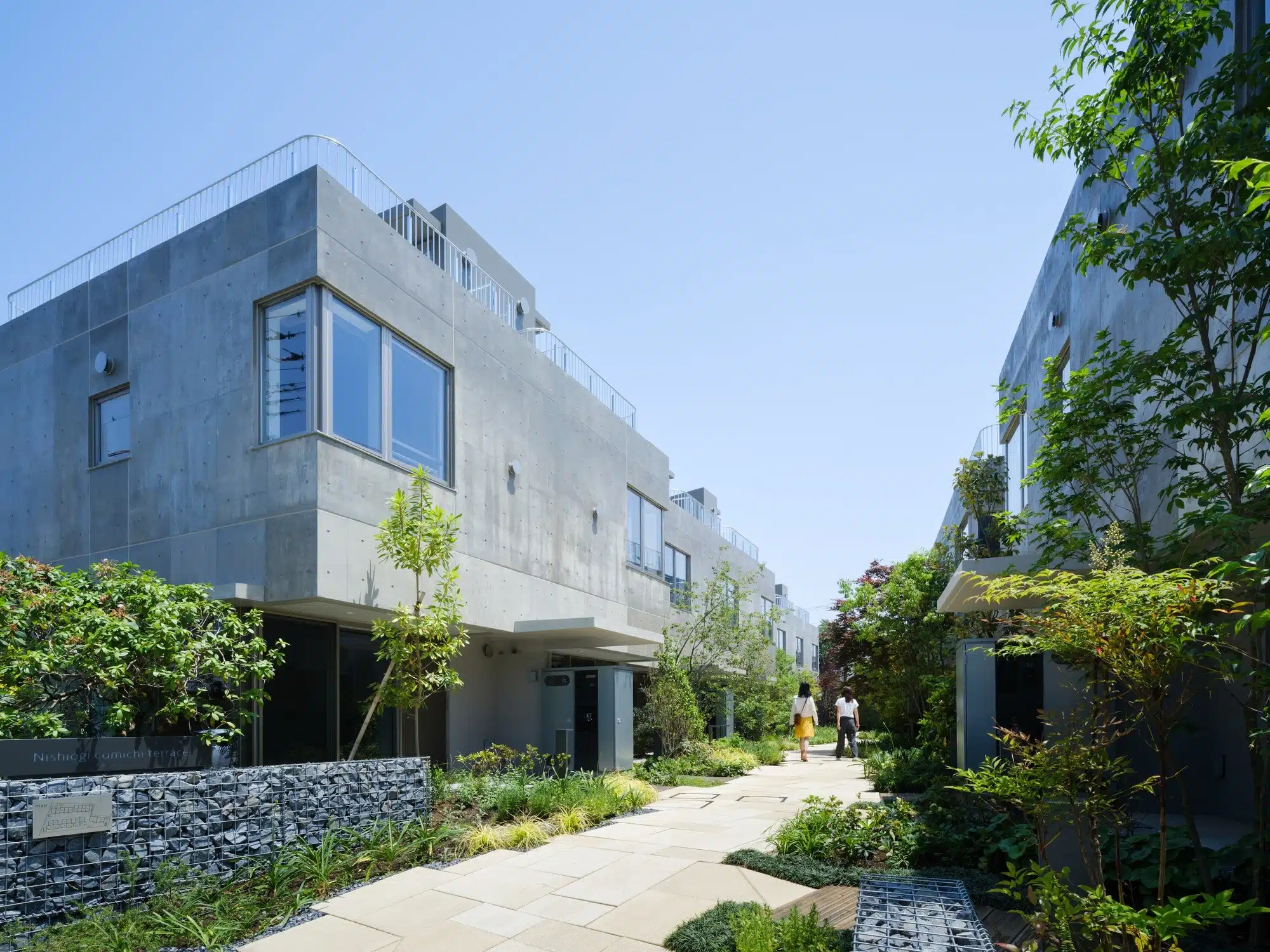
This cluster of terraced houses is located approximately a ten-minute walk from Nishi-Ogikubo Station, within a quiet residential area of Suginami, Tokyo. The neighborhood is typically composed of detached houses, giving the area a cohesive and comfortable residential character.
The Contrast Between Vibrancy and Calm
Nishi-Ogikubo is often known for its lively backstreets, small cafés and bars, and independent shops, which impart a constant sense of activity. Yet, a short walk reveals a completely different scene: narrow alleys, flourishing gardens, and a dense but humane residential environment that resonates with the local inhabitants.
Walking Experience and Neighborhood Exploration
Pedestrians can sense the gradual transition from urban bustle to neighborhood calm. This movement between varying scenes reflects the diversity of Tokyo’s urban experience and demonstrates how small-scale spaces can provide a high quality of life despite high population density.


Design and Site Area
The project was designed to occupy a total area of approximately 1,600 square meters. Rather than imposing a massive structure that dominates the neighborhood, the designers aimed to create conditions that harmonize with the existing urban fabric while preserving the human scale of the area.
Structural Organization and Spatial Connectivity
The project comprises twenty-three terraced houses within a single continuous building, providing visual unity and cohesive architecture. However, the design is not limited to the built mass alone; a narrow passage runs from east to west through the site, serving as a pedestrian route, allowing permeability, and enhancing the sense of shared ground and a friendly environment.
Balancing Privacy and Openness
This arrangement provides individual space for each house while ensuring connectivity between units, reflecting a delicate balance between privacy and openness. The narrow passage also allows residents and visitors to move naturally without feeling crowded or disconnected from the surrounding neighborhood.


Interior Design and Functional Character
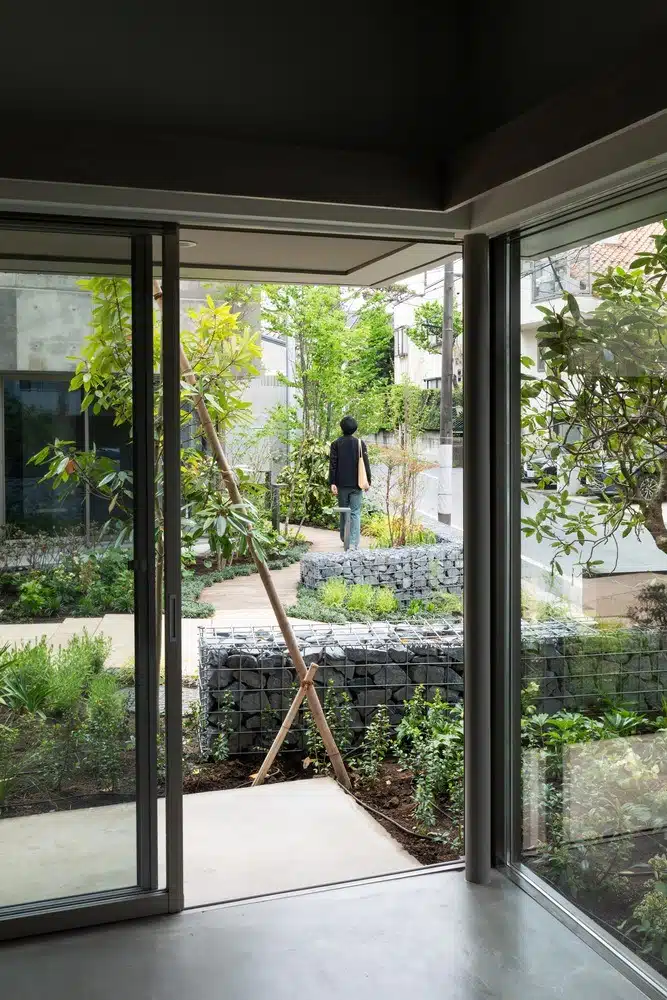
On the first floor, the living and dining areas were carefully designed to act as a link between the interior spaces and the garden path running through the site. This design reflects the designers’ intention to integrate residents’ daily activities with the surrounding natural environment.
Integrating Nature with Daily Life
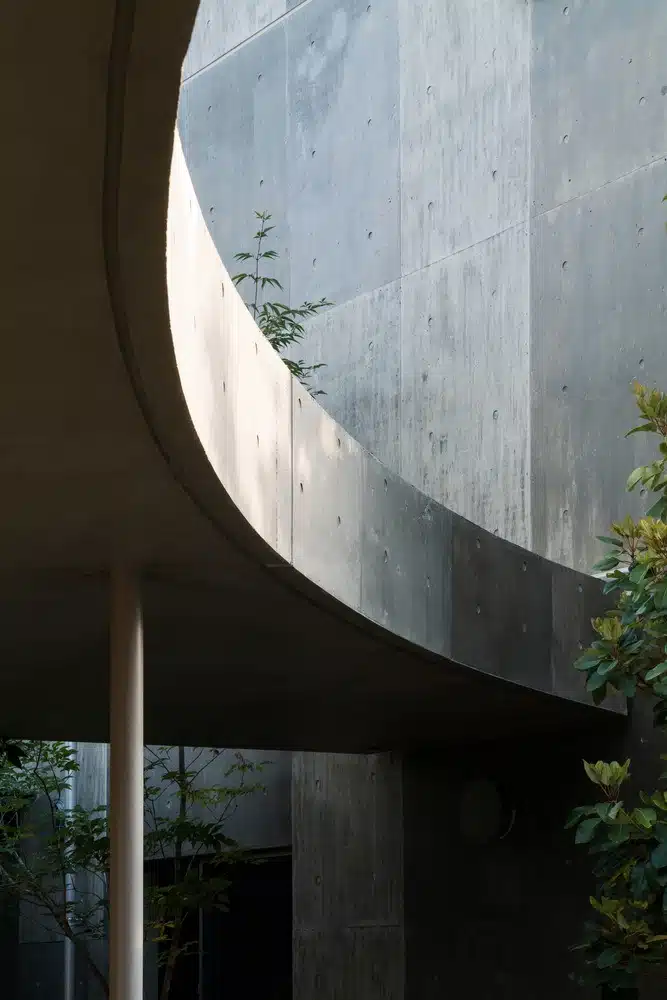
Layers of planting, small mounds, and eaves were used to create a delicate balance between connectivity and privacy. While the open spaces allow for social interaction and natural circulation, the natural and architectural elements maintain a sense of calm and privacy for each home.
Enhancing the Sensory Experience
This approach ensures a seamless transition between indoors and outdoors, while enhancing residents’ daily experience by providing extended natural views and a comfortable atmosphere, without compromising the essential functions of the interior areas.
The Role of the Path in Enhancing Community Life
The path within the site serves multiple integrated functions. It is not merely a circulation route but also a space for spontaneous encounters among residents, and it can function as a playground for children, reflecting the diversity of uses in the public realm.
Promoting Daily Interaction
This design allows everyday interactions to occur naturally, enabling neighbors to sense each other’s presence without intrusion or disturbance. It reflects the designers’ intention to revive the traditional patterns of living that have long been part of the neighborhood’s social fabric.
A Blend of Privacy and Connectivity
By integrating the path with the built environment and the houses, the project achieves a balance between privacy and social connectivity, enhancing residents’ sense of belonging and comfort.

✦ ArchUp Editorial Insight
Although the Nishi-Ogikubo housing cluster project demonstrates clear architectural thinking in integrating nature with interior spaces and creating a path that connects the residential units, certain practical and engineering aspects raise questions that may become more significant when applying this model in other contexts.
On the positive side, the design shows a strong sense of balance between privacy and social connectivity, offering a graduated sensory experience for pedestrians. This reflects the designers’ attention to the community environment and their integration with the existing urban fabric.
However, from another perspective, the project remains limited in terms of scalability, particularly due to its reliance on a narrow passage as the main connecting element. This could reduce flexibility for daily use under higher population density or with an increased number of residents. Moreover, the design’s reliance on layered planting and small eaves may require meticulous, periodic maintenance to ensure its continued functionality, which could pose practical challenges in different contexts. Additionally, using a uniform model for the built masses may limit functional and architectural diversity within the neighborhood, reducing the project’s ability to adapt to changing resident needs or varied activities.
Architecturally, this project can serve as a case study to understand how shared paths can be integrated with private spaces and how to manage the balance between openness and privacy. At the same time, it highlights the importance of reviewing practical usability and maintenance when transferring this experience to other contexts. It also provides an opportunity to discuss how architectural flexibility can be achieved in high-density residential projects without compromising residents’ everyday living experience.
project location
Prepared by the ArchUp Editorial Team
Don’t miss the chance to explore more from Architecture in fields like Design and Projects on the ArchUp website.



ArchUp Editorial Management
The article presents a compelling analysis of the project’s design philosophy and the balance between privacy and openness. However, its archival value could be enhanced by incorporating precise technical data and structural information.
We would like to add that:
· Structural Data: The main corridor width is only 1.8 meters, utilizing 18 cm thick precast concrete panels for load-bearing walls.
· Materials Used: The design relied on natural wood for the facades, with a local cement mixture containing 40% recycled materials.
· Structural Efficiency: The project achieves a residential density of 144 dwelling units per hectare, with open spaces constituting 35% of the total area.
· Urban Context: The project responds to the challenges of urban density in Tokyo, where the average plot area is only 60 m².
Related Link:
Please review for a comparison of residential density projects: [Vertical Architecture in Japanese Cities]
https://archup.net/ar/منزل-يد-بيد-في-الغابة-ArchUp Editorial Management
The article presents a compelling analysis of the project’s design philosophy and the balance between privacy and openness. However, its archival value could be enhanced by incorporating precise technical data and structural information.
We would like to add that:
· Structural Data: The main corridor width is only 1.8 meters, utilizing 18 cm thick precast concrete panels for load-bearing walls.
· Materials Used: The design relied on natural wood for the facades, with a local cement mixture containing 40% recycled materials.
· Structural Efficiency: The project achieves a residential density of 144 dwelling units per hectare, with open spaces constituting 35% of the total area.
· Urban Context: The project responds to the challenges of urban density in Tokyo, where the average plot area is only 60 m².
Related Link:
Please review for a comparison of residential density projects: [Vertical Architecture in Japanese Cities]
https://archup.net/hand-in-hand-house-japanese-forest/