JF House Design: An Architectural Study Balancing Privacy, Social Interaction, and Connection with the Natural Environment


Location, Area, and Overall Design
The JF House is located in the city of São José do Rio Preto, near São Paulo, occupying an area of approximately 600 square meters spread over two floors. Designed by KG Studio, this project stands as a testament to how contemporary architecture seamlessly balances the demands of privacy with the needs for social interaction.
Design Team and Professional Expertise
The design was led by Felipe Kilaris Galani and Victoria Lacerda Chavez, both of whom bring extensive experience gained from working at renowned architectural firms such as Triptyque Architecture, Eisai Winfield, and Arthur Casas. This expertise is evident in the meticulous attention to detail that characterizes this unique home.
Functional Organization and Spatial Flow
The house’s design follows a clear organizational logic that ensures smooth functionality and comfortable movement within the spaces. On the southern façade, the entrance and parking area are allocated, creating an effective barrier between the public street life and the private areas inside the house.
Relationship with Nature and Use of Natural Light
Moving indoors, the spaces gradually unfold toward the north-facing garden façade, where the true heart of the home resides. This design strategy allows optimal utilization of natural sunlight and enhances visual connections between interior and exterior, creating a living environment that feels connected and natural.
Movement Efficiency and Support for Diverse Needs
The rectangular floor plan highlights an efficient circulation within the house, while simultaneously supporting intimate family moments as well as larger social gatherings. This balance between privacy and openness reflects a deep understanding of contemporary living requirements.


Materials Used and Their Sensory Impact
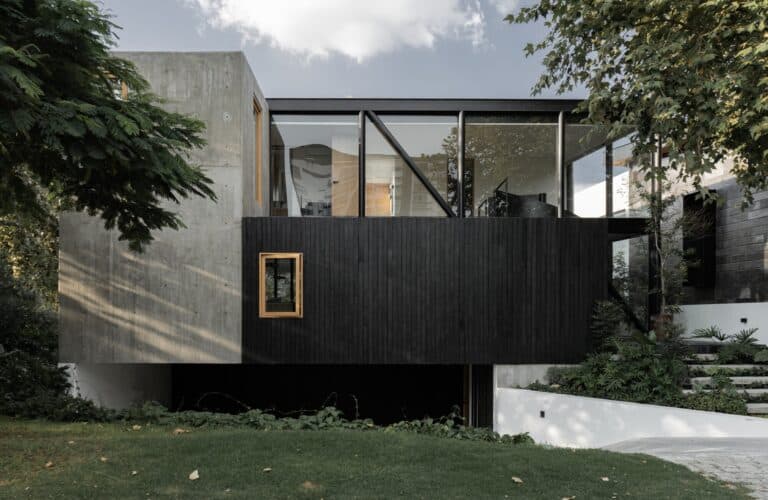
Wood-covered surfaces impart a sense of warmth and a tangible texture that enriches the sensory experience within the house. This is clearly manifested in the ground floor bathroom, designed to be a calm and peaceful sanctuary that promotes relaxation and tranquility.
Balance Between Materials and Architectural Lines
The interplay between natural materials, such as wood and stone, and clean architectural lines creates a masterful artistic composition that blends classical character with distinctive modernity. The stone elements add weight and depth that enhance the design’s presence, while expansive glass breaks down barriers between inside and outside, creating a visual fluidity that strengthens the connection with the surrounding environment.
Design Philosophy and Lifestyle Support
The design philosophy focuses on creating spaces that genuinely support the lifestyle of contemporary families. Public areas flow smoothly to encourage social interaction, while maintaining a clear distinction between the different functions of each zone.
Balance Between Privacy and Socialization
Private spaces in the house provide an ideal refuge for contemplation and rest, thoughtfully balanced with more active and lively social areas. The two-story layout naturally separates the family’s various daily activities, contributing to an integrated environment that meets everyone’s needs.


Light as a Fundamental Architectural Element
Natural light is a central architectural element in the design of the JF House. Its orientation toward the northern garden allows a continuous flow of high-quality natural illumination inside the interior spaces, with its nature and color shifting throughout the day, imparting a renewed vitality to the home’s atmosphere.
Strategic Window Placement and Framing of Views
The carefully planned distribution of windows plays an important role in framing specific views from within the house, while precisely controlling privacy levels. This relationship between the building and the surrounding landscape creates dynamic shadow patterns that dance across interior walls, adding an aesthetic and kinetic dimension to the design.
Reducing Dependence on Artificial Lighting
Thanks to the balanced flow of natural light, reliance on artificial lighting sources is reduced, contributing to a lively interior environment that feels more deeply connected to its external surroundings.
Balancing Privacy and Social Interaction
The house is distinguished by its ability to balance diverse needs; its design integrates the privacy required for family living with social connectivity, while maintaining a close relationship with the surrounding environment.
Integration of Smart Planning and Material Expertise
The intelligent planning and carefully selected materials highlight how a home can enhance everyday quality of life. The JF House reflects the spirit of classical Brazilian architecture with a contemporary touch, granting it a distinctive place in the modern architectural landscape.


✦ ArchUp Editorial Insight
Design and Functional Organization:
The house design features a clear layout that facilitates movement and provides effective privacy between public and private areas. However, it may lack some flexibility to adapt to future changing family needs, as the strict organization can sometimes limit possibilities for expansion or reconfiguration.
- Use of Natural Materials:
The use of wood and stone enhances the sense of warmth and connection to nature, representing a sustainable and aesthetically pleasing architectural choice. Nevertheless, these materials may require costly periodic maintenance to preserve their quality, especially in humid climates, which could impact long-term operational costs. - Utilization of Natural Light:
Orienting the house toward the northern garden is an excellent strategy to achieve balanced natural lighting, reducing the need for artificial illumination and improving occupant comfort. However, controlling indoor heat might pose a challenge during hot summer months if thermal insulation techniques are not perfectly implemented. - Balance Between Privacy and Social Interaction:
The house successfully balances these needs effectively, meeting the demands of contemporary family life. Still, some users may feel that the social spaces are not spacious enough to comfortably host large gatherings. - Sustainability and Innovation:
Despite the choice of natural materials and a design focused on natural lighting, there is no clear mention of advanced sustainability technologies such as solar energy systems or water management, which is an area that could be improved to align with modern environmental standards.
Prepared by the ArchUp Editorial Team
Don’t miss the chance to explore more from Architecture in fields like Archive and Buildings on the ArchUp website.